 Badminton/Pickleball court lights
 Pickleball court lights
 Padel Court Lights
 Basketball court lights
 Tennis court lights
 Football field lights
Australia S90 Badminton Court Lighting for Dark-Ceiling Halls: SAA 60W 5130 lm 24-Fixture Rows at 6 m

Quick Answer for Australian Venue Owners
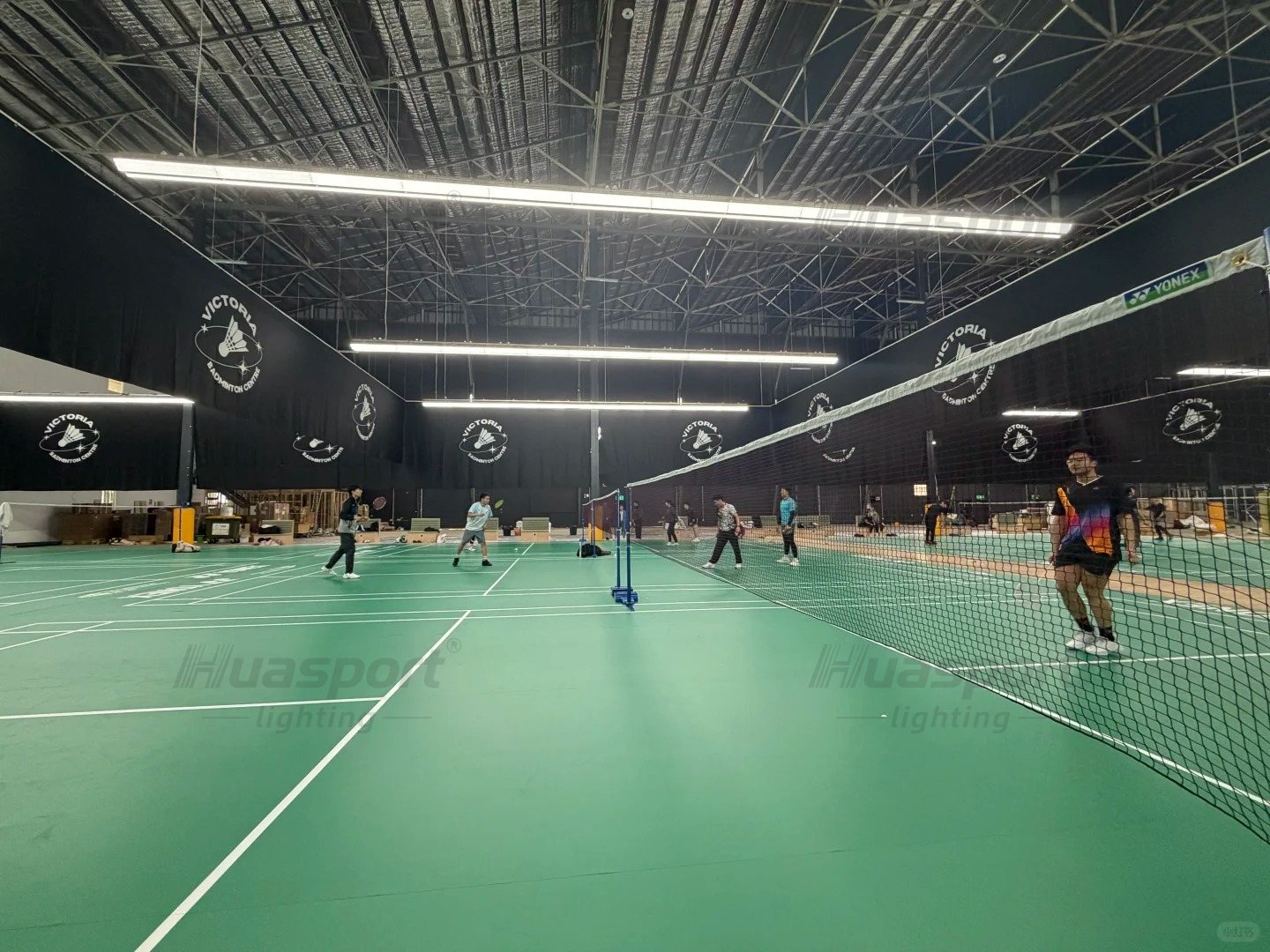
In an Australian badminton hall with a dark ceiling, the court can look bright in photos and still feel tiring on court. The real test is whether players can look up for clears, lifts and overhead recovery without seeing harsh fixture glare from the side rows.
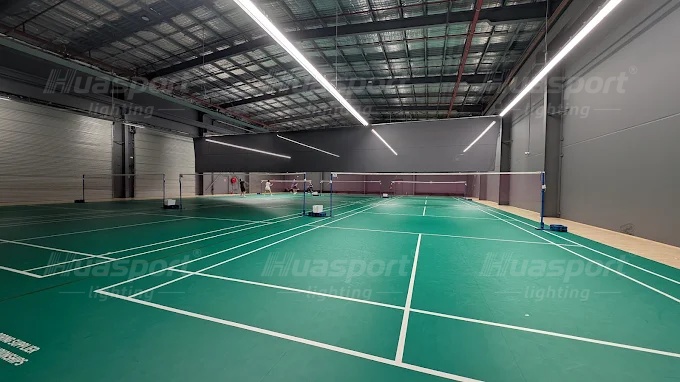
One practical Huasport planning option for this market is SAA-S90-1160-FLP-60W-108Z, a 1.16 m S90 60W long-bar anti-glare fixture with a 13 cm body and 5130 lm luminous flux. For one indoor badminton court, the layout uses 24 fixtures, with 12 fixtures on each side, mounted around 6 m and aimed 30 degrees inward. Twelve 1.16 m fixtures form a 13.92 m continuous row, which covers the 13.4 m main playing-area length. The planning target is 400-500 lux+ for commercial training and recreational use; venues that need formal competition use should review the design toward 500 lux+ average illuminance.
The Problem: Dark Ceilings Hide Bad Lighting Until Players Complain
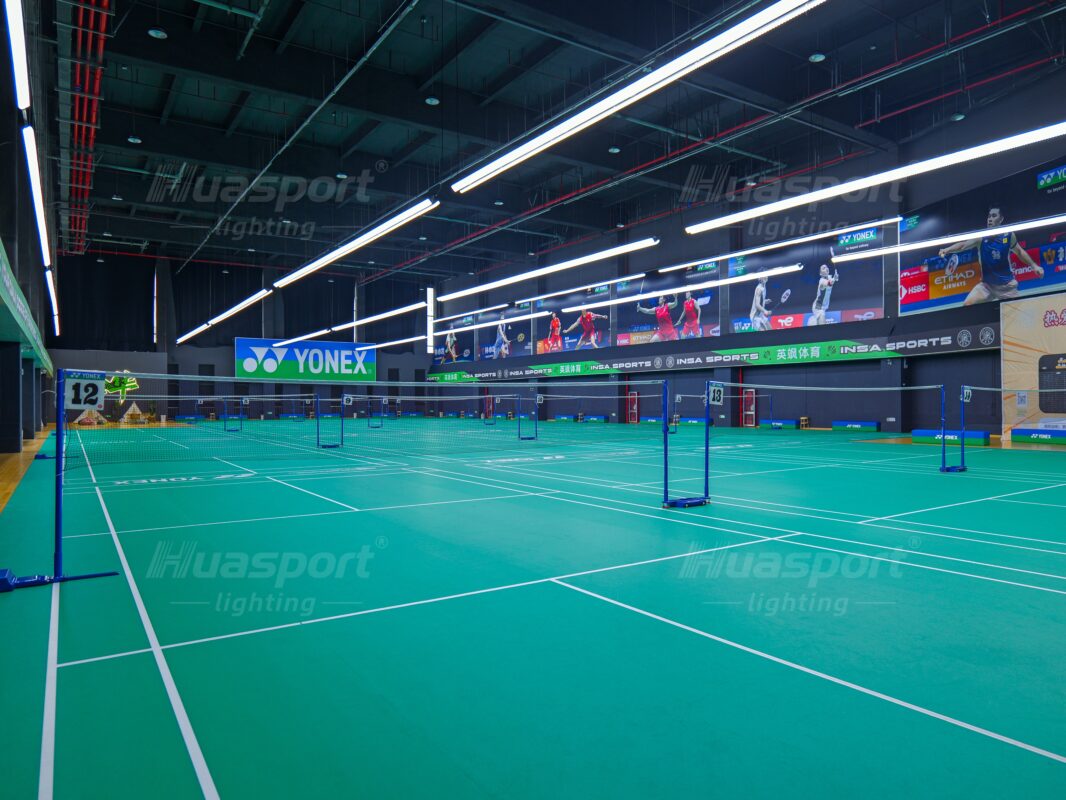
Dark ceilings make a venue look professional. They also make lighting mistakes harder to notice during a quick inspection. A photo from the entrance may show clean green courts, white lines and dramatic bright strips overhead, but that does not prove the player experience is comfortable.
Badminton is unforgiving because the shuttle often moves above eye level. During a high clear or a late back-court return, the player is not only looking at the floor. The player is tracking a small white object against ceiling structure, fixture rows and wall graphics. If the light source is exposed or aimed poorly, the player feels it immediately.
That is why Huasport plans badminton court lighting around player sightlines as well as lux values. Brightness matters, but a comfortable court also needs controlled glare, repeatable aiming and fixture rows that make sense for the court length.
The S90 Data Point: 60W, 5130 lm and a 13 cm Anti-Glare Body
For Australia projects that require SAA certification, the S90 planning option is SAA-S90-1160-FLP-60W-108Z. The important verified data point is simple: 60W power and 5130 lm luminous flux.
The S90 uses a 13 cm long-bar body, giving buyers a concrete product detail to verify when comparing fixture photos, installation drawings and quotation details.
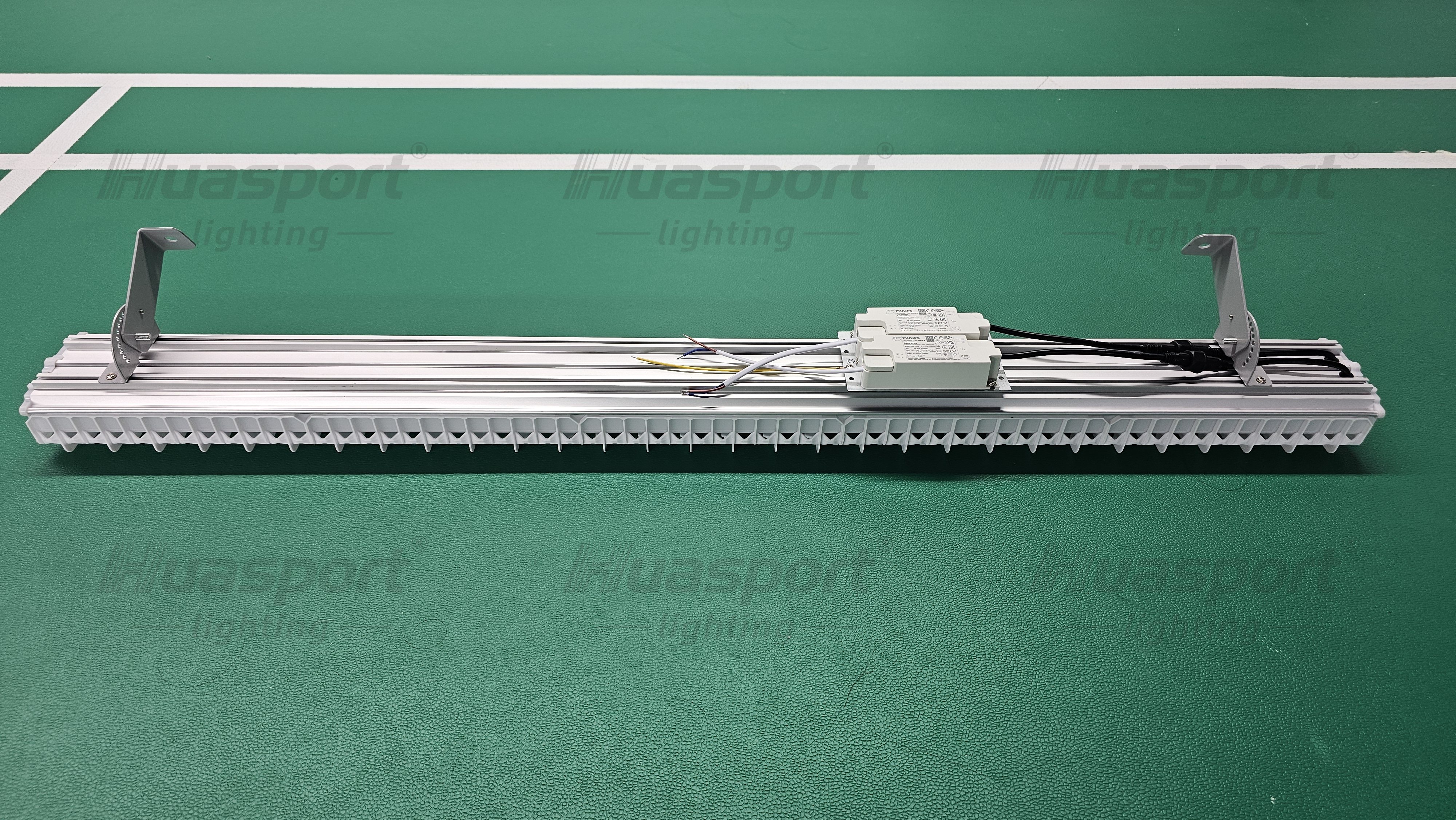
The front structure uses Huasport’s double-layer honeycomb anti-glare grille. This is the detail that separates the player experience from a basic bright strip light. A single-layer grille may reduce some direct glare, but the double-layer structure gives the fixture a more controlled visual cut-off when players look up from the court side. Huasport has filed patent protection for this anti-glare structure, so buyers can treat the grille design as a concrete product detail to verify in photos, samples and quotation documents.
The Layout: 24 Fixtures, 12 Per Side, 13.92 m Row Coverage
For this Australia SAA 60W plan, one badminton court uses 24 fixtures. The fixtures are split into 12 on the left side and 12 on the right side. Each fixture is 1.16 m long, so one side creates a 13.92 m row.
That row length is not random. A standard badminton playing area is 13.4 m long, and a 13.92 m continuous row helps cover the main playing length cleanly. The fixture rows sit outside the direct player lane and aim inward, so the court receives useful light without pushing the light source into the player’s most sensitive viewing path.
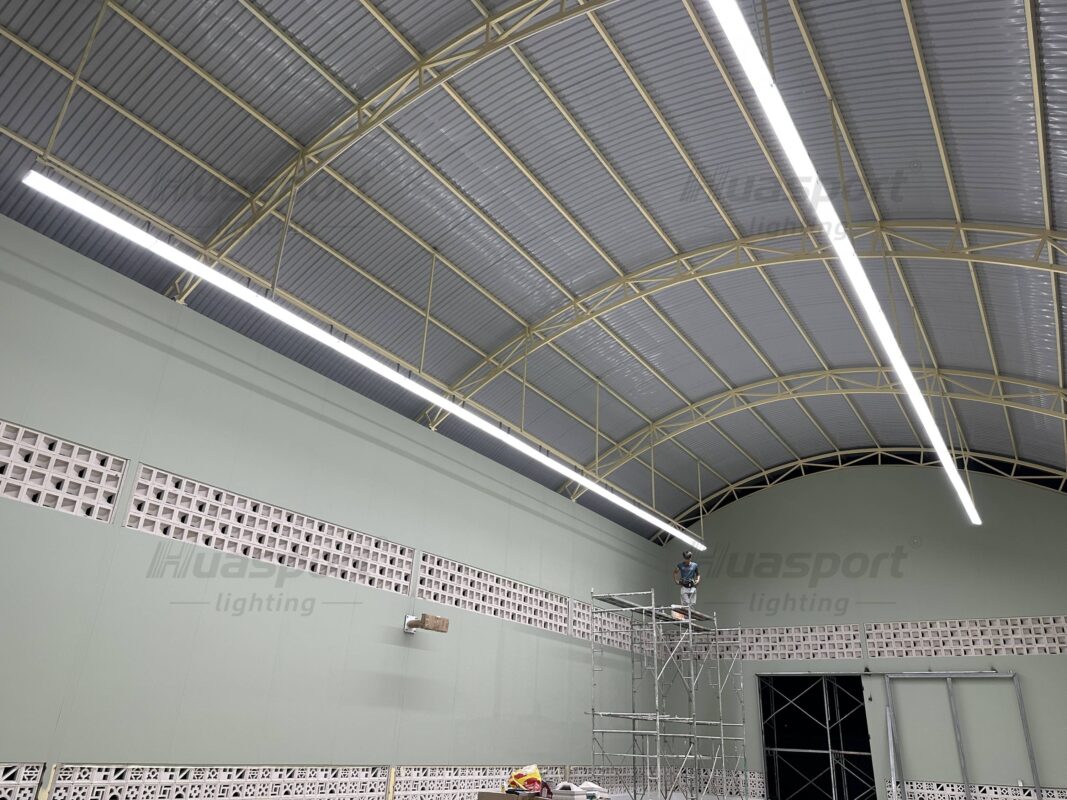
At around 6 m mounting height, the fixtures are aimed 30 degrees inward. The 30-degree setting matters because it makes the design repeatable. If every installer chooses a different angle by eye, one court can feel comfortable while the next court feels sharp and uneven.
What the Australia Case Photos Help Buyers Check
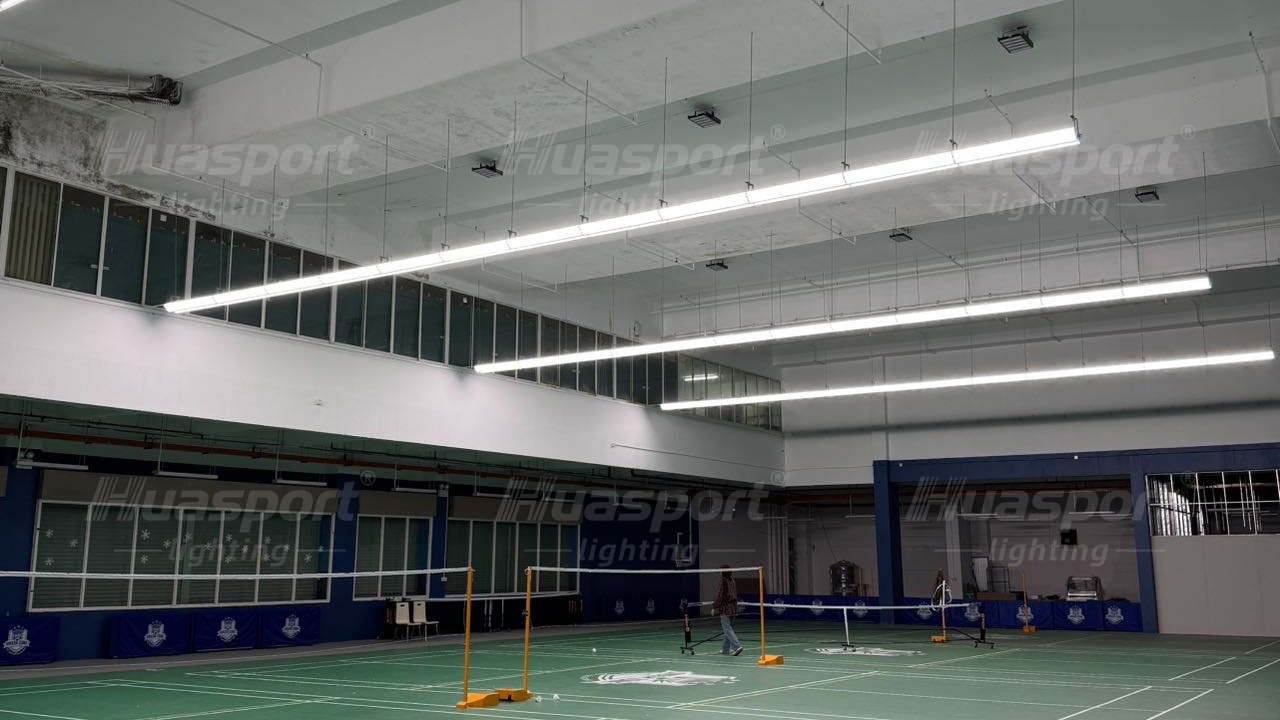
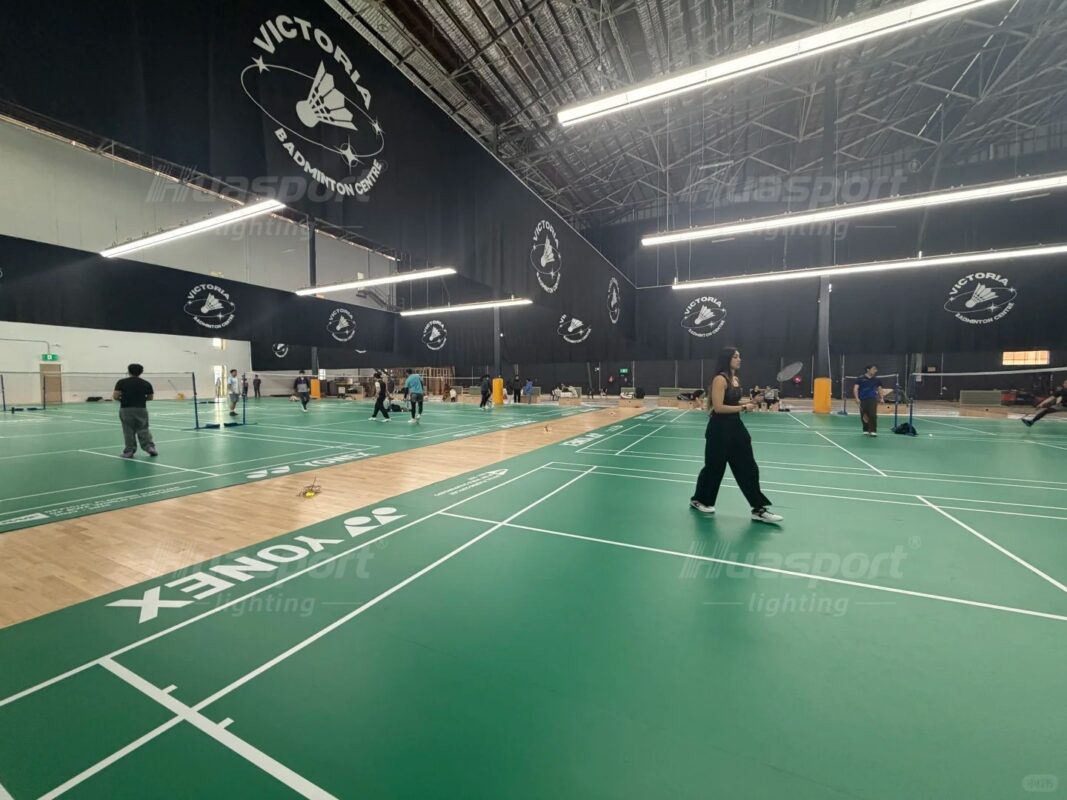
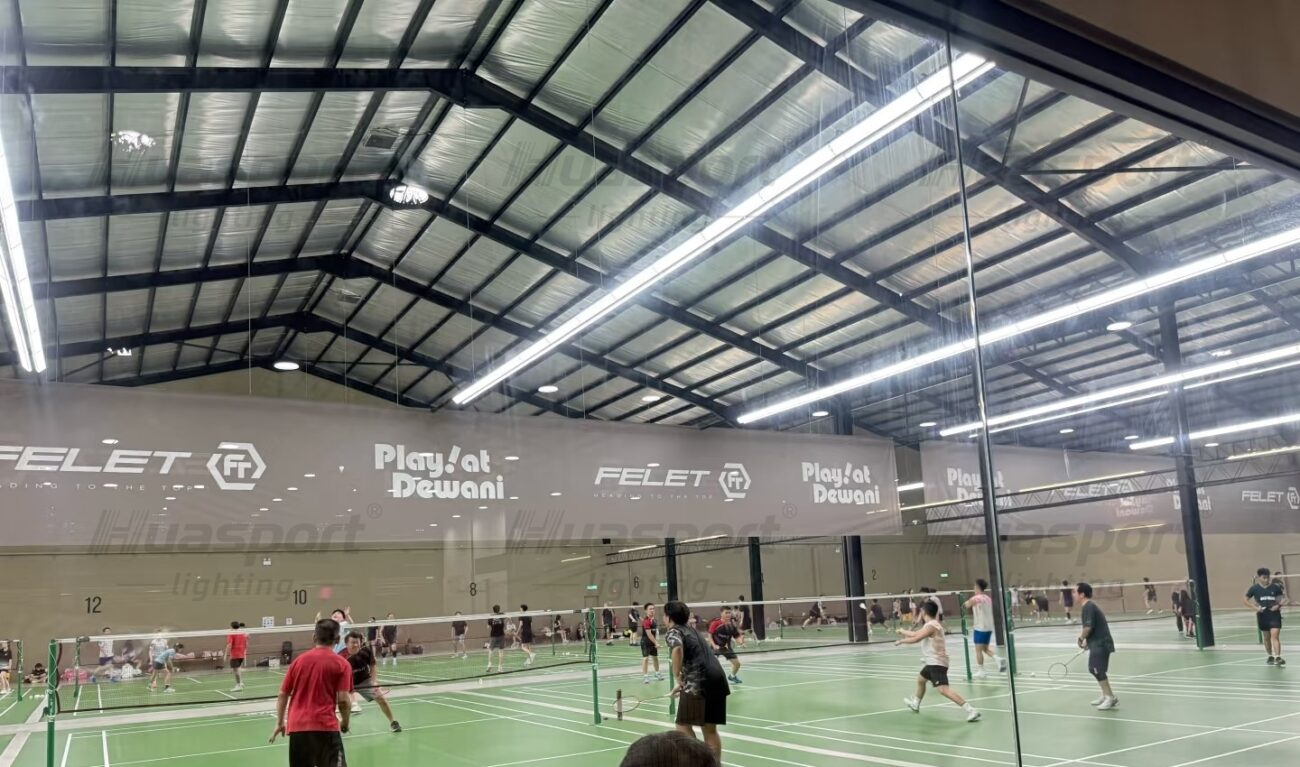
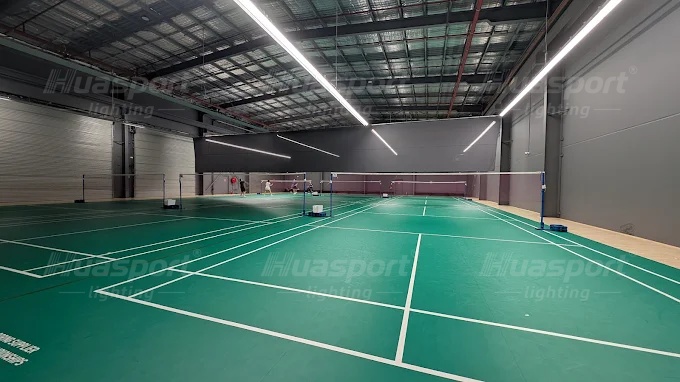
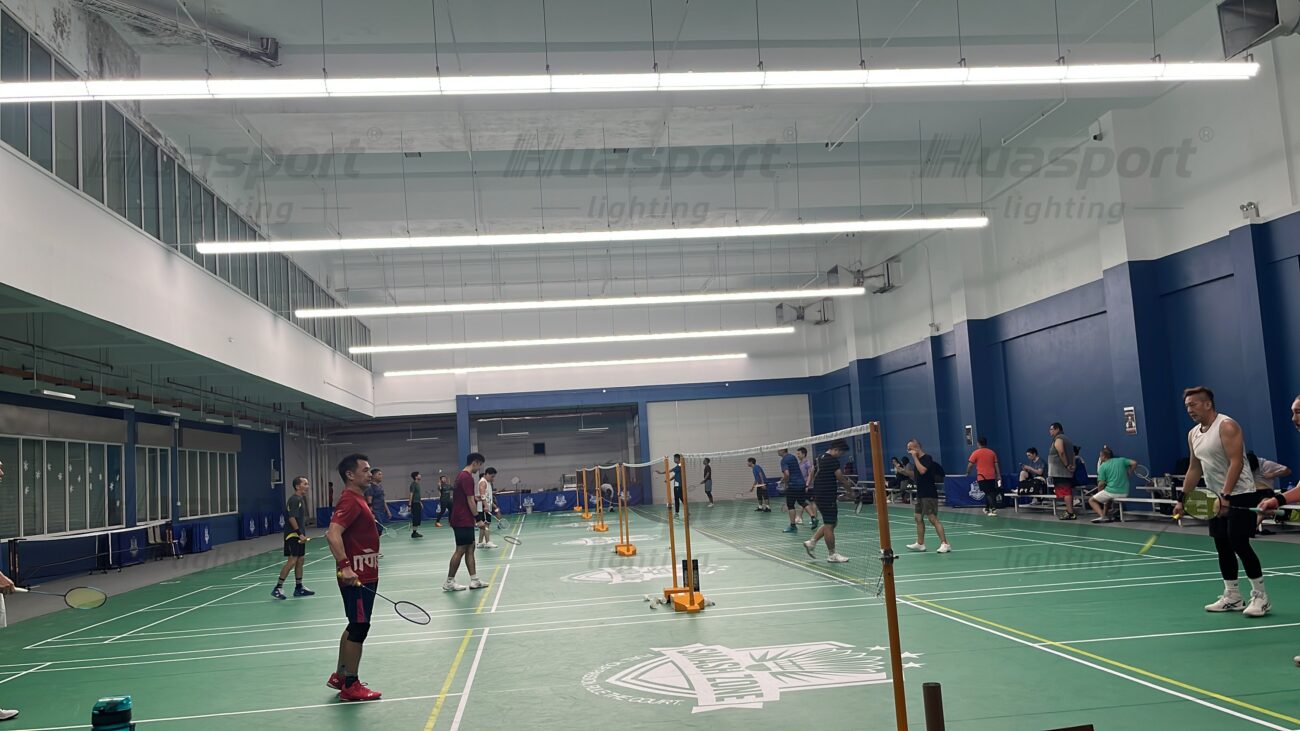
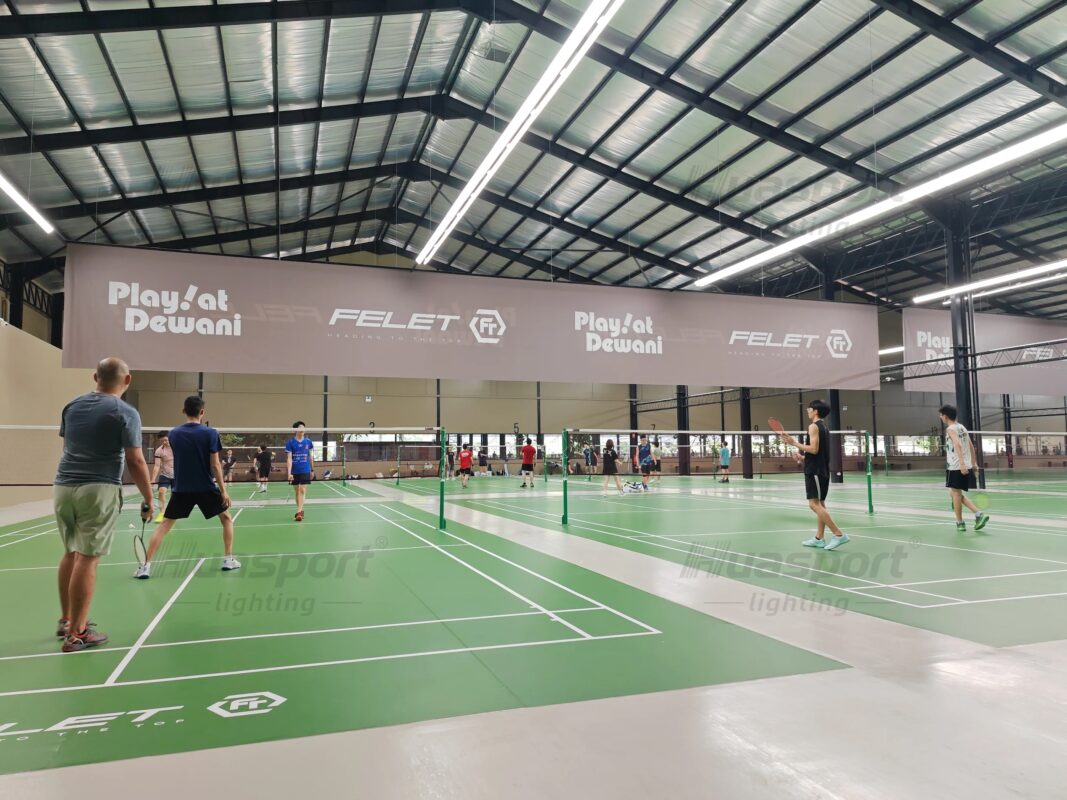
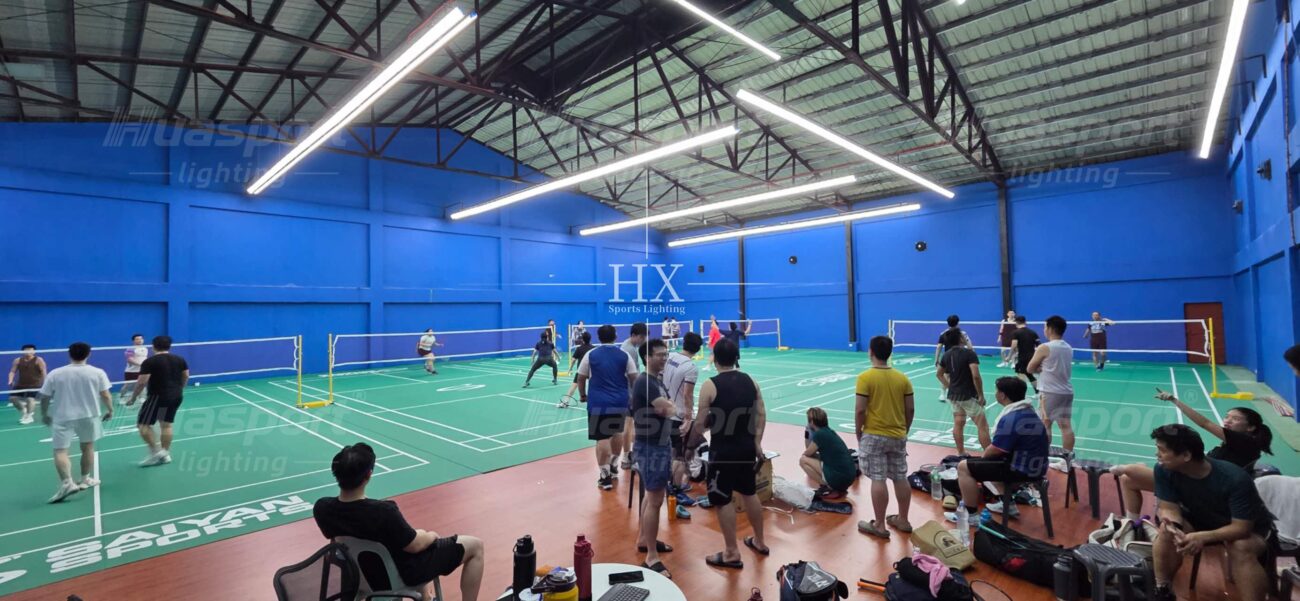
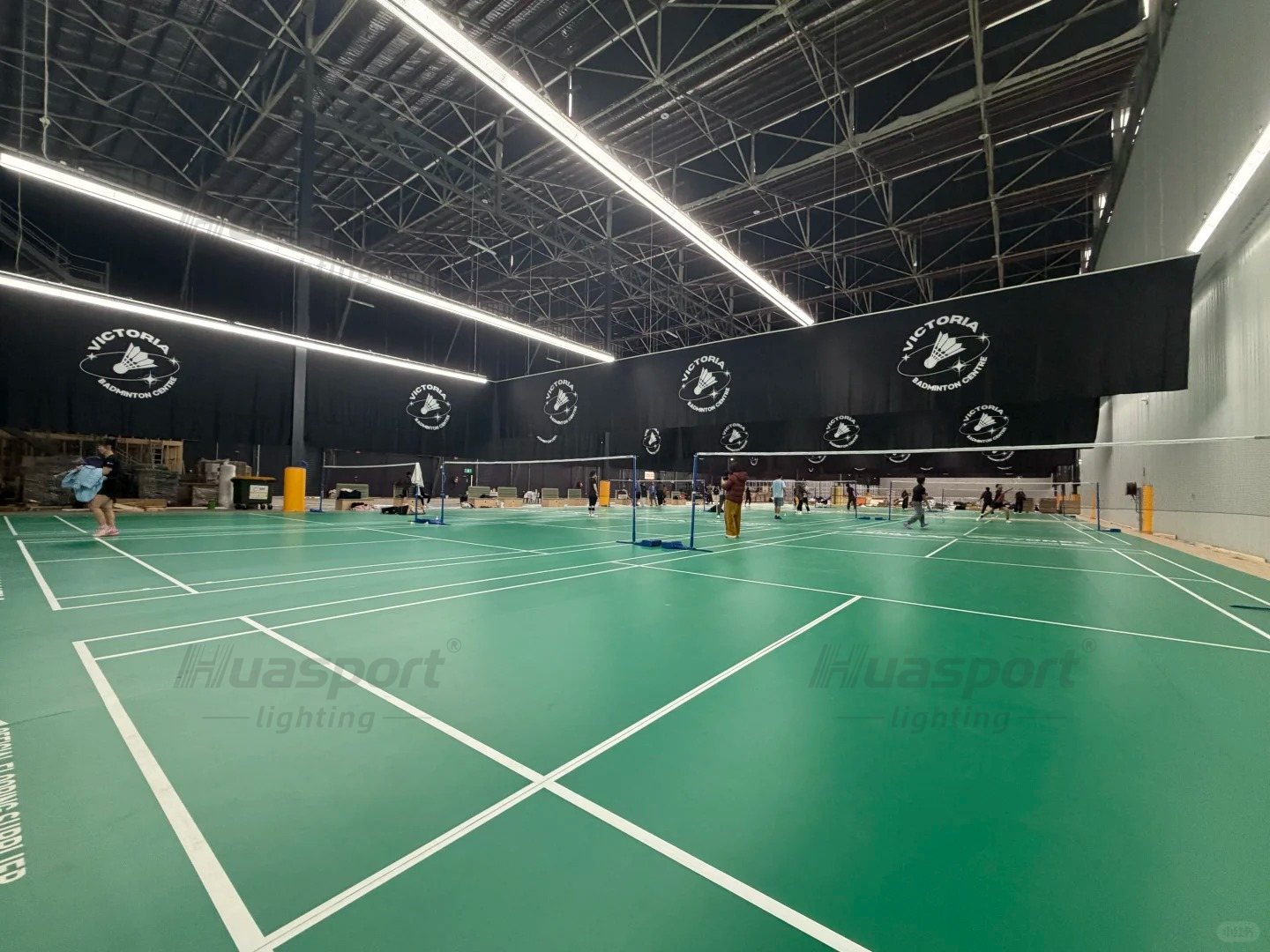
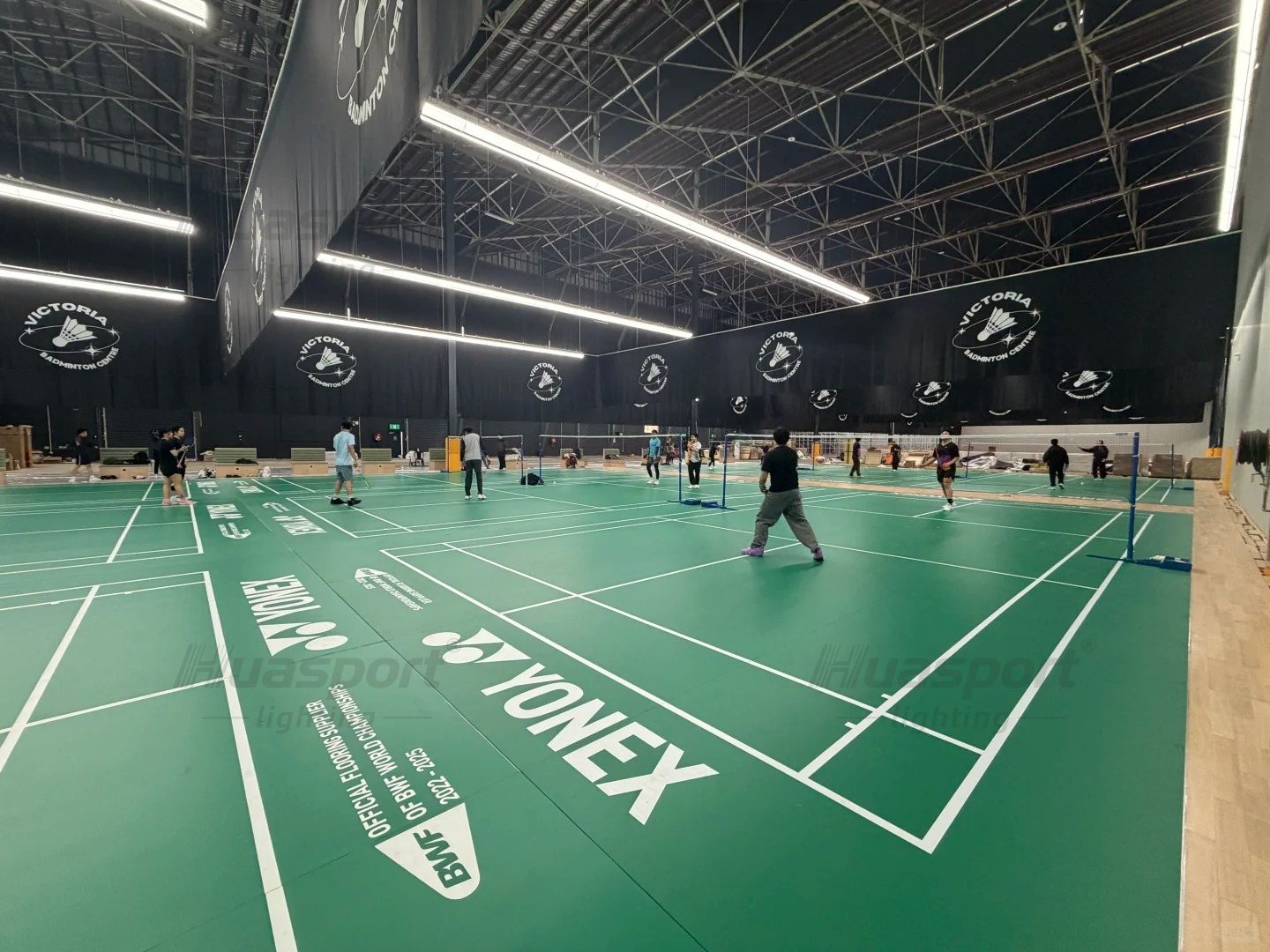
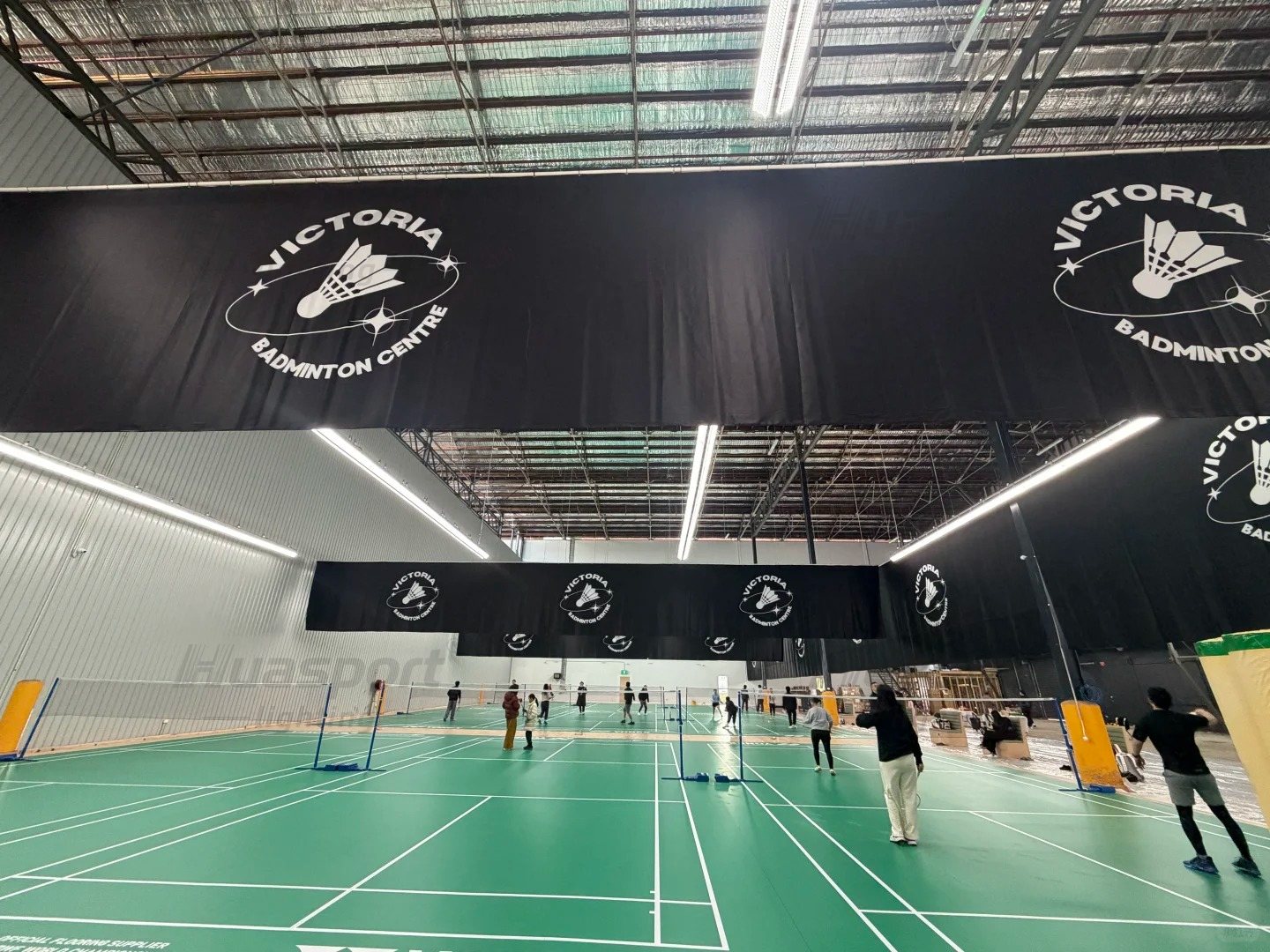
Photos cannot replace a final lighting calculation, but they can help a buyer ask better questions before paying for a design. In the Australia hall views, the most useful things to check are not decorative details. They are the ceiling color, fixture row direction, player sightline and court-to-court consistency.
First, look at the dark ceiling and the bright long-bar rows together. This combination is visually attractive, but it increases the importance of glare control. The more the ceiling disappears into shadow, the more exposed bright points can dominate a player’s view.
Second, look at how the long rows relate to the court length. A good row should support the playing area, not randomly cross the player’s overhead line. When a buyer compares multiple halls, the practical question is: can the player track a shuttle above the rear court without staring directly into the fixture body?
Third, compare one court with the next. In a multi-court venue, a lighting layout must feel consistent across training areas. If one court looks noticeably harsher or dimmer, the venue may get complaints even when the average lux number looks acceptable on paper.
Product Details That Matter Before Quotation
A buyer should not only ask for watts, lumens and price. The useful quotation check is more concrete: can the supplier show the anti-glare grille, the back structure, the bracket fixing method and the aiming method?
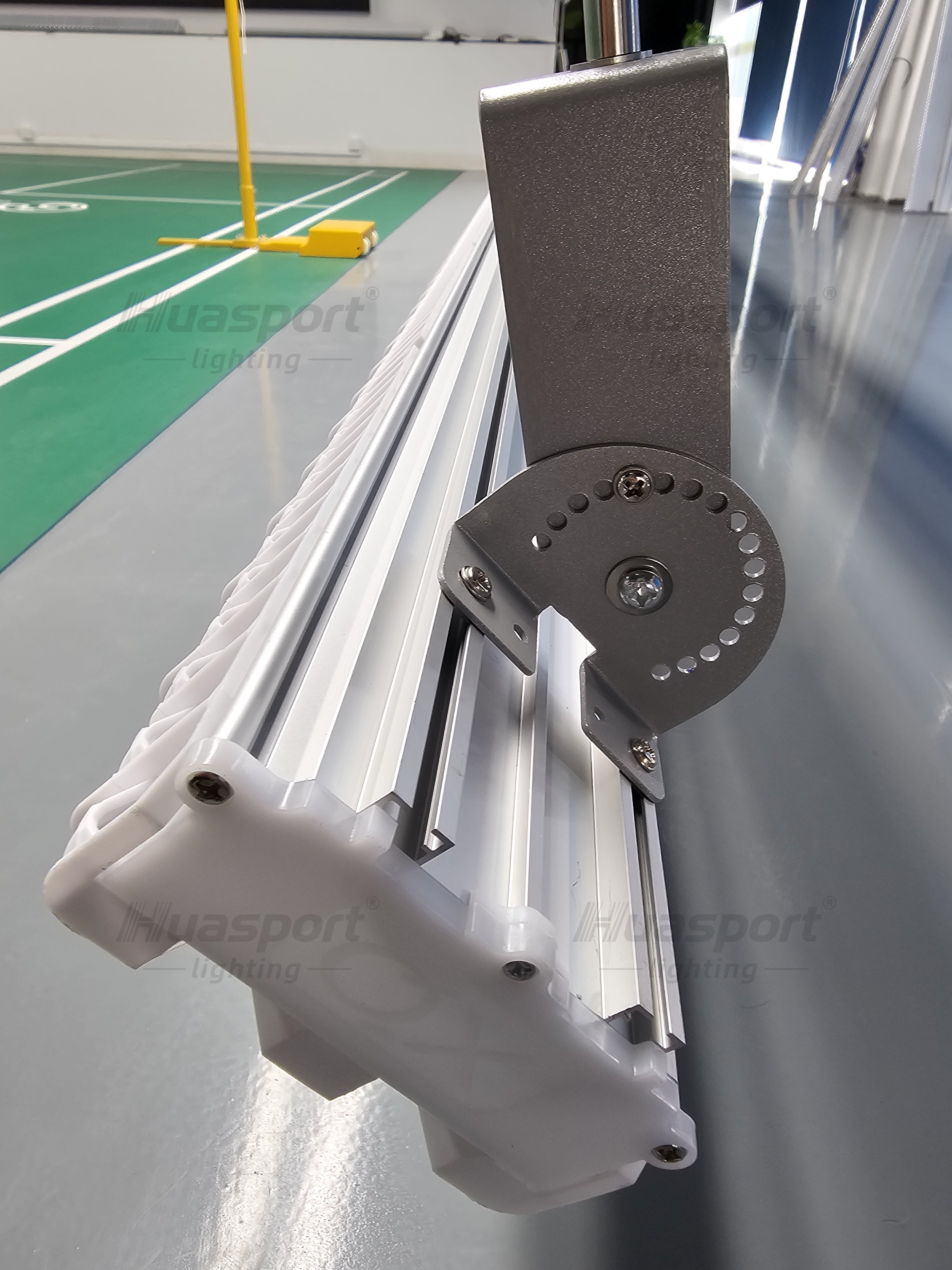
The Huasport S90 uses a thickened aluminum profile on the back side. Aluminum improves heat dissipation around the LED source and driver area, and it avoids the cost-cutting problem of using an iron body where heat management is weaker. The bracket is fixed to the aluminum profile rather than to plastic, which is a safer construction choice for a commercial sports hall that opens every day.
The adjustable bracket is also part of the lighting result. A good bracket is not just an accessory; it is how the layout keeps its angle from court to court. For badminton and pickleball layouts using this family of Huasport long-bar lights, a 30-degree inward angle is the normal planning reference. The bracket hole position helps installers repeat that angle instead of guessing on site.
How This Connects With Pickleball and Padel Planning
The same buyer may compare badminton, pickleball and padel facilities, but the lighting layout should not be copied blindly from one sport to another.
For pickleball court lighting, the same anti-glare long-bar concept can be useful because players also track fast balls under overhead and side lighting. The final layout still depends on court grouping, ceiling height and the venue’s playing standard.
For padel court lighting, the glass-wall environment changes the problem. Reflections, cage structure and corner visibility become more important, so a padel plan needs its own fixture count and row positions. A badminton SAA 60W row layout should not be presented as a padel layout.
Australia Buyer Checklist Before Confirming the Lighting Plan
Before an Australian venue owner approves a quotation, these checks are worth making:
- Confirm whether the project requires SAA-certified fixtures.
- Confirm the selected product line and model, such as SAA-S90-1160-FLP-60W-108Z.
- Confirm the fixture data point: 60W and 5130 lm.
- Confirm one court uses 24 fixtures, with 12 fixtures per side.
- Confirm the mounting height is around 6 m.
- Confirm the fixture rows aim 30 degrees inward.
- Confirm the continuous row length is 13.92 m, covering the 13.4 m main playing-area length.
- Confirm whether the target is 400-500 lux+ commercial use or 500 lux+ competition review.
- Confirm the double-layer honeycomb anti-glare grille is visible in product details.
- Confirm the bracket is fixed to the aluminum profile, not only to plastic.
These checks make the buying decision more concrete. Instead of comparing only a price line, the owner can compare the part of the lighting system that players actually feel.
FAQ
What Huasport model is suitable for this Australia SAA 60W planning article?
One suitable planning option is SAA-S90-1160-FLP-60W-108Z, a Huasport S90 1.16 m 60W long-bar anti-glare fixture with 5130 lm luminous flux. Final installed model should always be confirmed against the project record.
How many fixtures are used for one badminton court?
The reference layout uses 24 fixtures per court, with 12 fixtures on each side. Twelve 1.16 m fixtures create a 13.92 m row for the 13.4 m main playing-area length.
What mounting height and aiming angle are used?
The Australia SAA 60W reference layout uses around 6 m mounting height and 30-degree inward aiming toward the court.
Is this layout the same as padel lighting?
No. Padel uses a different court environment because of glass walls and cage reflections. This article is about Australia indoor badminton court lighting and should not be treated as a padel layout.