 Badminton/Pickleball court lights
 Pickleball court lights
 Padel Court Lights
 Basketball court lights
 Tennis court lights
 Football field lights
Philippines Indoor Pickleball Lighting: Will the Rows Fit Your Hall?

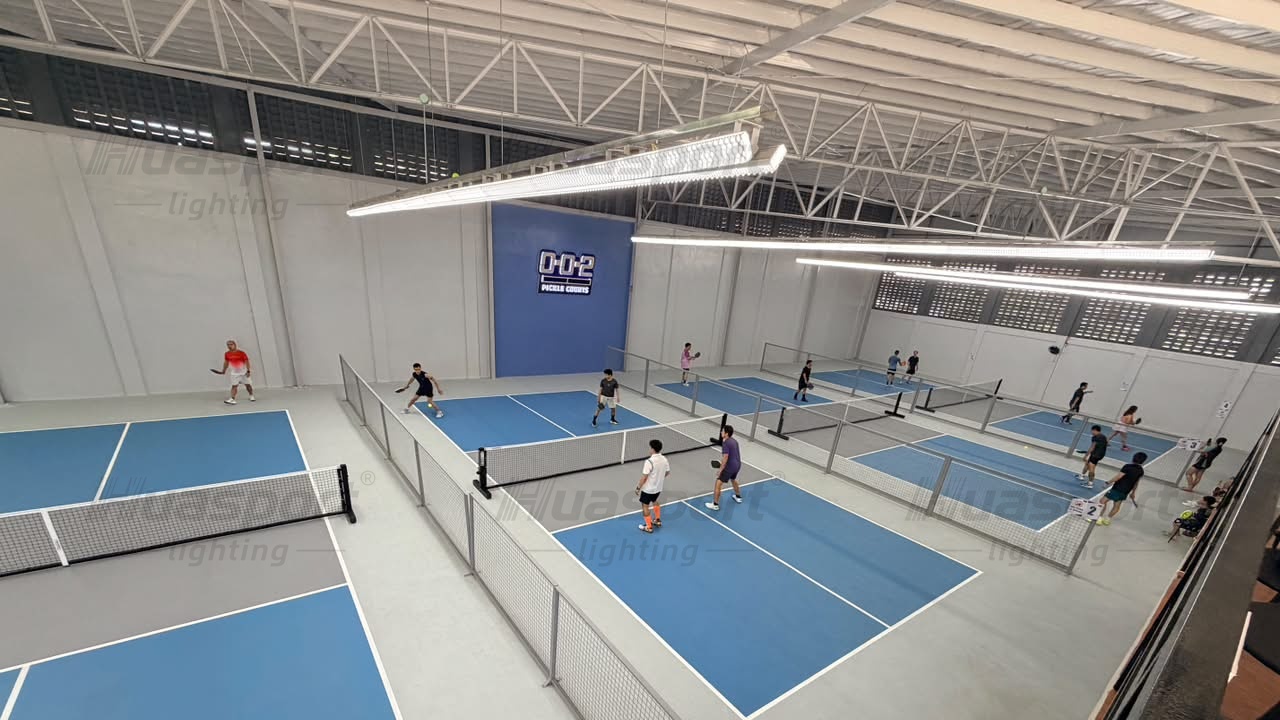
A court plan can look ready for lighting until someone adds the roof beams. One row passes under a truss; the other approaches a wall. The number of fixtures still looks right, but the installation drawing needs another look.
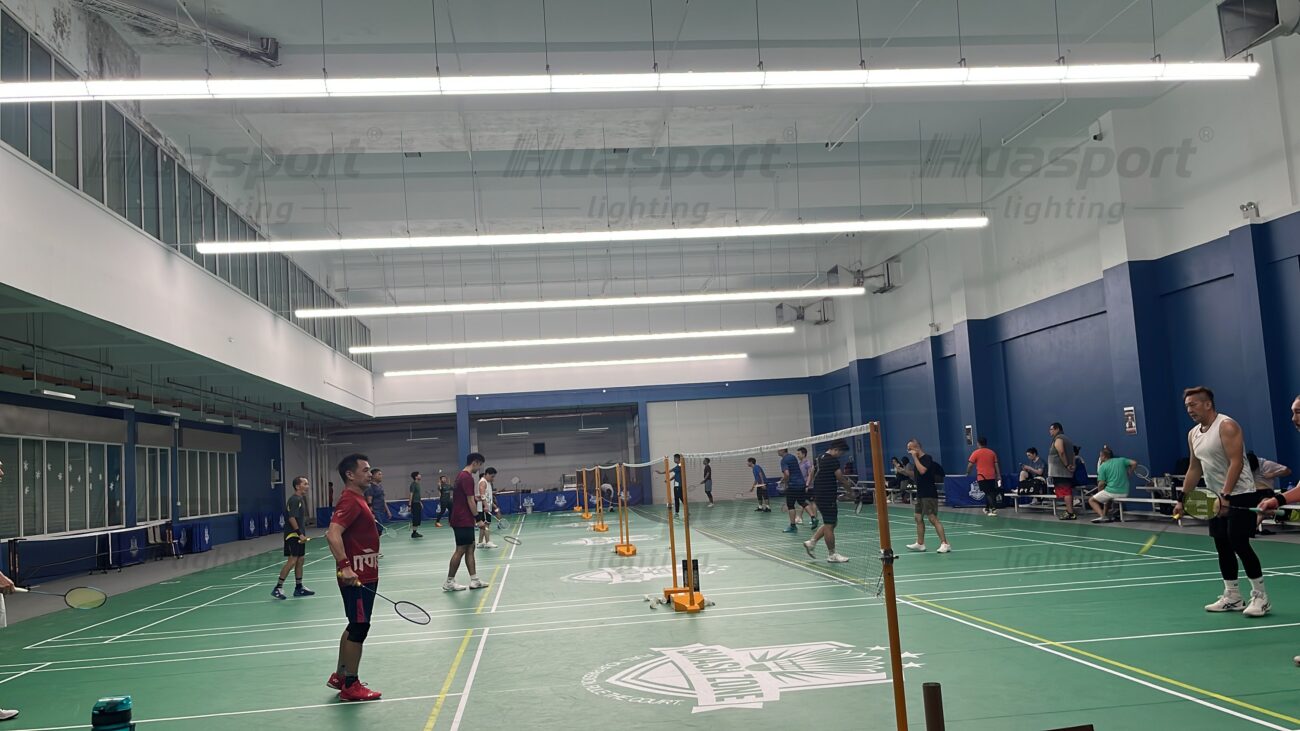
For an indoor pickleball venue in the Philippines, it helps to put the court markings, fences and ceiling structure on the same drawing before ordering. Huasport’s S90 42W continuous-row option has a defined length: twelve 1.16 m fixtures make a 13.92 m row on each side. Where those rows start, finish and hang determines whether the proposal fits the building.
A 13.92 m Row Is Only One Dimension
USA Pickleball’s court construction guidance gives the marked court as 20 by 44 feet, approximately 6.10 by 13.41 m. The space players use extends beyond those lines. Your lighting drawing needs the run-off areas, fences and routes between courts as well as the playing rectangle.
The Huasport planning reference rounds the playing length to 13.4 m. Twelve fixtures joined end to end give 12 x 1.16 m = 13.92 m. That makes the row slightly longer than the marked court. It does not establish how evenly the light reaches the space behind the baseline or beyond the sidelines.
Mark the start and finish of each row against the court lines. Then add its distance from the sideline and the fence. If one end has to move because a beam obstructs the suspension point, review the whole row position before approving the change. Even a neatly aligned row can sit in the wrong place relative to the court below.
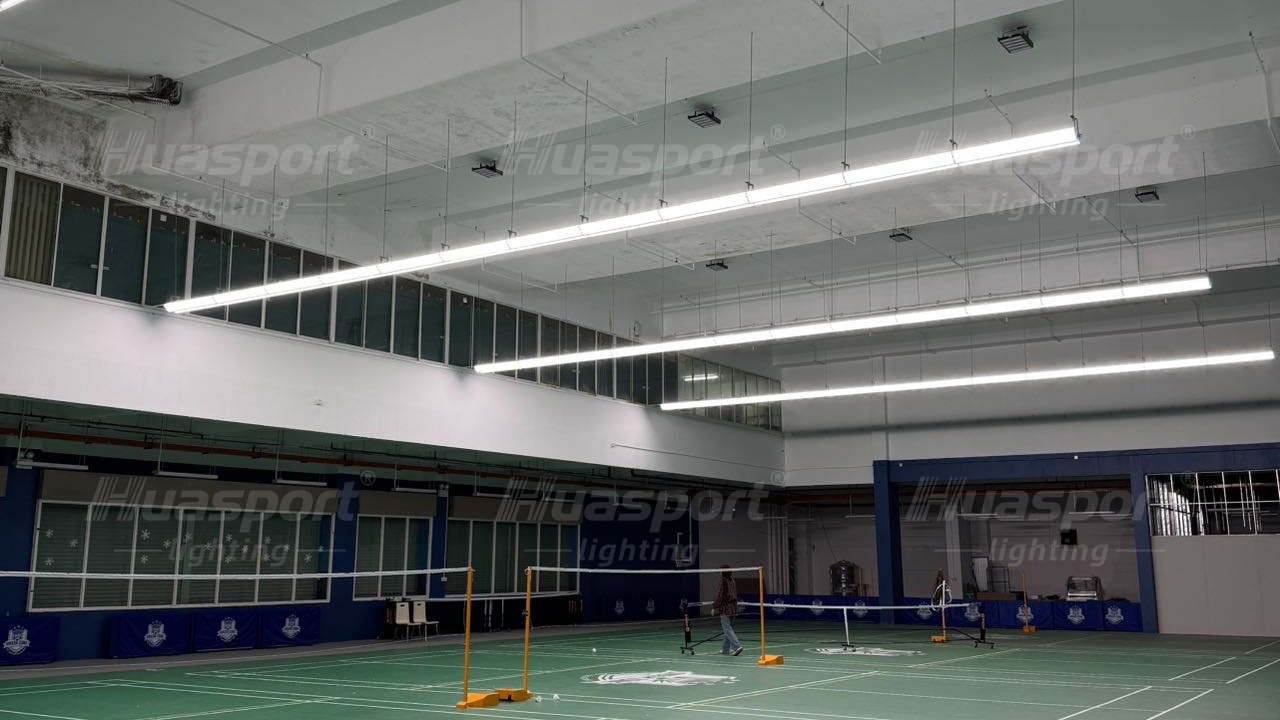
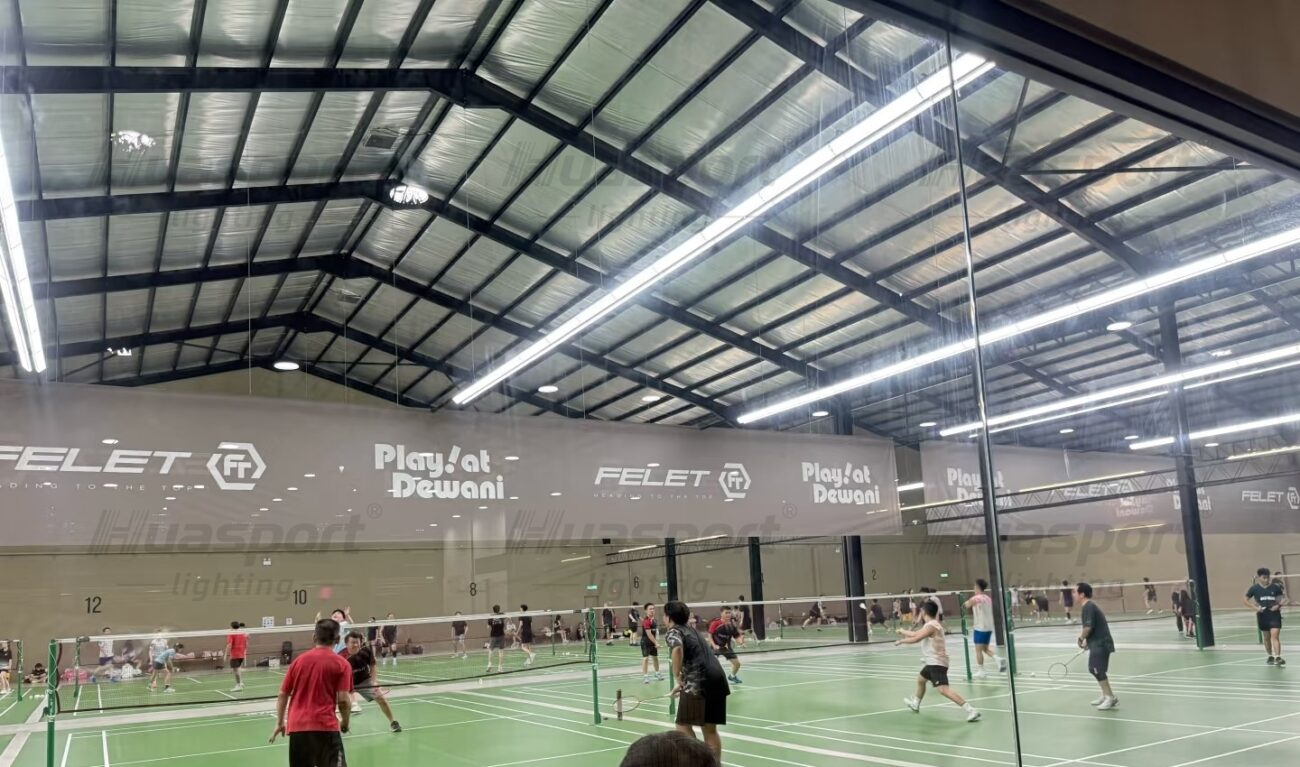
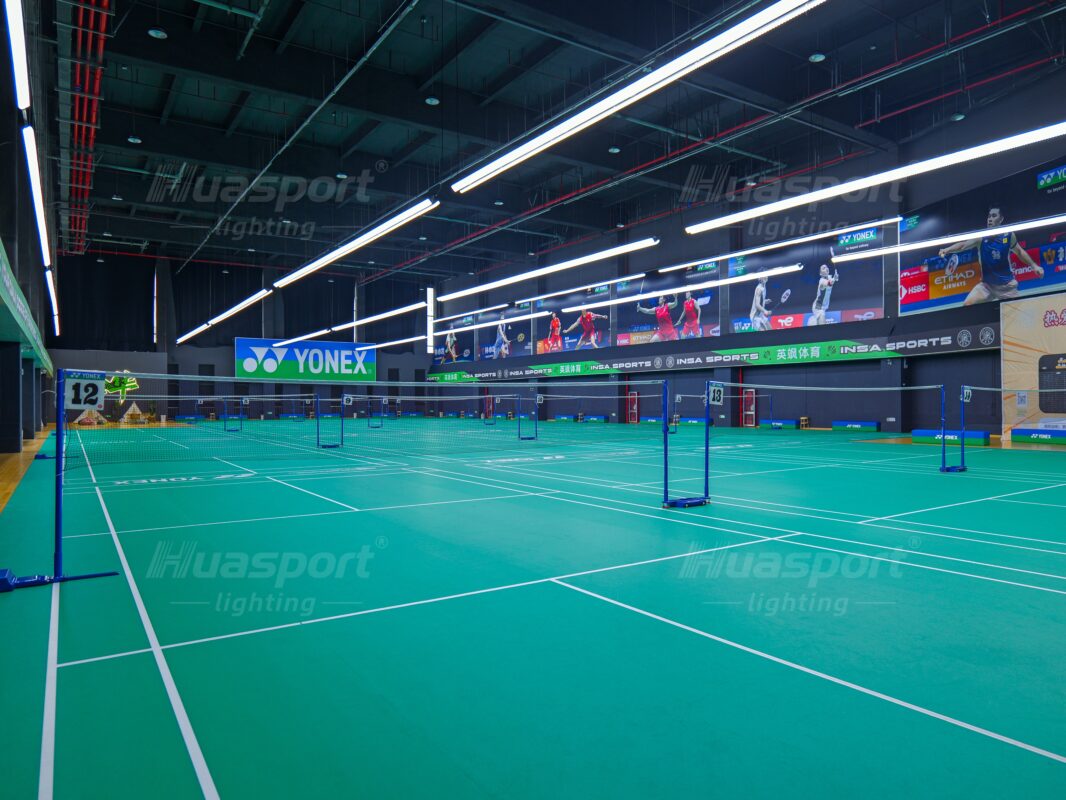
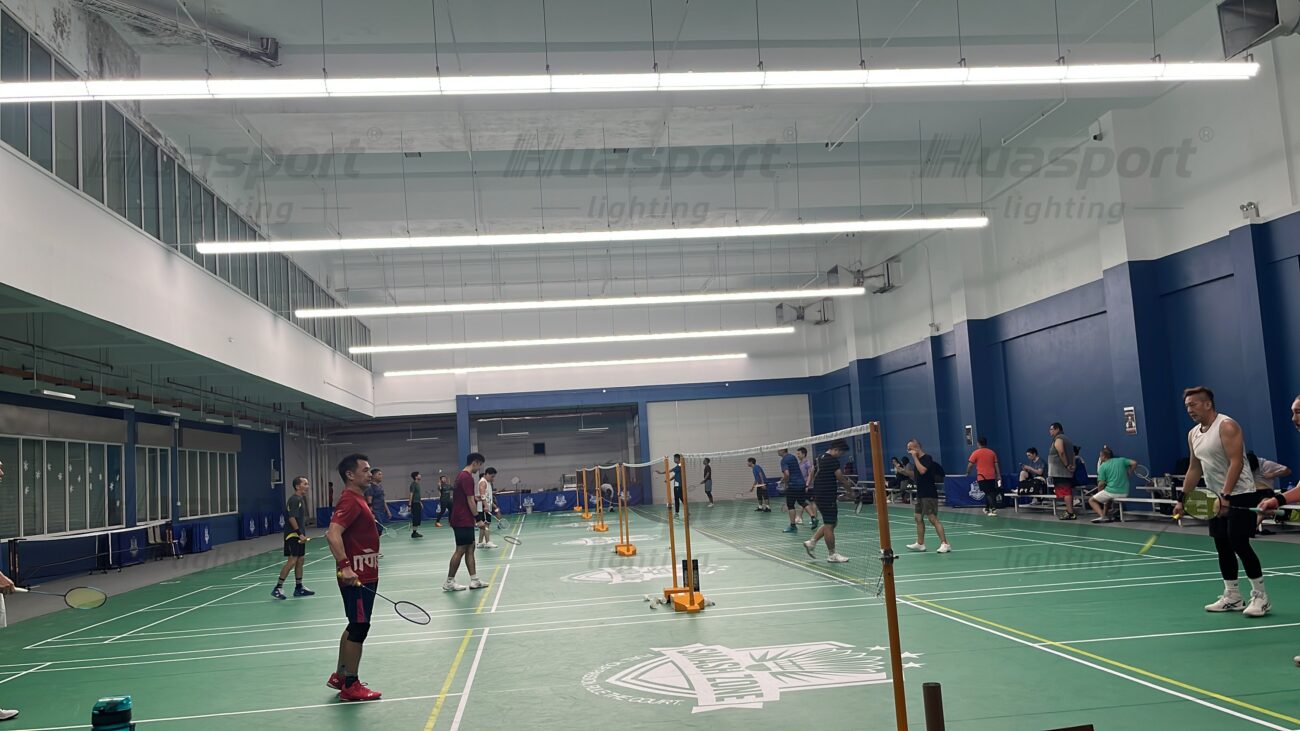
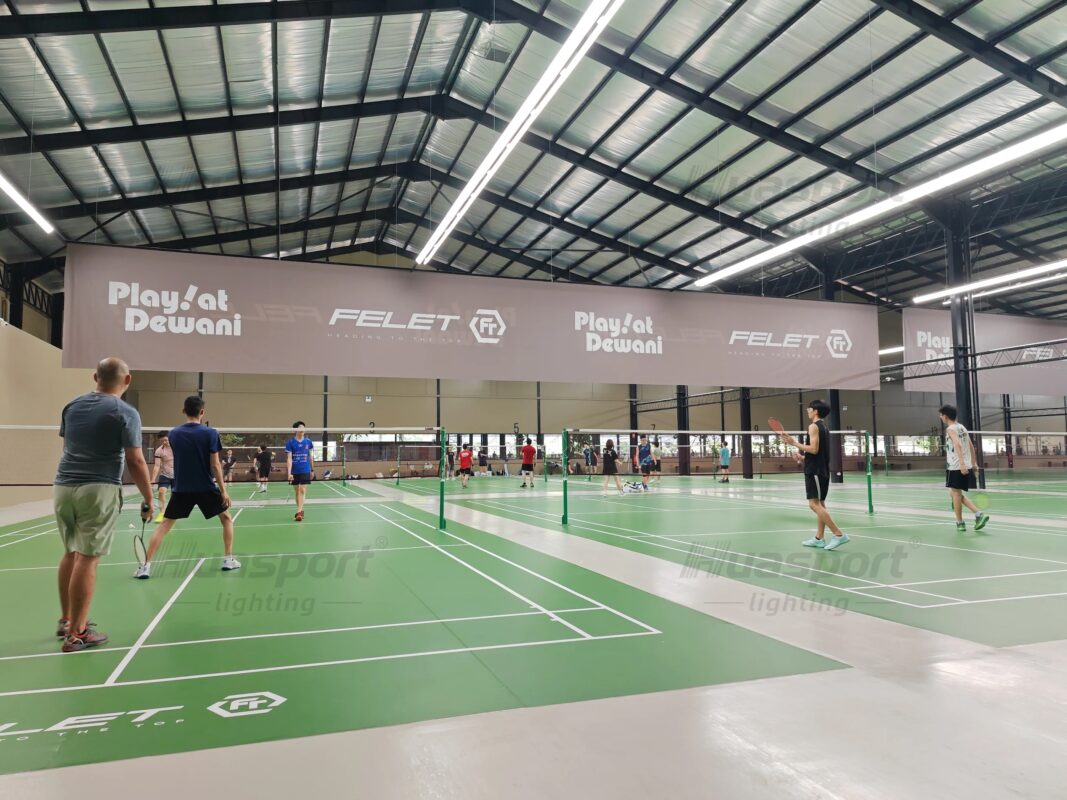
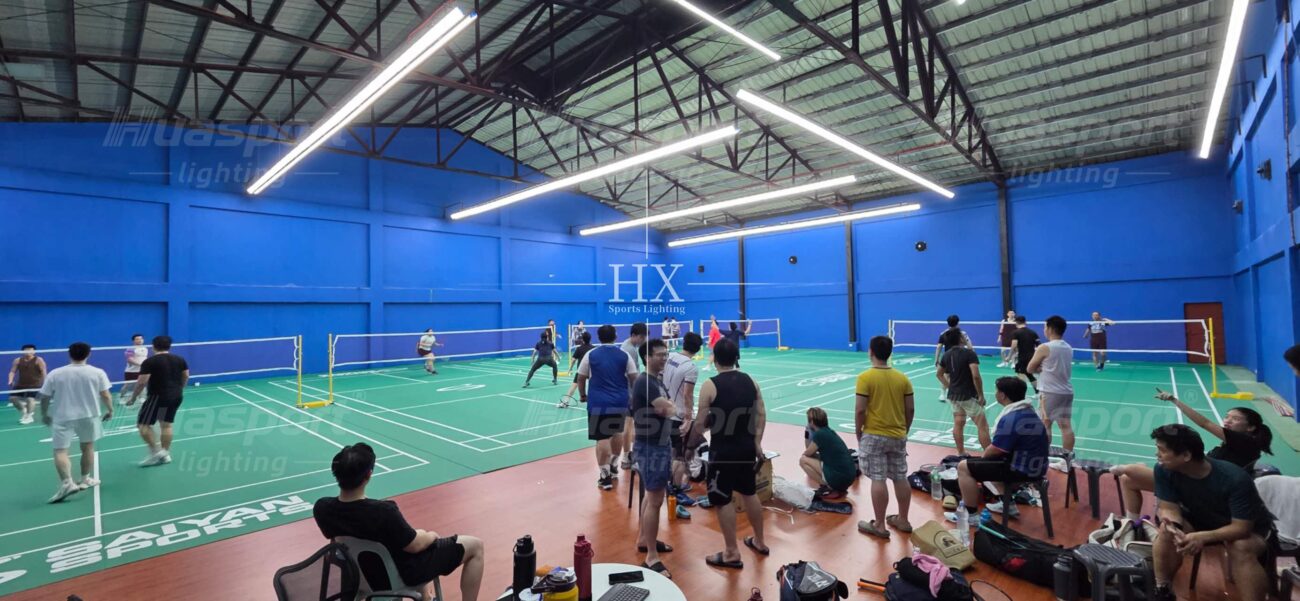
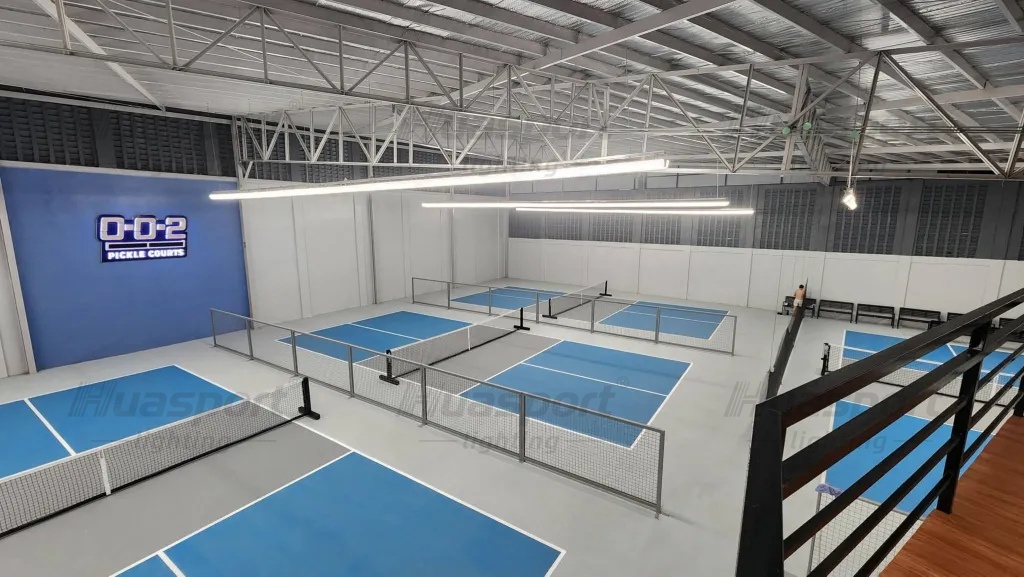
In the Philippines venue shown here, the blue playing areas sit inside a larger grey floor area, with fences separating courts. Those boundaries are useful reference points when marking up a photo for a lighting enquiry. The photos show the venue arrangement; the specifications below describe a proposed S90 layout, not verified measurements of this installation.
The S90 Option to Put on the Drawing
| Item | Planning reference |
|---|---|
| Fixture model | WM-S90-1160-DD-42W-108Z |
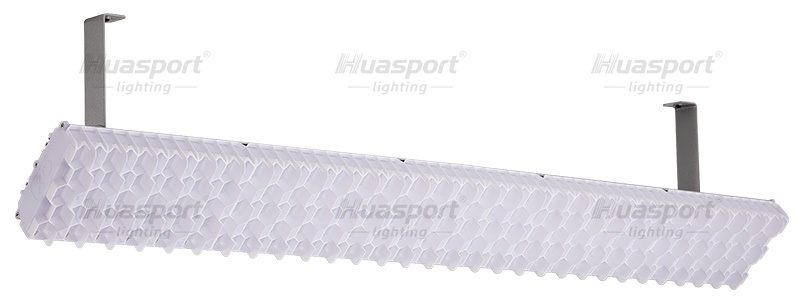
| Fixture body | S90, 1.16 m long, 13 cm wide |
| Power per fixture | 42W |
| Quantity per court | 24 fixtures, with 12 fixtures on each long side |
| Arrangement | Two continuous rows, 13.92 m per row |
| Mounting height | 5 m above the finished court floor |
| Aiming | 30-degree inward aiming |
| Illuminance reference | 300-400 lux+ for recreational and commercial training use |
This is a starting layout for review against the actual building. The illuminance figures are planning references, not measured results from these photographs. Competition use requires a separate review of the 500 lux+ target and the event’s requirements.
The Huasport pickleball court lighting guide covers the wider selection process. For this particular option, ask for the proposed row positions to accompany the fixture quotation. A quantity alone leaves the most useful installation information missing.
Measure From the Floor to the Fixture
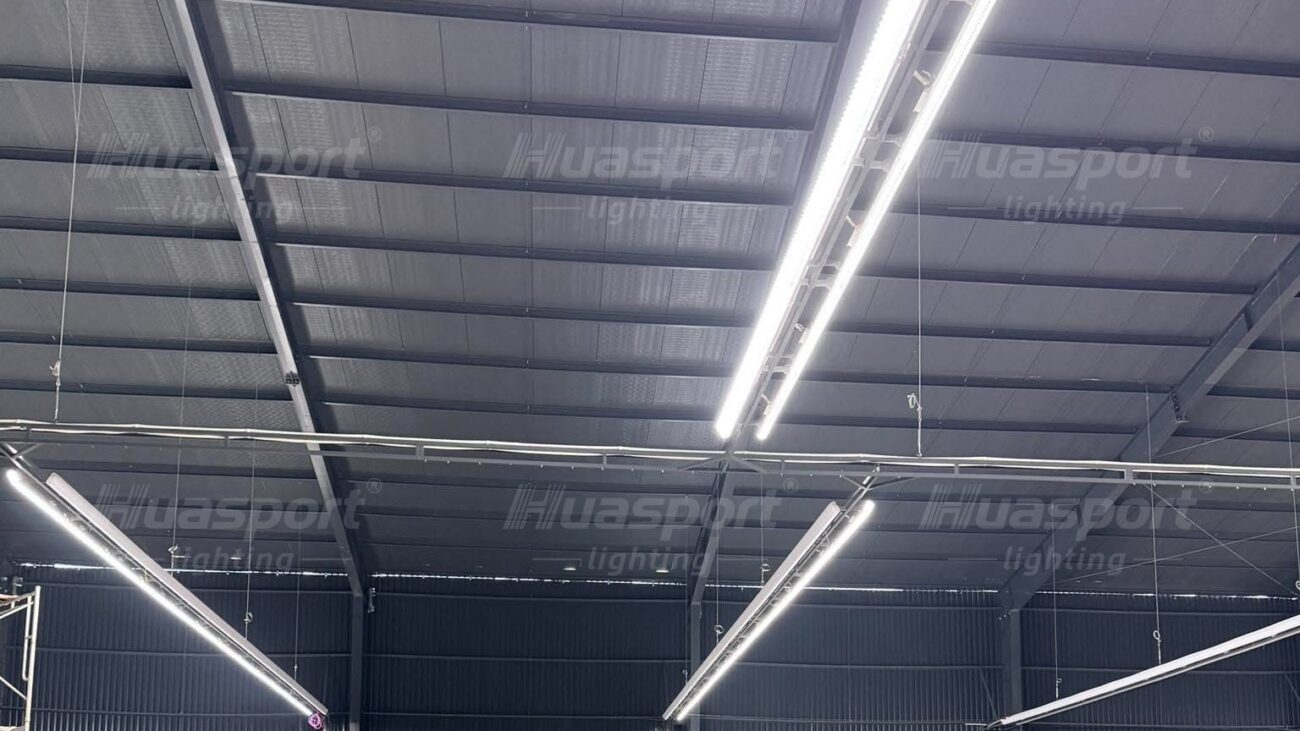
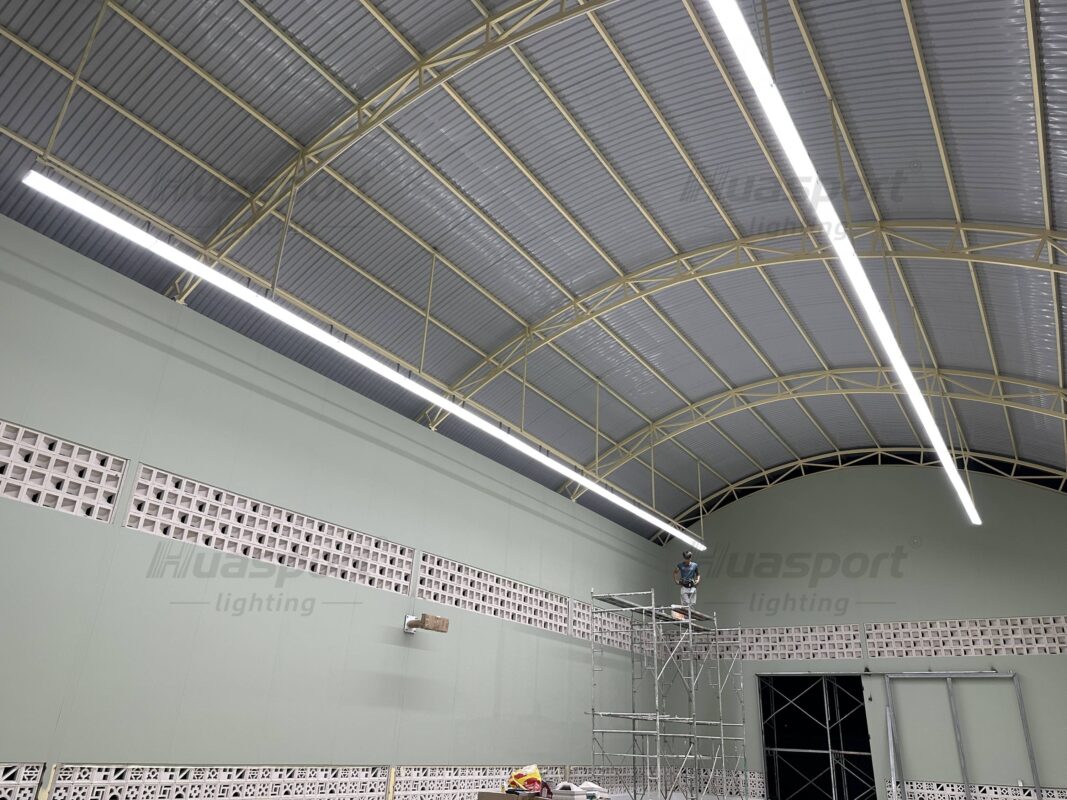
A roof-height measurement does not tell the installer where the light will sit. In a pitched building, the ridge and the lower roof structure are at different heights. A beam crossing the proposed row may be lower again.
Record the available height along both proposed rows, including the lowest obstruction. Show the intended fixture level separately. If a contractor says the ceiling is high enough, ask which point they measured and where the suspension will attach.
The lighting calculation needs the proposed fixture height and aiming angle. If the final suspension height changes, have the layout reviewed before the installation is completed. Raising or lowering the rows changes their relationship to the court and the players’ view.
That is especially useful when converting an existing hall. An old fixing point may be convenient, but it still needs to suit the new row position. Confirm the attachment arrangement and the supporting structure with the installer.
Keep the Row Position and Bracket Angle Together
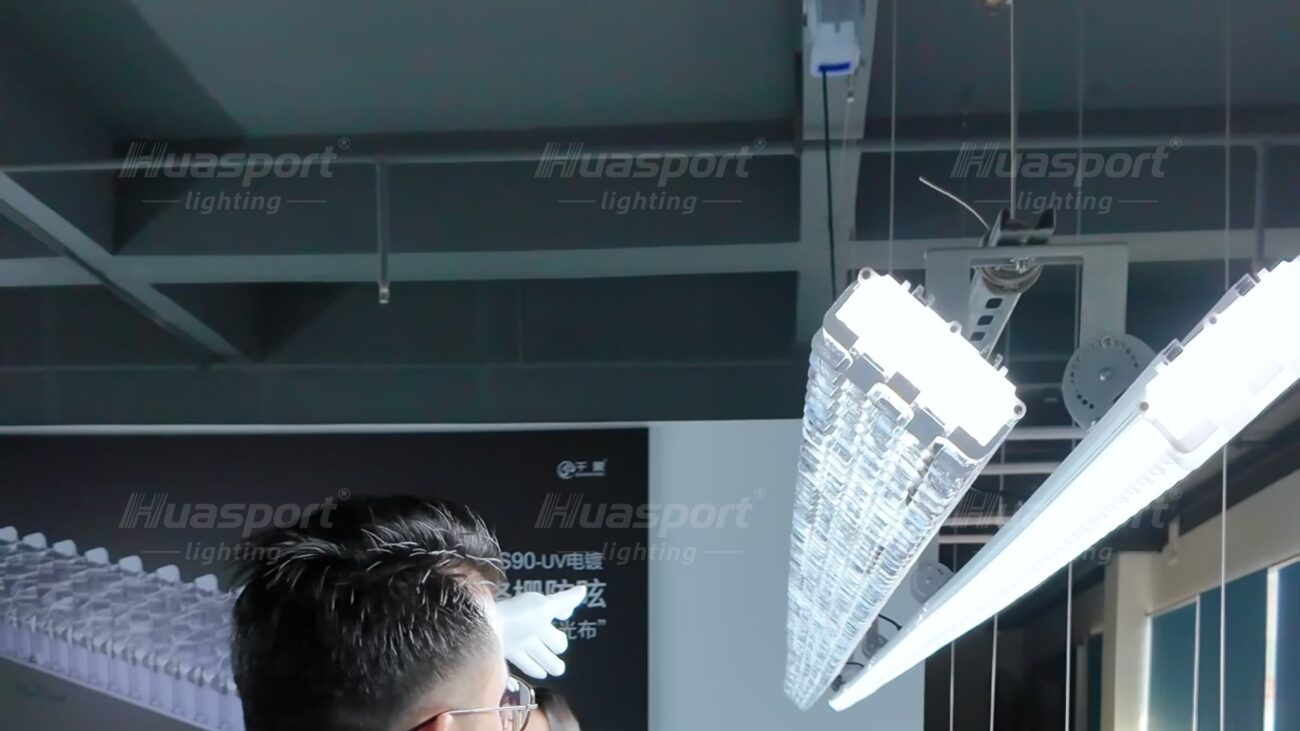
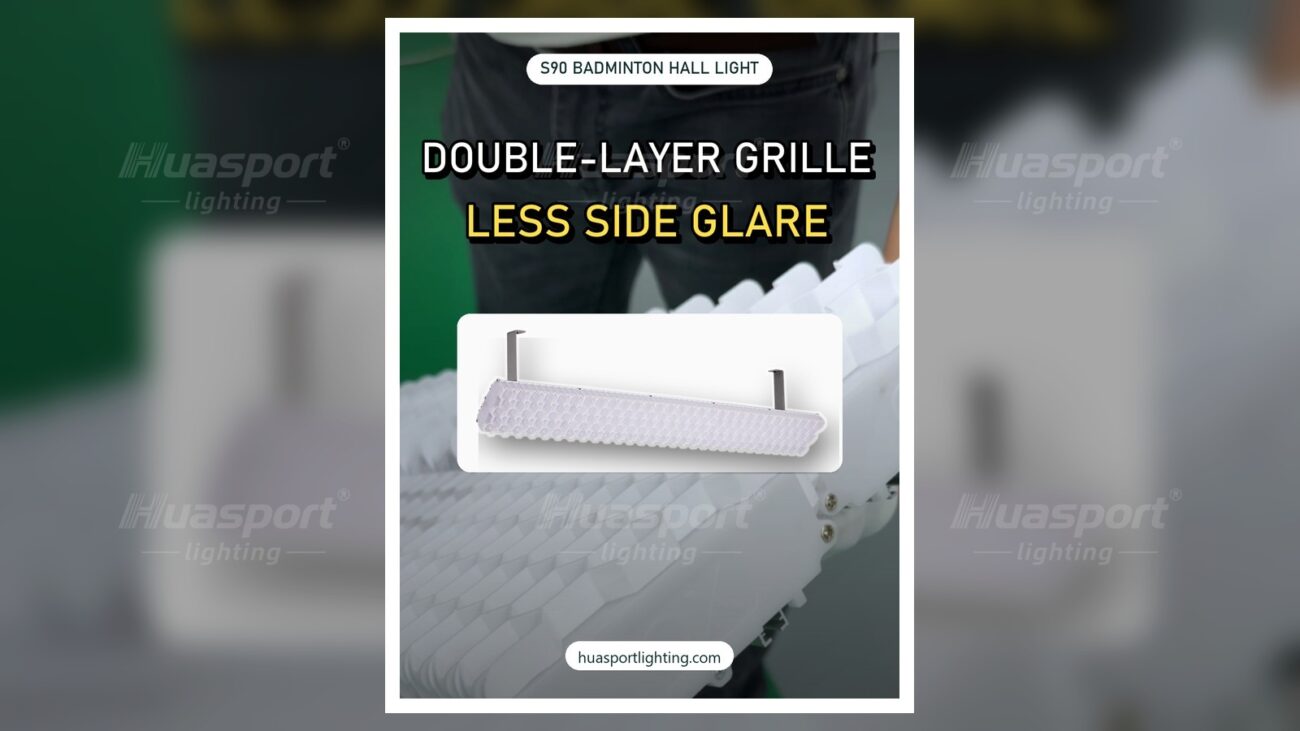
The S90 uses a double-layer honeycomb grille designed to reduce side glare. Its effect in a hall depends on where the fixture sits and how it is aimed. Moving a row to clear a beam changes the view of that row from the court; the grille does not remove the need to review that change.
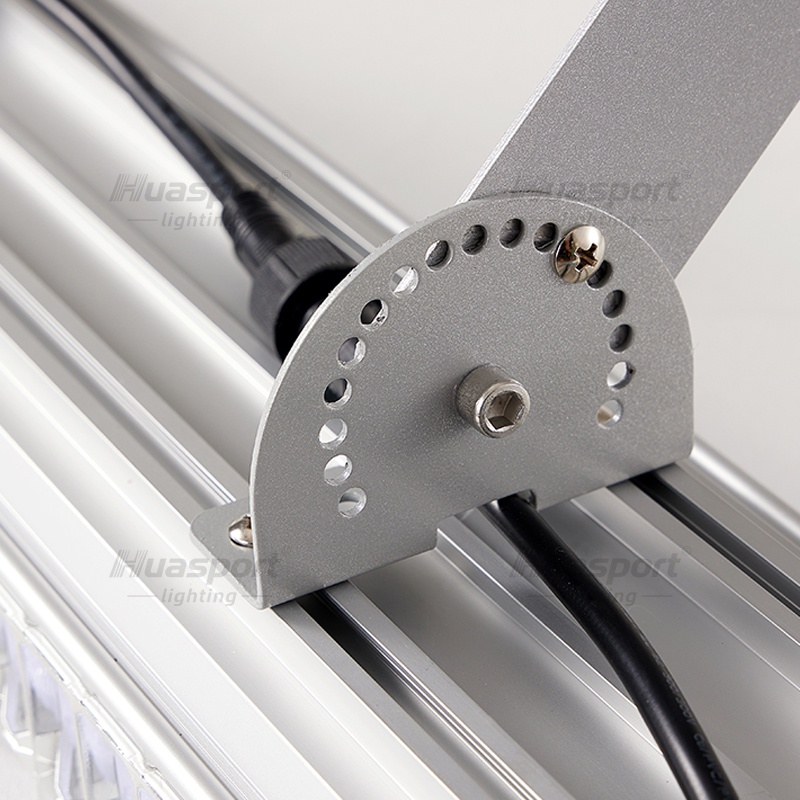
The adjustable bracket fixes to the aluminum profile. The profile supports the fixture structure and heat dissipation, while the bracket sets its direction. During installation, check the completed row for a consistent inward angle, including the fixtures at both ends.
From the baseline, follow a high ball toward the opposite end. Move forward toward the kitchen line and look across the court again. These positions give the installer a more useful view of an exposed bright row than a photograph taken from above the courts. Discuss any uncomfortable view alongside the row position and aiming on the drawing.
Adjacent Courts Need Their Own Row Positions
In a multi-court hall, a fence line can make one shared lighting row look like an easy way to reduce the fixture count. The 24-fixture reference here describes two rows for one court; it does not establish a shared-row design for two courts. Sharing a row can change the direction and distribution of light and needs a separate calculation.
Keep each court’s proposed rows identifiable on the plan, especially where courts sit close together. Include walkways and waiting areas so their lighting can be considered as part of the venue.
For a venue with other sports, use the corresponding badminton court lighting guide or Padel court lighting guide for those areas. Each needs a layout matched to its court use and surroundings.
Send the Roof Plan With the Court Plan
A useful enquiry includes a dimensioned floor plan, the height available along the proposed rows and a photo showing the roof structure. If you only have photos, mark the baselines, fence positions and any beams that may obstruct the rows. Include the number of courts and whether they will serve casual play, coaching or competitions.
Send your Philippines pickleball venue plan to Huasport for a review of the S90 row arrangement and a project quotation. Settling those positions before ordering gives the installer a clear layout to work from.