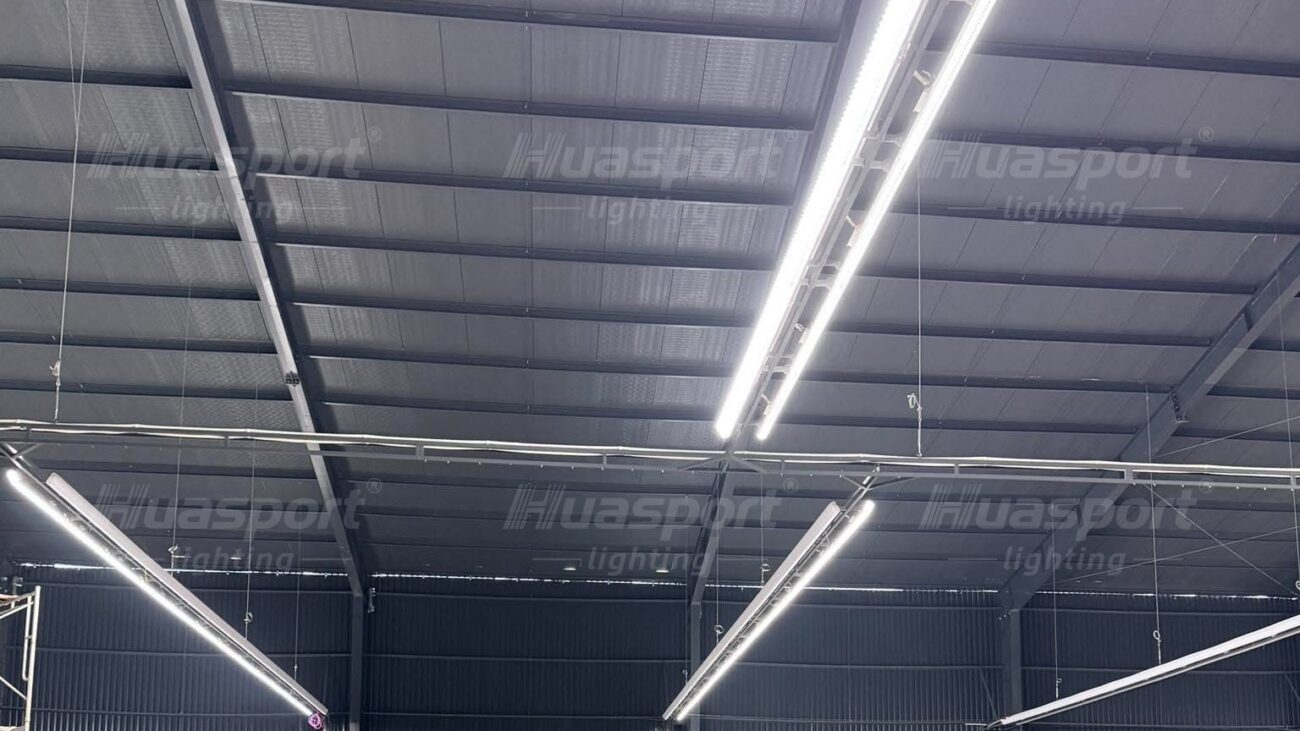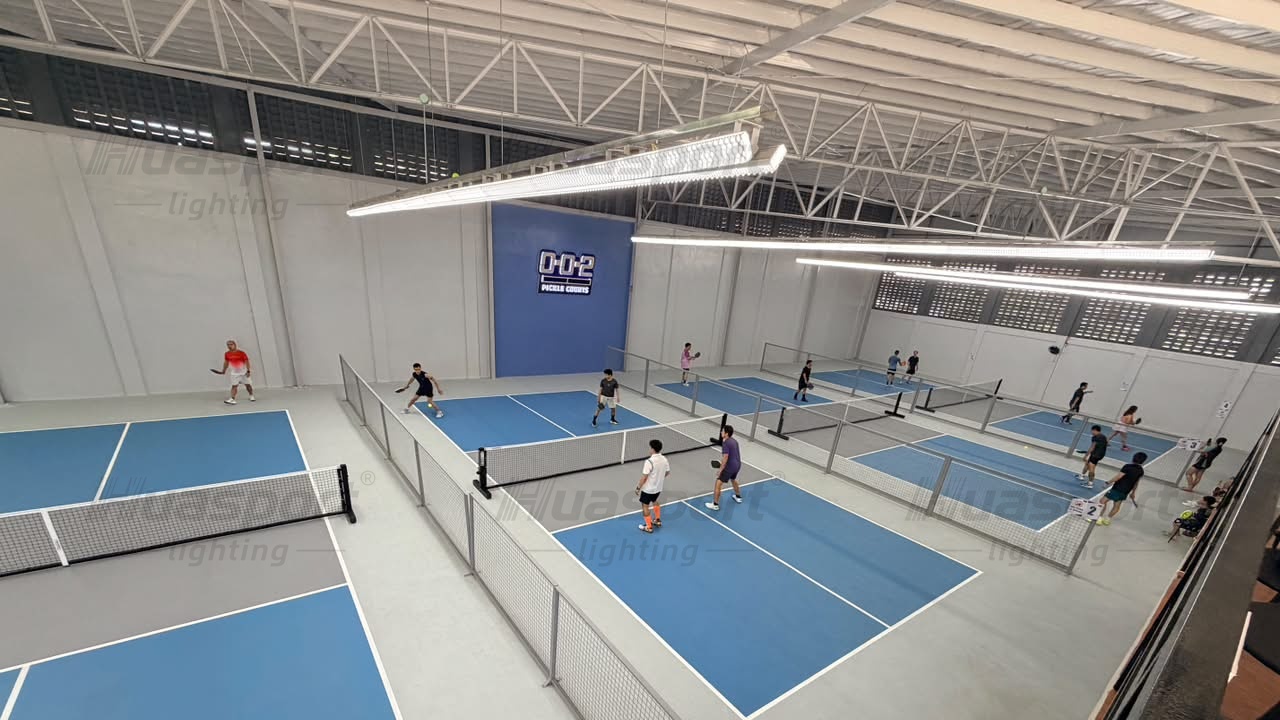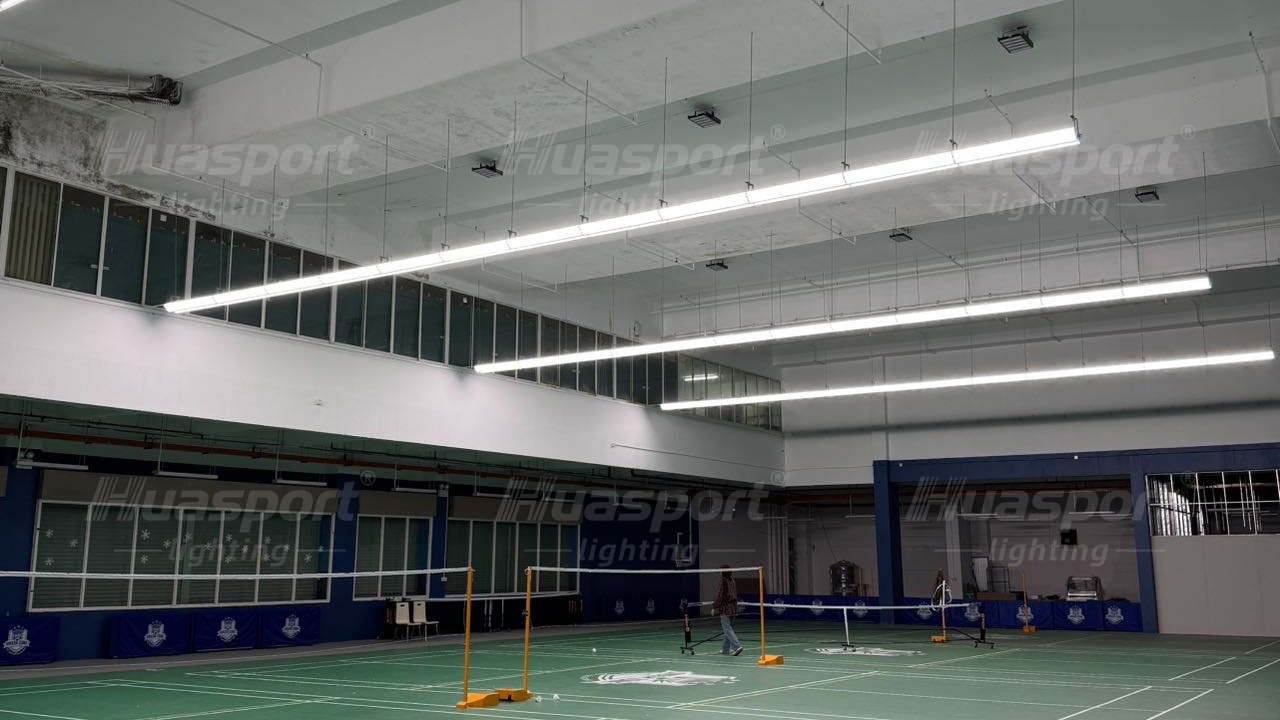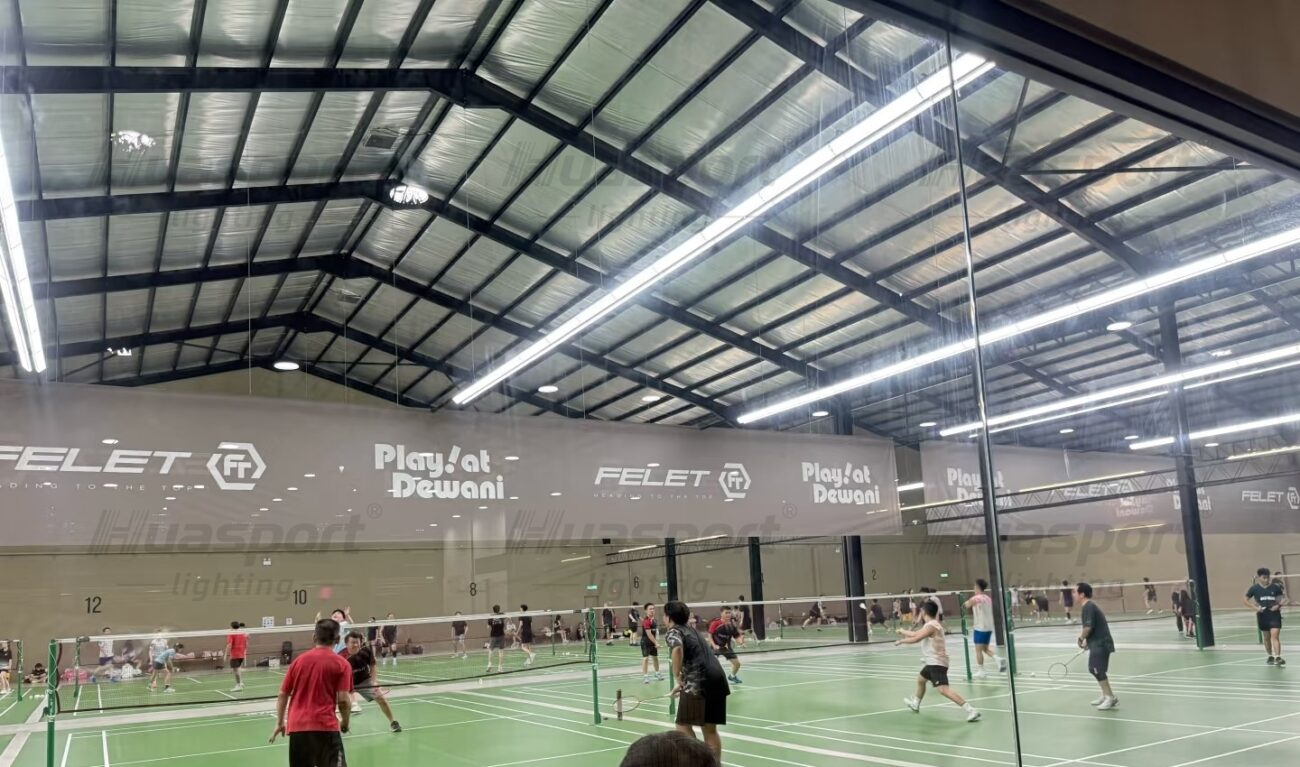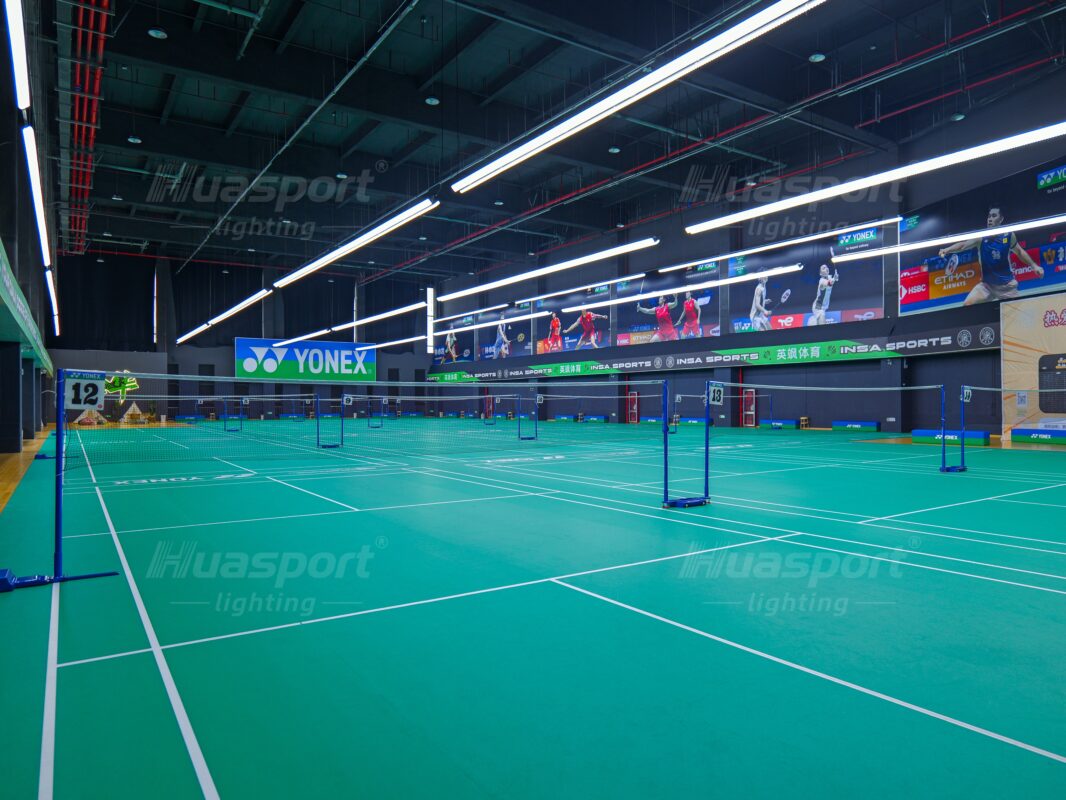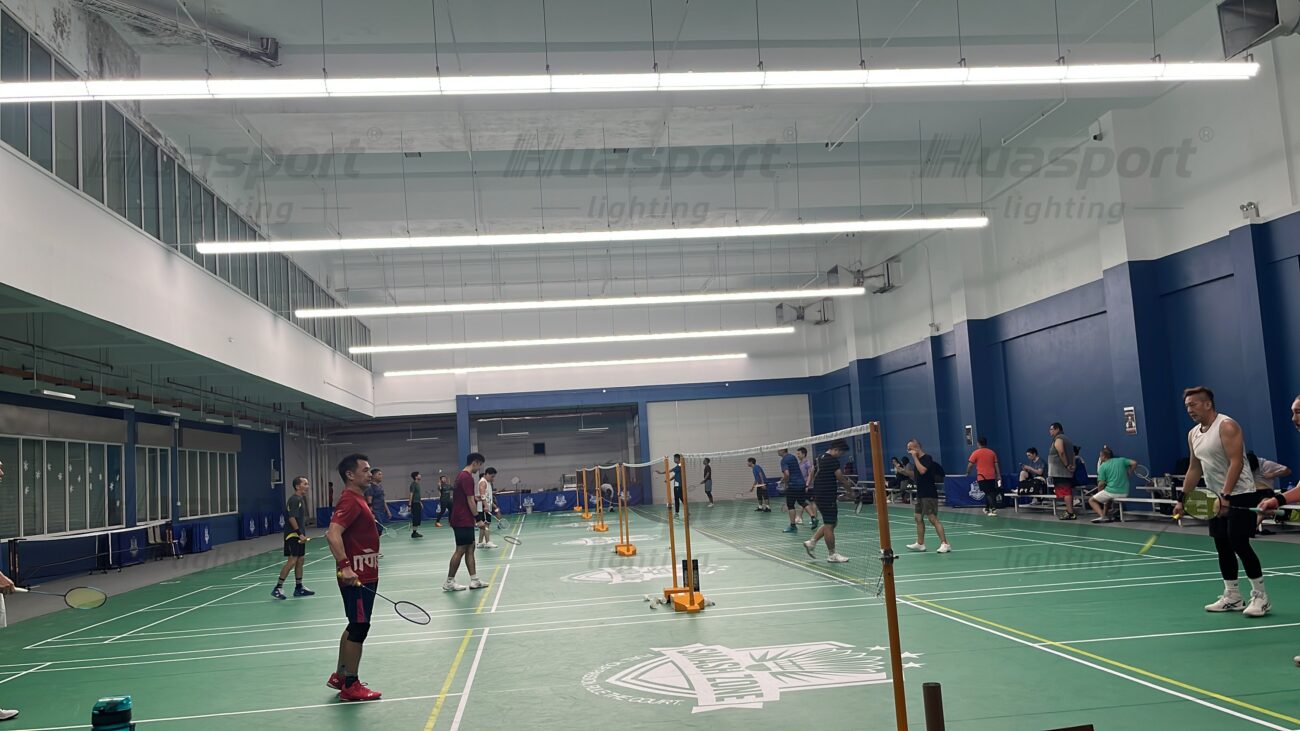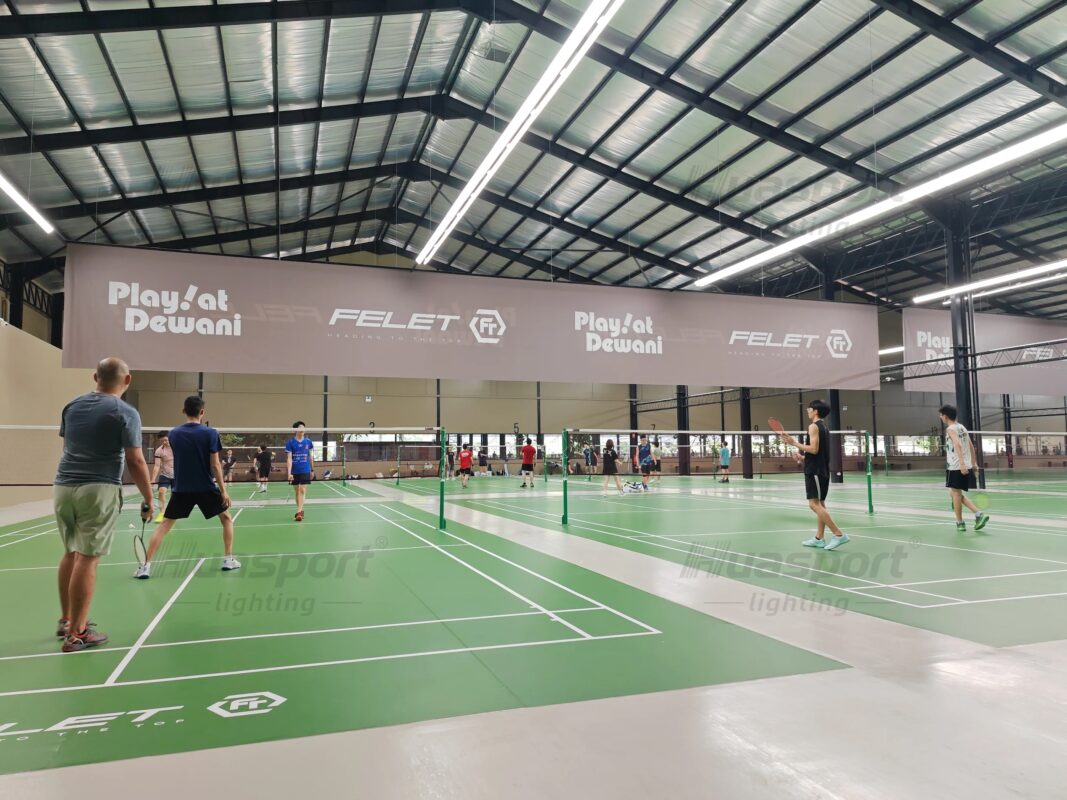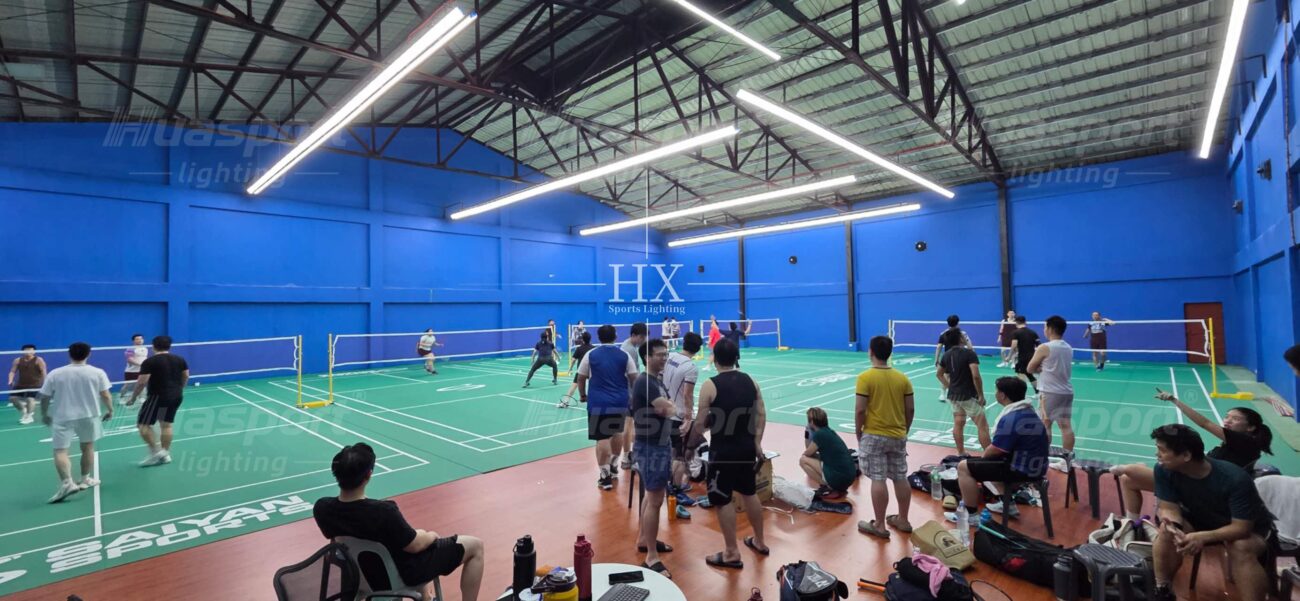
 Badminton/Pickleball court lights
 Pickleball court lights
 Padel Court Lights
 Basketball court lights
 Tennis court lights
 Football field lights
T-Shaped Badminton Hall Lighting: S90 Checks for Uneven Rows and Player-View Glare

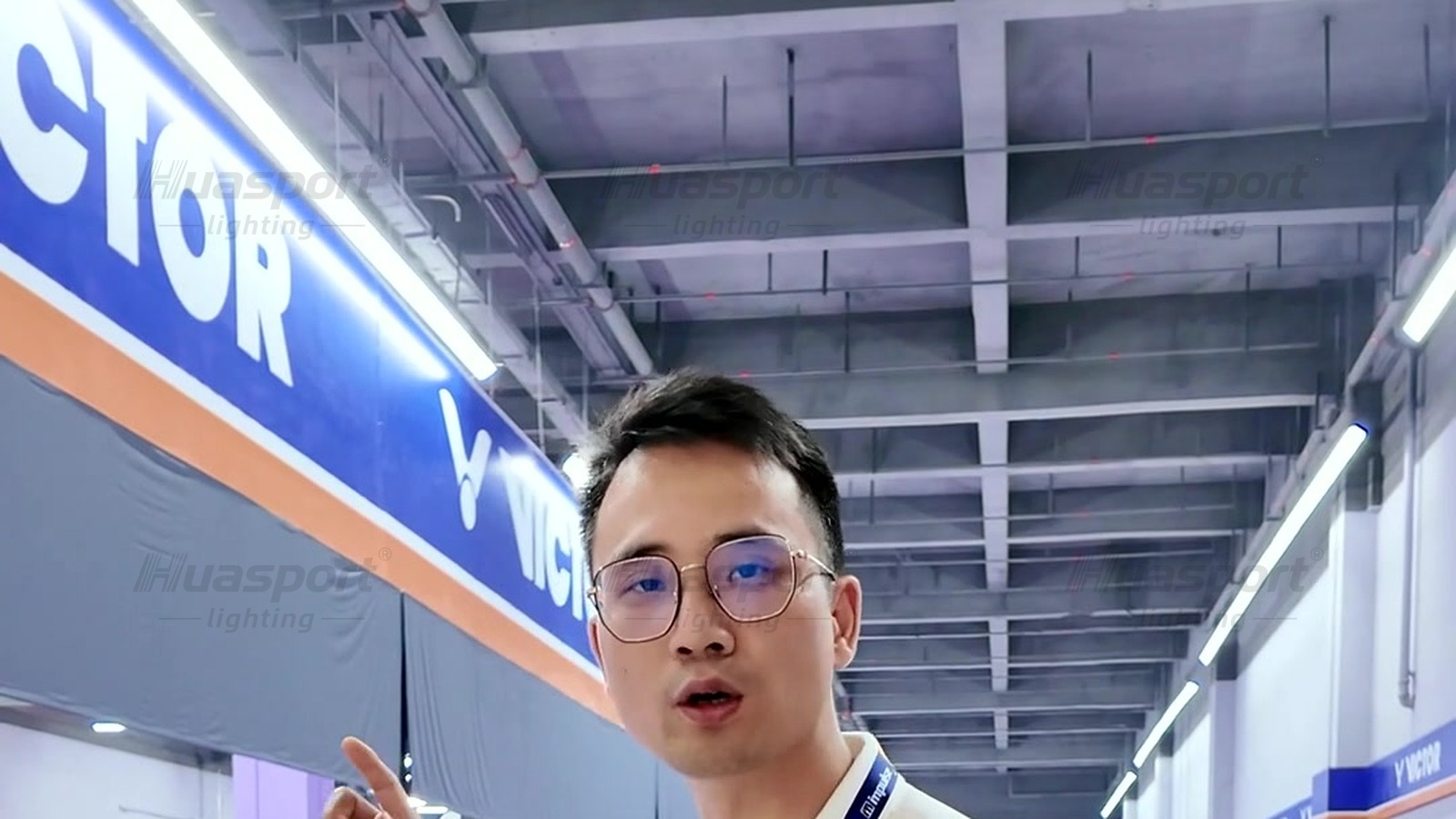
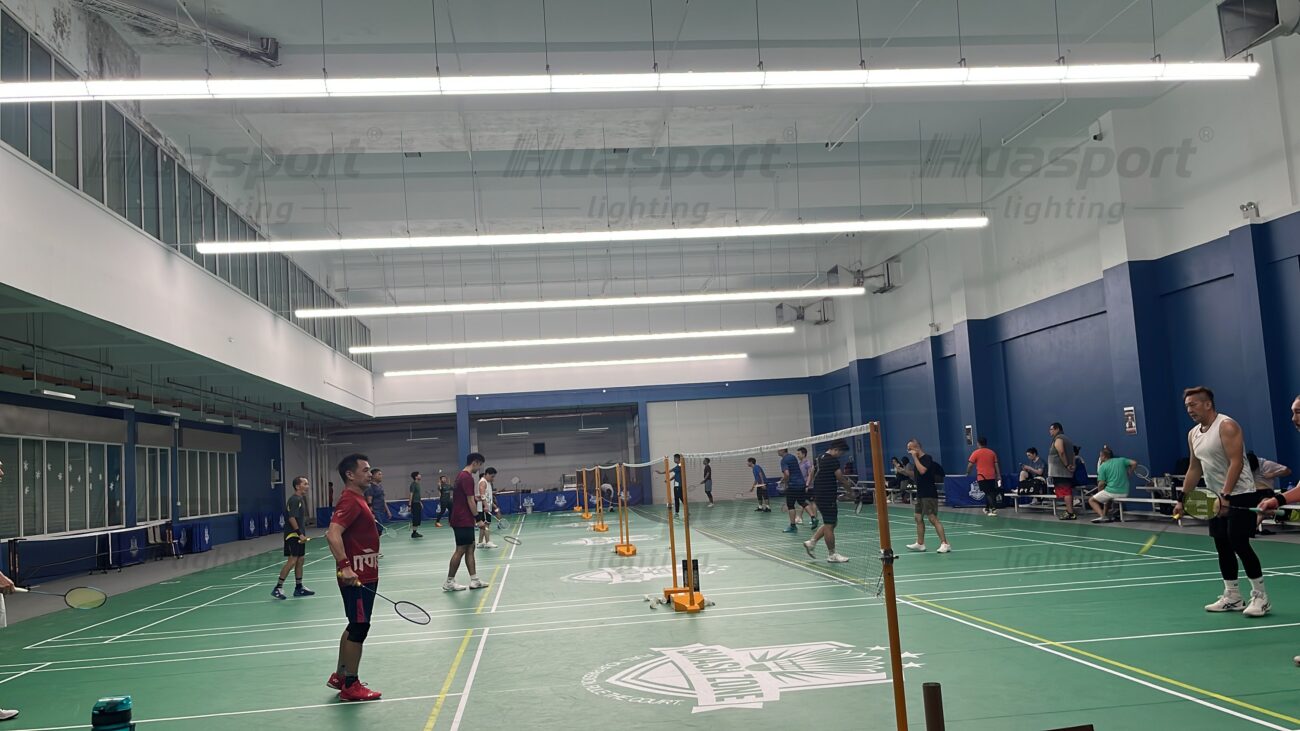
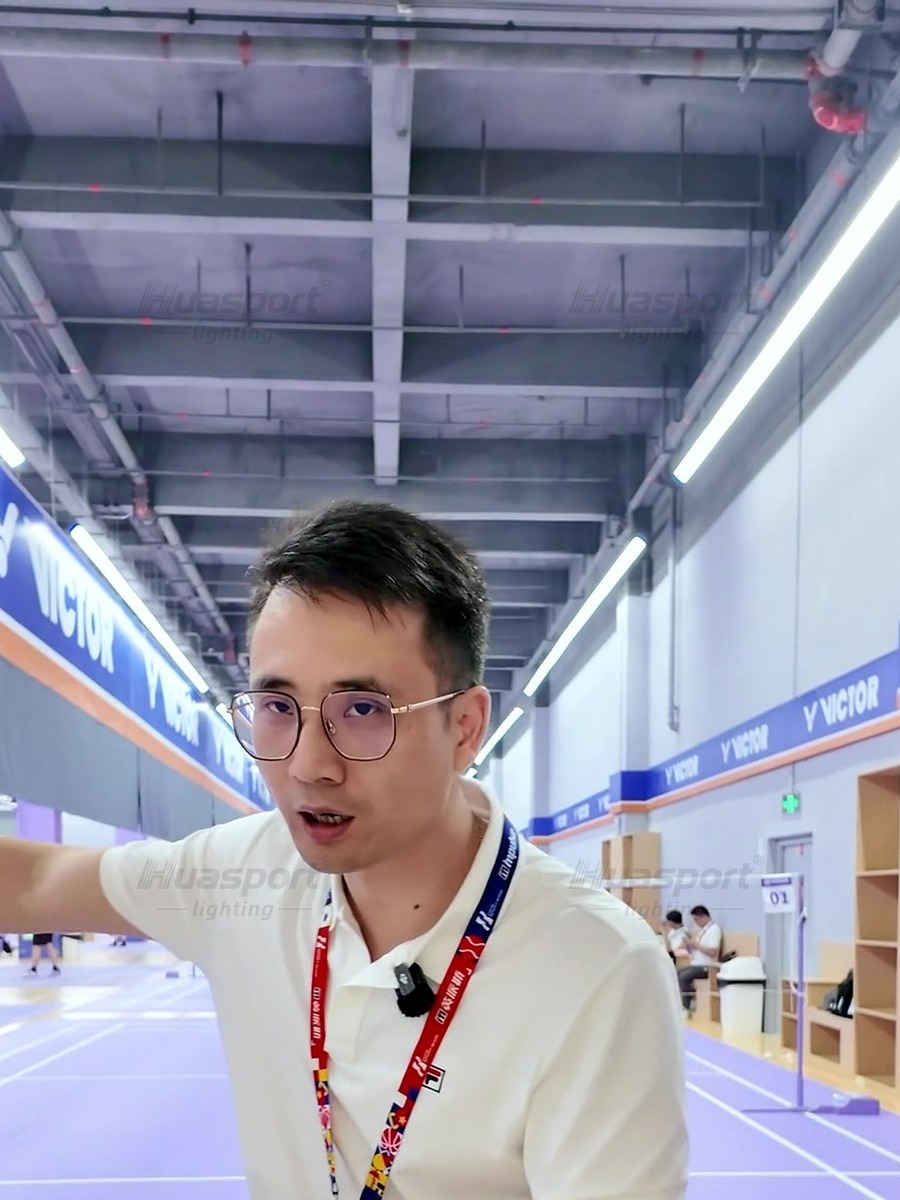
A T-shaped badminton hall can fool you at first glance. Stand near the entrance and the building may look bright enough. Step into the playing area, though, and the problem becomes more specific: one row of courts feels brighter than the other, and the lights from the courts across the hall can sit right inside a player’s upward view.
That is the point of today’s S90 video. The hall is not a simple straight-row layout, so the lighting plan cannot be judged like a single clean line of courts. The useful question is tighter: where does extra light spill from one court into another, and where does the opposite row send glare toward the player?
Quick Planning Answer
For a T-shaped indoor badminton hall, one practical Huasport reference is the S90 1.16 m 42W fixture, model WM-S90-1160-DD-42W-108Z. A single court planning layout uses 24 fixtures, with 12 fixtures on each side, mounted around 5 m high and tilted 30-degree inward. Twelve 1.16 m fixtures form a 13.92 m continuous row, covering the 13.4 m main playing-area side.
That layout targets 300-400 lux+ for commercial training or recreational badminton. If the venue needs competition use, the project should be checked toward a 500 lux+ average illumination target before quotation.
This is a planning reference, not a claim that every video hall uses the exact same installed count. Before quoting, confirm court quantity, ceiling height, mounting structure, fixture model, target illuminance and the player’s viewing angle from the backcourt.
Why T-Shaped Halls Play Unevenly
In a straight multi-court hall, neighboring courts often sit in similar conditions. In a T-shaped hall, one side may have courts packed side by side while another row stands more exposed. The side-by-side row receives light from its own fixtures and a little spill from the next court. The exposed row does not receive the same spill.
That is how two courts with the same wattage can read differently. One side looks hot. The other side feels low. The mistake is to treat it as a wattage problem before checking the layout.
For badminton, the difference matters because players do not stare at the floor. They look up for clears, lifts, serves and smashes. A bright reading on one court does not help if the next court feels dull at the back line or harsh from the side.
The Second Problem Is Opposite-Court Glare
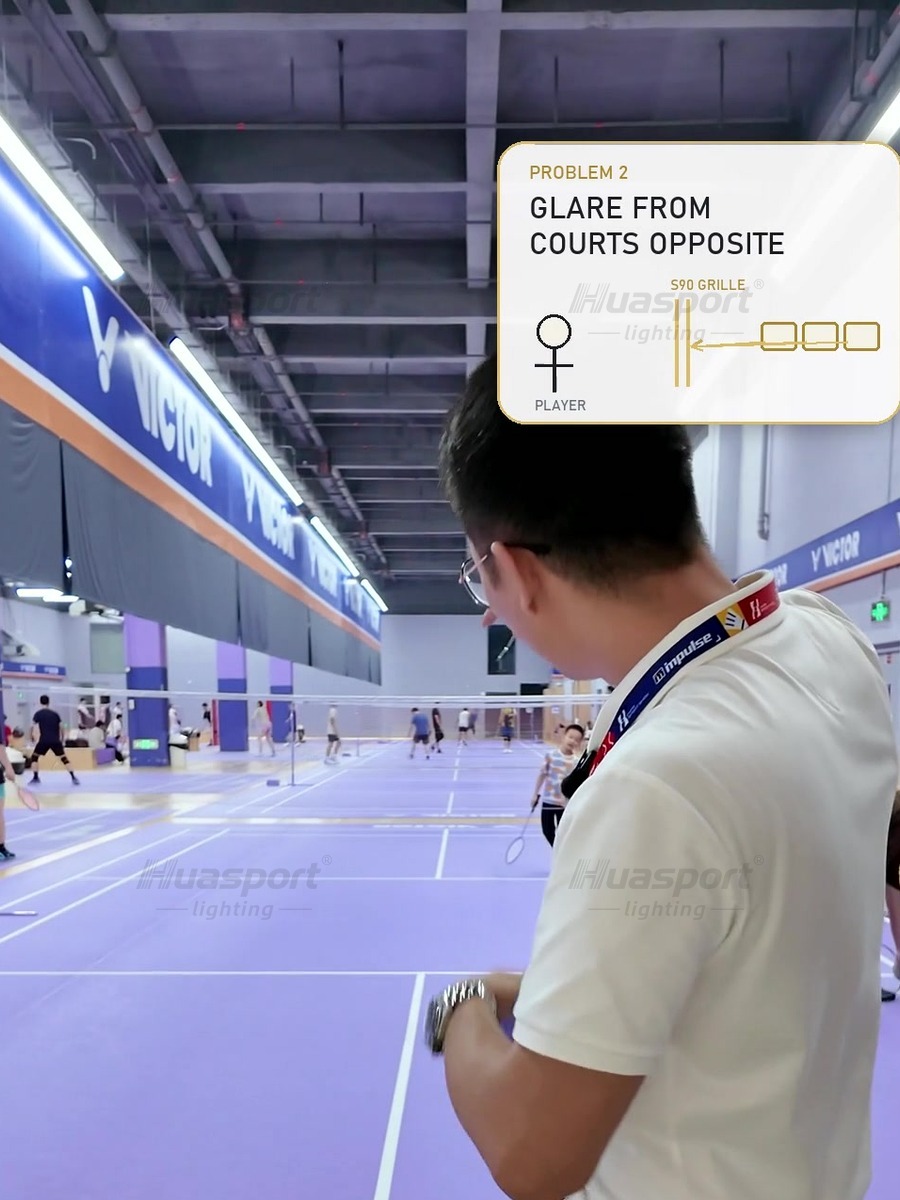
The video also shows the more annoying problem: a player standing on one row can look across the hall and see the opposite court fixtures entering the line of sight. That is not the same as poor brightness. It is a player-view glare issue.
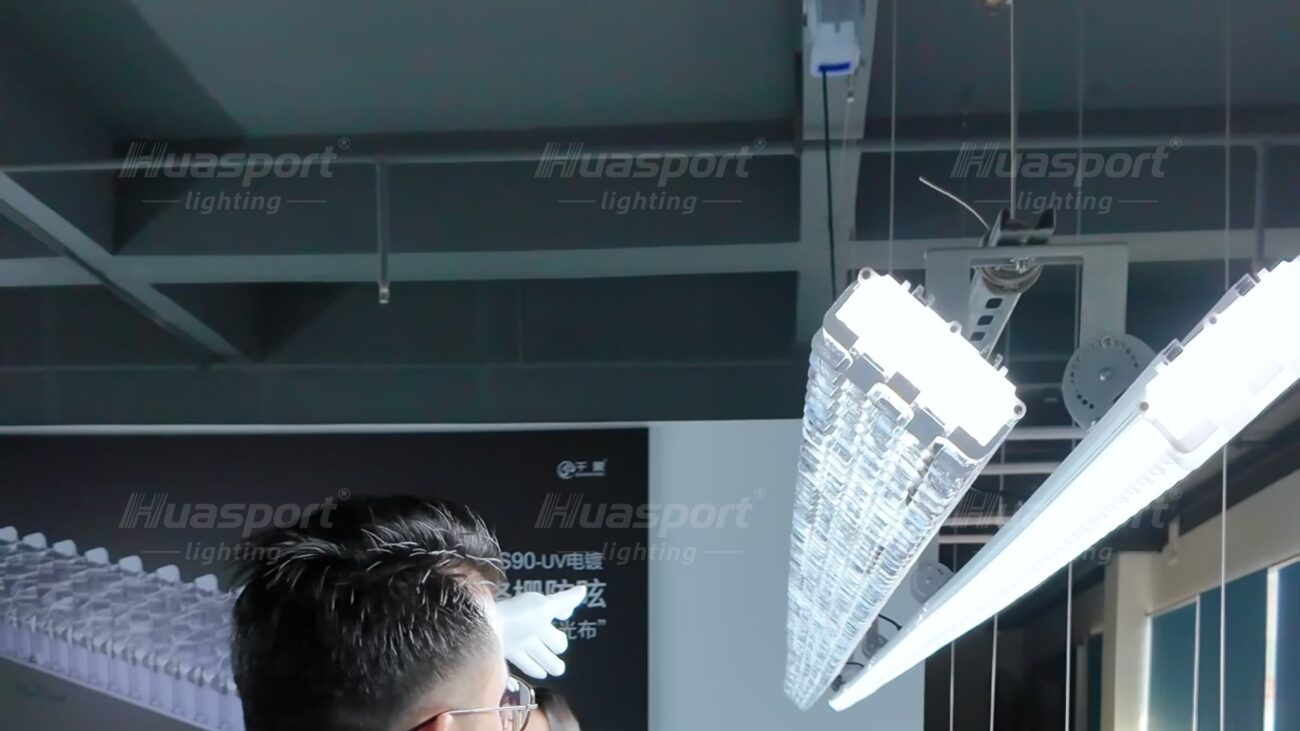
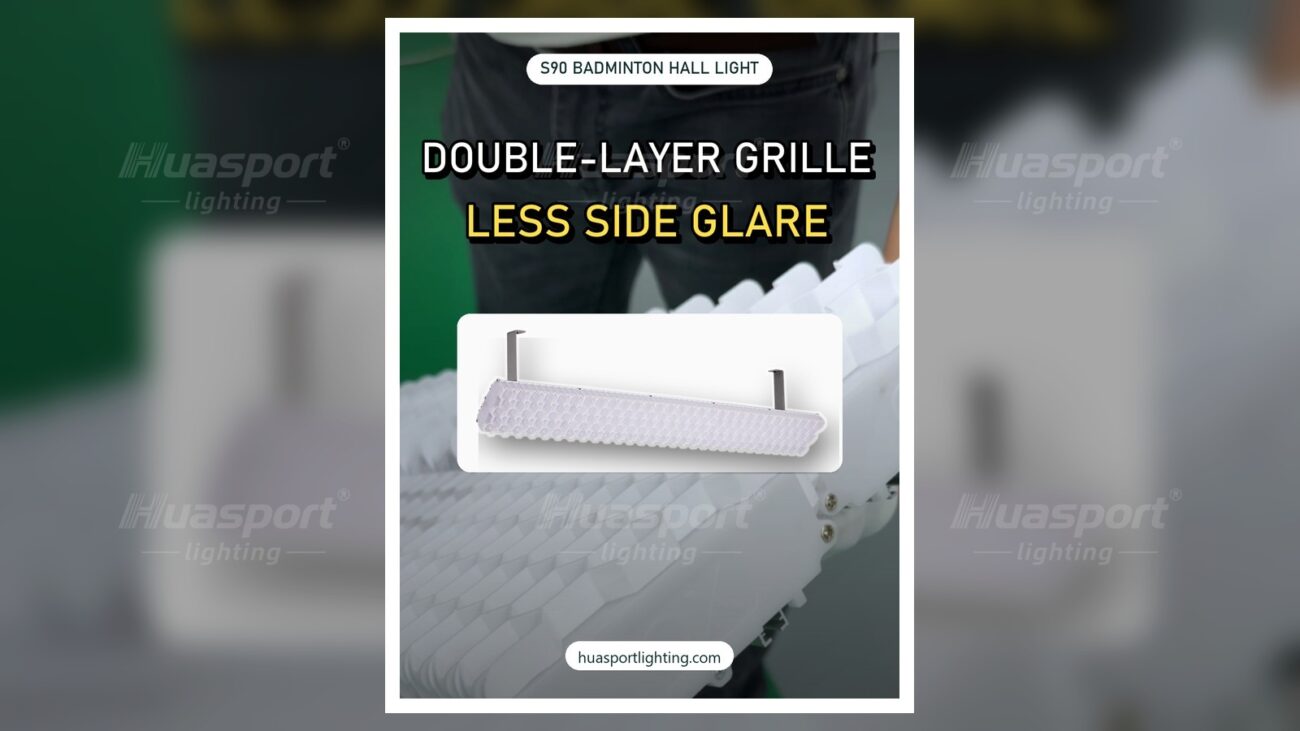
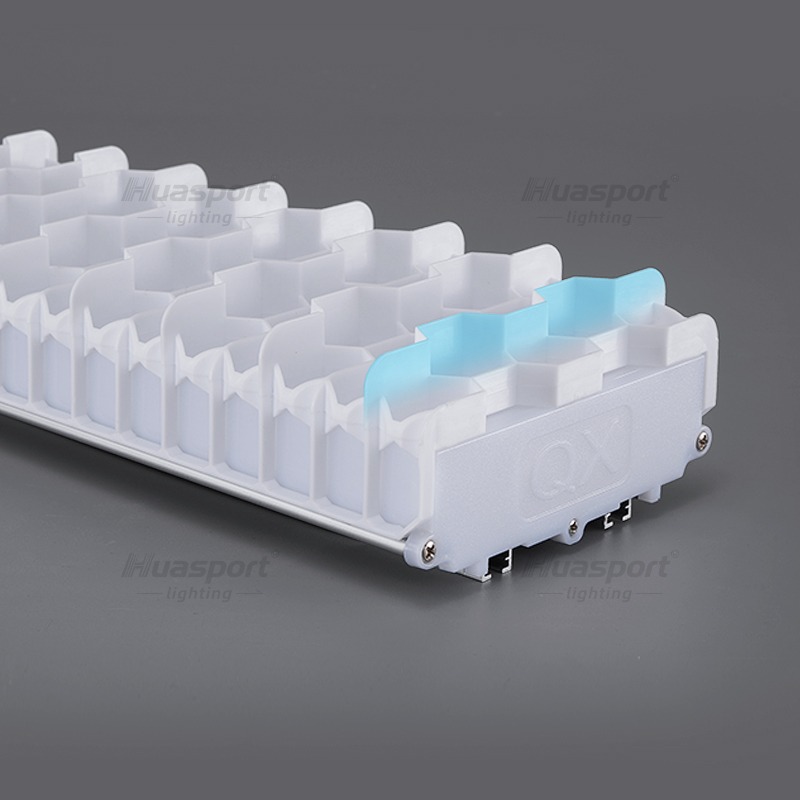
This is where the S90 product family matters. The S90 has a 13 cm body and a double-layer honeycomb anti-glare grille. The video points to the plated S90 grille version for situations where side light from the opposite row needs to be reduced. The public takeaway is simple: ask more than whether the court is bright. Ask whether the fixture row stays comfortable when a player looks up and across the hall.
No indoor badminton light should be described as free from glare at every angle. A safer target is lower side glare, better visual comfort and a layout that respects the real court geometry.
What the S90 Details Help Buyers Verify
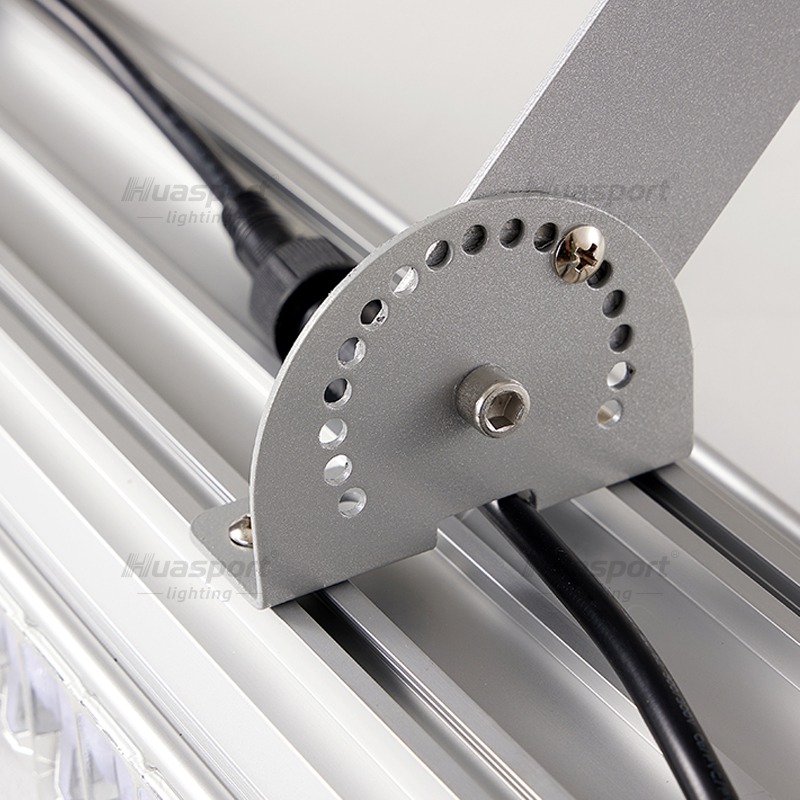
The S90 is not a generic ceiling light. It is a badminton-specific long-bar fixture with a double-layer grille in front of the LED source, a thickened aluminum back profile for heat dissipation and an adjustable mounting bracket fixed to the aluminum profile.
Those details are useful before quotation because they give buyers something to check in photos or samples:
- Whether the front grille is a double-layer honeycomb structure.
- Whether the body width is the S90 13 cm version.
- Whether the bracket is fixed to the aluminum profile.
- Whether the bracket angle can support the 30-degree inward aiming reference.
- Whether the fixture row sits outside the main hitting path but still covers the playing area.
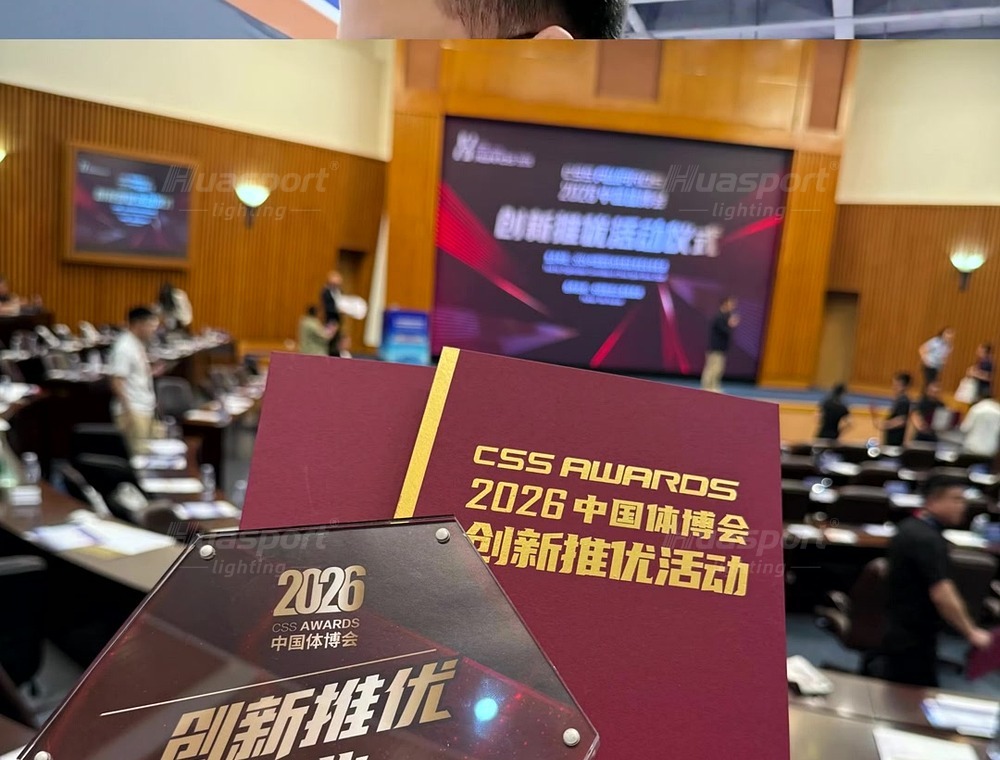
The video also notes that the S90 grille design received recognition at China Sport Show 2026. That is a proof point for the product design, but the project still needs normal site checks before a final lighting plan is approved.
One S90 Layout to Use as the Starting Point
For export planning, keep the first proposal simple. Start with one model and one layout, then adjust only after checking the real building.
| Item | S90 42W planning reference |
|---|---|
| Model | WM-S90-1160-DD-42W-108Z |
| Fixture length | 1.16 m |
| Power | 42W |
| Fixtures per court | 24 fixtures |
| Fixtures per side | 12 fixtures |
| Mounting height | around 5 m |
| Aiming | 30-degree inward tilt |
| Row length | 13.92 m continuous row |
| Playing-area side covered | 13.4 m main playing-area side |
| Target use | 300-400 lux+ for commercial training or recreation |
| Competition review | check toward 500 lux+ average illumination |
For a T-shaped hall, this table is only the starting point. The next step is to map which courts receive neighbor-row spill and which courts face the opposite-row glare problem.
How to Check the Hall Before Quotation
Do not approve a badminton hall lighting plan from a doorway photo. Walk the court and check the view that players actually use.
- Stand at the back line and look up toward the high-clear path.
- Compare the row that has neighboring courts with the row that stands alone.
- Look across the hall from the exposed row and check whether opposite fixtures enter the player’s view.
- Confirm whether the selected model is WM-S90-1160-DD-42W-108Z.
- Confirm whether the layout uses 24 fixtures per court, with 12 fixtures on each side.
- Check whether 5 m mounting height and 30-degree inward aiming fit the roof structure.
- Review whether the target is 300-400 lux+ for training or 500 lux+ for competition use.
If the hall has mixed court types, keep the planning pages separate. Use the Huasport Badminton Court Lighting guide for shuttle tracking and high-clear viewing angles. If the same venue also trains pickleball players, compare the low-net layout on the Huasport Pickleball Court Lighting guide. For glass-wall clubs, the Huasport Padel Court Lighting layout uses a different perimeter logic.
FAQ
Which model is used for this T-shaped hall planning reference?
The planning reference is WM-S90-1160-DD-42W-108Z, an S90 1.16 m 42W long-bar anti-glare fixture for indoor badminton and pickleball court planning.
Why can the same wattage look different in a T-shaped hall?
One row may receive extra spill from neighboring courts, while another row stands more exposed. The wattage can be the same, but the court geometry changes what players see.
How many S90 fixtures are used for one badminton court?
One practical S90 42W layout uses 24 fixtures per court, with 12 fixtures installed on each side of the playing area.
Does the video prove the exact installed model and quantity?
No. The video supports the topic, the S90 product family and the player-view problem. Exact installed model, fixture count and acceptance data should be confirmed from the project record before quotation.
For a project review, send court quantity, ceiling height, roof photos and target use level through Huasport Lighting contact. More planning notes are available in the technical articles archive.