 Badminton/Pickleball court lights
 Pickleball court lights
 Padel Court Lights
 Basketball court lights
 Tennis court lights
 Football field lights
Malaysia Badminton Court Lighting: S90 42W Checks for Direct and Side Glare

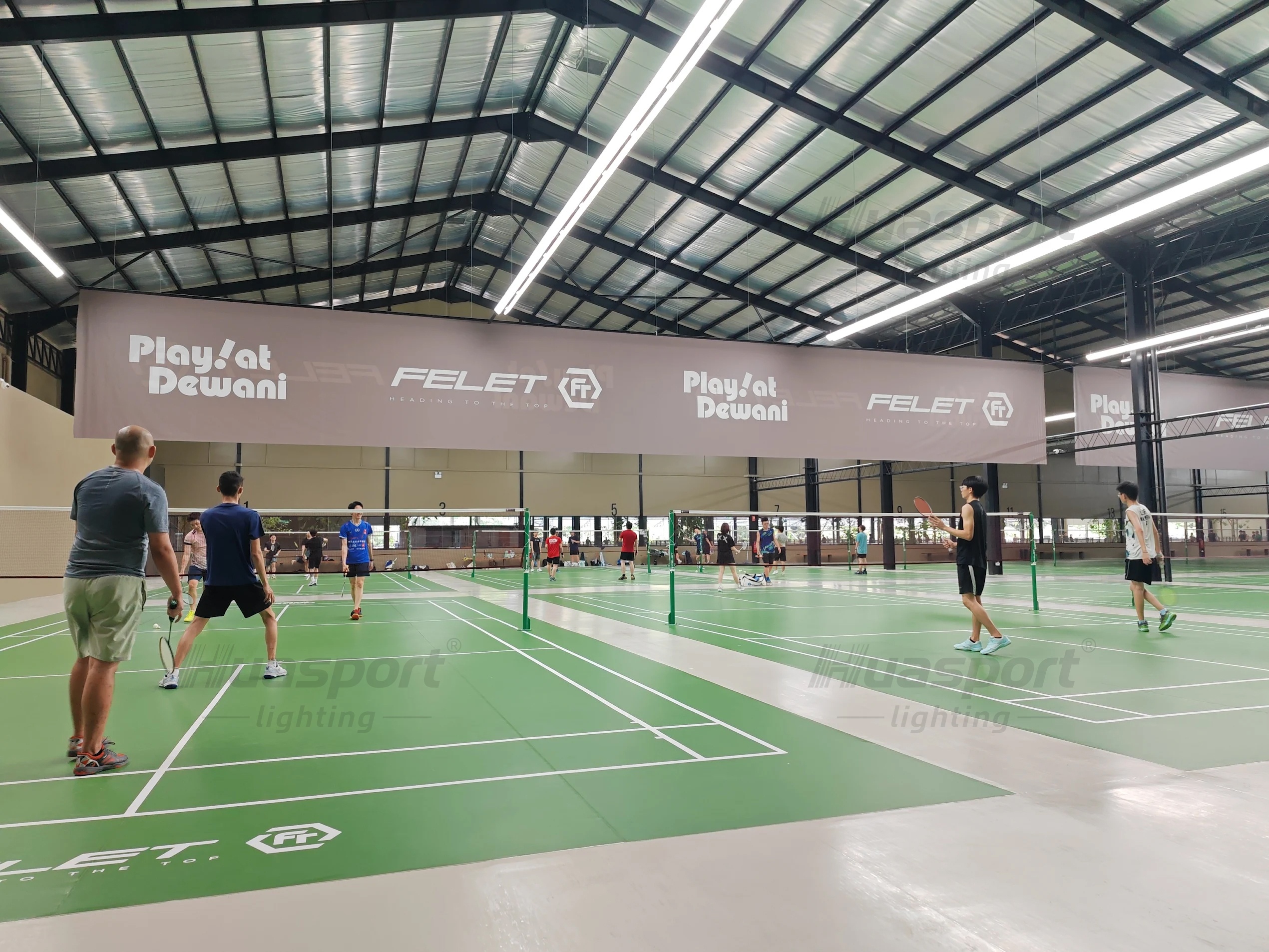
A badminton court can pass the first quick look and still feel wrong once the player starts tracking a high shuttle. The problem is usually not one simple number. In a busy Malaysia indoor hall, a player may see the light face directly on one shot, then catch side light from a neighboring row on the next. Those are two different checks, and they should not be folded into one vague glare question.
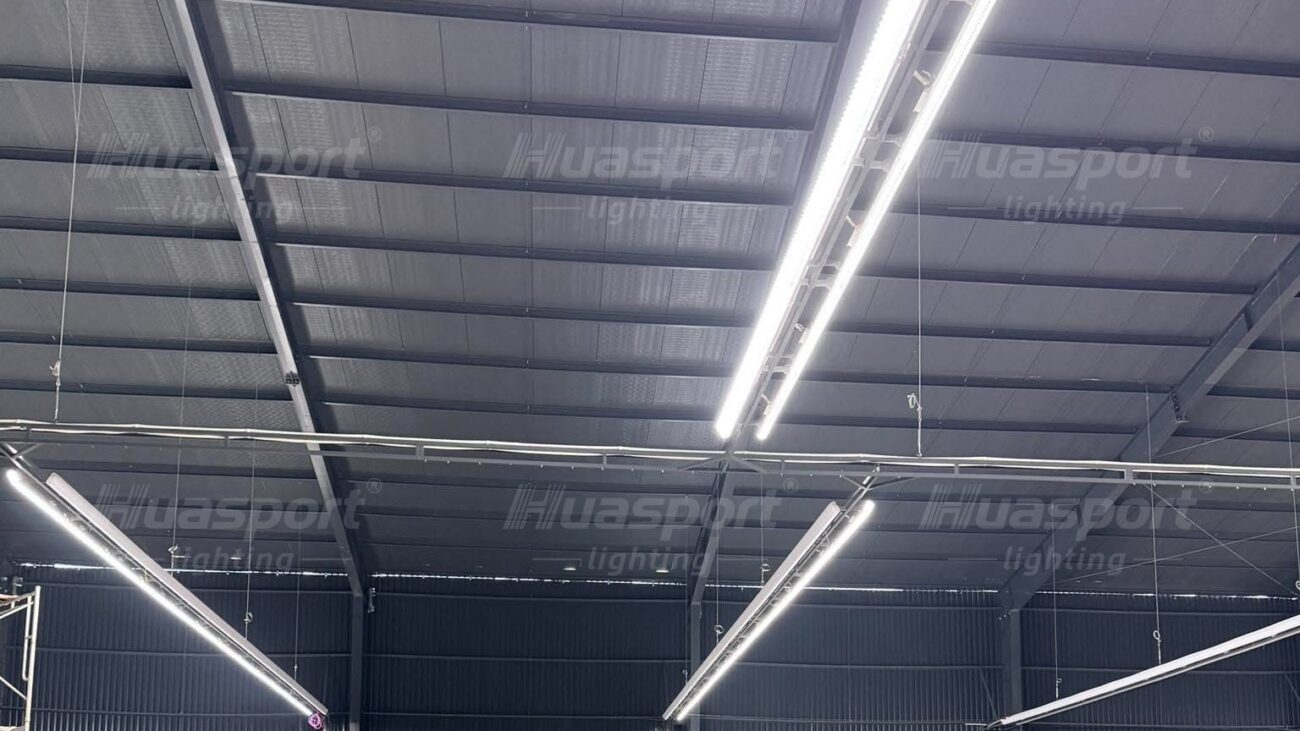
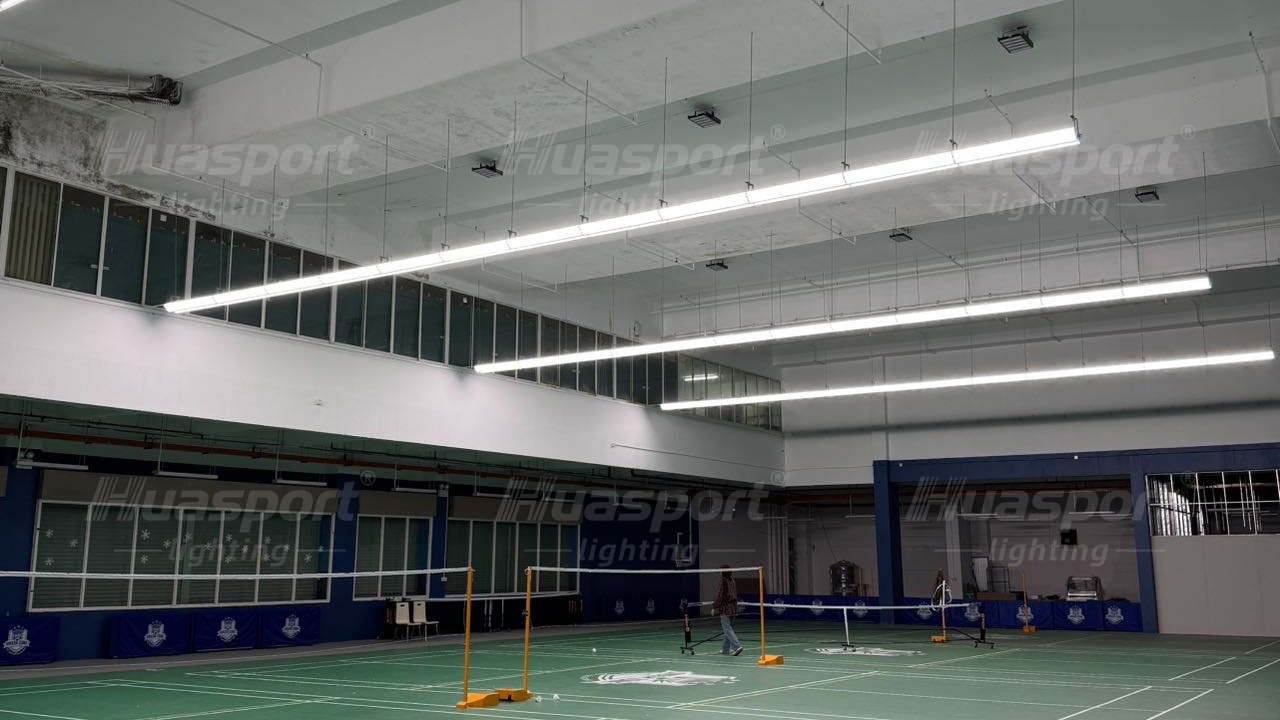
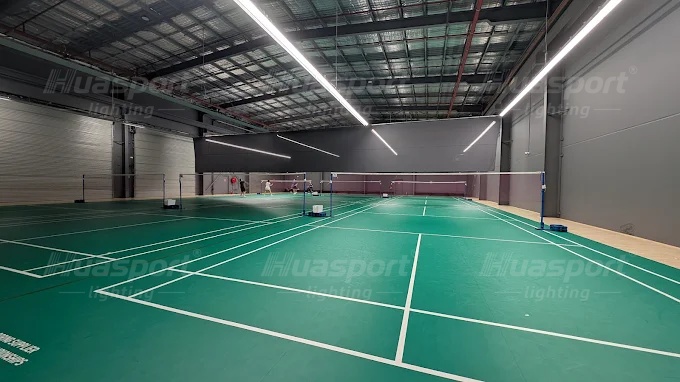
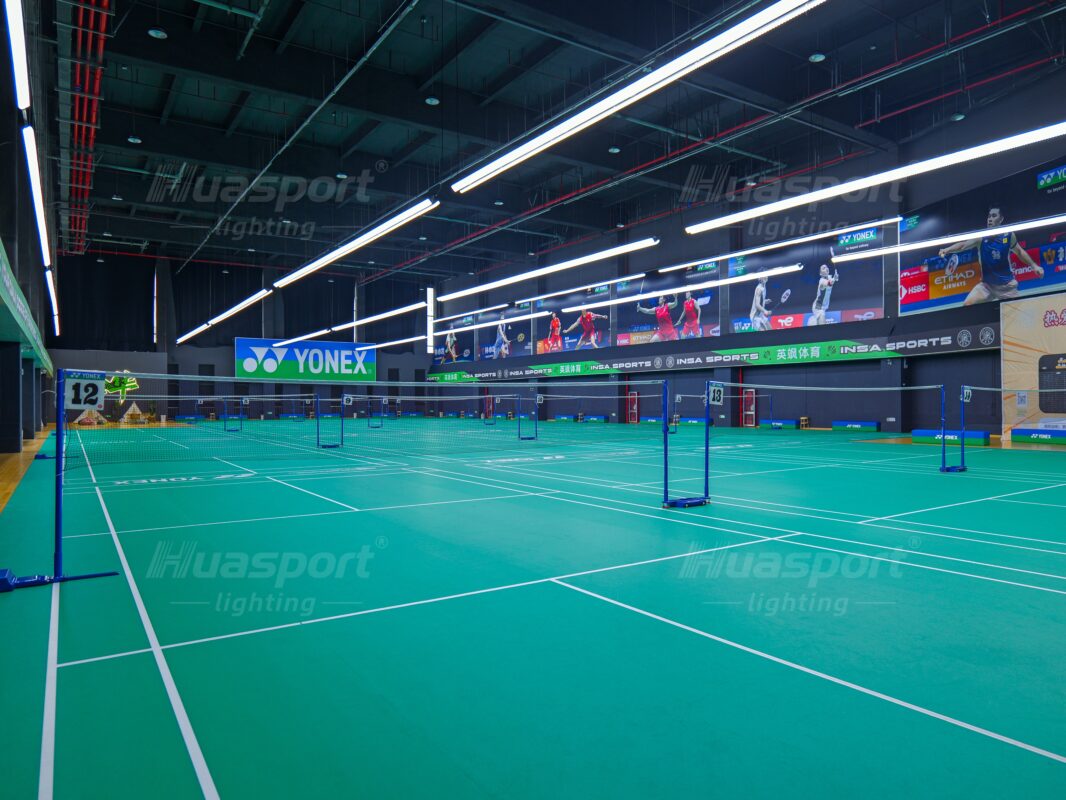
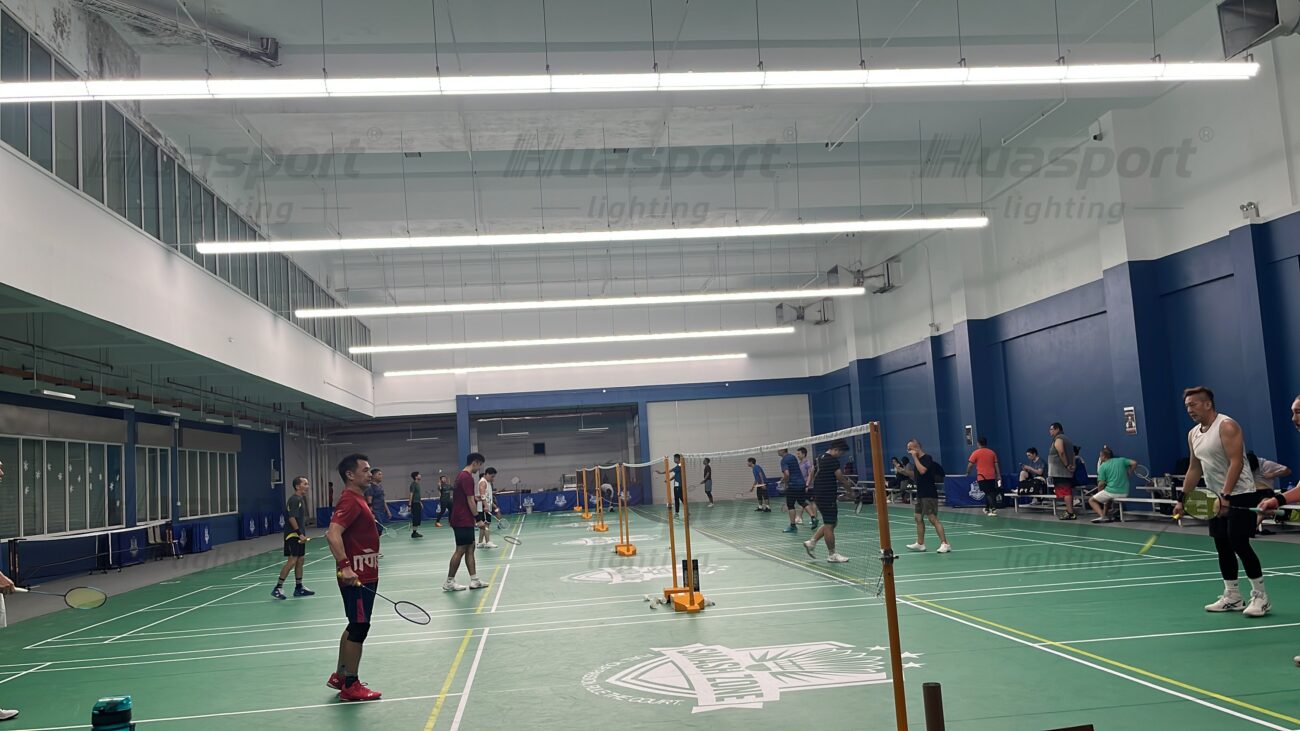
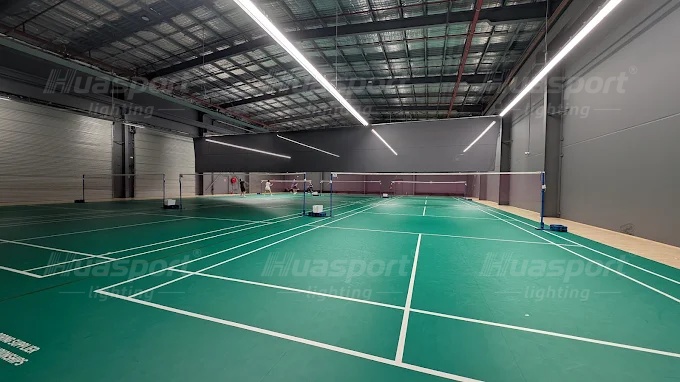
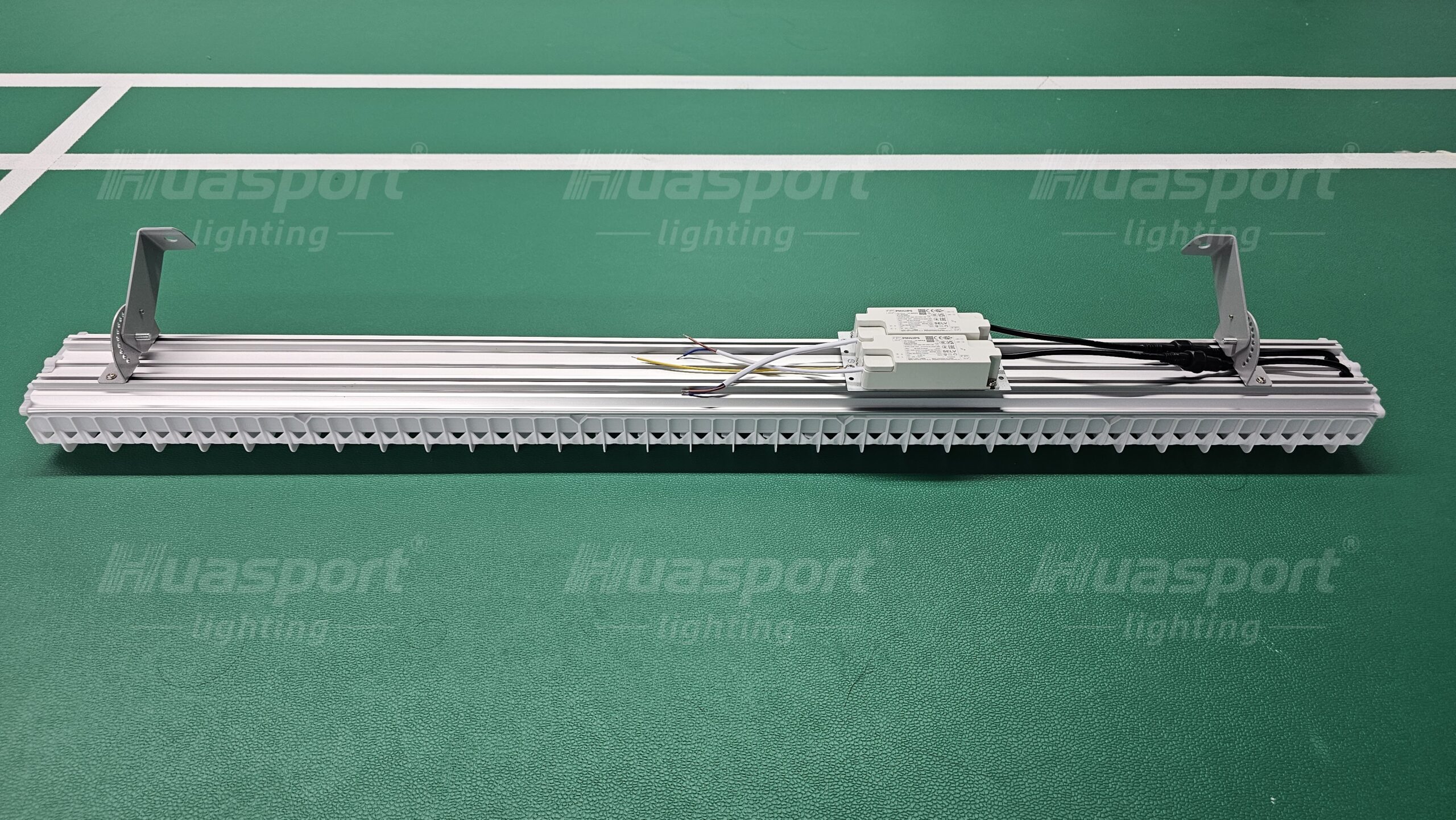
For this Malaysia badminton court lighting guide, the planning reference is the Huasport `WM-S90-1160-DD-42W-108Z` S90 1.16 m 42W anti-glare fixture. The layout uses 24 fixtures per court, with 12 fixtures on each side, installed at about 5 m and aimed 30 degrees inward. Twelve 1.16 m fixtures form a 13.92 m continuous row, which is matched to the 13.4 m main playing-area side length.
Start With Two Glare Questions
When a buyer says a court is glarey, ask where the glare comes from. Direct-view glare happens when the player sees the emitting face of the fixture during play. Side glare happens when a long fixture row sends light toward the player from the side, especially along the sideline, rear court or waiting zone.
That difference matters because badminton players do not keep their eyes at one height. They look up during clears, lifts, high serves, defensive blocks and overhead shots. A hall can look bright in a photo, yet still feel tiring if the player keeps catching the light row while following the shuttle.
The S90 structure is used here because its 13 cm body gives more room for the double-layer honeycomb grille. The goal is not to promise zero glare. A better check is more honest: can the layout reduce side light from the player angle while keeping enough usable light on the court?
The One Layout Used In This Guide
This article uses one model and one layout so the quotation check stays clear.
| Item | Planning Reference |
|---|---|
| Application | Malaysia indoor badminton court lighting |
| Fixture model | `WM-S90-1160-DD-42W-108Z` |
| Fixture family | Huasport S90 1.16 m long-bar anti-glare fixture |
| Fixture body width | 13 cm |
| Fixtures per court | 24 fixtures |
| Side layout | 12 fixtures on each side |
| Mounting height | About 5 m |
| Aiming angle | 30-degree inward tilt |
| Bracket reference | 6th hole for the common 30-degree setting |
| Row length | 12 x 1.16 m, forming a 13.92 m continuous row |
| Main playing-area side | 13.4 m |
| Typical target | 300-400 lux+ for commercial training or recreational play |
| Competition note | Review toward 500 lux+ average if competition use is required |
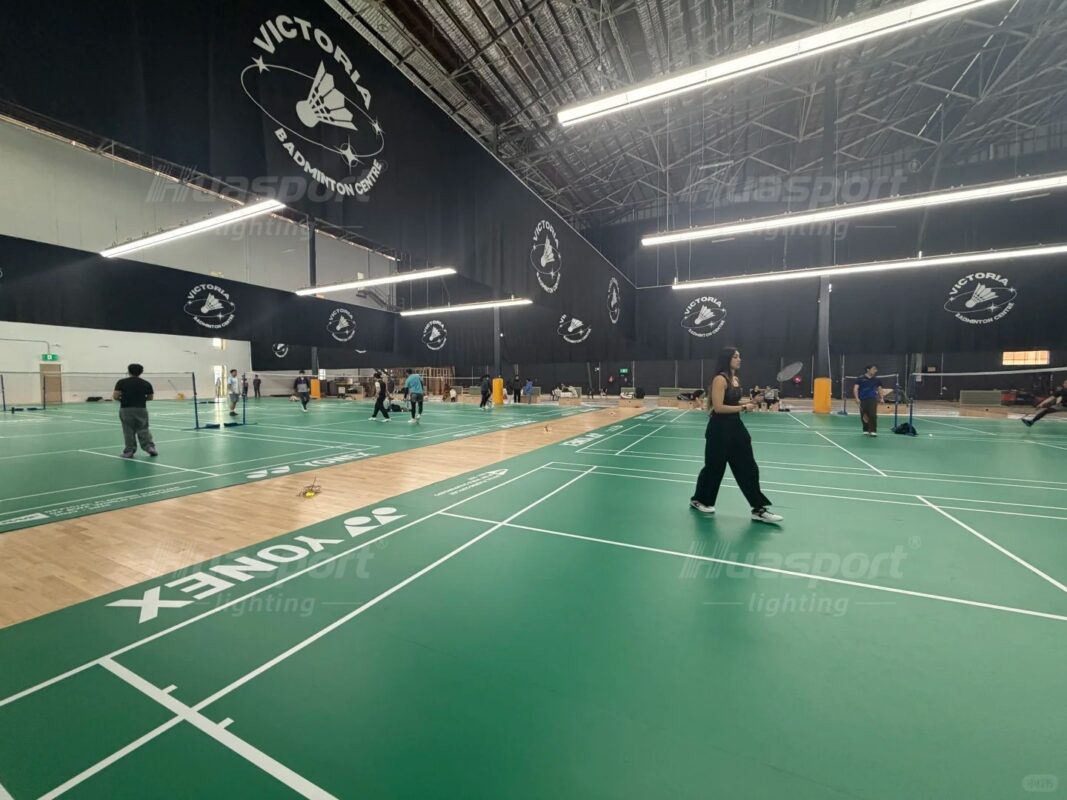
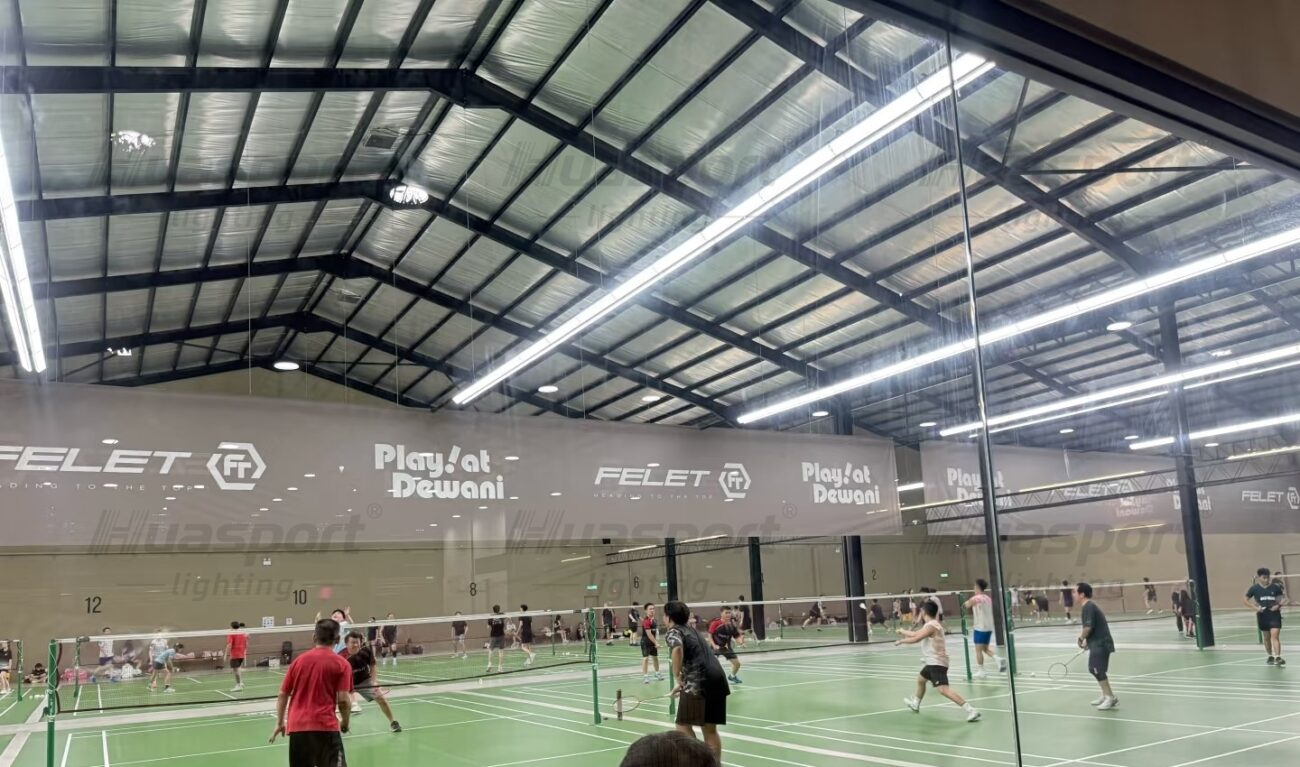
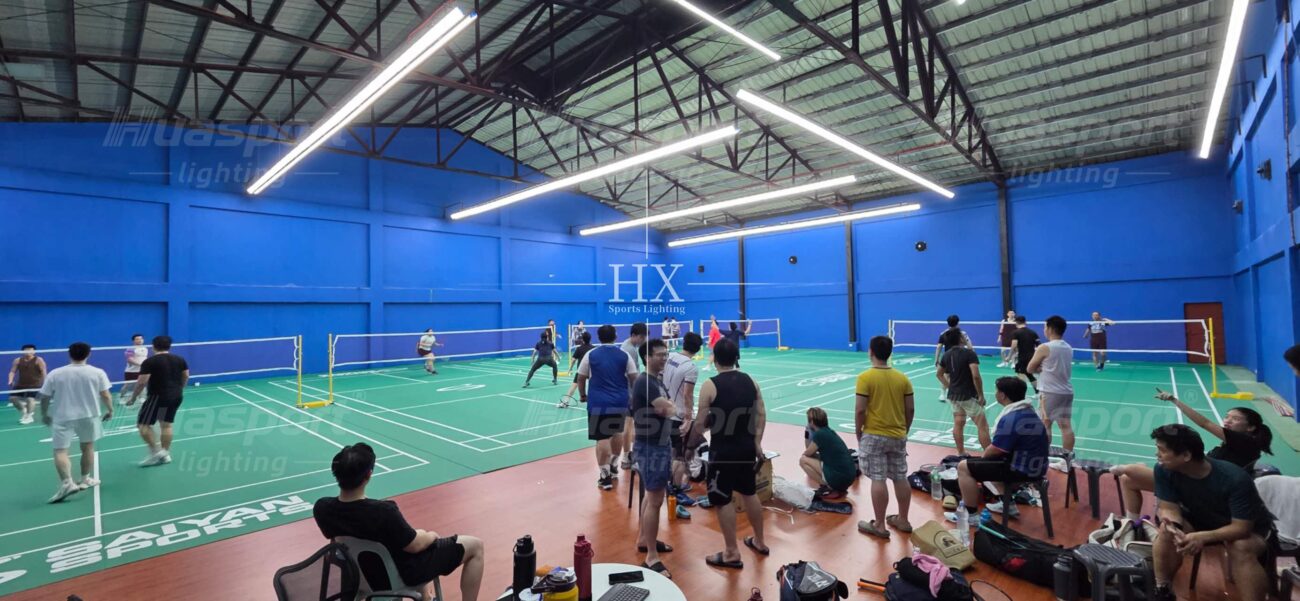
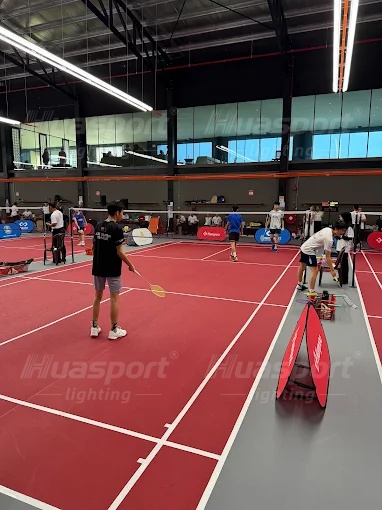
The photo can confirm a Malaysia indoor badminton environment, visible court activity and long fixture rows. It should not be used alone to claim the exact installed model, final lux result or final acceptance data. Those details still need a project record, quotation or site drawing.
What To Check From The Back Line
The back line is where many lighting problems show up. Stand there and follow the path of a high clear. If the eye keeps landing on a bare emitting surface, the court may feel sharp even when the floor looks bright enough.
Then turn slightly toward the neighboring court. This is where side glare appears. In a multi-court hall, the row that serves one court can sit inside another player’s upward view. A small shift in row height, roof beam position or bracket angle can change the feeling from one court to the next.
For Malaysia halls with active training or weekend play, this check is worth doing before the final quote. Players will judge the hall during rallies, not from the doorway. The lighting plan should be reviewed from the positions where the shuttle is actually seen.
Why The S90 Double-Layer Grille Is The Useful Detail
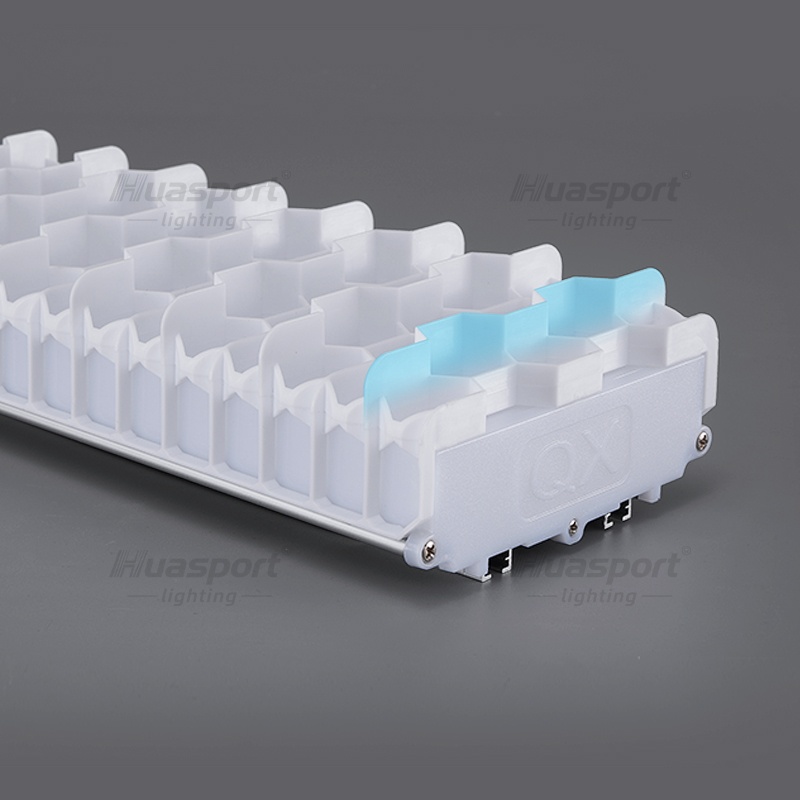
The S70 and S90 look similar as long-bar sports lights, but the S90 is wider at 13 cm. That width is useful because the double-layer honeycomb grille needs space. A simple single layer can block some stray light. A double-layer structure gives the fixture more depth for controlling light from the side.
For a badminton buyer, the practical question is simple: when a player looks up from the rear court, does the light row feel exposed or controlled? The S90 does not remove every glare risk from every angle. Mounting height, roof structure, wall color, row position and player movement all matter. The point is that the grille gives the installer a better starting structure for side-glare control.
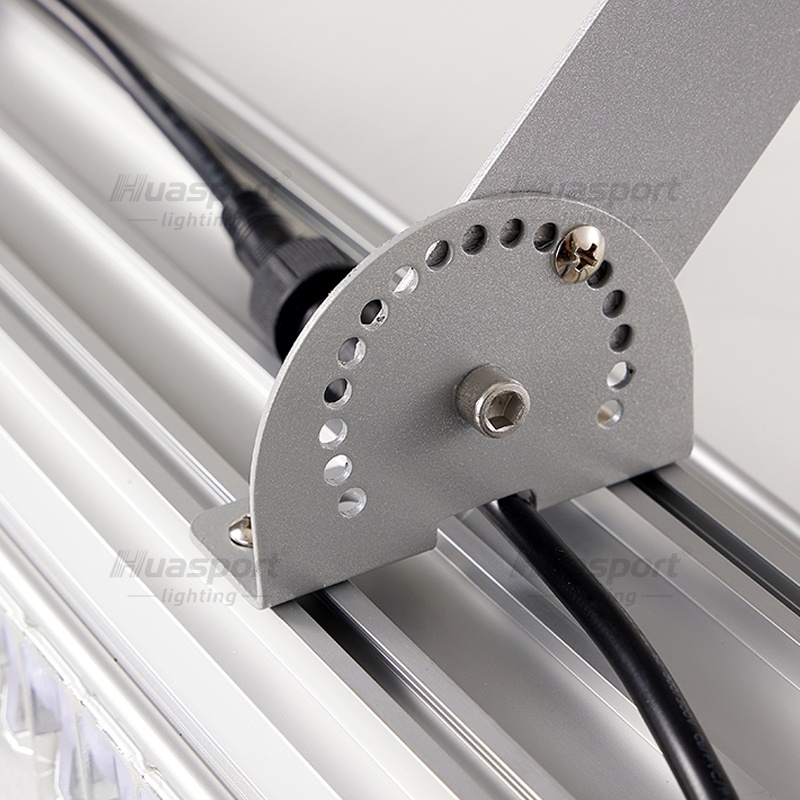
The fixture body also matters. Huasport uses a thickened aluminum profile at the back of the light, rather than thin ironwork. That helps heat management for the driver and LED beads. The bracket is fixed to the aluminum profile, not to plastic, which gives a stronger base when the installer sets the 30-degree inward angle.
Why The Continuous Row Helps The Buyer Understand The Layout
Twelve 1.16 m fixtures create a 13.92 m row. That row length is easy to compare with the 13.4 m main playing-area side. For a buyer, this is cleaner than a drawing where the row starts and stops without a clear reason.
The continuous row also helps with site checking. The installer can compare the row to the playing area, then confirm whether beams, cables, ceiling height or wall positions require adjustment. If the row is broken, shifted or angled inconsistently, one court may feel different from the next.
This does not mean every hall can be quoted from the table alone. The table gives the first planning reference. The final quotation still needs court quantity, ceiling height, roof structure, wall color, mounting points and the expected level of play.
What Buyers Should Verify Before Quotation
Before a Malaysia badminton hall owner asks for a final quotation, these checks should be clear.
- Confirm the court quantity and the exact court layout.
- Confirm the available ceiling height and hanging structure.
- Confirm whether the selected option is `WM-S90-1160-DD-42W-108Z`.
- Confirm that each court uses 24 fixtures, with 12 fixtures on each side.
- Confirm that the row is planned as a 13.92 m continuous side row.
- Confirm that the fixture angle is about 30 degrees inward.
- Check direct-view glare from the back line during high-shot tracking.
- Check side glare from the sideline, waiting zone and neighboring court view.
- Confirm whether the buyer needs 300-400 lux+ for training or a separate review toward 500 lux+ for competition.
The last two checks are the ones that save arguments later. If the owner only asks for wattage, fixture count and price, the quote can miss how players actually see the light during a rally.
How This Fits Badminton, Pickleball And Padel Planning
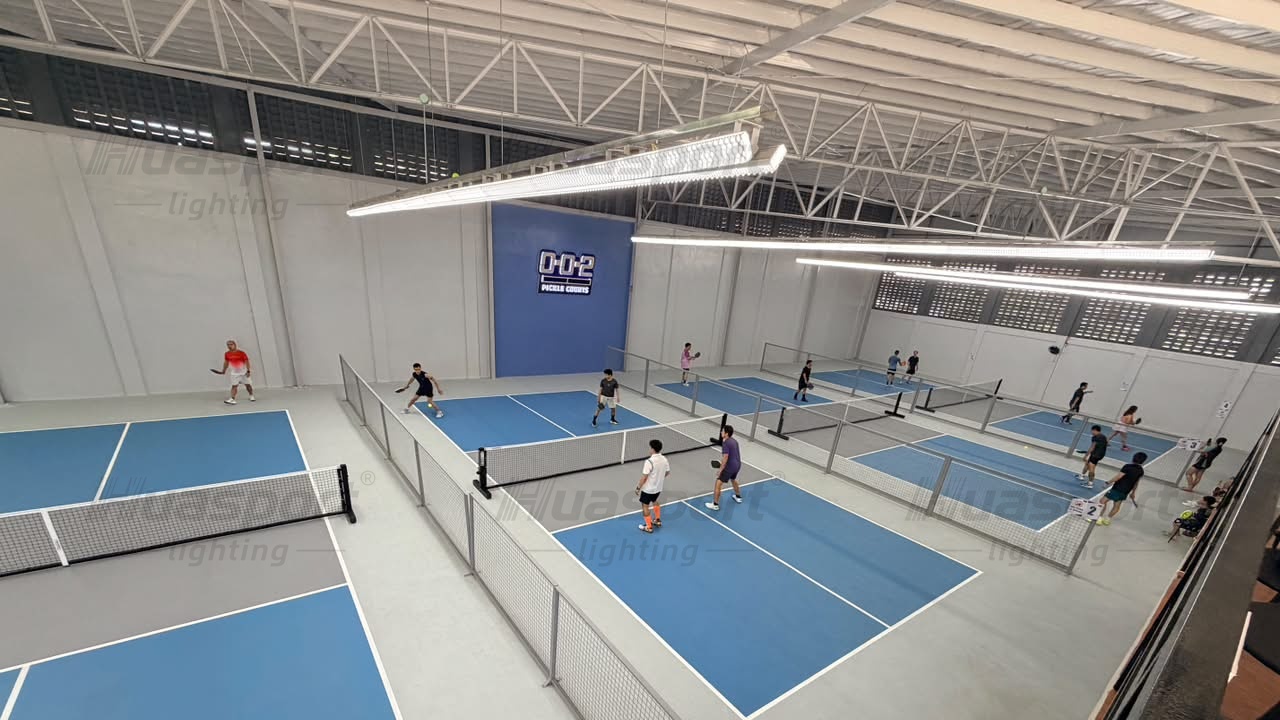
Badminton and indoor pickleball can both use long-bar side-row planning in many indoor halls, but the buyer still needs to check player view. The court size, ball or shuttle path, and player movement change how the light is perceived. That is why Huasport keeps a dedicated badminton court lighting page and a separate pickleball court lighting guide.
Padel should be treated differently. Glass walls, fences and four-side lighting create reflection problems that do not match a badminton side-row layout. For padel projects, use the Huasport padel court lighting layout instead of copying the badminton fixture count.
Final Note For Malaysia Hall Owners
The best time to solve glare is before the rows are fixed in place. Stand on the court, not only at the entrance. Look up from the back line. Check the sideline. Sit where waiting players sit. Compare the first court with the next one.
If the hall owner wants one clear starting point, the Huasport S90 `WM-S90-1160-DD-42W-108Z` 24-fixture layout gives the discussion a solid base. The final quote should still be built from the actual site conditions. That is how a bright hall becomes a comfortable hall.
For project discussion, contact Huasport Lighting or read more planning notes in Technical Articles.