 Badminton/Pickleball court lights
 Pickleball court lights
 Padel Court Lights
 Basketball court lights
 Tennis court lights
 Football field lights
Australia Badminton Hall Lighting: SAA 60W End-Court Glare Checks

In many Australian badminton halls, the first court people complain about is not always the darkest court. It is often the end court, the court beside a wall, or the court closest to curtains and roof steel. Players stand under a bright space, look up for a clear or a lift, and suddenly the light row feels closer than it looked from the doorway.
That is why an Australia badminton hall lighting review should include a player-view check, not only a ground-level lux reading. A practical Huasport planning option for this market uses the SAA-certified `SAA-S90-1160-FLP-60W-108Z` long-bar fixture, with 5130 lm output, 24 fixtures per court, 6 m mounting height and 30-degree inward aiming.
Why End Courts Need Their Own Lighting Check
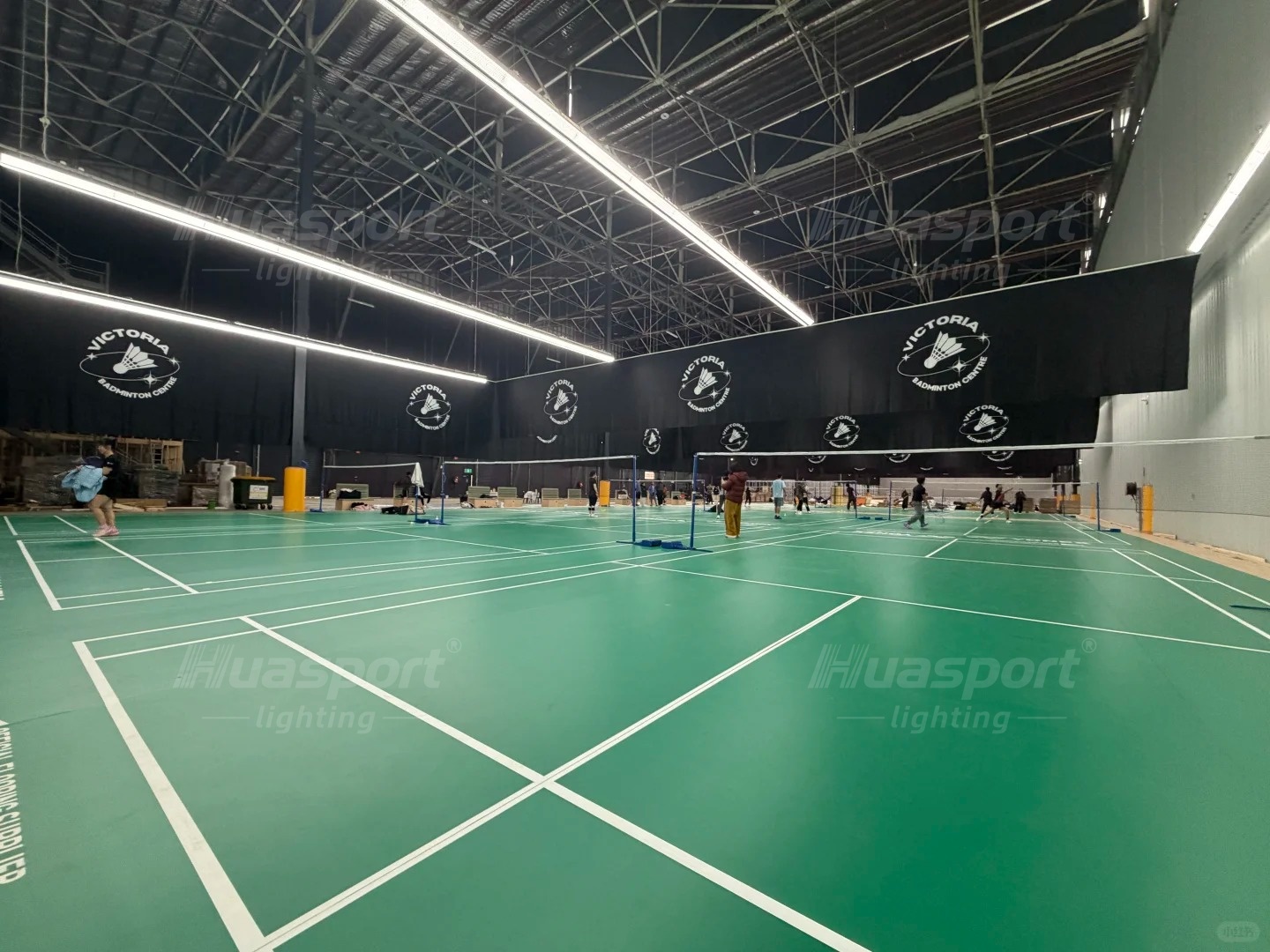
End courts often sit beside a wall, an entry bay, a curtain line, or a structural column. The court may pass a basic brightness check, but a player at the rear court sees the hall differently. From that position, one row can sit inside the upward sightline while a neighboring row creates extra brightness from the side.
For badminton, that matters. Players look up again and again for clears, lifts, serves, drops and high defensive shots. A fixture row that looks clean from the walkway may become distracting from the back boundary line. The safer check is simple: stand where players stand, look toward the shuttle path, and ask whether the light row helps tracking or steals attention.
For project planning, this is also where the Huasport Badminton Court Lighting guide becomes more useful than a bare wattage comparison. Wattage gives a starting point. Player view tells you whether the layout feels playable.
The Australia SAA 60W Planning Reference
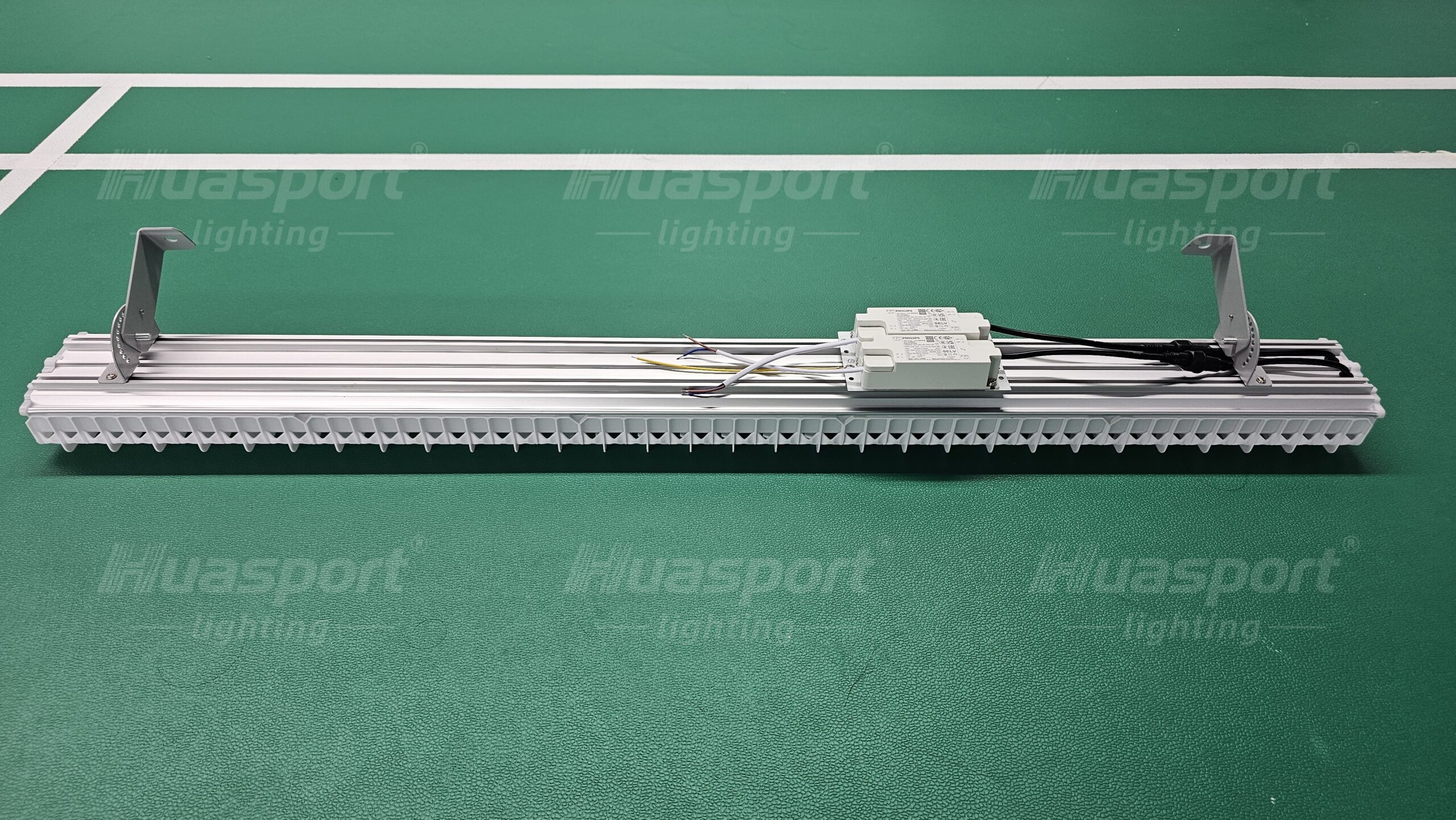
For Australian badminton halls that need SAA-certified fixtures, one Huasport reference layout uses `SAA-S90-1160-FLP-60W-108Z`. It is a 1.16 m S90 long-bar anti-glare fixture, 60W, 5130 lm, with a 13 cm body width and double-layer honeycomb grille.
The reference layout is built around continuous rows on both sides of the court.
| Item | Planning Reference |
|---|---|
| Fixture model | SAA-S90-1160-FLP-60W-108Z |
| Certification | SAA |
| Power and output | 60W, 5130 lm |
| Fixture family | S90 1.16 m long-bar fixture |
| Body width | 13 cm |
| Fixtures per court | 24 fixtures |
| Fixtures per side | 12 fixtures |
| Mounting height | 6 m |
| Aiming | 30-degree inward aiming |
| Row length | 13.92 m continuous row |
| Main playing-area side covered | 13.4 m |
| Planning illuminance | 400-500 lux+ |
This is a planning reference, not a promise that every photo from an Australian hall uses the exact same installed model. Photos help buyers understand the hall shape, row position and player sightline. Final model, quantity and aiming still need project records and quotation details.
What Players Actually Notice From the Rear Court
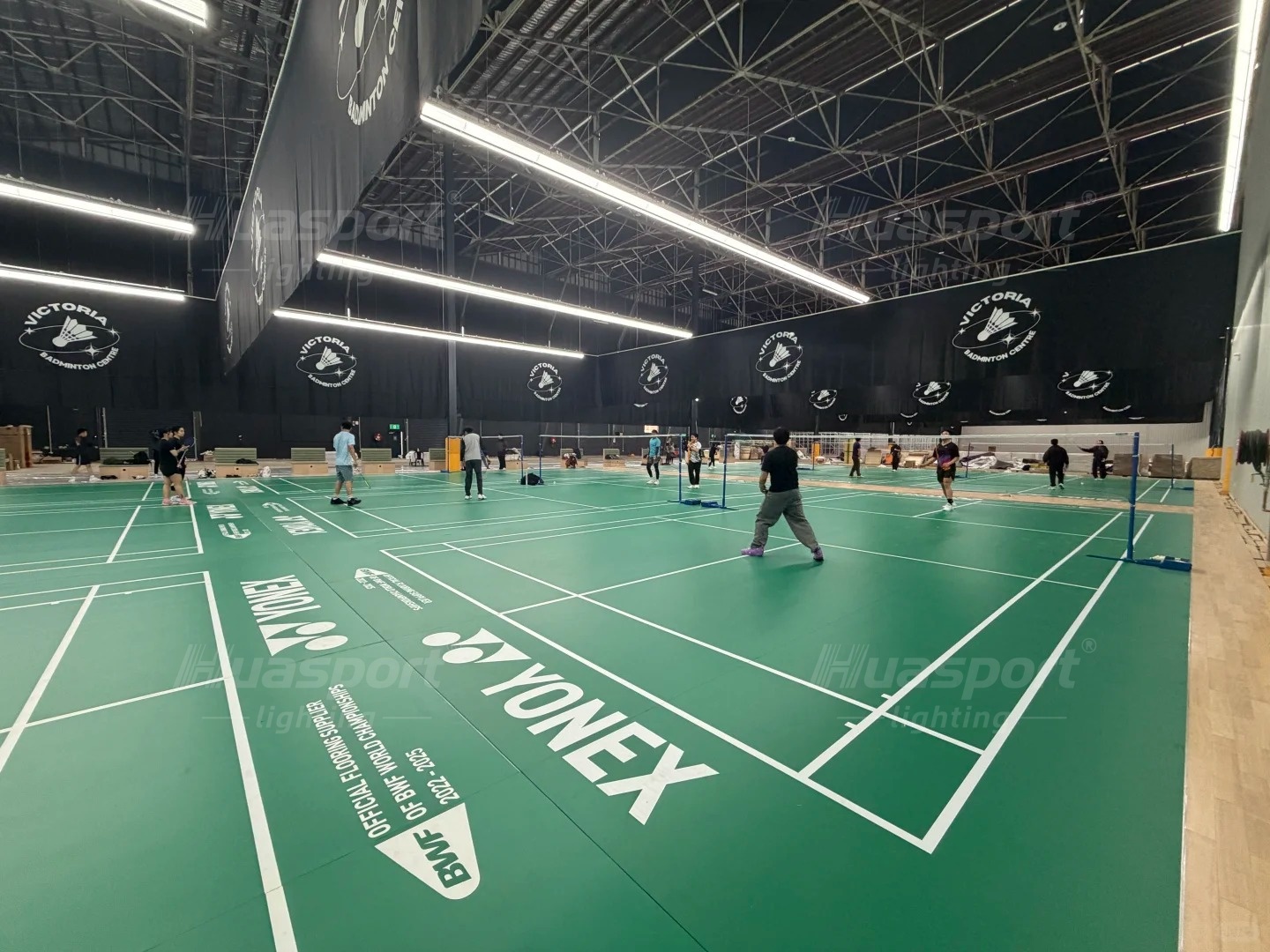
A hall can look bright from the entrance and still feel uncomfortable from the back line. The rear-court check is useful because it catches problems that a center-court reading can miss.
Look for three things.
- Does the light row enter the player view when they track a high shuttle?
- Does the end court feel different from the middle courts because of wall reflection or missing spill light?
- Does the sideline view show glare from the side of the long fixture row?
The third point is the one buyers often miss. A long-bar row is not only seen from directly underneath. In a multi-court hall, the side of the row can enter a player’s view from the next court or from the boundary line. That is why the optical structure matters.
Why the Double-Layer Grille Matters
The S90 fixture uses a double-layer honeycomb grille. The public buyer benefit is easy to understand: it helps reduce side glare from player viewing angles. It does not mean every possible angle becomes glare-free, and it should not be sold that way. A serious lighting review still checks real court positions.
Compared with simple open lighting or a basic single-layer grille, the double-layer structure gives the fixture more optical depth. The 13 cm S90 body width leaves room for the grille and light source arrangement, so the fixture can be aimed inward while keeping the side view calmer for players.
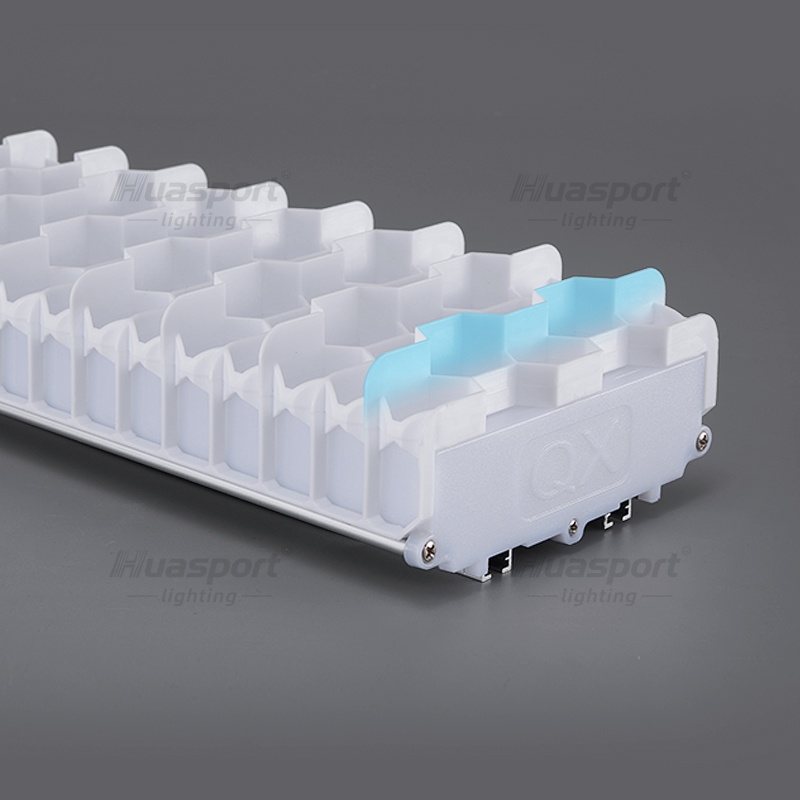
For an Australian buyer, the point is not to memorize the grille shape. The useful question is more practical: when a player stands at the end court and looks up, is the light row controlled enough that the shuttle path remains easy to follow?
Aiming and Bracket Checks Before Quotation
The reference layout uses 30-degree inward aiming at 6 m mounting height. That angle is important because the light should serve the playing area, not the wall, roof steel or the player’s eyes. On paper, 30 degrees looks like a small detail. On court, it changes where the bright face of the fixture appears from a player’s view.
Before quotation, ask the installer or lighting supplier to confirm these items:
- Court quantity and exact court layout.
- Mounting height, roof structure and safe suspension points.
- Whether the SAA-certified 60W option is required for the project.
- Whether each court will use 24 fixtures, with 12 fixtures per side.
- Whether the 13.92 m continuous row covers the 13.4 m main playing-area side.
- Whether 30-degree inward aiming can be repeated consistently on both sides.
- Whether end courts near walls, curtains or columns need extra player-view checking.
- Whether the target is 400-500 lux+ for the intended play level.
This same logic also helps when buyers compare lighting plans for other sports. A Huasport Pickleball Court Lighting guide may use a similar player-view mindset, but the court size, ball path and layout must still be reviewed on their own. Padel is different again because glass walls and four-side lighting change the glare and reflection problem, which is why the Huasport Padel Court Lighting layout uses a separate court approach.
What Photos Can Confirm, and What They Cannot
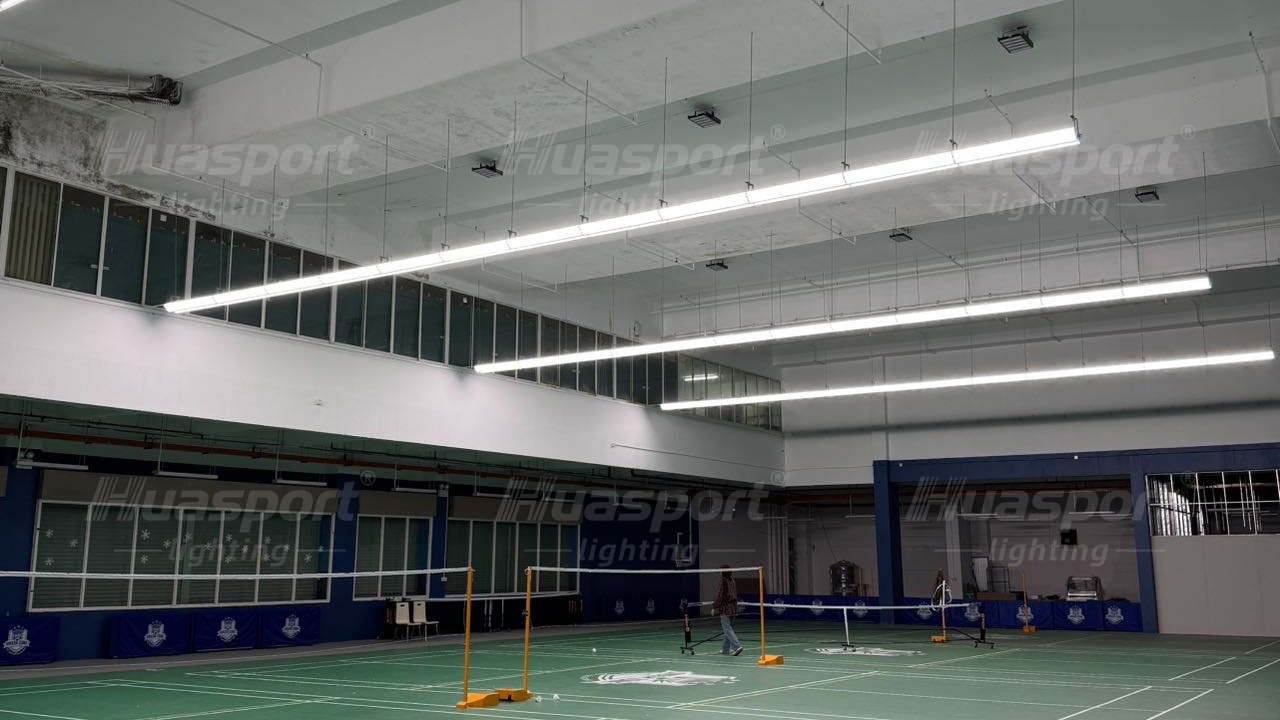
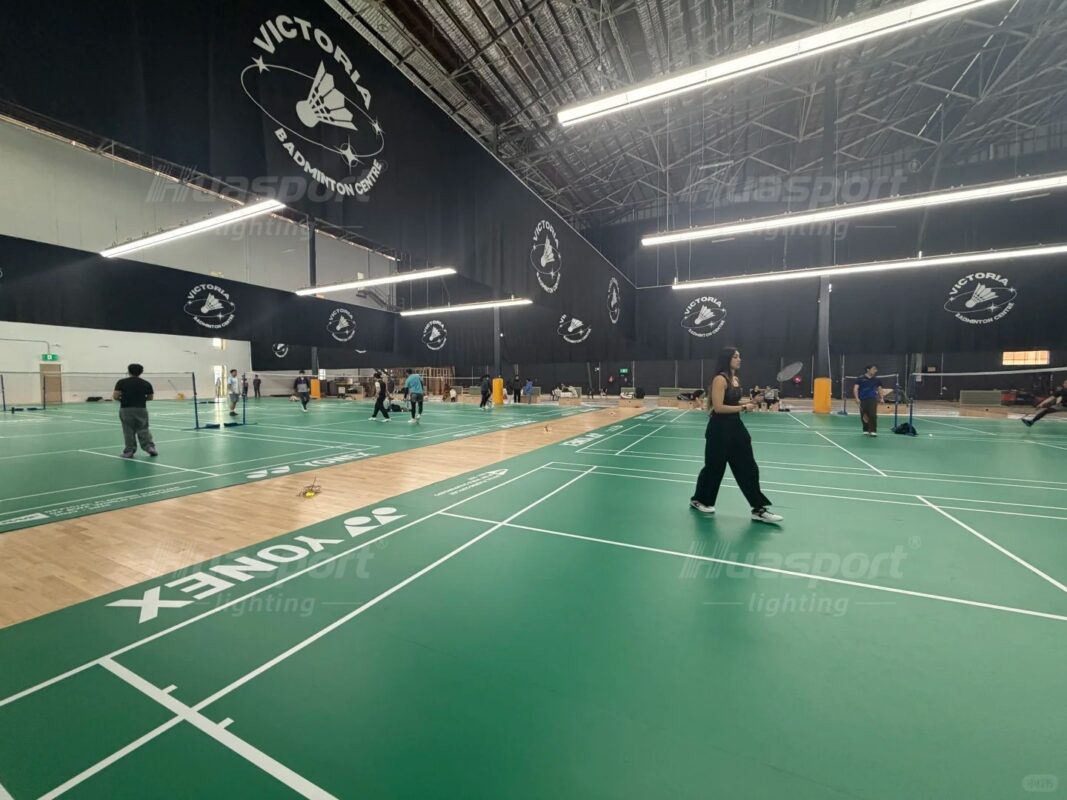
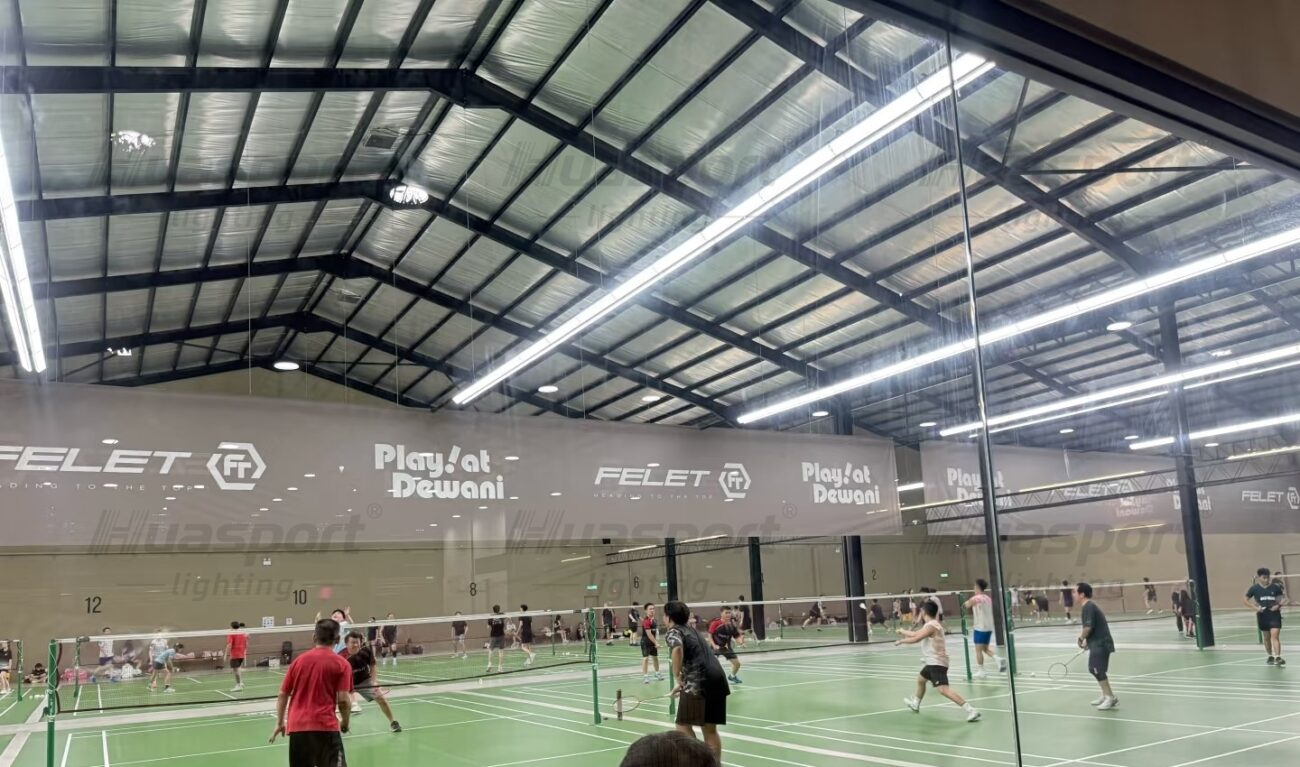
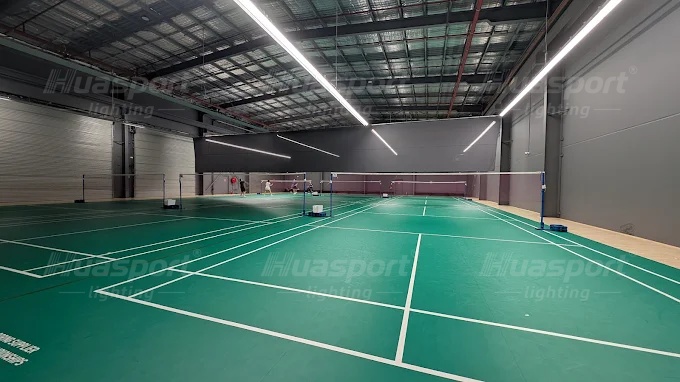
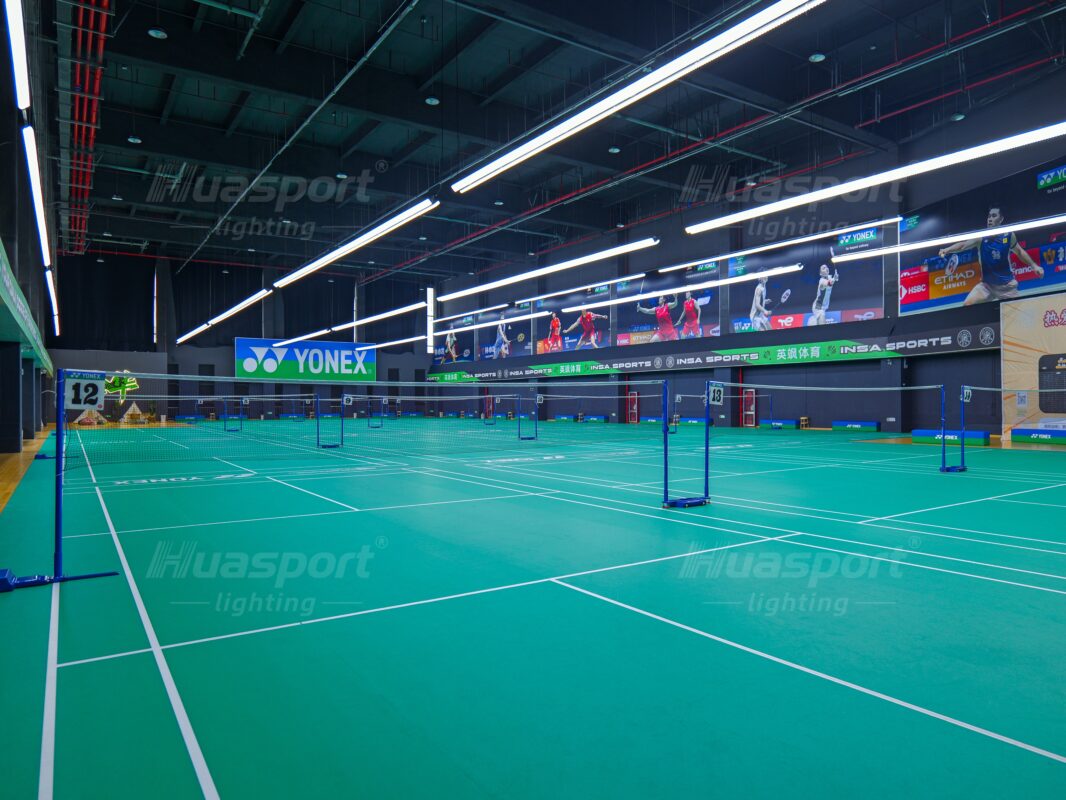
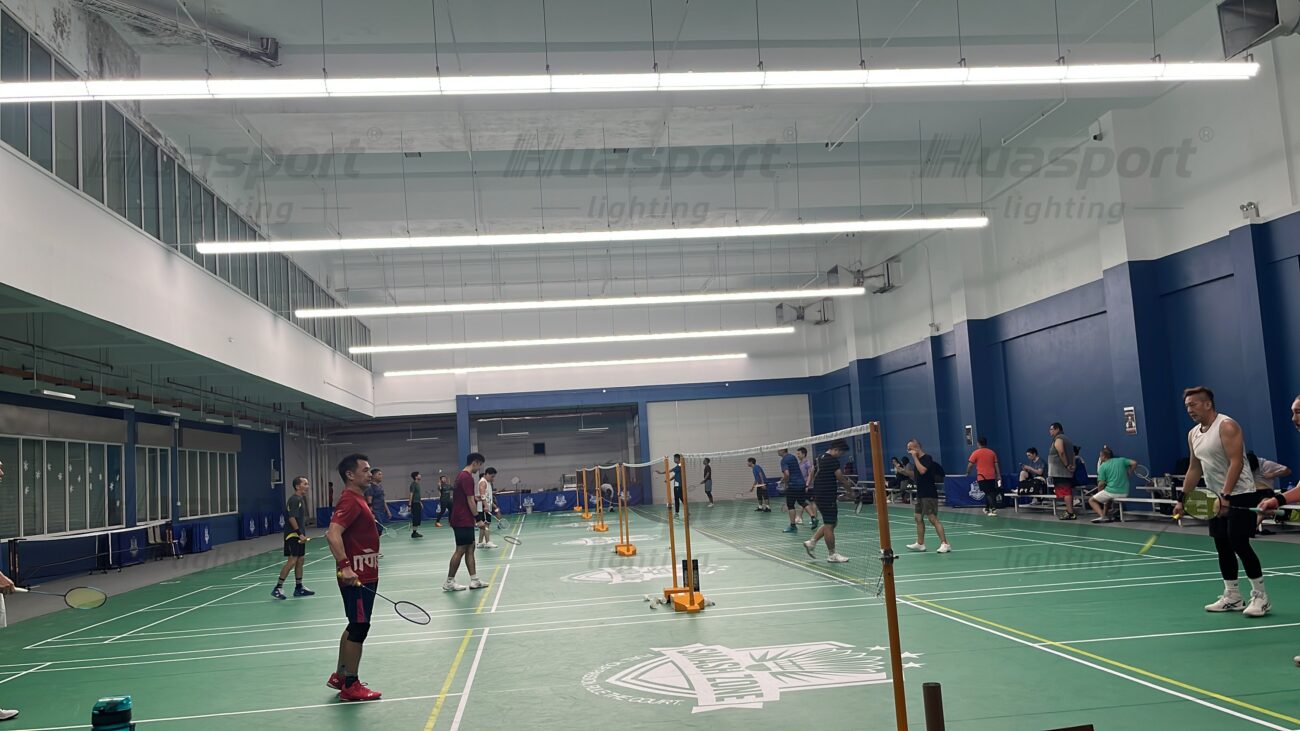
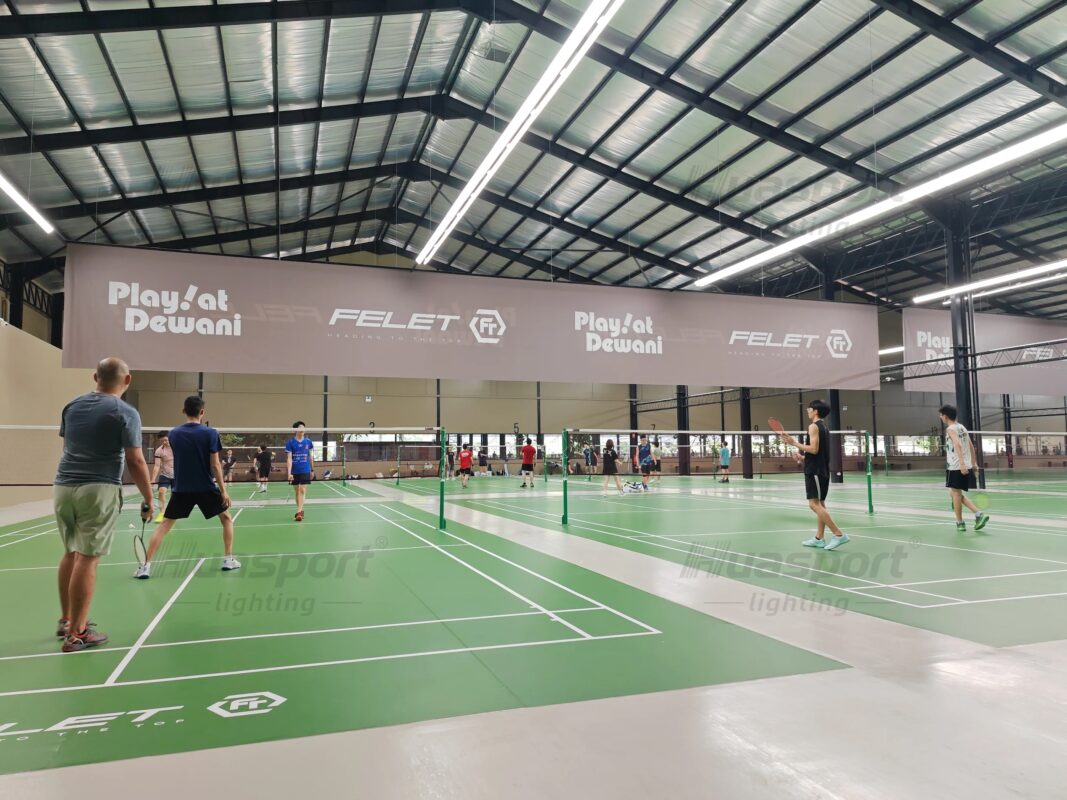
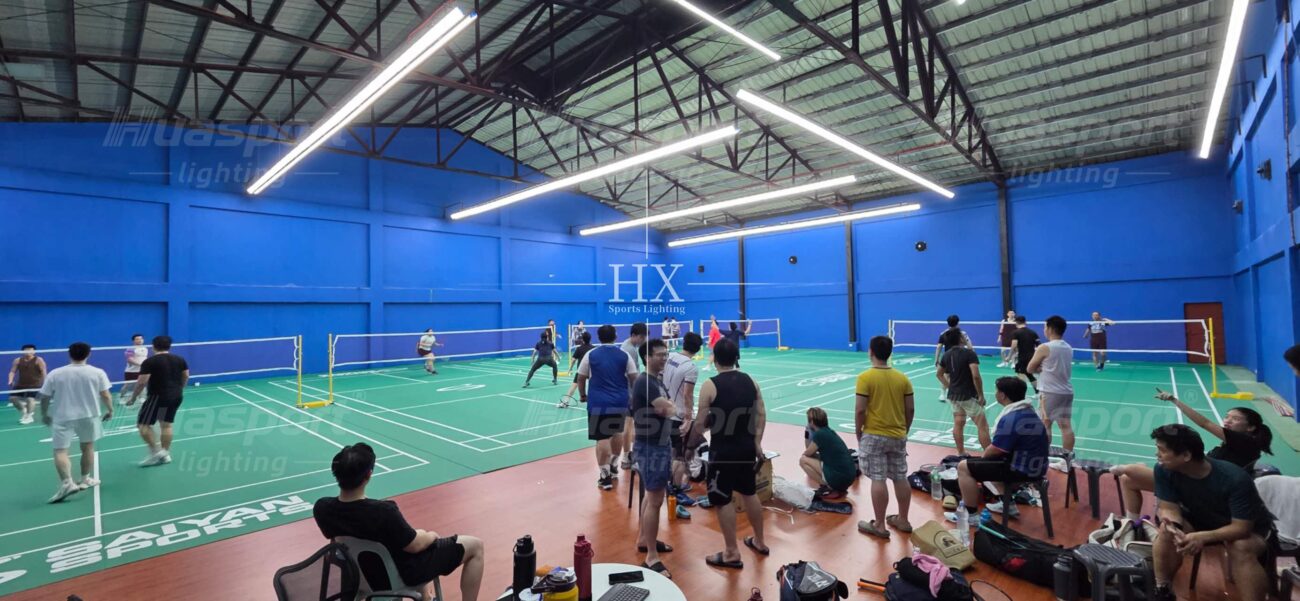
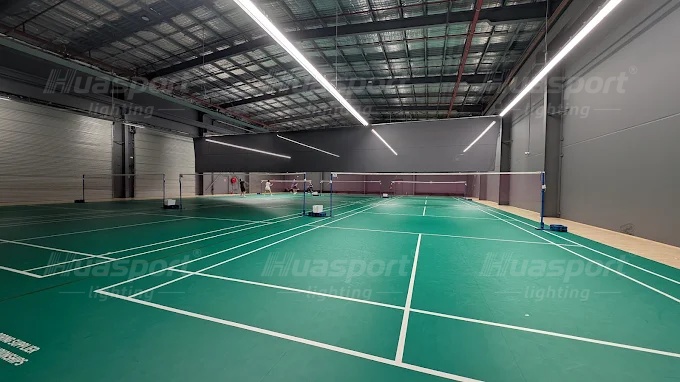
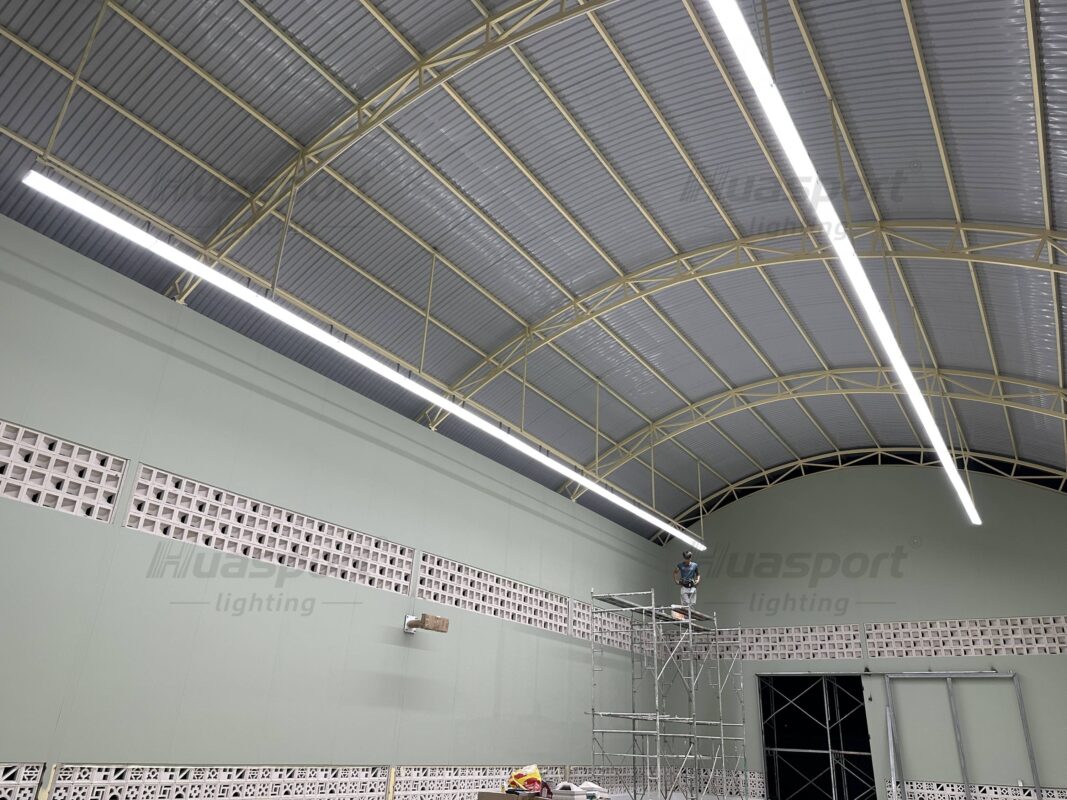
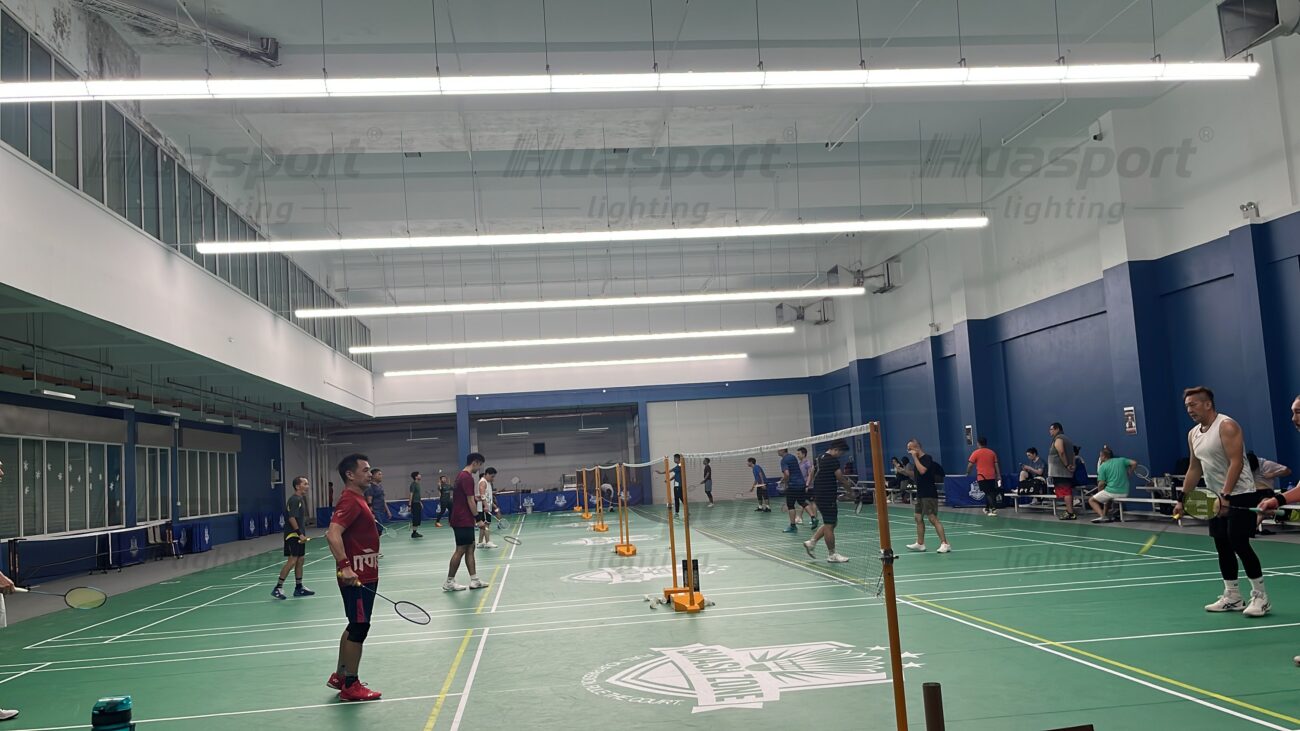
Case photos are useful, but they should be read carefully. A photo can show the hall height, ceiling material, wall color, court position, visible fixture rows and whether the row sits close to a wall or curtain. It can also reveal whether the buyer should ask more questions about end-court comfort.
A photo cannot confirm every project parameter by itself. It cannot prove the exact installed model, fixture count, output, certification or final lux result unless the project record says so. For public planning, the safer wording is to use the photo as a court environment reference and keep the technical numbers tied to the confirmed planning option.
That is the approach used here. The Australia case images show the kind of hall environment where end-court and side-wall checks matter. The technical planning option is the Huasport SAA 60W, 5130 lm, 24-fixture layout described above.
Heat, Fixing and Long-Term Fixture Stability
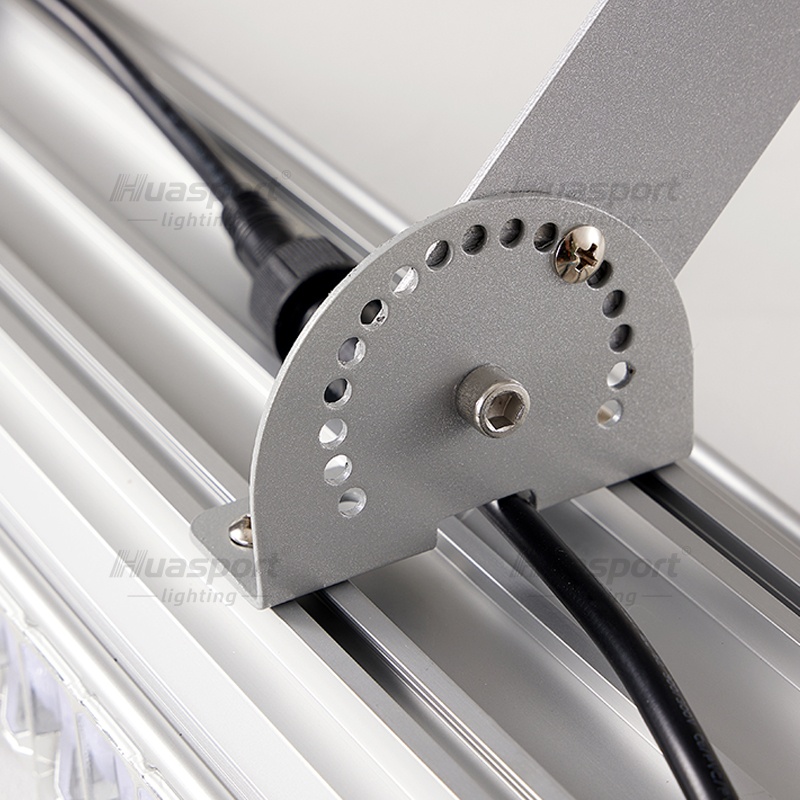
The rear structure of a badminton light is easy to overlook because buyers usually see the bright side first. Still, the back of the fixture matters. Huasport uses a thickened aluminum profile, and the adjustable bracket is fixed to the aluminum body rather than to a weak plastic section.
That detail matters in a suspended long-bar layout. Rows need stable aiming, and brackets need a firm base. If the aiming shifts after installation, the end-court player view can change as well. A clean quotation should treat the fixture body, bracket and aiming method as one system, not as separate small parts.
Short Buyer Checklist for Australian Badminton Halls
If you are comparing badminton hall lighting options in Australia, ask for answers that connect the layout to the court, not just to the fixture box.
- Which SAA-certified model is being quoted?
- Is the output 5130 lm for the 60W option?
- How many fixtures are used per court and per side?
- What is the mounting height and aiming angle?
- Does the row length match the main playing-area side?
- Where are the end courts, curtains, walls and columns?
- Has anyone checked the view from the rear court and sideline?
- Are the photos being used as environment references or as confirmed installation records?
When those questions are answered clearly, the buyer has a better basis for comparing options. They can see whether the plan is only bright on paper, or whether it has been checked from the positions where badminton players actually look up and play.
For project discussion, contact Huasport Lighting. For more planning notes, visit the Technical Articles archive.