 Badminton/Pickleball court lights
 Pickleball court lights
 Padel Court Lights
 Basketball court lights
 Tennis court lights
 Football field lights
Vietnam Badminton Hall Conversion: Can the Existing Lights Stay?

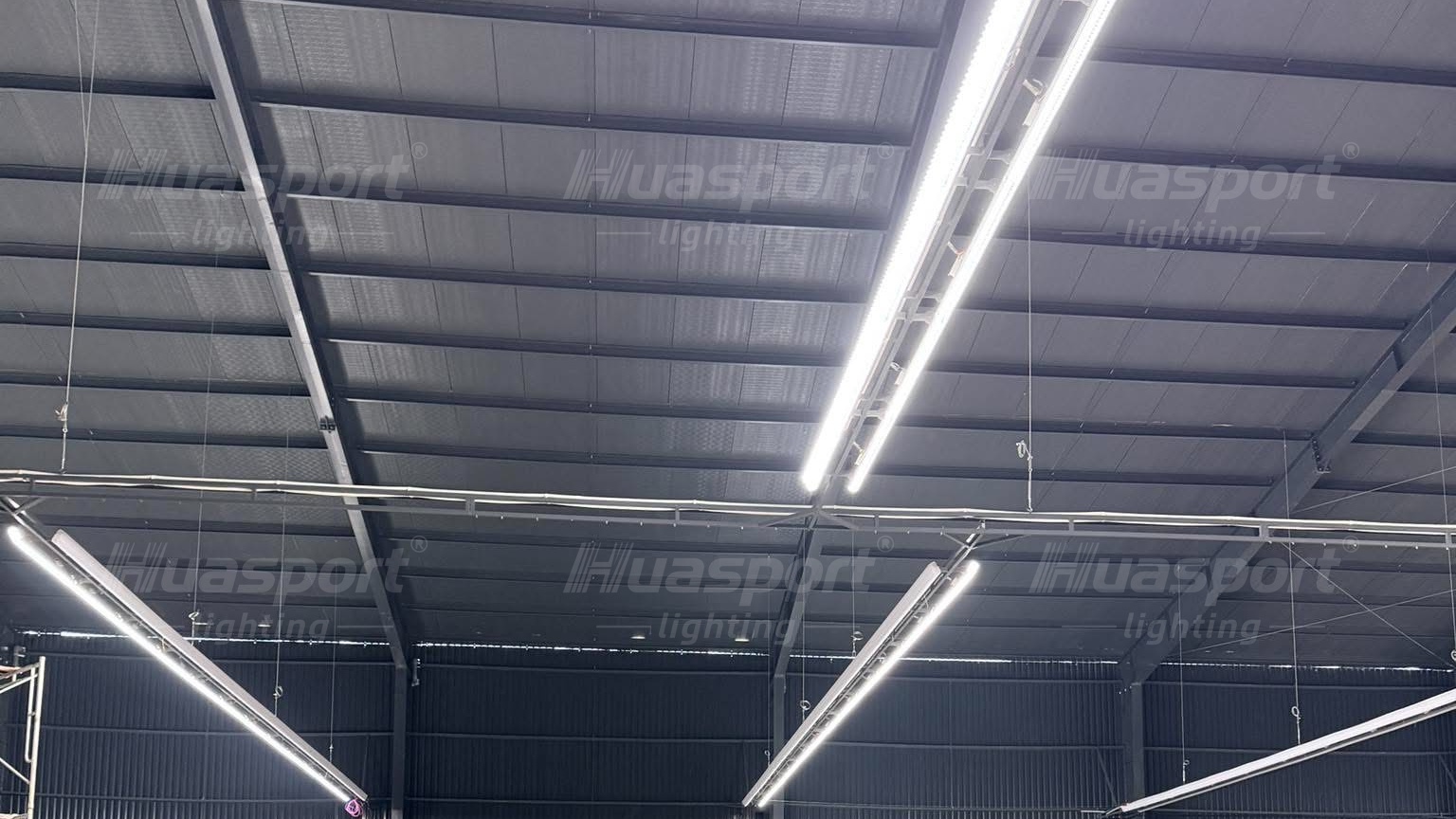
The hall is already there. So are the lights. When turning a basketball venue or general sports hall into badminton courts, keeping them is an obvious way to limit the work. The awkward question comes later: will a player lose sight of the shuttle against one of those lights?
For a badminton conversion in Vietnam, retain existing fixtures only after checking them against the proposed court layout and testing visibility from the playing area. A working lamp and a usable suspension point are two separate decisions. Some equipment may stay; some rows may need moving; some fixtures may need replacing.
Mark the new courts before deciding what stays
Draw the proposed sidelines and baselines beneath the existing lights. Include the spaces between courts and the routes around them. Now look at where each bright fitting falls relative to a player waiting in the rear court.
A row that served a basketball floor may sit directly above a new badminton court. Changing the floor markings changes the player’s relationship with that row. Keeping every ceiling position can therefore lock the new courts into a lighting arrangement designed for a different game.
Separate the survey into three decisions. Can the fixture provide suitable light for badminton? Is its position suitable? Can its support safely carry the proposed installation? Reusing a sound support does not require reusing the old lamp, and choosing a new lamp does not make the old suspension point suitable.
Take photos from the proposed baselines and sidelines as well as a wide view of the roof. For the fixture itself, record its model label and any available optical data. Those details help a lighting designer assess what is already installed before drawing a replacement scheme.
Will basketball still be played here?
Decide this before settling the lighting height. A permanent badminton conversion and a hall that still hosts basketball need different project briefs. Suspended fittings must be considered alongside the space needed for each sport, including equipment and ball trajectories.
Sport England’s sports-hall guidance treats the intended mix of sports as an early planning decision and provides a method for assessing existing halls. It is a useful planning reference, not a substitute for the requirements applying to your Vietnamese venue.
Tell the supplier whether basketball is being removed, retained occasionally or retained as a main use. A layout proposed for badminton alone should not quietly become the installation plan for a shared hall.
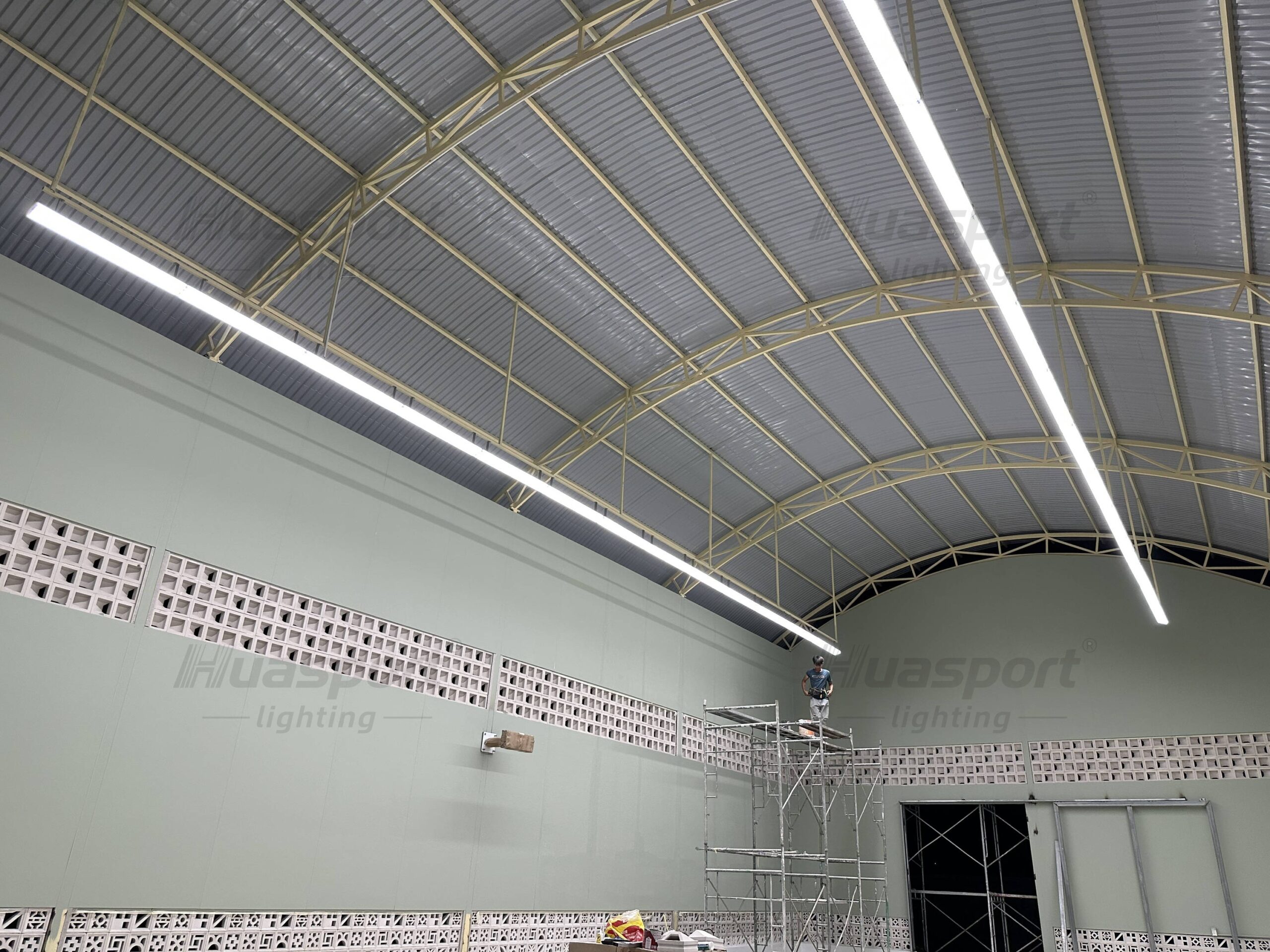
Side rows or overhead fittings: compare the view, then the work
Side rows are worth considering when existing overhead fittings sit in the player’s upward sightline. Moving the light source towards the sides changes that view, but the result still depends on the optics, aiming and space between courts. A neighboring row can also be visible to the player.
An overhead arrangement may be simpler to fit around existing suspension points. Assess it on its actual performance: can players follow a high clear through the upper space, and does a bright fitting interrupt that view? A bright floor alone cannot answer either question.
Where a comparison is possible, ask for the same proposed court plan and playing use to be assessed under each arrangement. Include mounting work in the quotation. A lower fixture price says little about the final conversion cost if the supports need substantial changes.
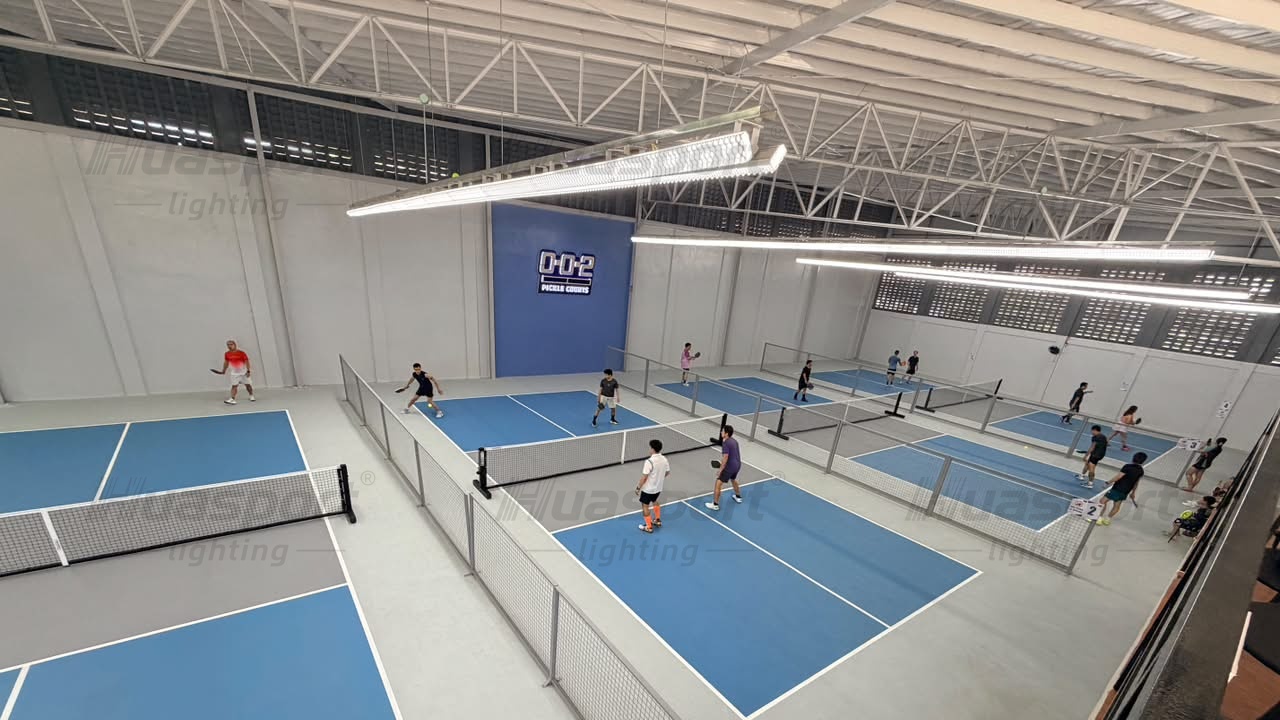
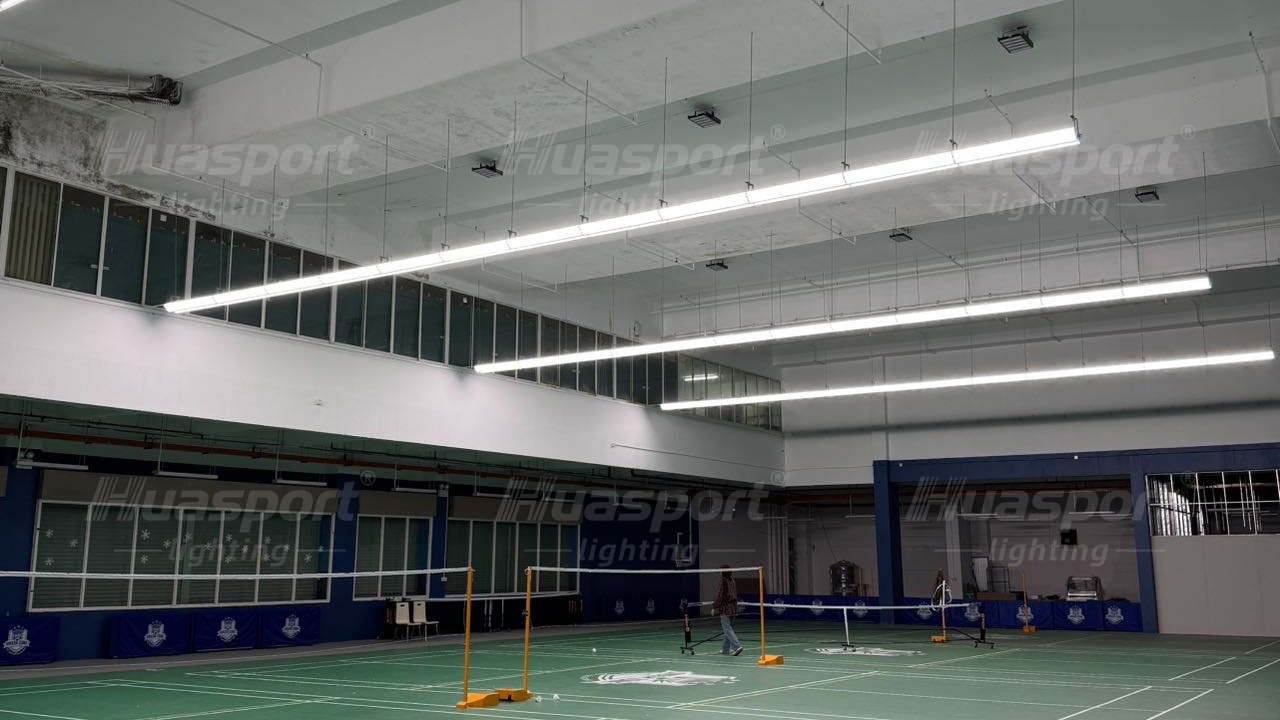
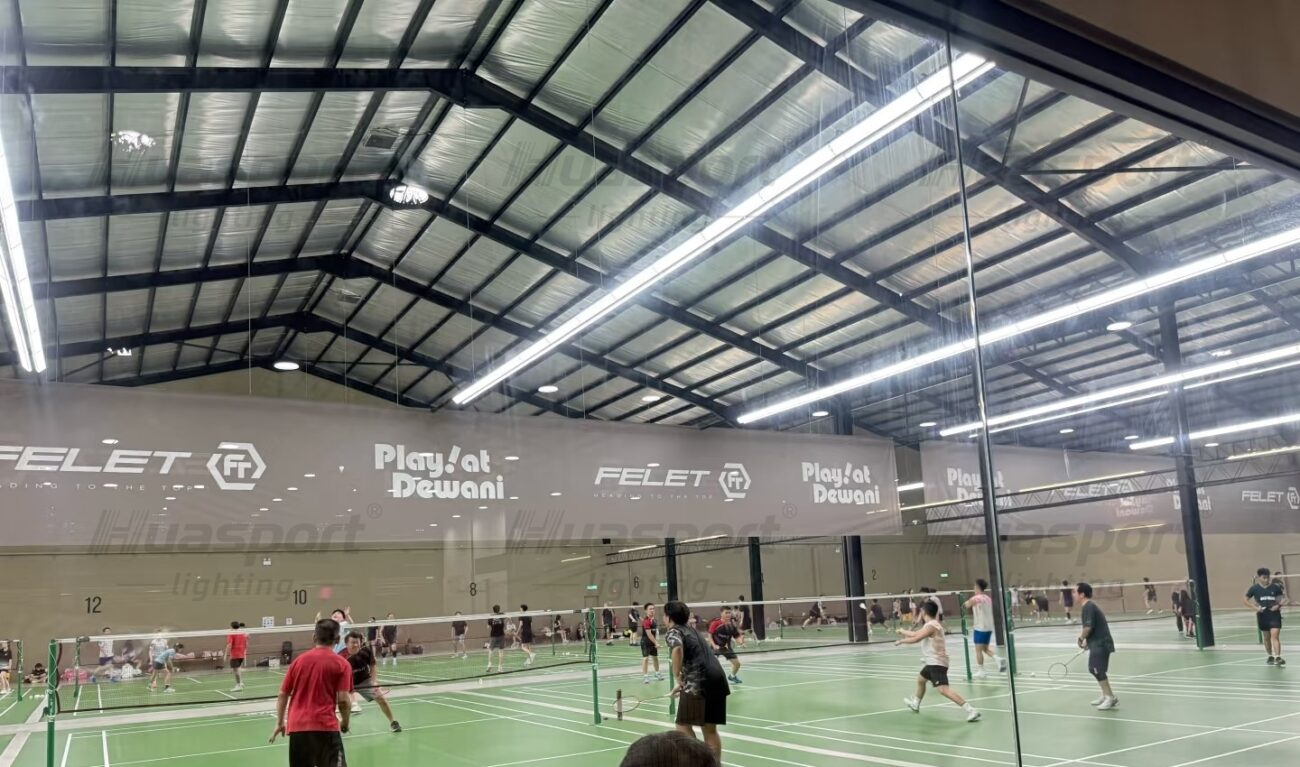
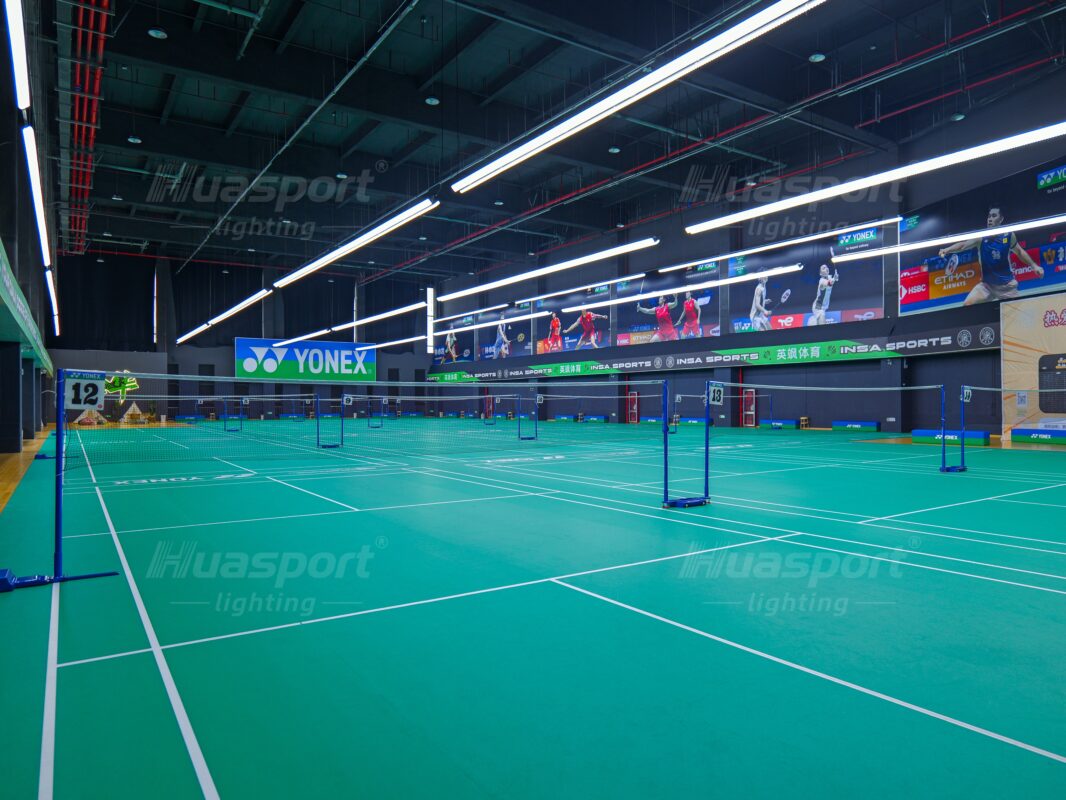
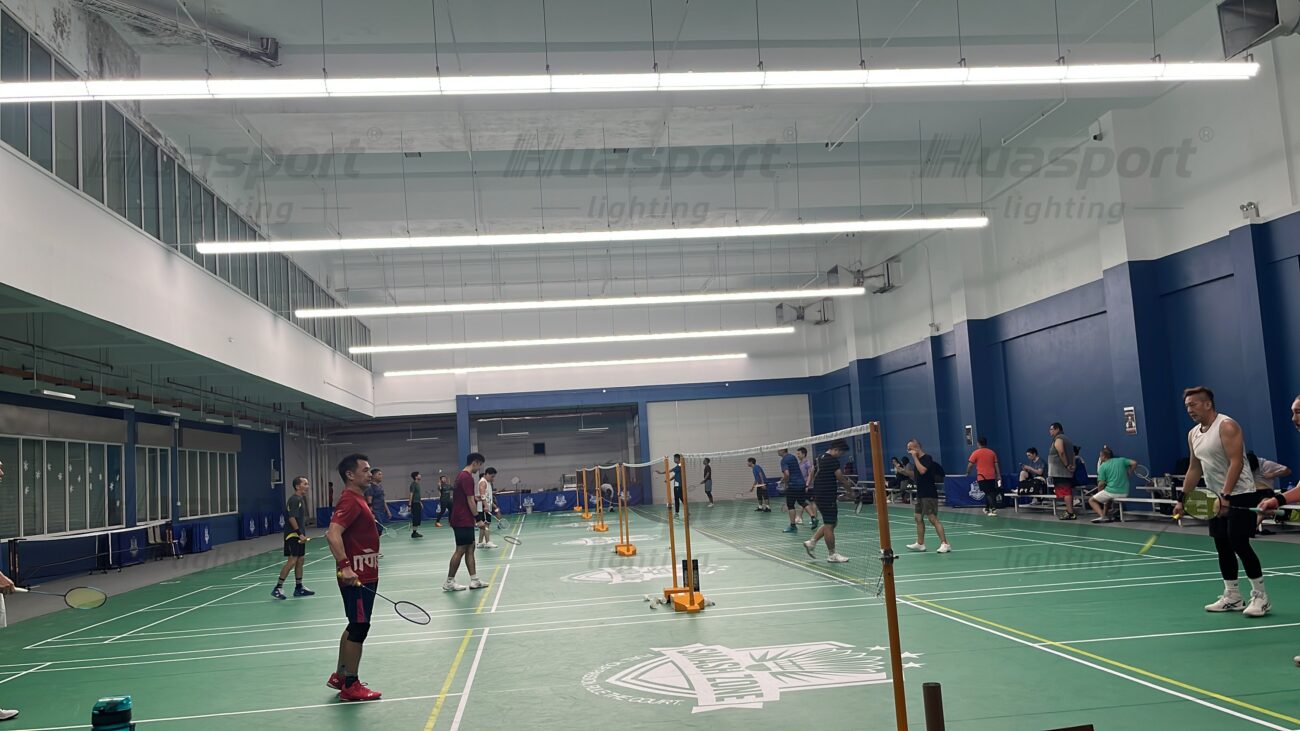
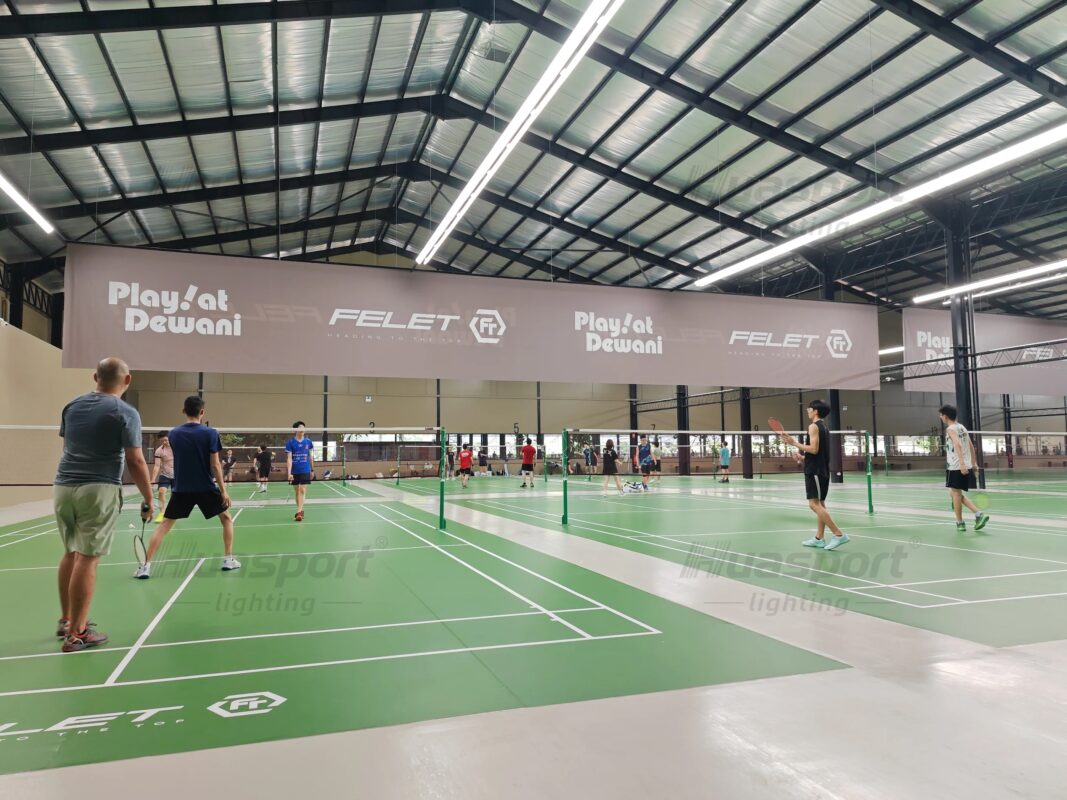
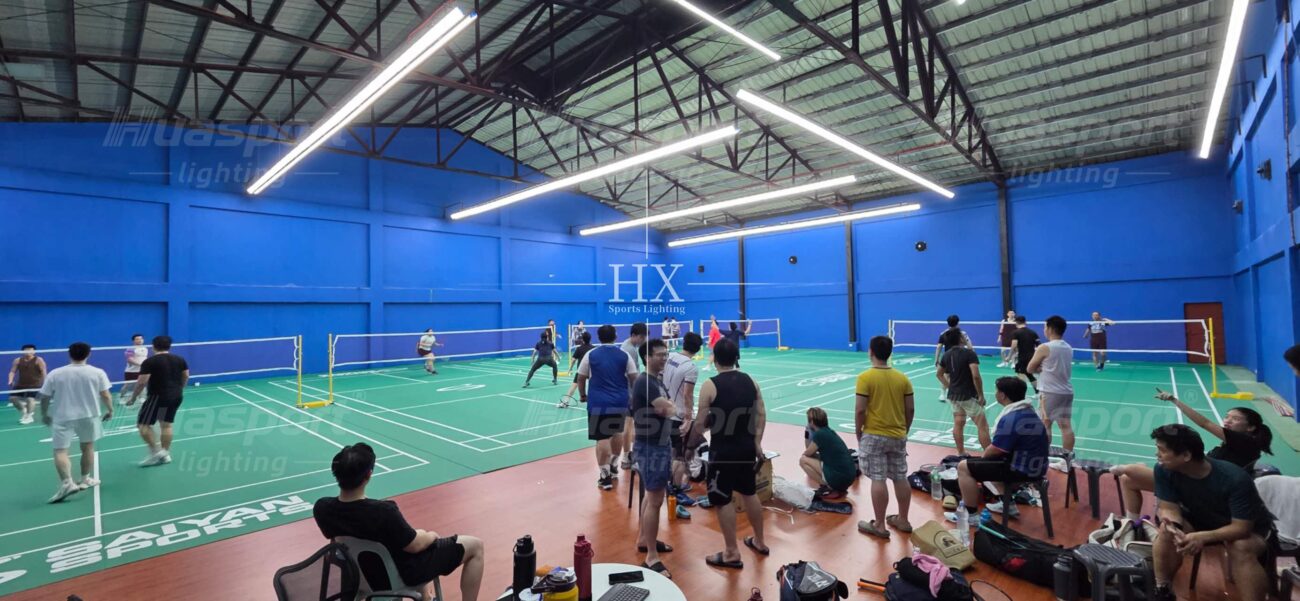
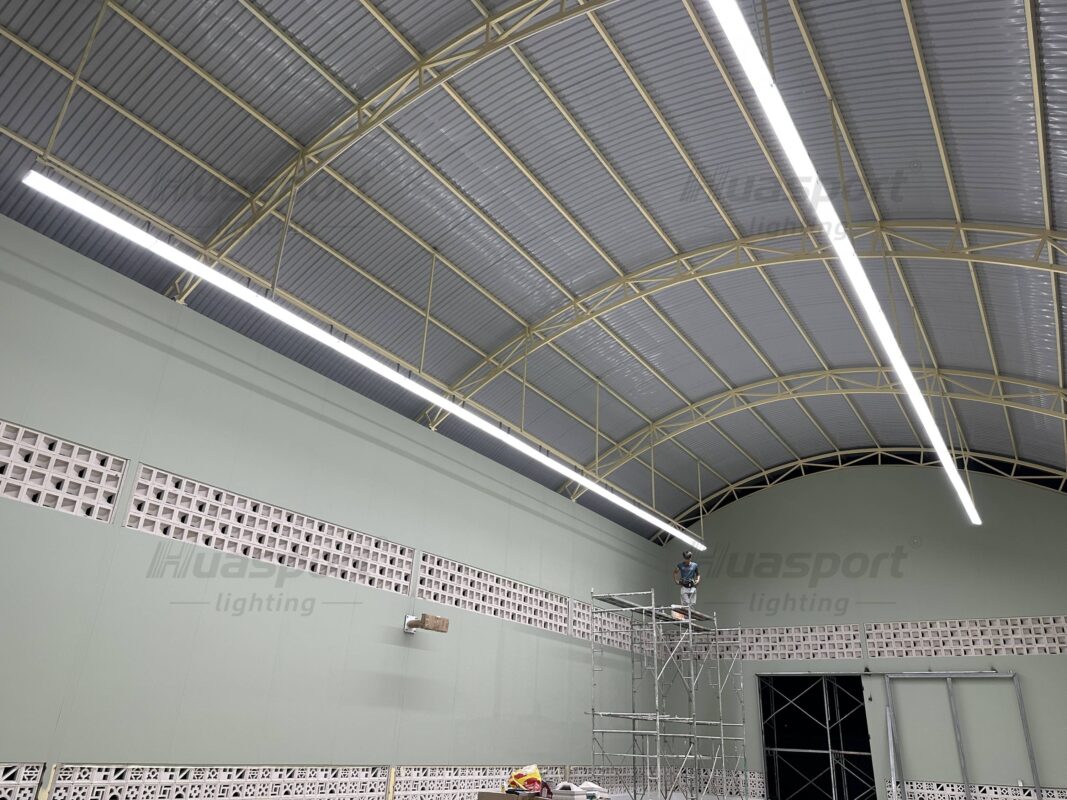
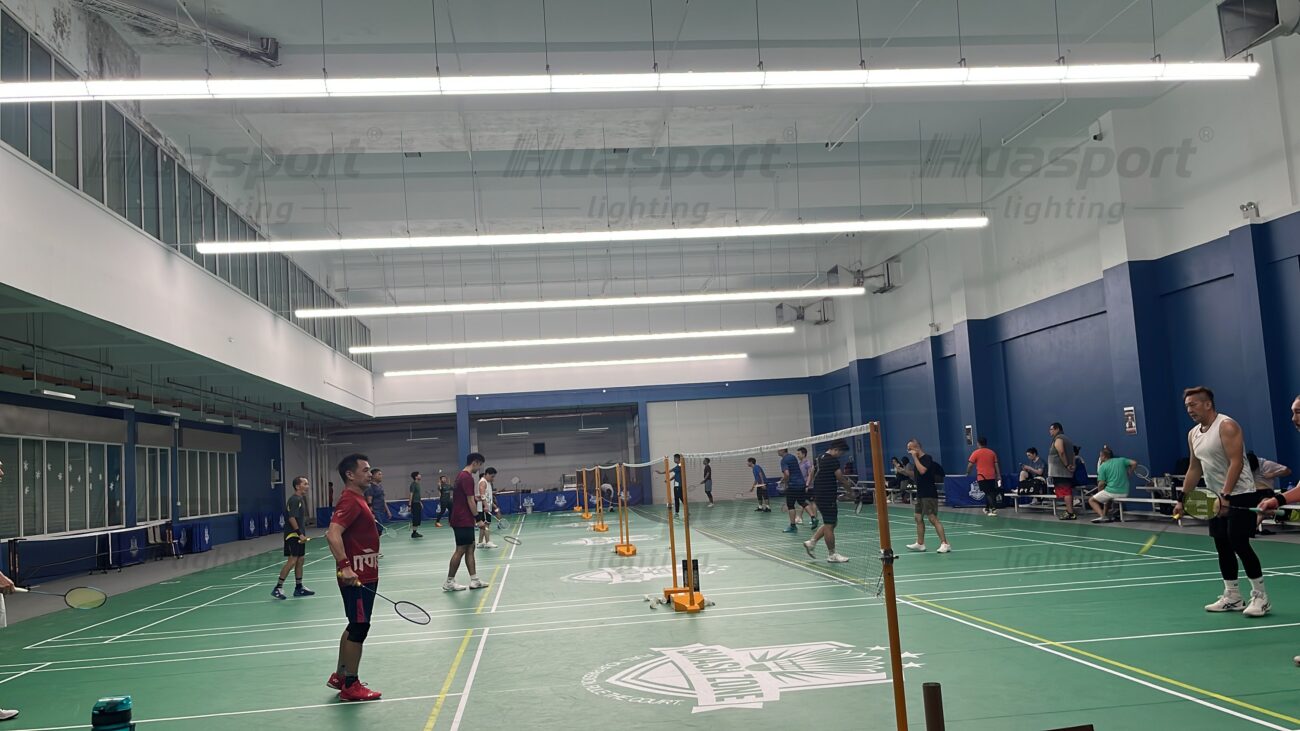
The Vietnam installation photos here illustrate roof structures and long-bar light rows. They are not a documented basketball-to-badminton conversion or verification of the model proposed below.
One S90 option for a dedicated badminton layout
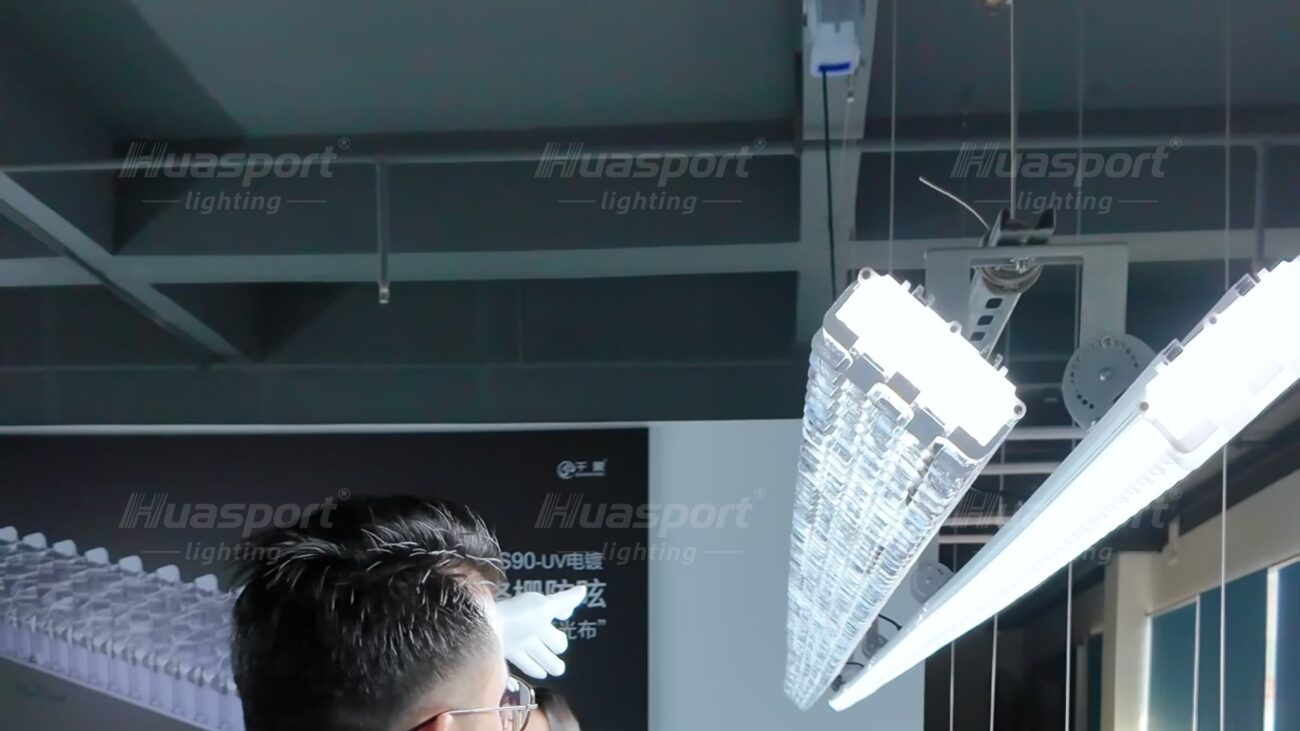
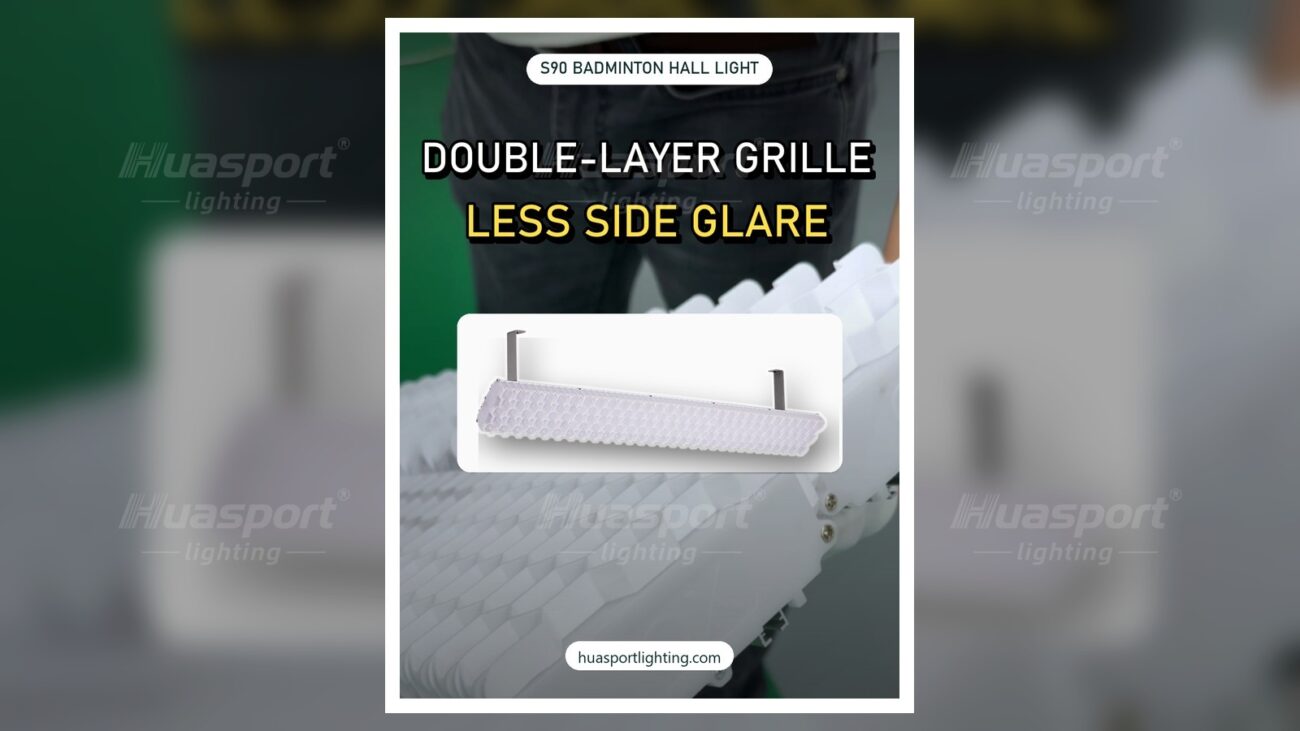
For a dedicated badminton scheme, Huasport offers WM-S90-1160-DD-42W-108Z as one planning option for Vietnam. This is the 1.16 m, 42W S90 fixture with a 13 cm body and a double-layer honeycomb anti-glare grille. The table sets out a reference for discussion, not an instruction to lower every existing hall to this height.
| Item | Planning reference |
|---|---|
| Model | WM-S90-1160-DD-42W-108Z |
| Fixture dimensions and power | 1.16 m length; 13 cm body width; 42W |
| Quantity per court | 24 fixtures, with 12 fixtures on each side |
| Arrangement | Two continuous rows along the sides |
| Mounting and aiming | 5 m fixture height; 30-degree inward tilt |
| Physical row length | 12 x 1.16 m = 13.92 m beside the 13.4 m main playing length |
| Illuminance reference | 300-400 lux+ average as a commercial-training planning target |
| Competition brief | Review a 500 lux+ average target separately where required |
The final lighting calculation must check distribution and uniformity across the intended playing and surrounding areas. Row length does not establish run-off area illumination, and these targets are not measured results for the photos. The 5 m fixture height also needs a separate clearance review; it is not approval for a hall retaining basketball.
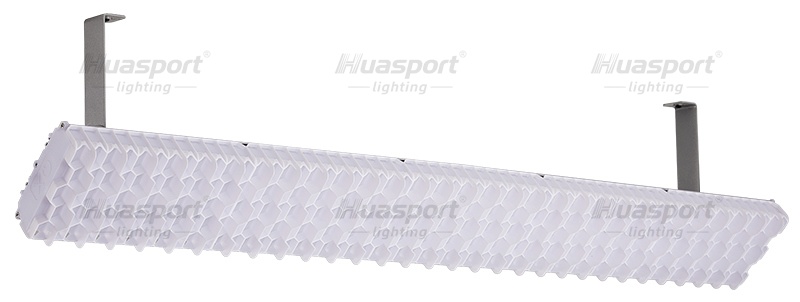
The S90 grille is designed to reduce side glare. Its role matters during a conversion because new court positions can expose players to a light source from directions that were less relevant to the previous activity. Read the badminton court lighting guide for the wider layout discussion.
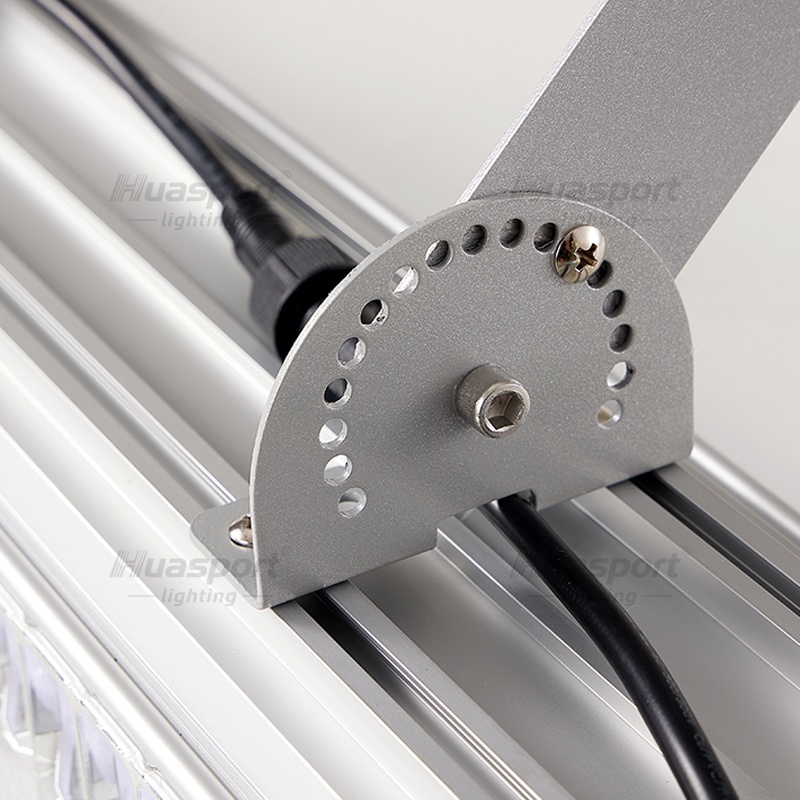
The adjustable bracket fixes to the aluminum profile. Ask the installer to show how the proposed support will hold the fixture at the specified position and inward angle. Reusing old mounting points is a decision to verify on that drawing, not an assumption to make from a roof photo.
Ask for a quotation that separates retained and replaced items
A useful conversion quotation should identify the fixtures being retained, relocated and replaced, with the related mounting work shown separately. That makes it possible to compare the work against the proposed courts instead of comparing two unexplained lamp totals.
Send the existing hall dimensions, intended court count, roof and fixture photos, and the sports you plan to keep. Include any complaint you already hear from players: losing a high shuttle, a bright fitting above the rear court, or discomfort from the next court’s row.
If the conversion includes other court types, identify them at this stage. Our pickleball court lighting guide covers that layout separately; for an enclosed glass-court area, use the Padel court lighting guide. The badminton fixture count should not be copied across the whole venue.
Send Huasport your existing-hall plan and tell us what you hope to keep. We can use that brief to discuss a suitable fixture and layout before you commit to a conversion order.