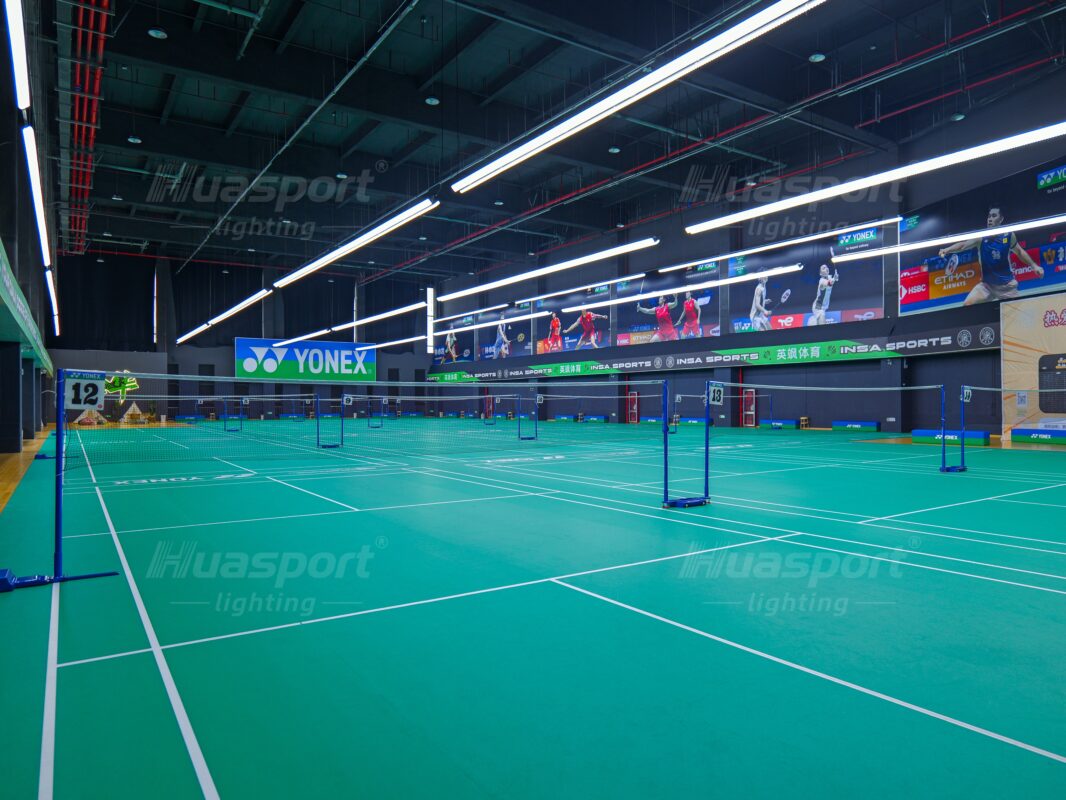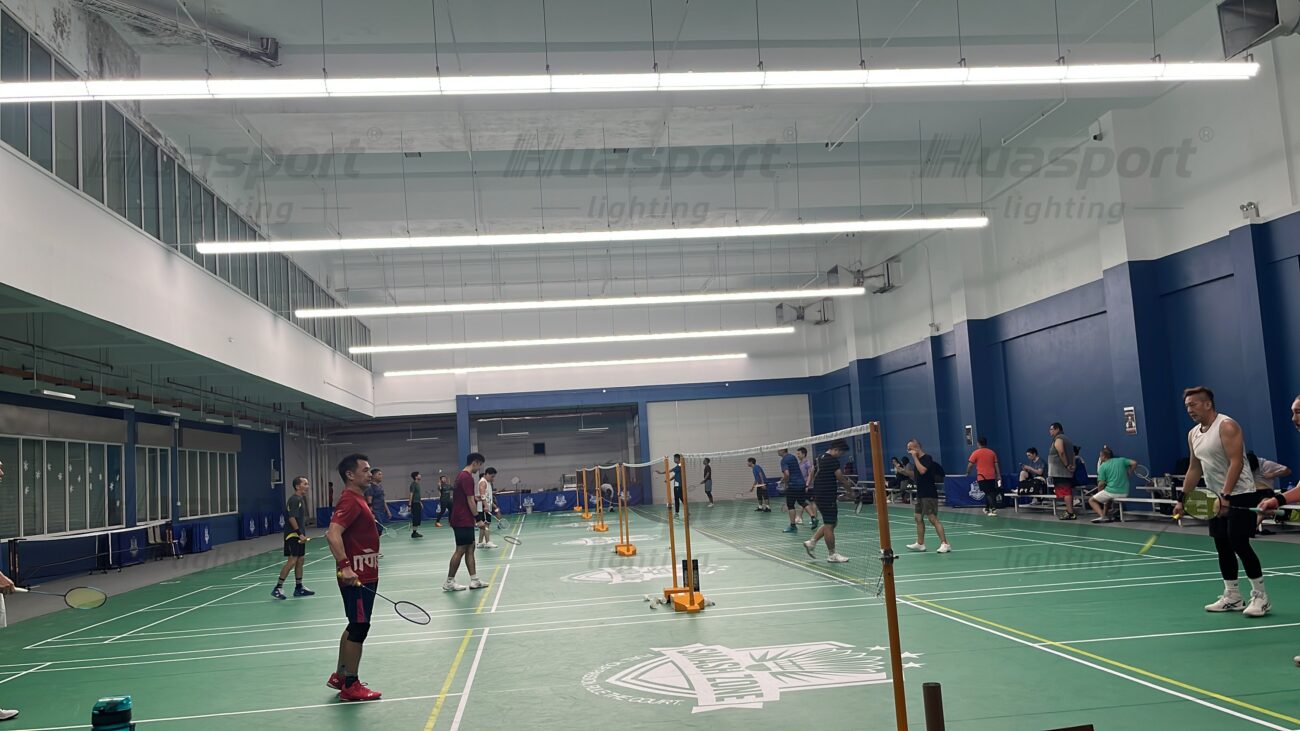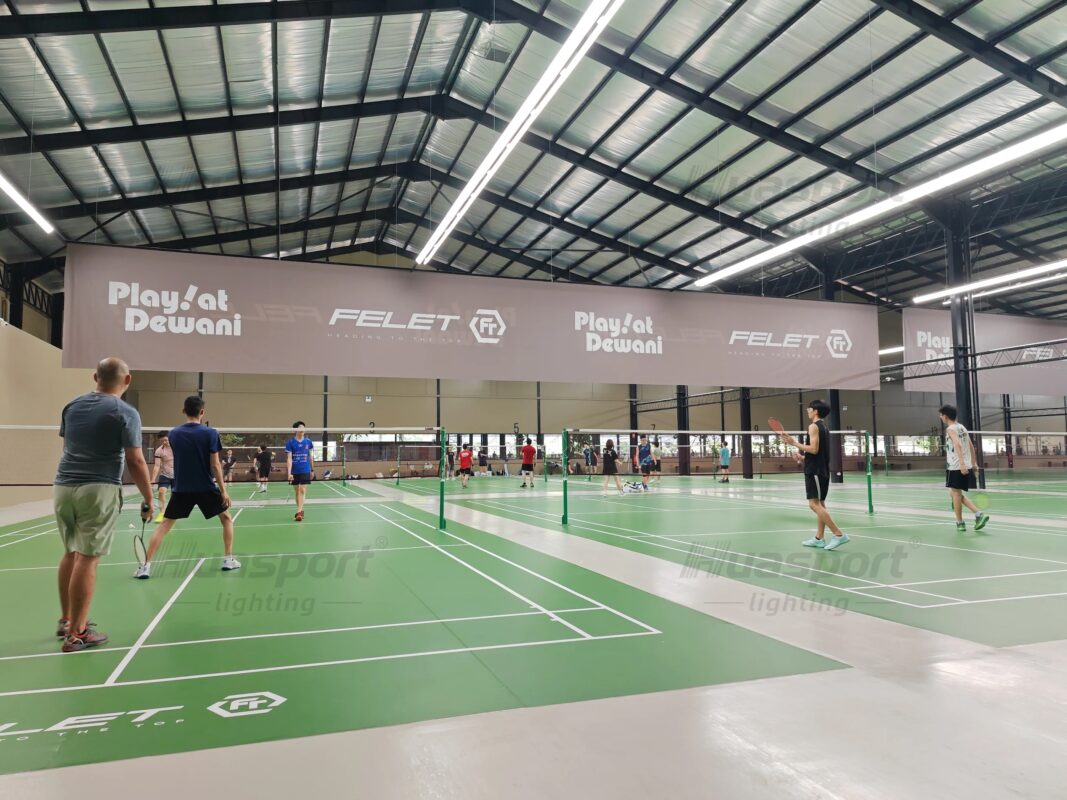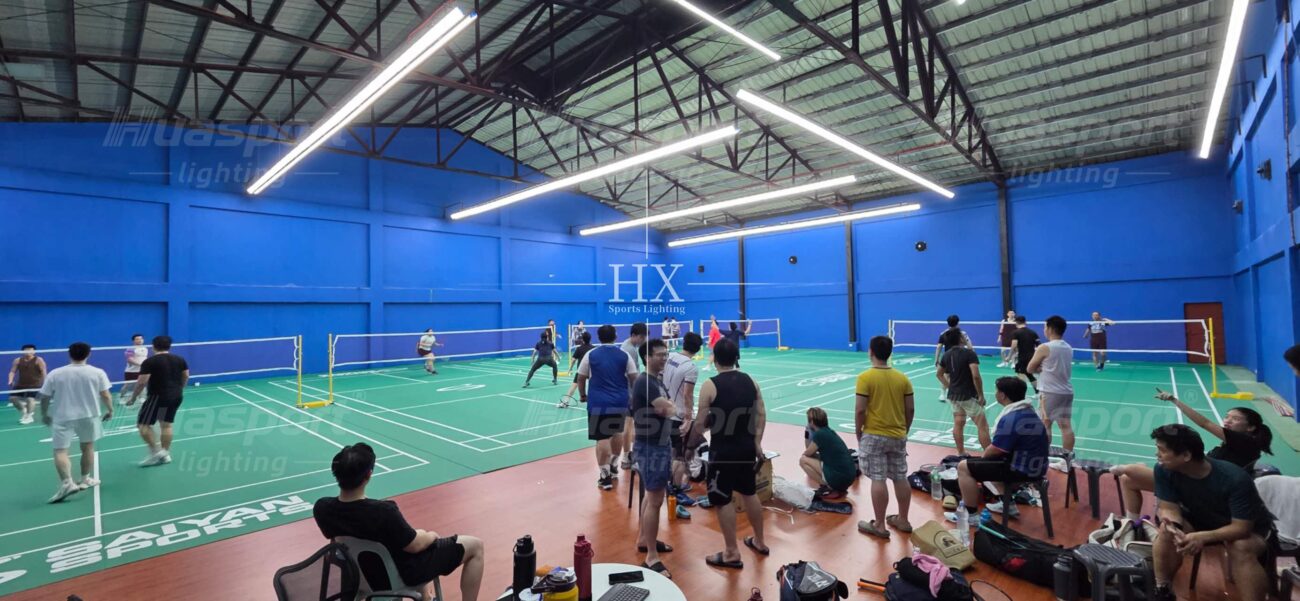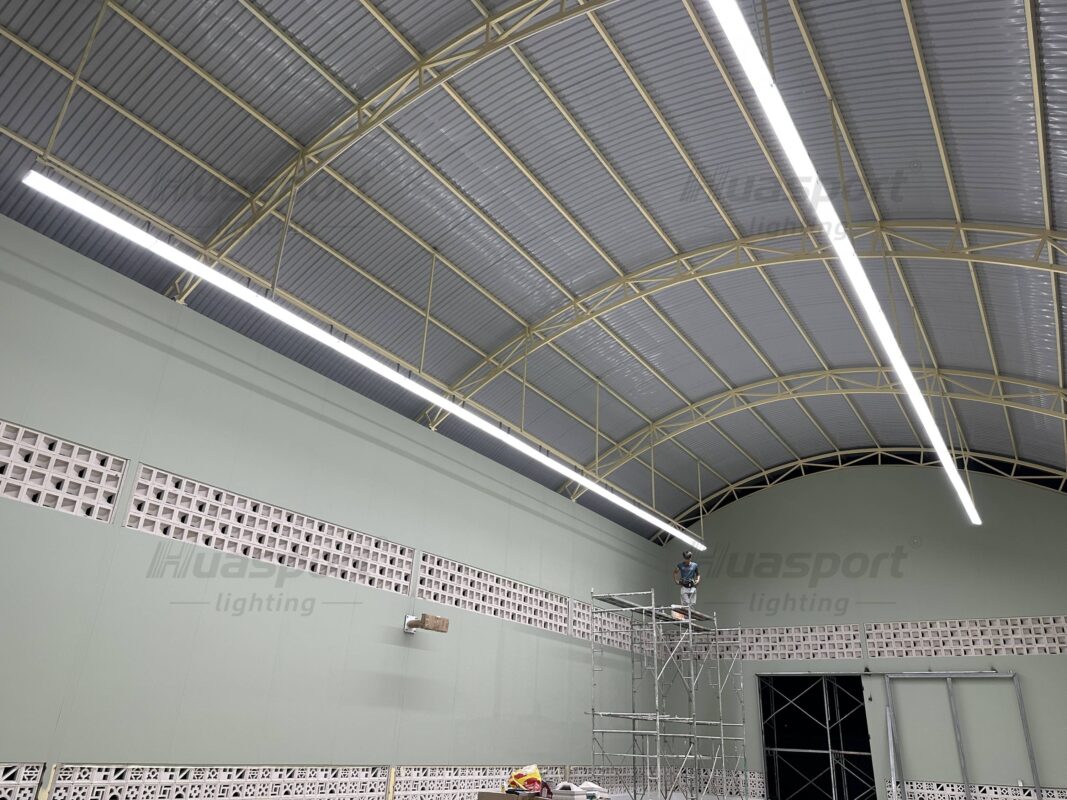
 Badminton/Pickleball court lights
 Pickleball court lights
 Padel Court Lights
 Basketball court lights
 Tennis court lights
 Football field lights
Badminton Hall Lighting Without Shade Curtains: S90 Plated Fixture Checks

Shade curtains are often discussed only after a badminton hall starts getting complaints. The court may be bright enough on paper, but a player looks up for a clear, sees the light from the opposite row, and the first reaction is to block the view with curtains.
That can solve one problem while creating another. A hall with heavy curtains can feel smaller, darker at the edges and less open for training or commercial use. If the owner wants to keep the space open, the lighting decision has to move upstream: check the fixture structure and the player-view angle before the curtains become the only option.
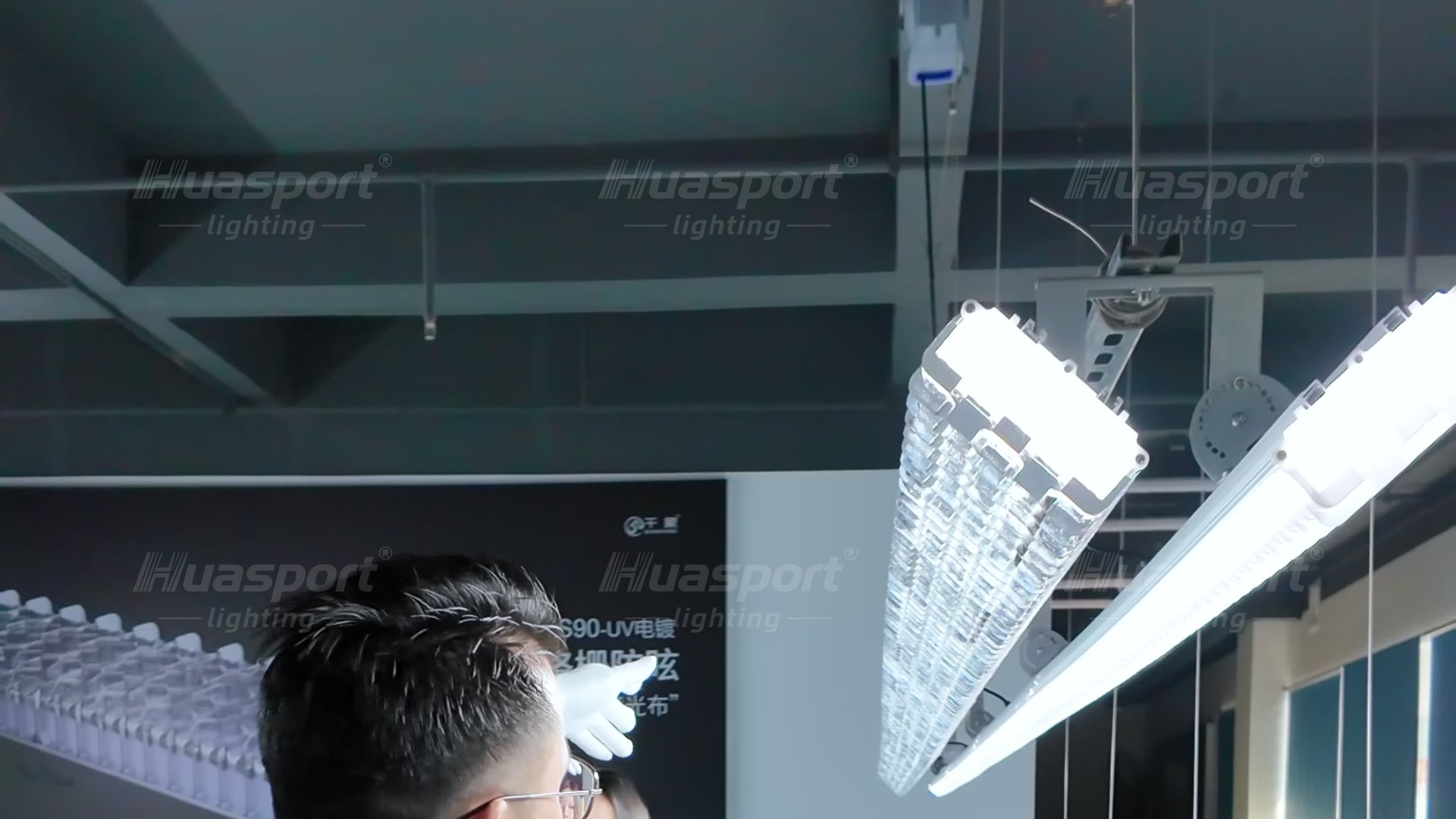
Today’s video focuses on that exact situation. It uses the Huasport S90 plated anti-glare fixture as the example because brightness is only part of the decision. The harder question is what the player sees when the fixture row is in the natural upward viewing path.
Quick Planning Answer
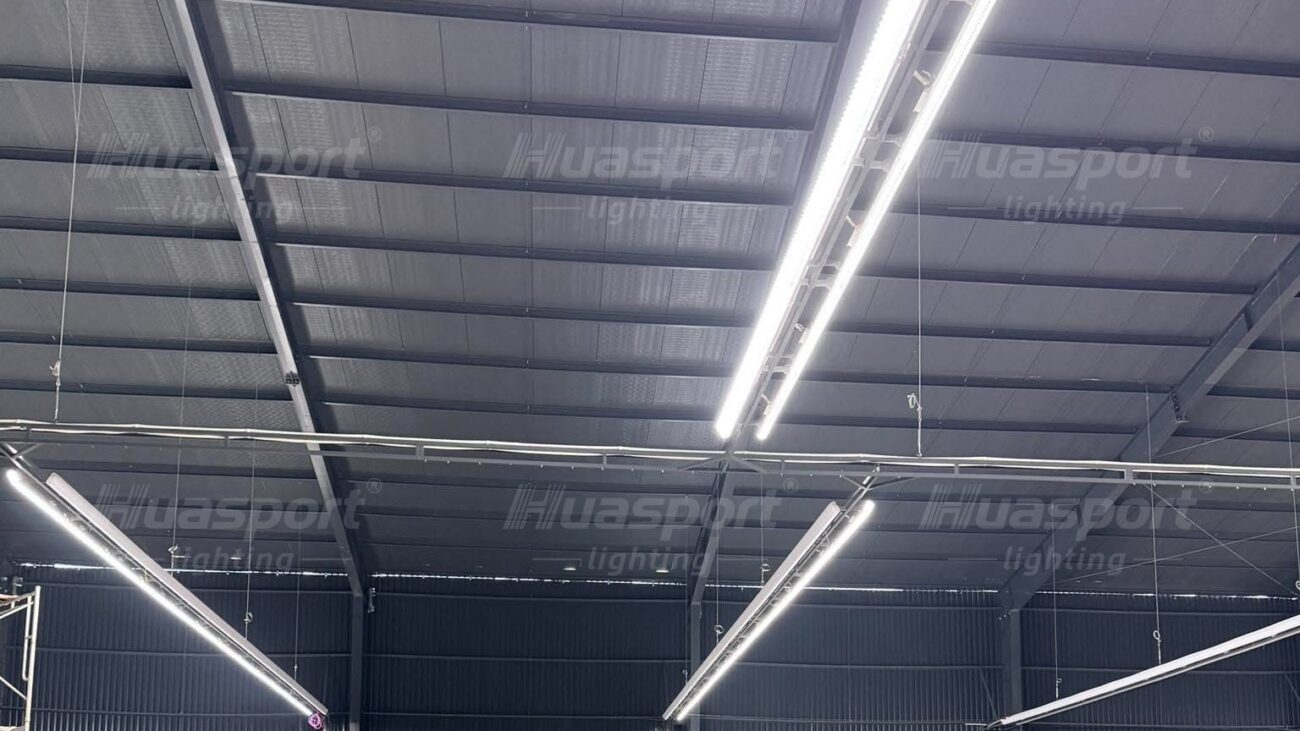
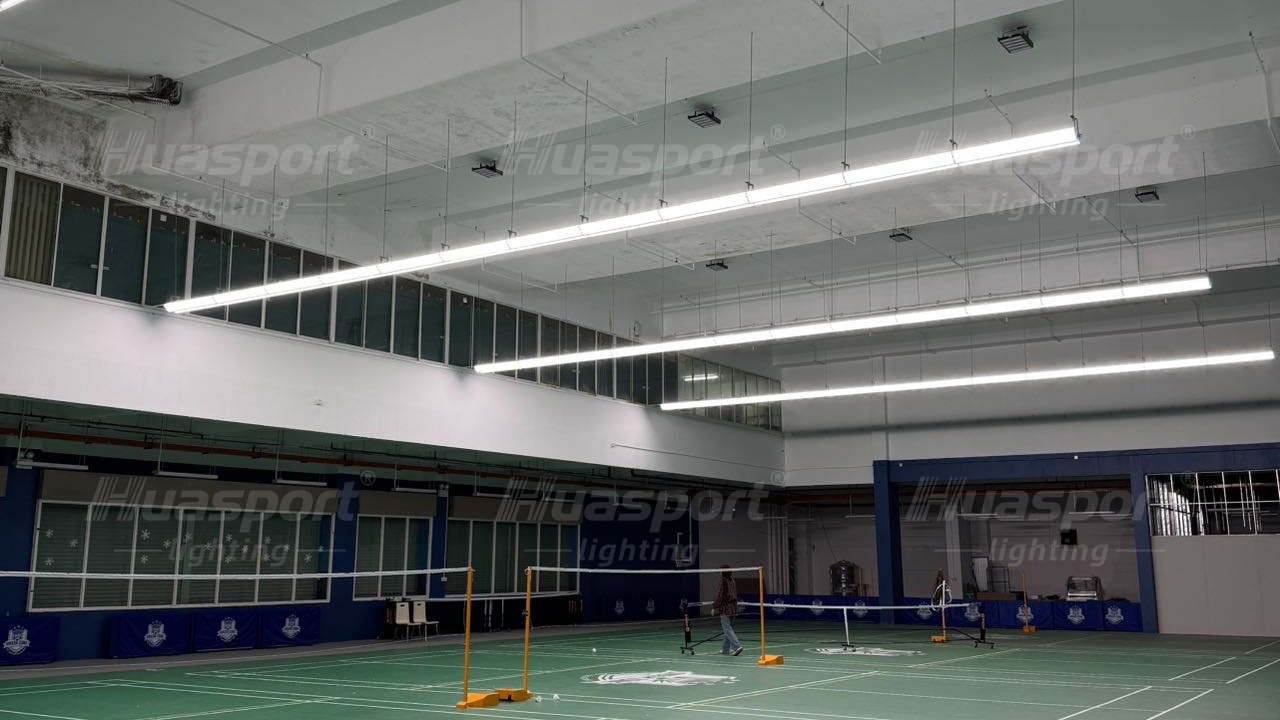
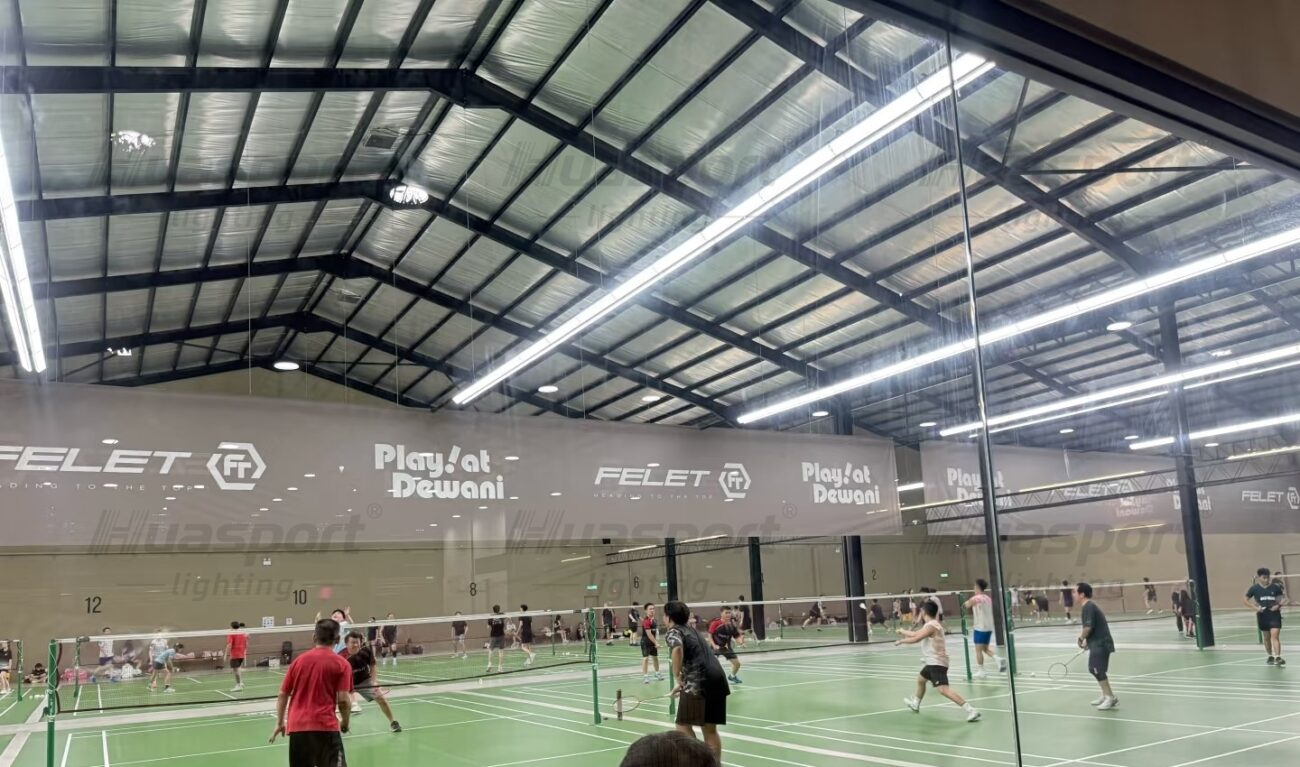
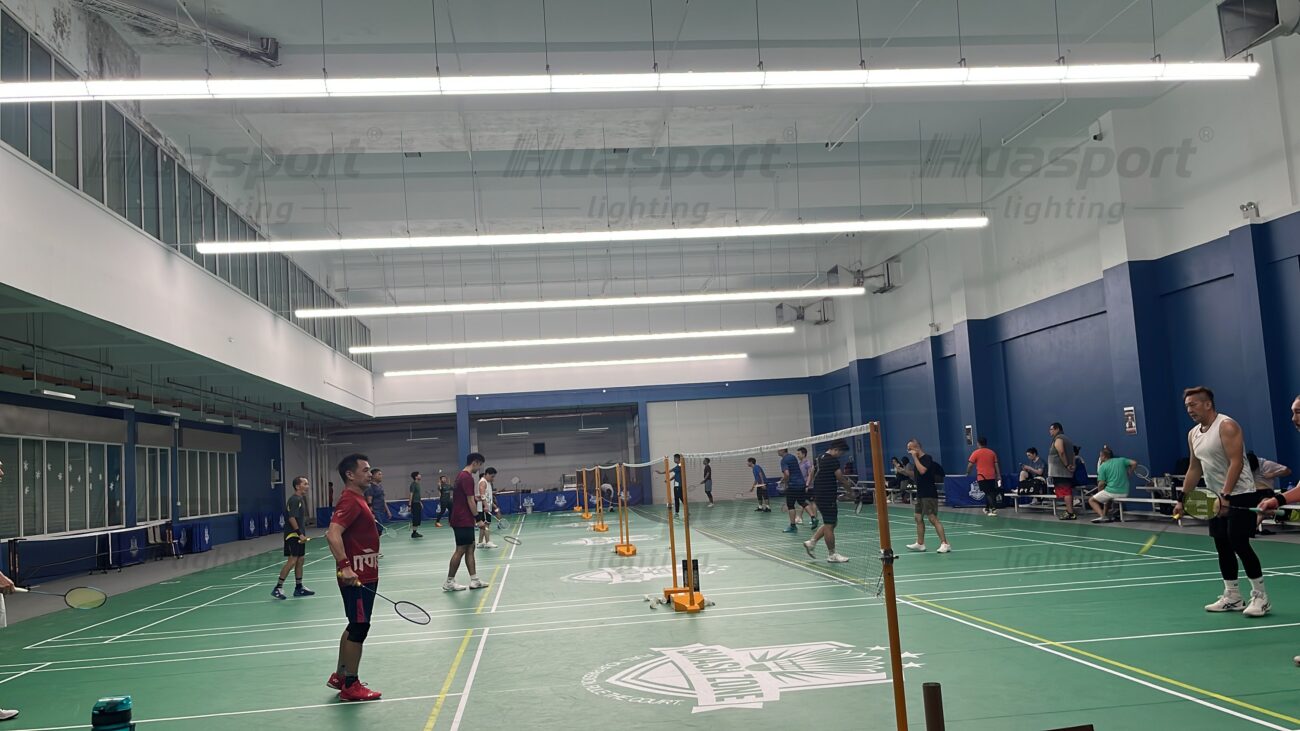
For an indoor badminton hall where the owner wants to reduce the need for shade curtains, one practical Huasport reference is the S90 1.16 m 42W fixture, model WM-S90-1160-DD-42W-108Z. A single-court planning layout uses 24 fixtures, with 12 fixtures on each side, mounted around 5 m high and tilted 30-degree inward. Twelve 1.16 m fixtures form a 13.92 m continuous row, covering the 13.4 m main playing-area side.
That layout targets 300-400 lux+ for commercial training or recreational badminton. If the hall needs competition use, the average illumination target should be reviewed toward 500 lux+ before quotation.
This is a planning reference, not a claim that every video hall uses the exact same installed count. Before quotation, confirm court quantity, ceiling height, mounting structure, fixture model, target illuminance and the viewing angle from the backcourt.
Why Curtains Enter the Conversation
Curtains are usually not the first thing a hall owner wants to buy. They appear when the lighting row, the opposite court and the player’s eyes form a bad line. The player is not complaining because the floor is too dark. The player is reacting to a bright source entering the upper field of view.
That distinction matters. Adding more wattage does not fix that kind of discomfort. It can make the court look stronger in a lux reading while making the player-view problem worse. The better first check is simple: stand on the back line, look toward the high-clear path and see whether the opposite row or side row becomes the thing your eyes notice first.
For buyers comparing badminton court lighting, that player-view check is often more useful than a catalogue photo. A court can photograph well from the doorway and still feel wrong once a player starts tracking the shuttle.
What the S90 Plated Version Is Trying to Solve
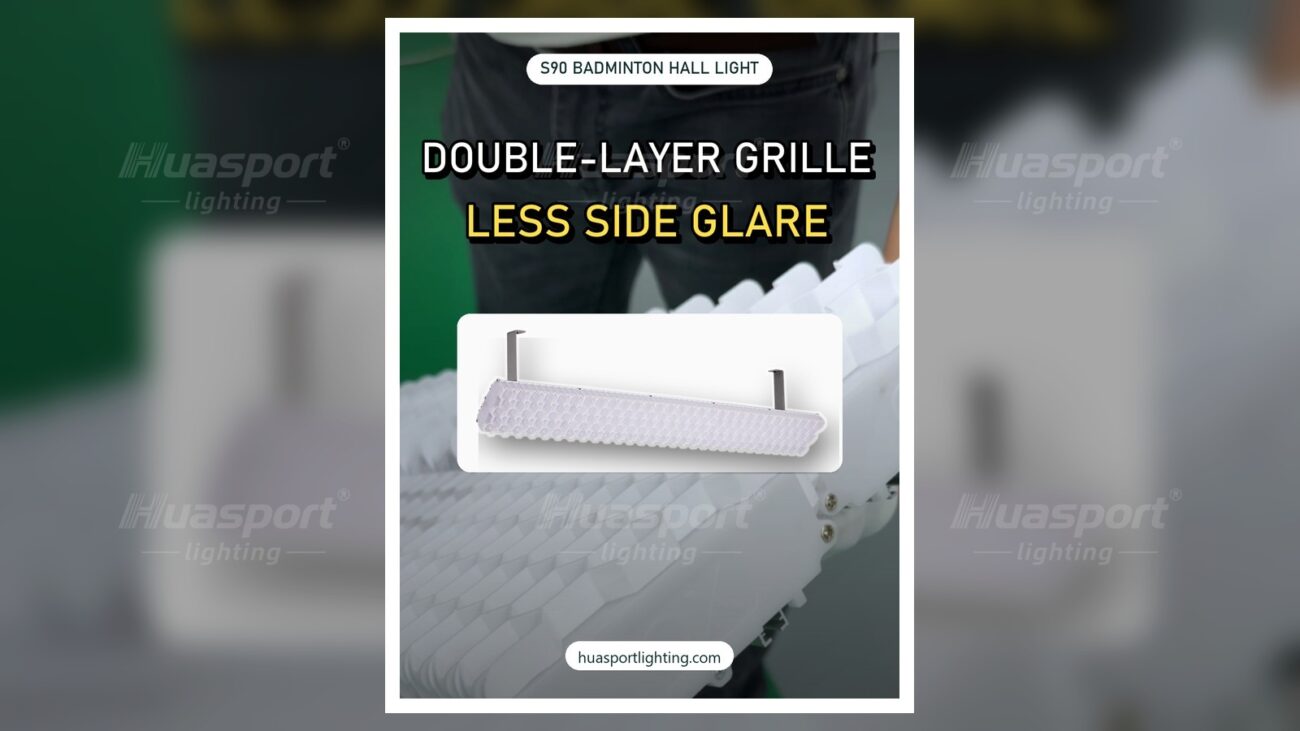
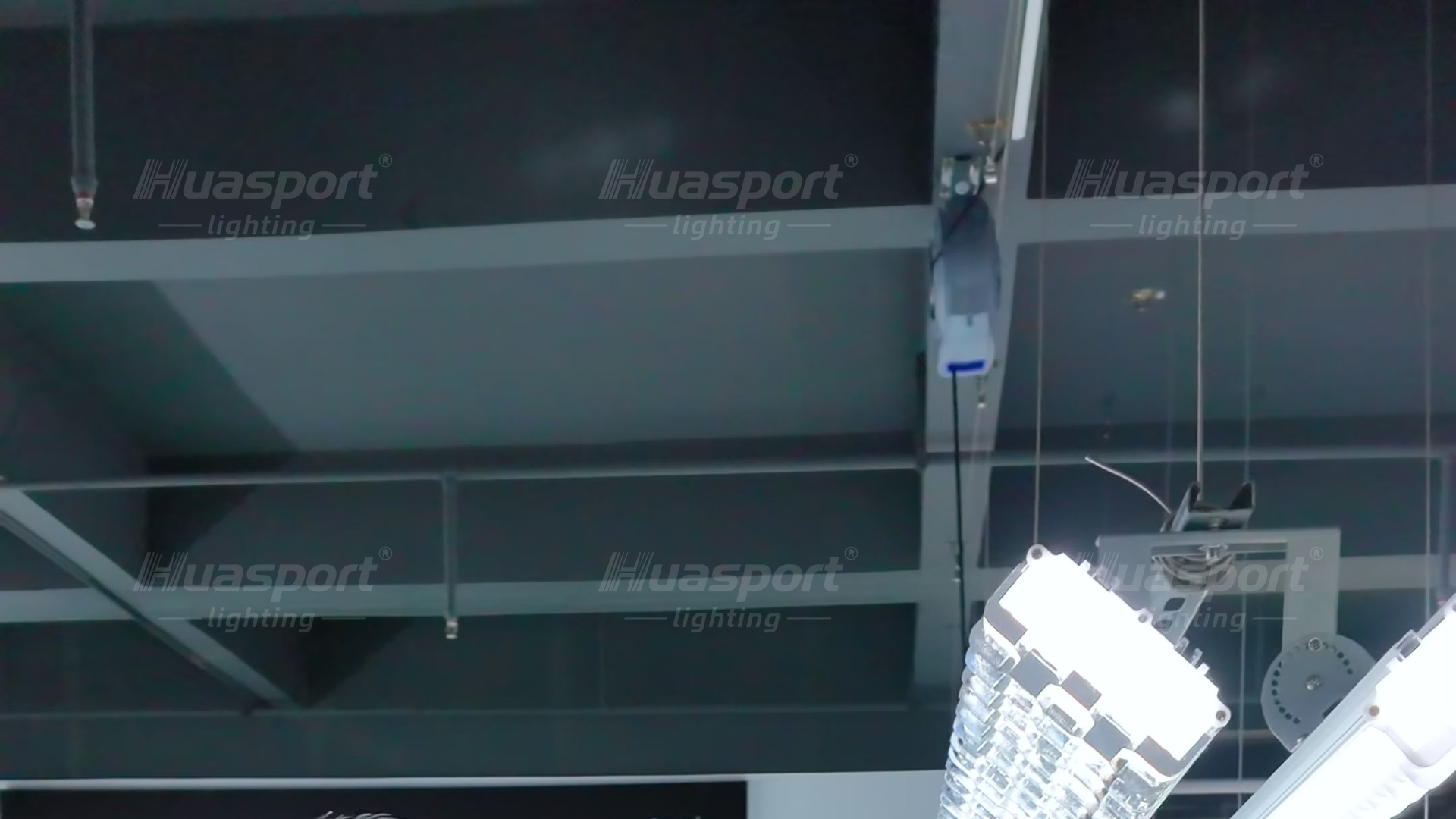
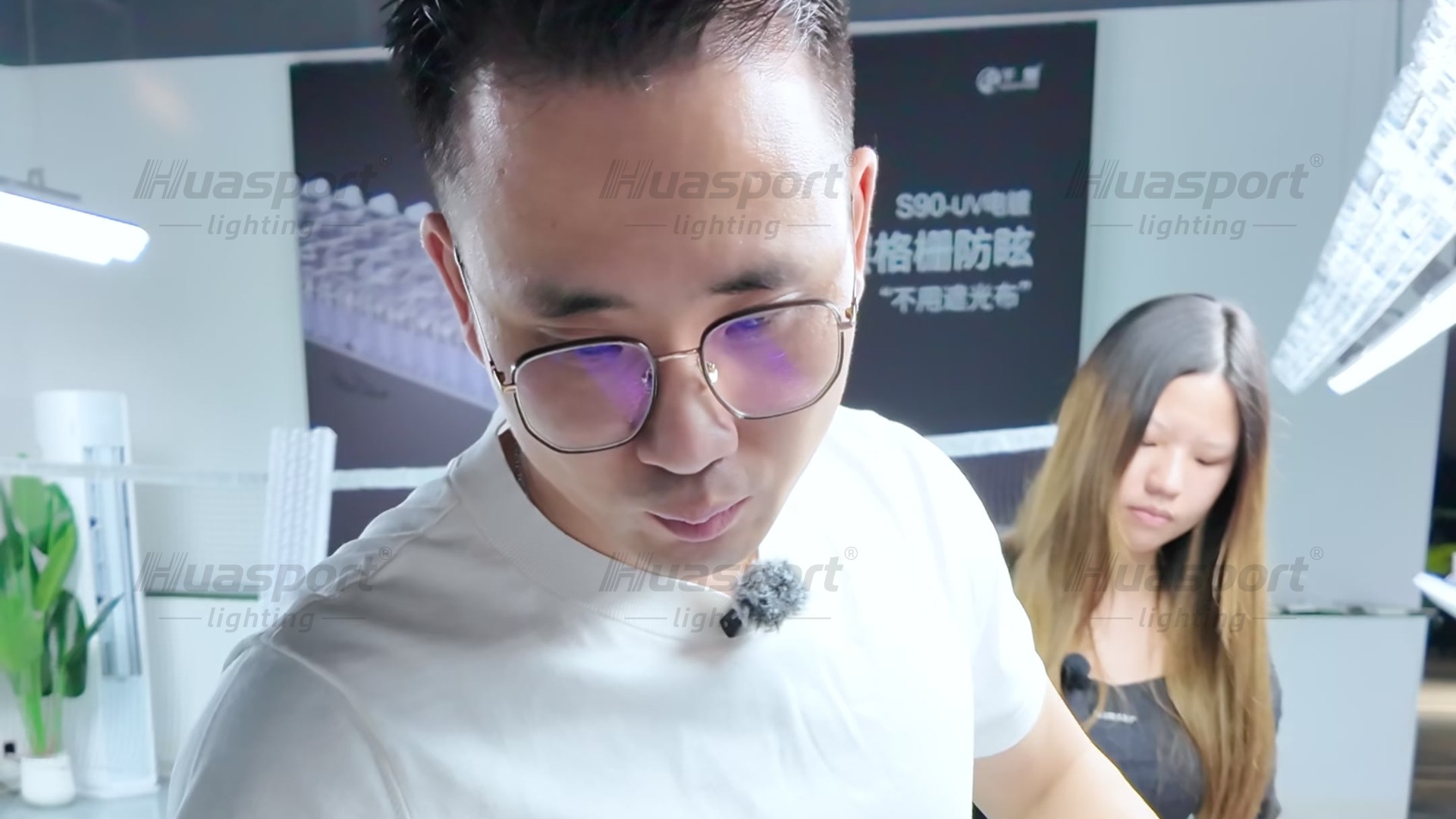
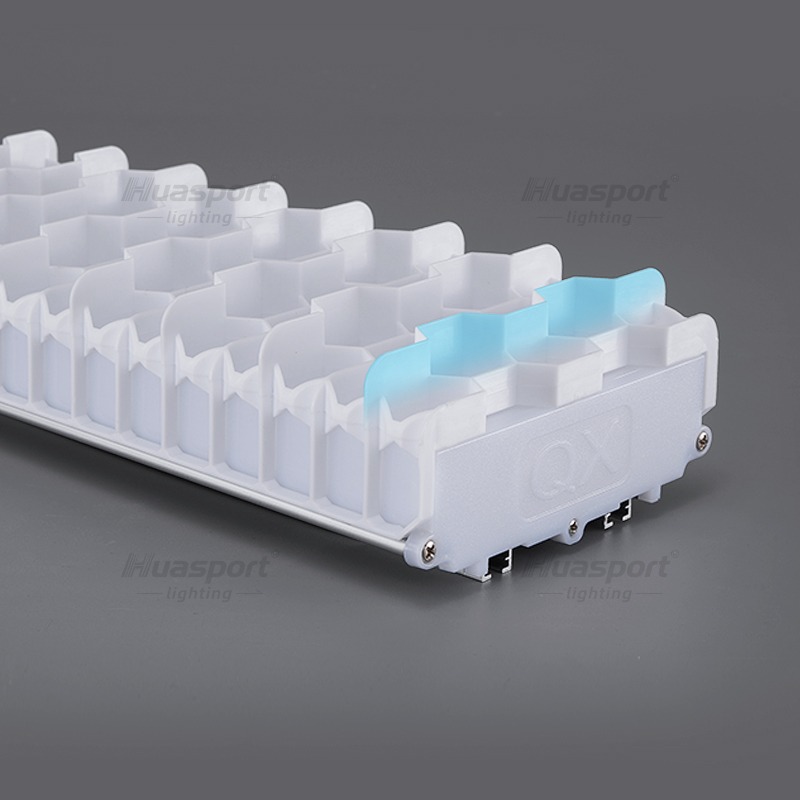
The S90 has a 13 cm body width and a double-layer honeycomb anti-glare grille. A normal honeycomb grille may control some side light, but the S90 adds another grille layer so the player sees useful light with less direct view into the source from common court angles.
The plated version adds another design pressure. A plated surface can look clean and premium, but it also reflects strongly. That is why direct glare cannot be ignored. The video’s useful point is not a promise that glare disappears from every angle. The useful point is that the fixture body, grille depth and viewing path must be checked together.
For Huasport, this anti-glare direction comes from years of court feedback. The double-layer grille structure is a patent-protected design direction, and the plated S90 version is used when a hall wants a more refined product appearance without giving up player comfort.
Side Glare and Direct Glare Are Different
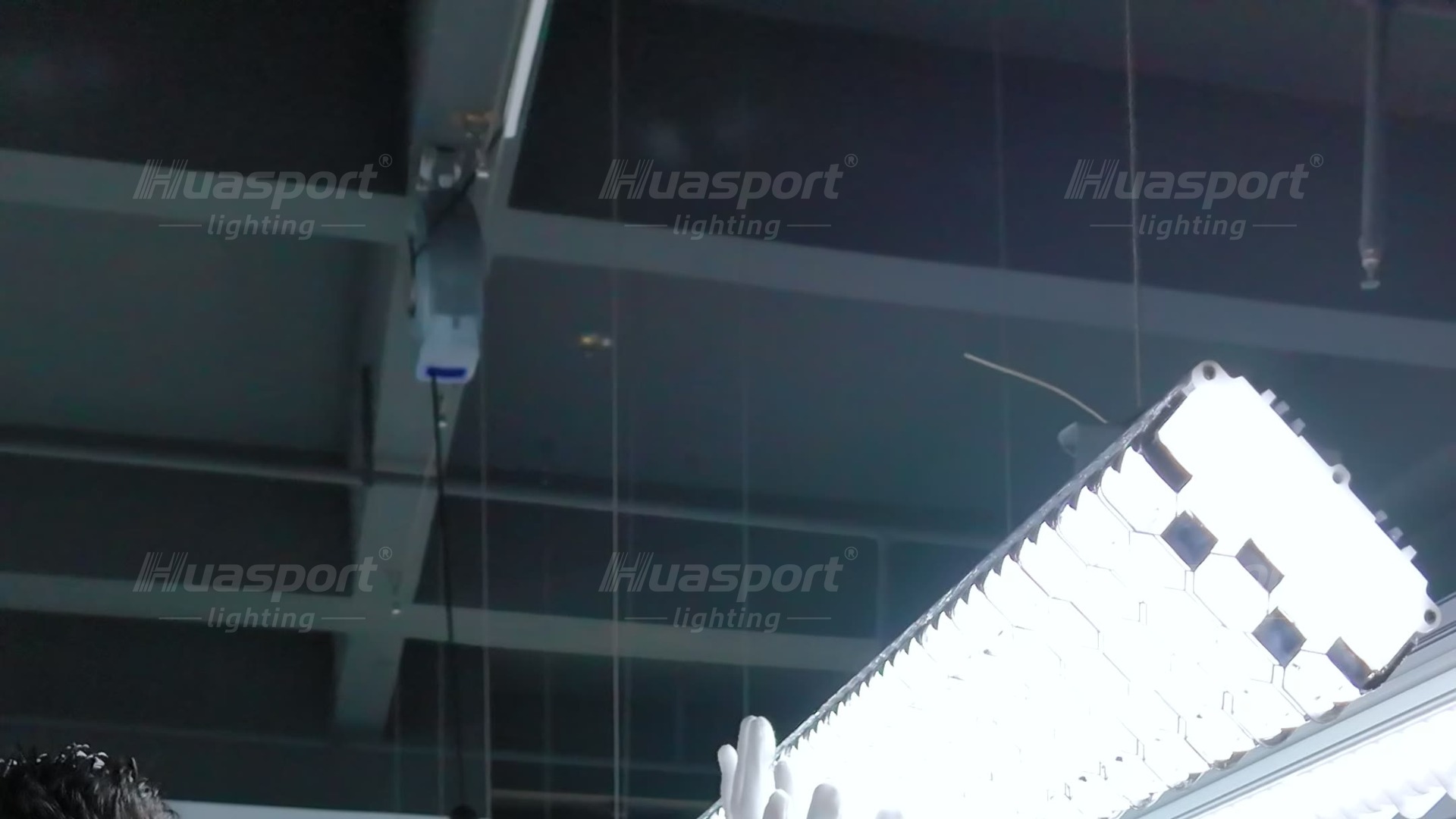
When a fixture row is beside the court, side glare is the first issue. The grille needs enough depth and control so the player can look across the hall without staring straight into the LED source.
Direct glare is different. It appears when a player looks closer to the fixture axis, or when a reflective surface makes the light source feel sharper. This is why the plated version should never be judged from a product beauty shot alone. Look at the court angle. Look at the ceiling height. Look at the mounting direction. Then check whether the fixture still feels calm from the player’s side.
A good badminton lighting plan does not need to claim zero glare. A better target is lower side glare, controlled direct view and a court that remains comfortable during repeated overhead shots.
One S90 Layout to Start From
Keep the first proposal simple. Use one model and one layout as the starting point, then adjust only after checking the actual hall.
| Item | S90 plated badminton hall reference |
|---|---|
| Model | WM-S90-1160-DD-42W-108Z |
| Fixture length | 1.16 m |
| Body width | 13 cm |
| Power | 42W |
| Fixtures per court | 24 fixtures |
| Fixtures per side | 12 fixtures |
| Mounting height | around 5 m |
| Aiming | 30-degree inward tilt |
| Row length | 13.92 m continuous row |
| Playing-area side covered | 13.4 m main playing-area side |
| Target use | 300-400 lux+ for commercial training or recreation |
| Competition review | check toward 500 lux+ average illumination |
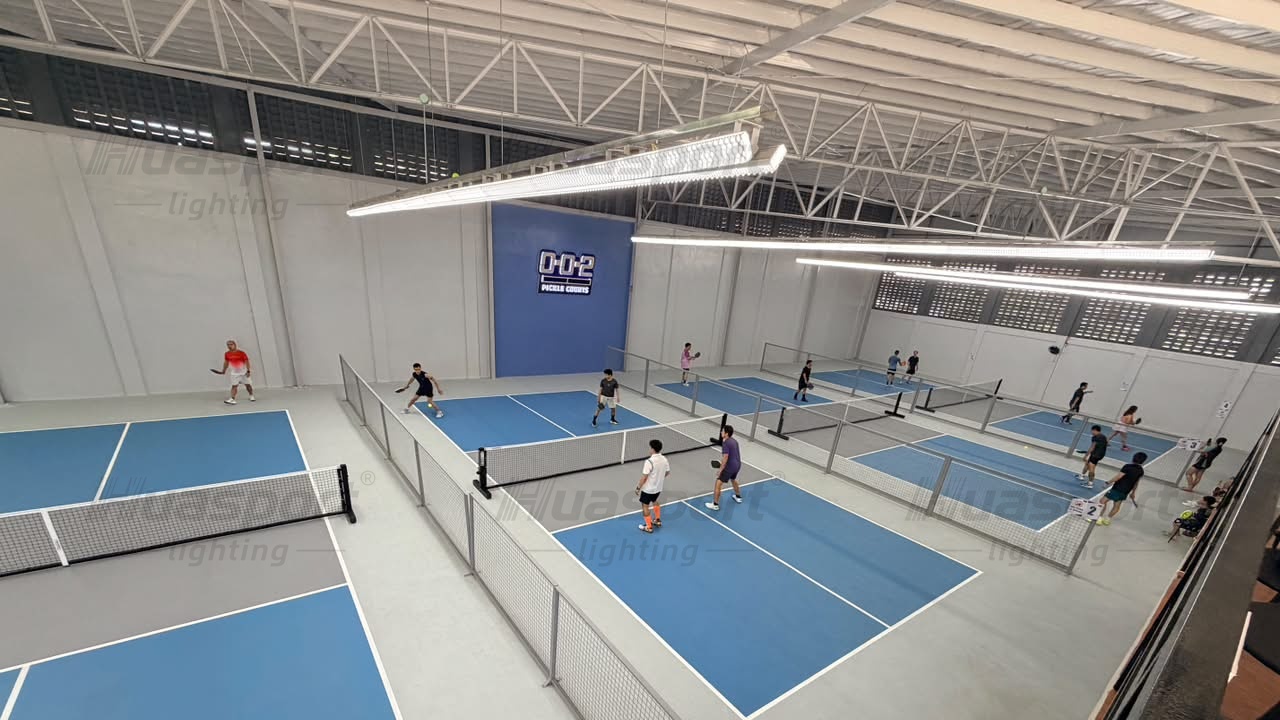
This layout is also useful when a mixed sports facility wants to compare court types. Badminton needs high-clear tracking and backcourt comfort. Pickleball court lighting pays more attention to low-net sightlines and shared indoor halls. Padel court lighting uses a different perimeter logic because of glass walls, fences and corner reflections.
What to Verify Before Quotation
Before approving a badminton hall lighting plan without shade curtains, check the points that will affect real play:
- Confirm whether the selected fixture is the S90 13 cm body version.
- Confirm whether the model is WM-S90-1160-DD-42W-108Z for the 42W planning option.
- Check whether the front anti-glare structure is a double-layer honeycomb grille.
- Stand at the back line and look up toward the high-clear path.
- Look across the hall and check whether the opposite row enters the player’s view.
- Confirm whether the mounting height is around 5 m.
- Confirm whether the bracket can support the 30-degree inward aiming reference.
- Check whether one court uses 24 fixtures, with 12 fixtures on each side.
- Decide whether the target is 300-400 lux+ for training or 500 lux+ for competition use.
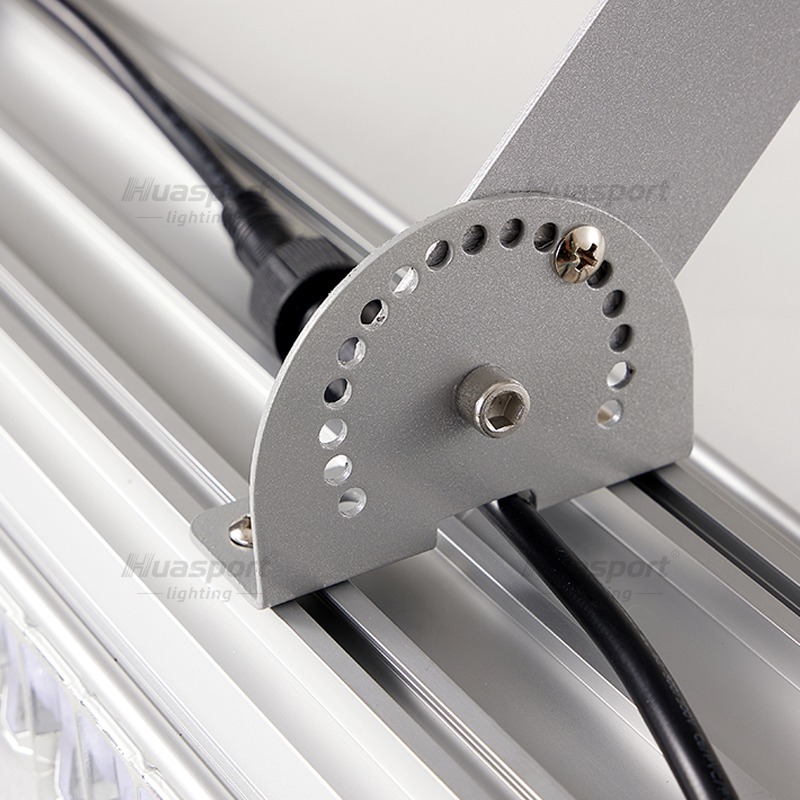
The bracket and back body also matter. Huasport uses a thickened aluminum profile for heat dissipation, and the adjustable bracket is fixed to the aluminum profile instead of being treated as a weak accessory. That helps the lighting row stay aligned after installation.
FAQ
Does this mean every badminton hall can avoid curtains?
No. It means the lighting design should be checked before curtains become the default answer. Some buildings may still need other architectural measures, but a better anti-glare fixture and player-view layout can reduce the need for visual blocking in many planning cases.
Which model is used for this S90 plated planning reference?
The planning reference is WM-S90-1160-DD-42W-108Z, an S90 1.16 m 42W long-bar anti-glare fixture for indoor badminton and pickleball court planning.
What is the main difference between S70 and S90?
The most important difference is width. S70 is 11 cm wide, while S90 is 13 cm wide. Both use the double-layer honeycomb anti-glare design, but S90 gives a wider body for this planning option.
What should a buyer check first: lux or glare?
Both matter, but start with the player’s view. A court can reach a useful brightness level and still feel uncomfortable if the opposite fixture row sits in the shuttle-tracking line. After that, check the 300-400 lux+ training target or the 500 lux+ competition review target.
For a project review, send court quantity, ceiling height, roof photos and target use level through Huasport Lighting contact. More planning notes are available in the technical articles archive.