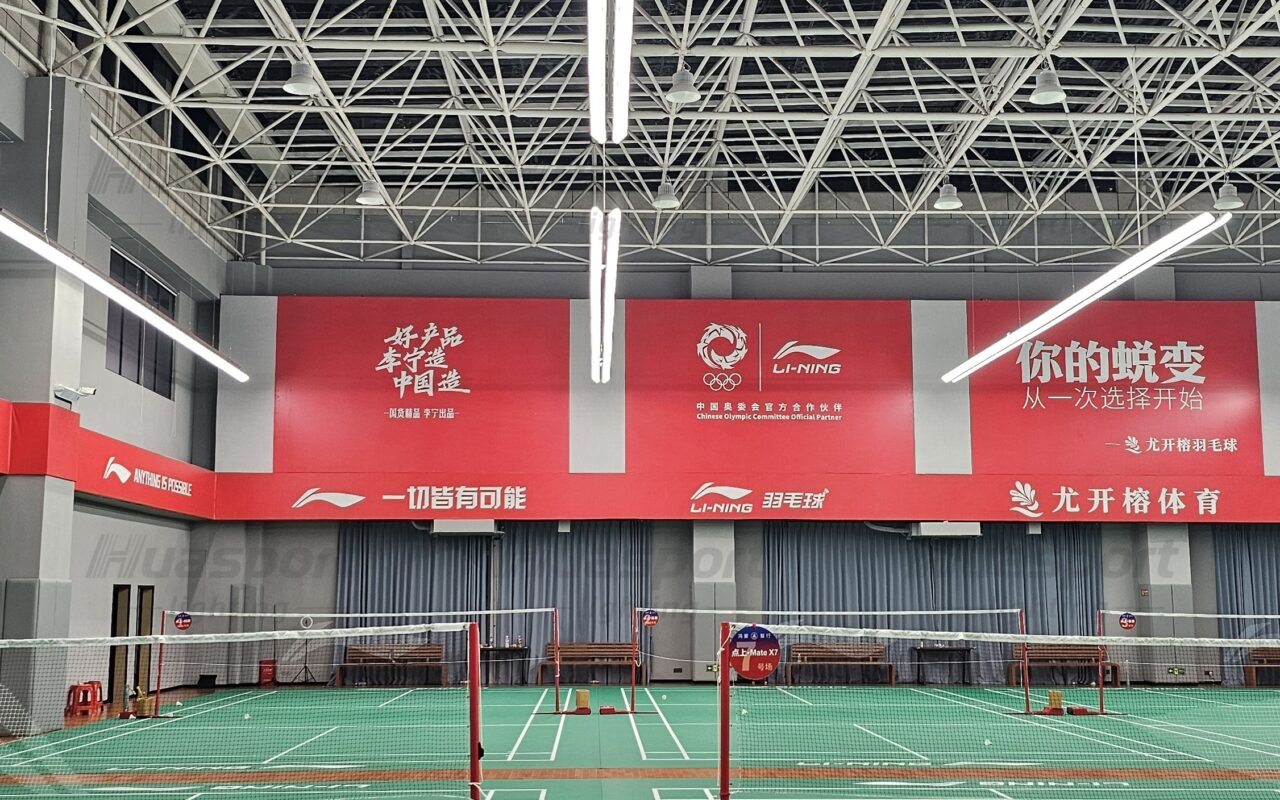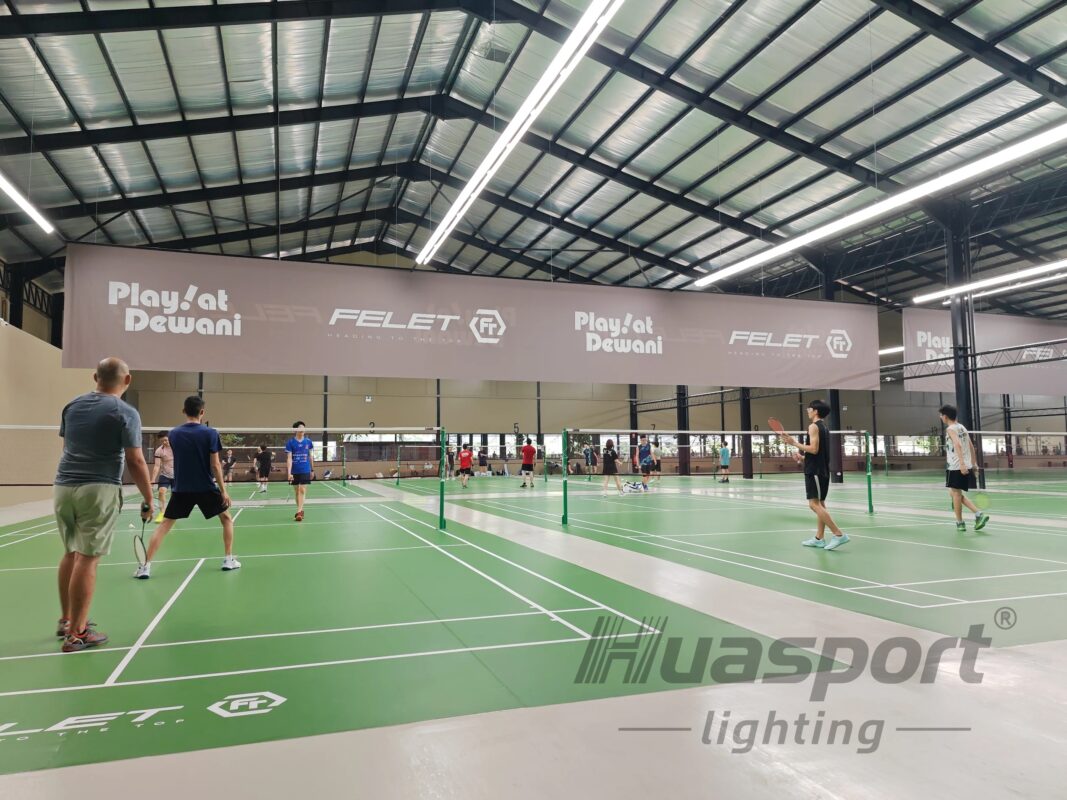
 Badminton/Pickleball court lights
 Pickleball court lights
 Padel Court Lights
 Basketball court lights
 Tennis court lights
 Football field lights
One Light Row, Two Images: Padel Lighting and Glass Reflections

A ball lands deep, reaches the back glass and comes towards you again. For that return, the glass belongs to the game. So does whatever appears in it, including the bright image of a light row.
That is the detail to watch when choosing indoor padel court lighting. A fixture may sit outside your direct line of sight while its reflection remains visible in the glass. The grille, the physical light position and the reflected image need to be considered together.
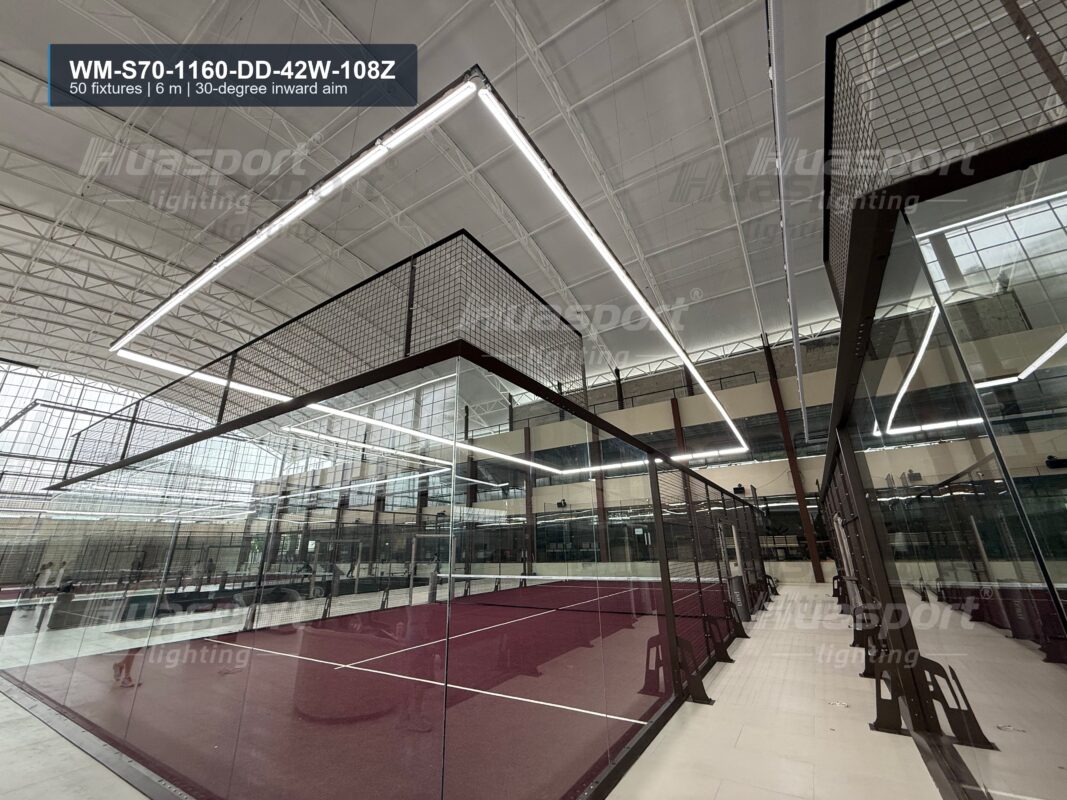
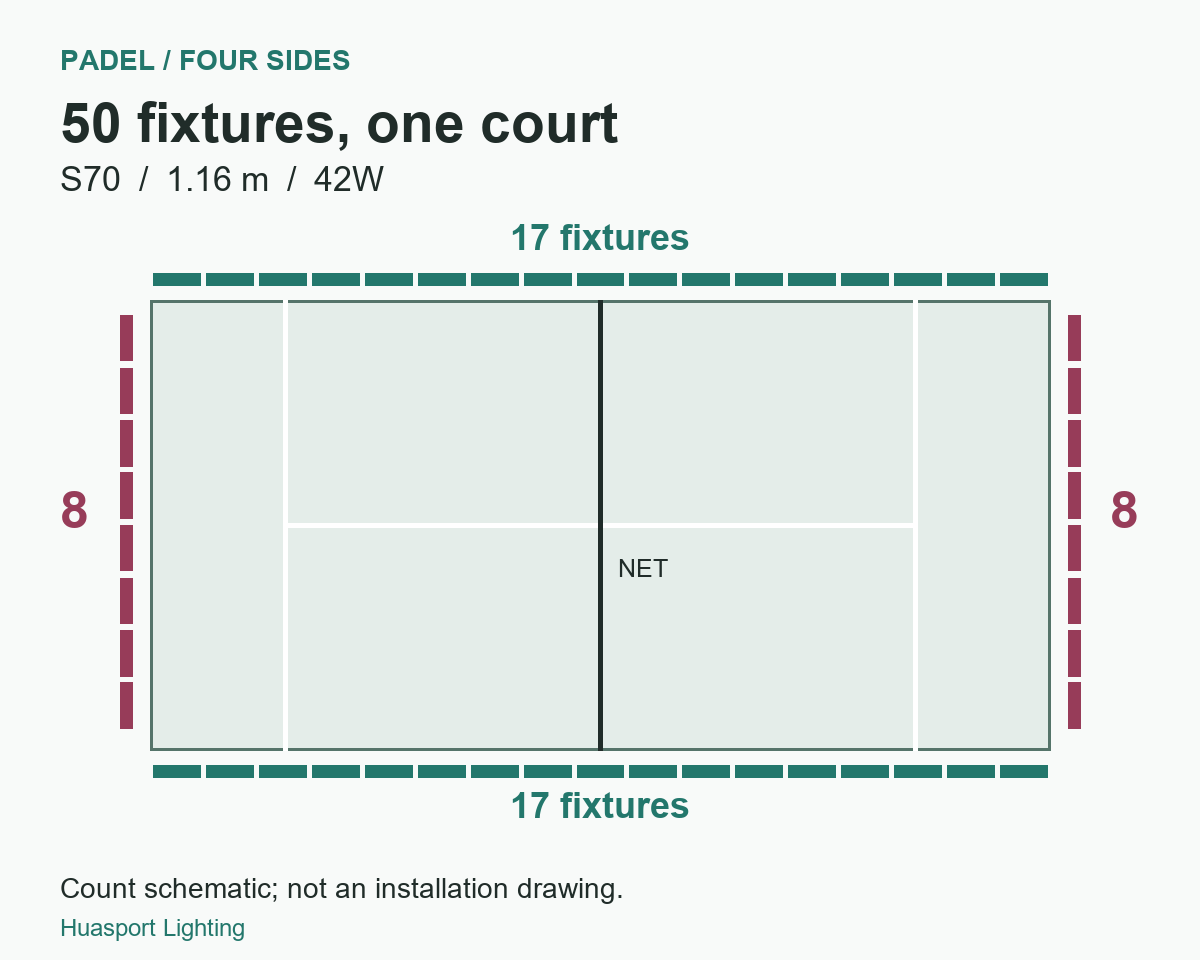
Huasport’s S70 proposal places 50 long-bar fixtures around four sides of the court. The drawing below makes the count easy to follow; the view towards the glass needs a separate look from where players actually stand.
The back glass is part of the rally
After bouncing in the opponent’s court, a ball can rebound off the wall and remain in play until its second bounce. That is why a padel lighting review should include the view towards the back glass, as well as the view across the net. See FIP’s Rules of Padel, Rule 12.
Imagine following that return from the rear corner. You turn towards the glass, pick up the rebound and turn back into the court. During that movement, the lamp itself and its reflected image occupy different parts of your view. A good photograph from the entrance cannot tell you whether either one is distracting there.
The useful question during a rally is whether a bright strip crosses the area of glass behind the ball. If it does, the player’s position and viewing direction help locate the problem. A general comment that the court feels bright leaves both out.
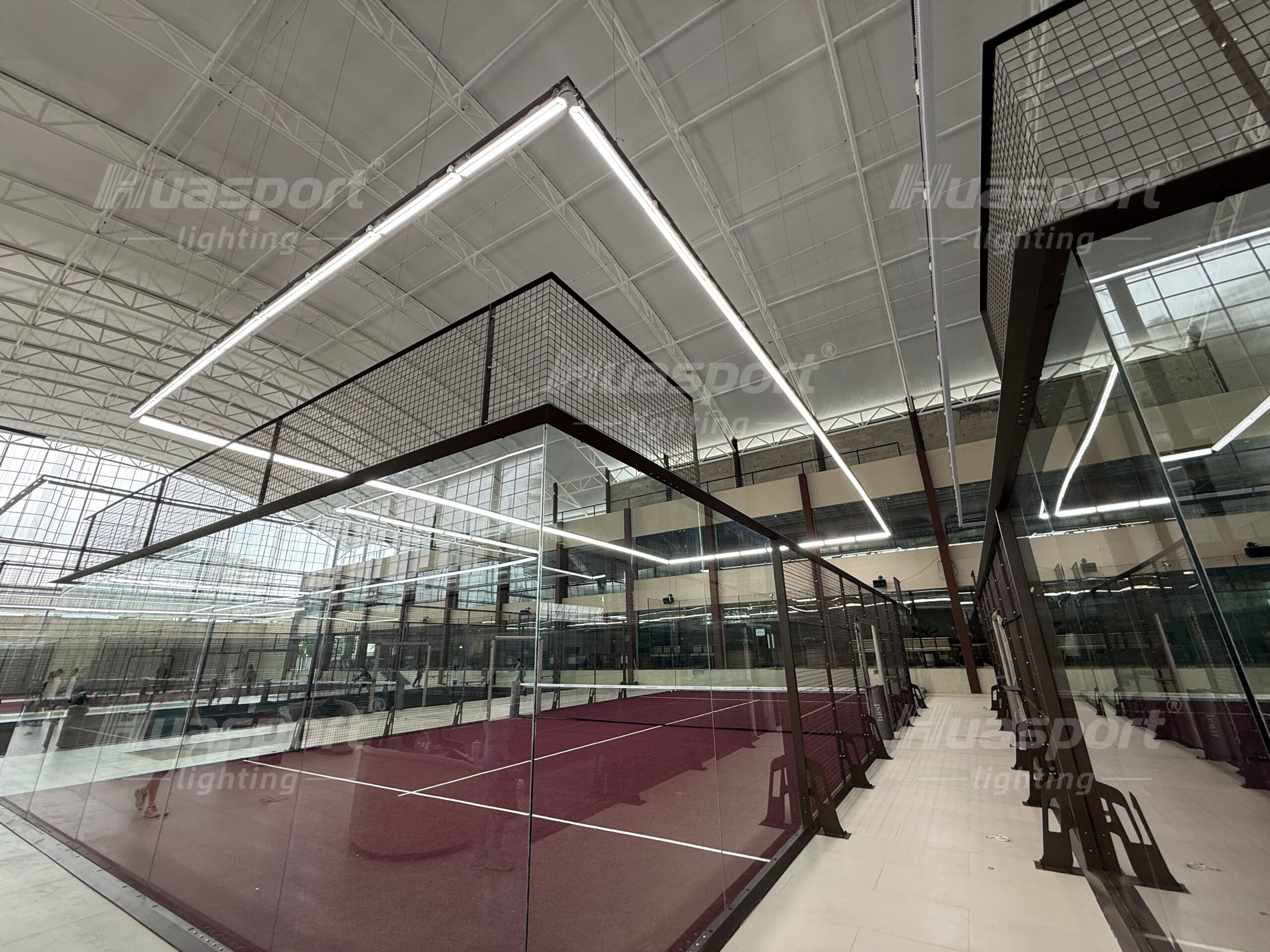
Is it another fitting, or a reflection?
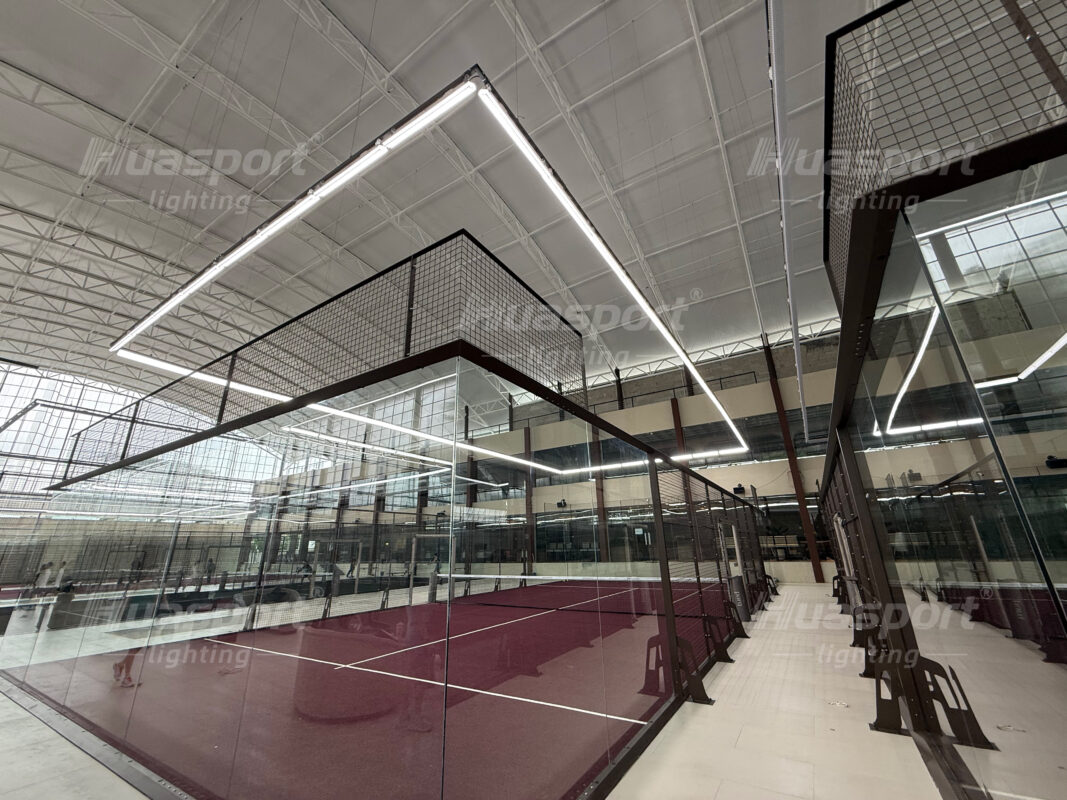
In the installation photograph above, the court has overhead rows and bright lines visible in the right-hand glass. Following the actual fixtures back to their supports reveals which lines belong to the physical installation. A reflected line is not another installed row.
A second photograph from a different position adds something a wide shot cannot: another view of the same glass. Keep the court markings and glass posts in frame so both viewpoints can be located on a plan. Comparing them helps distinguish the physical installation from its reflected image.
For a new venue, the glass panels and likely player viewpoints belong on the lighting plan alongside the fittings. A floor illuminance result does not describe every reflected image a player may see.
What the S70 four-sided arrangement contains
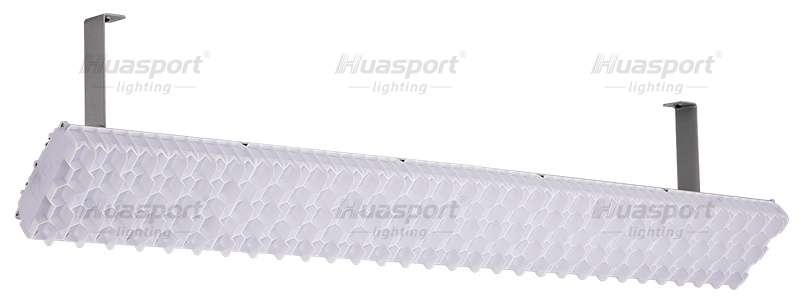
The Huasport Padel Court Lighting layout uses WM-S70-1160-DD-42W-108Z: a 1.16 m, 42W long-bar fixture with a double-layer honeycomb anti-glare grille. This is one proposed arrangement, not a rule that every padel court needs 50 fixtures.
| Part of the proposal | Specification |
|---|---|
| Fixture | S70, WM-S70-1160-DD-42W-108Z |
| Individual length and power | 1.16 m; 42W |
| Each long side | 17 fixtures; 19.72 m of nominal fixture length |
| Each short side | 8 fixtures; 9.28 m of nominal fixture length |
| Court total | 50 fixtures: 17 + 17 + 8 + 8 |
| Mounting reference | 6 m; subject to the venue’s clearance review |
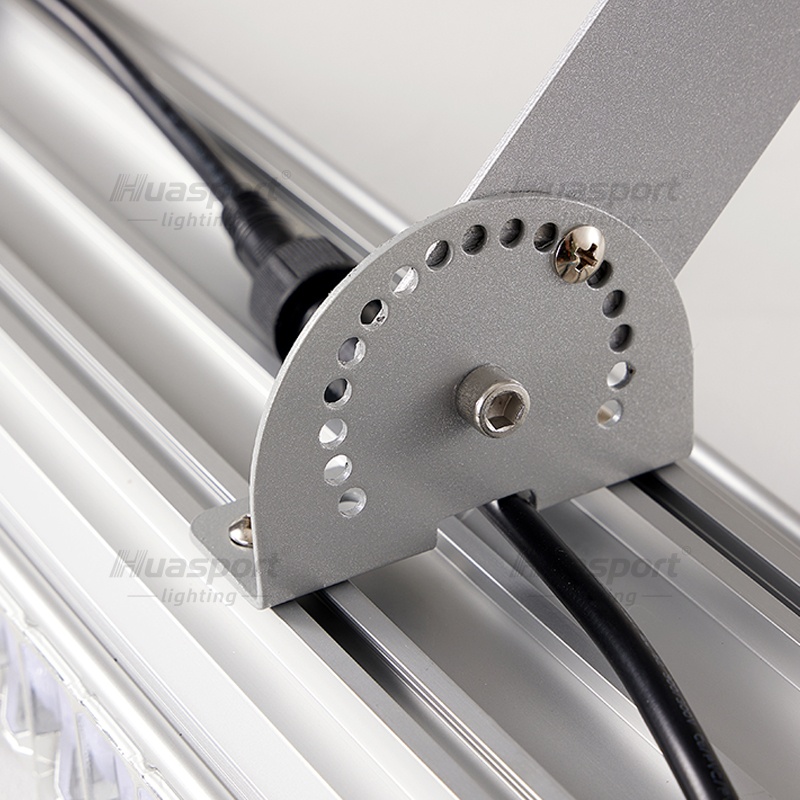
| Aiming reference | 30-degree inward tilt, using the seventh bracket hole |
The row lengths come from simple multiplication: 17 x 1.16 m and 8 x 1.16 m. Compare them with the nominal 20 x 10 m court, then resolve the joints, corner clearances and supports on the installation drawing. The figures are fixture-length totals, not measured light coverage or final corner-to-corner installation dimensions.
This four-sided arrangement belongs to the padel proposal. For a club adding badminton court lighting or pickleball court lighting alongside it, prepare separate court layouts rather than carrying the same fixture count across all three sports.
The grille and the glass do different jobs
The double-layer honeycomb grille helps shield the bright source at oblique viewing angles. It does not make the court glass stop reflecting. Changing the light’s position or aiming also changes how the source is presented to the glass and the player; the result needs to be reviewed for the actual venue.
For this S70 arrangement, the adjustable bracket fixes to the aluminum profile. The specified inward tilt uses the seventh hole. Installers should verify the orientation of each side of the perimeter, because inward on one side is the opposite direction on the other.
A 6 m mounting reference still needs a clearance check
FIP’s rules specify a minimum 6 m unobstructed clear height and recommend 8 m for new facilities. Their lighting section also recommends 8 m for new facilities where lights lie within the court walls’ vertical projection. The 6 m mounting reference in this Huasport proposal therefore does not establish that a new venue meets every applicable requirement. Check the lowest part of each fitting, its supports and their position relative to the court. See the court-dimensions and lighting sections of the FIP rules.
Planning a padel installation? Send Huasport your court plan and an inside-court photograph facing the back glass. Add the roof height and mark where the photograph was taken. That gives us a useful starting point for discussing the S70 layout and the view your players will actually have.