 Badminton/Pickleball court lights
 Pickleball court lights
 Padel Court Lights
 Basketball court lights
 Tennis court lights
 Football field lights
Indoor Padel Court Lighting Around Glass Walls: 50 Huasport S70 Fixtures at 6 m

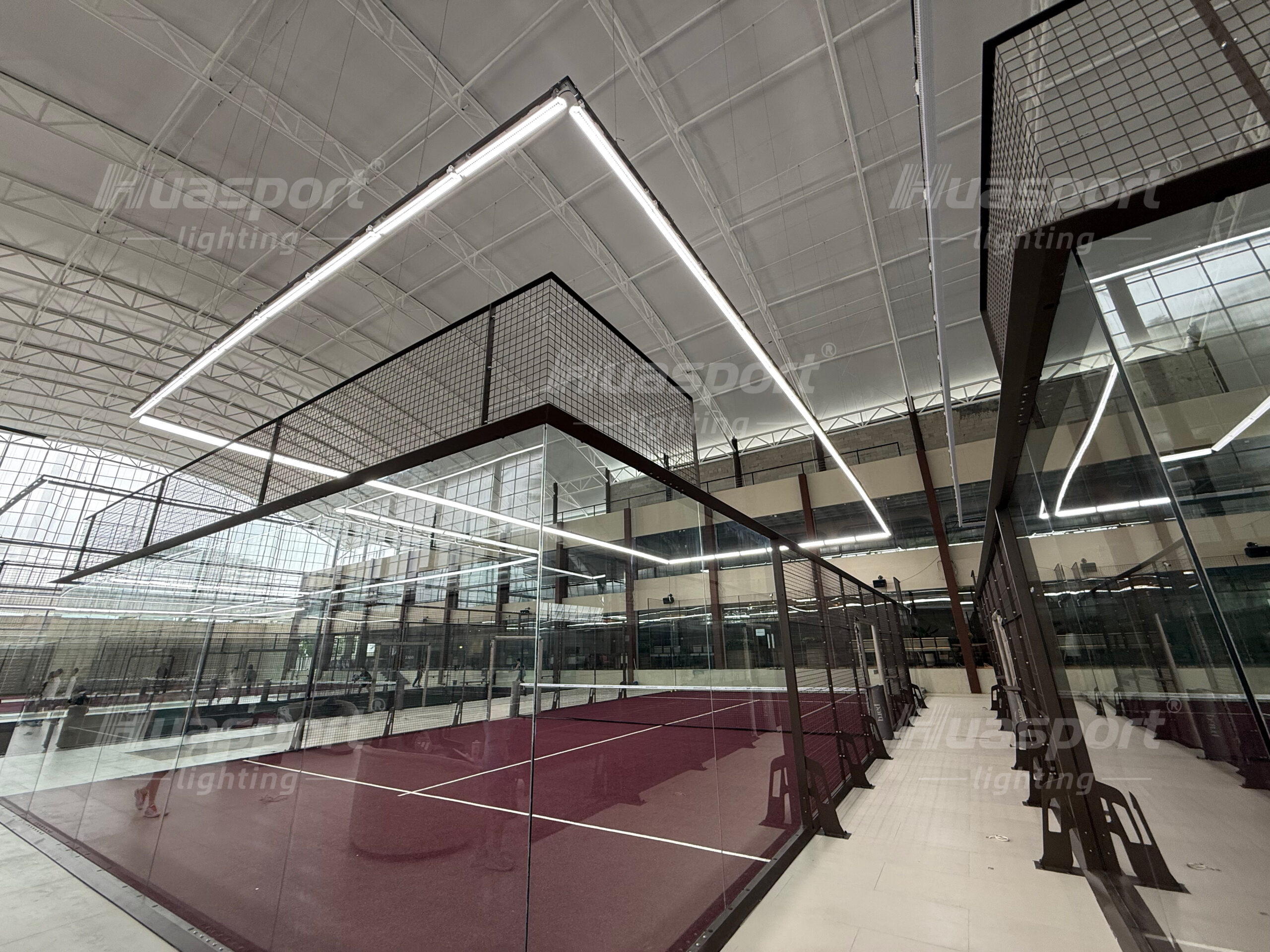
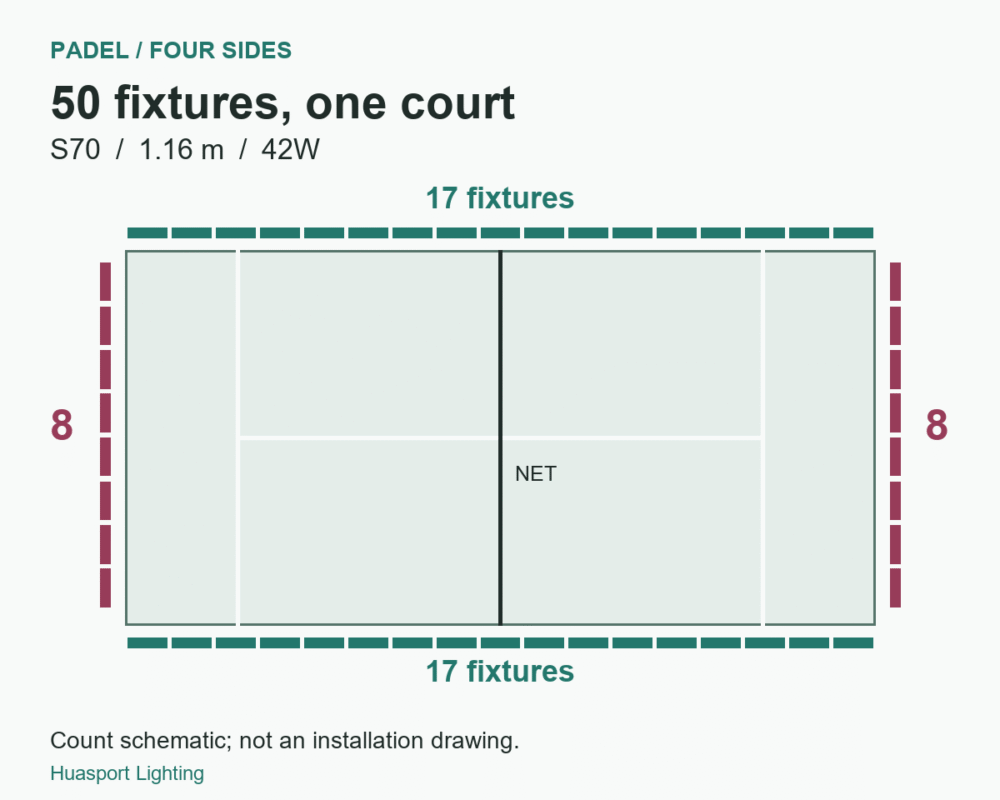
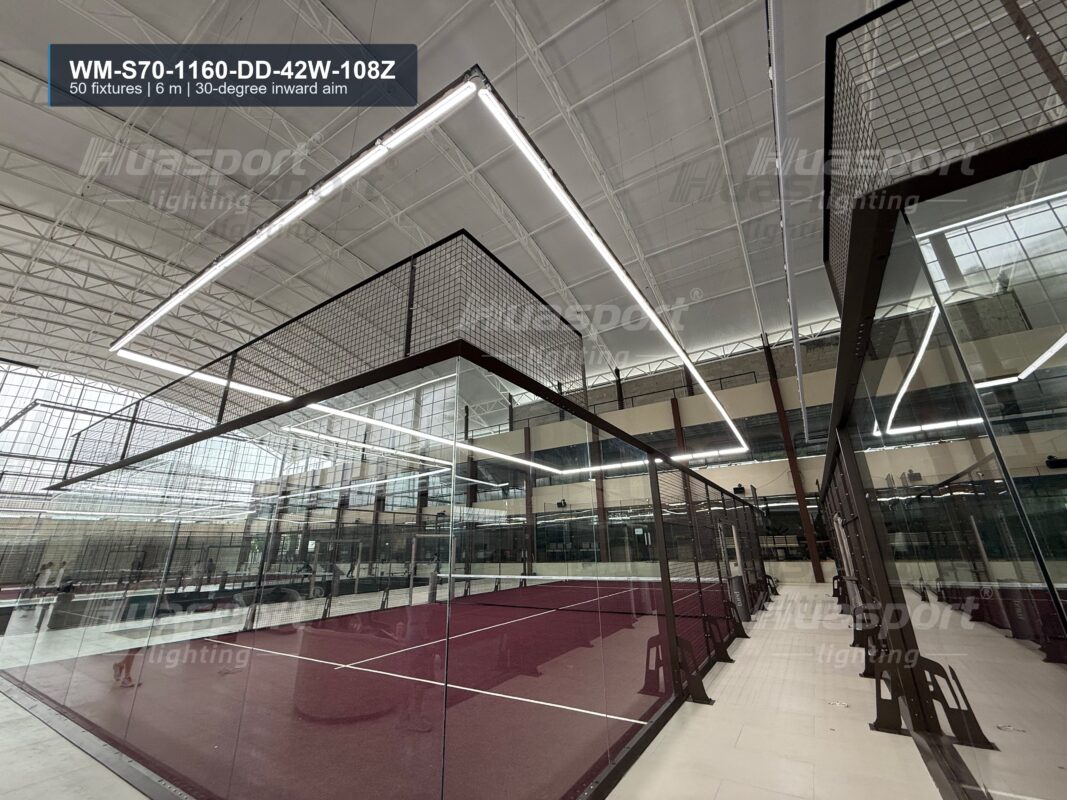
An indoor padel court asks more from lighting than a normal open sports hall. The ball rises fast, rebounds from glass, and players often track it through reflections from side walls, fences and ceiling lines. A practical Huasport padel lighting layout uses the S70 1.16 m fixture, model WM-S70-1160-DD-42W-108Z, with 50 fixtures per court: 17 on each long side, 8 on each short side, 6 m mounting height, 30-degree inward aiming and the 7th bracket hole as the angle reference.
The Glass-Wall Problem: Padel Lighting Is Judged From More Angles
In badminton, most lighting discussions start from the two long sides of the court. Padel is different. The glass enclosure becomes part of the player’s view, and a bright line that looks acceptable from the lobby can feel distracting when a player is turning, defending near the back wall or tracking a lob.
That is why padel court lighting should not be judged only by whether the floor looks bright. A venue owner needs to think about four things at the same time: ball visibility, side-wall reflection, player comfort and fixture position around the enclosure. When those details are planned together, the court feels calmer during rallies and more professional in photos, videos and first visits.
For the dedicated venue solution, see the Huasport Padel Court Lighting layout.
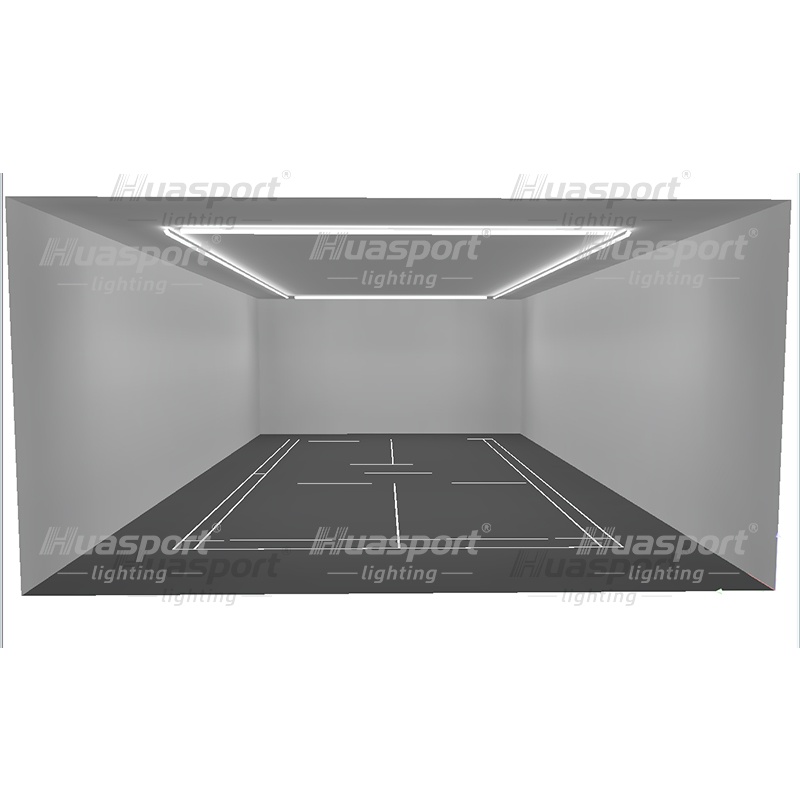
Huasport S70 Padel Layout: 50 Fixtures Around One Court
The Huasport S70 padel reference uses a four-side fixture arrangement around one court. The long sides carry more fixtures because they run with the main playing length. The short sides help close the lighting environment, which is important for glass-wall venues where the rear and corner views matter during defensive play.
| Planning item | Huasport reference data |
|---|---|
| Fixture model | WM-S70-1160-DD-42W-108Z |
| Fixture family | S70 1.16 m anti-glare long-bar light |
| Fixture count | 50 fixtures per indoor padel court |
| Long-side layout | 17 fixtures on each long side |
| Short-side layout | 8 fixtures on each short side |
| Total formula | 17 + 17 + 8 + 8 = 50 |
| Mounting height | About 6 m |
| Aiming angle | 30-degree inward aiming |
| Bracket reference | 7th bracket hole |
| Main planning reason | Four-side visibility control for glass-wall courts |
This is not the same as a badminton or pickleball two-side row plan. It is a padel-specific layout built around the court enclosure.
Why Four-Side Lighting Helps Padel Players Read the Ball
Padel rallies often pull players into the corners. A ball can hit the glass, slow down, change angle and force a quick recovery shot. If lighting is concentrated only in one direction, the player may see a bright strip or dark transition at the exact moment they need to judge the rebound.
The four-side S70 layout helps avoid that one-direction problem. With 17 fixtures along each long side and 8 fixtures along each short side, the lighting relationship follows the court perimeter instead of treating the court like an empty rectangle. The goal is not to flood the space with uncontrolled brightness. The goal is to give the player a more stable view from the serve, the volley, the back glass and the side fence.
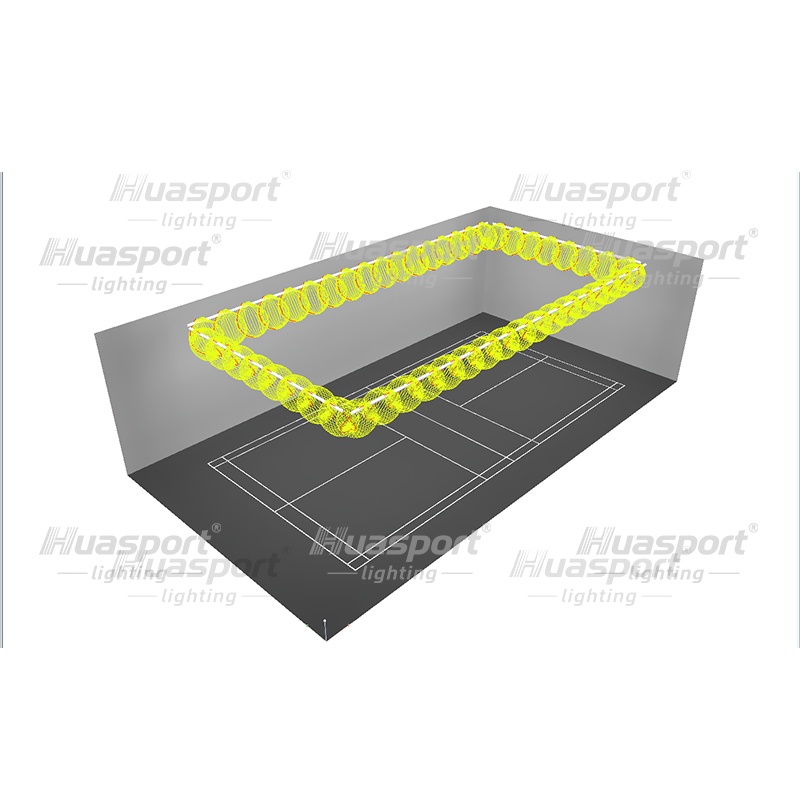
6 m Mounting Height, 30-Degree Aiming and the 7th Bracket Hole
For this indoor padel layout, the reference mounting height is about 6 m. The fixtures are aimed 30 degrees inward toward the court, and the angle reference is the 7th bracket hole.
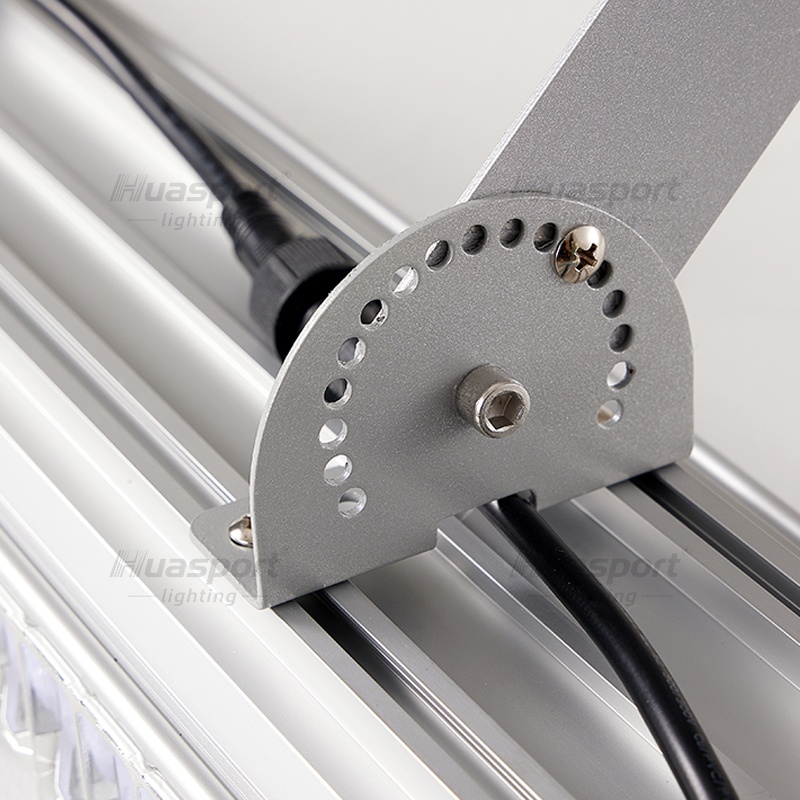
This matters because padel lighting is very sensitive to aim. If fixtures point too flat, the court may lose useful light near the opposite glass. If fixtures point too aggressively, players may see sharper brightness when looking upward or across the enclosure. The bracket hole reference gives installers a repeatable starting point, so the long sides and short sides can be adjusted with the same logic instead of relying on guesswork.
The bracket is fixed to the aluminum profile of the fixture body. That detail is practical: the aiming structure is supported by the metal body, not by a weaker plastic area.
Product Details Buyers Can Check Before Paying for a Layout
A padel court owner does not need to become a lighting engineer before asking for a quote. But the buyer should know which visible details separate a real court-lighting product from a generic linear light.
The S70 fixture is a 1.16 m long-bar light with a double-layer honeycomb anti-glare grille. The grille sits in front of the LED source to help control direct glare from player viewing angles. The back of the fixture uses a thickened aluminum profile, which helps move heat away from the driver and LED chips during long commercial operating hours.
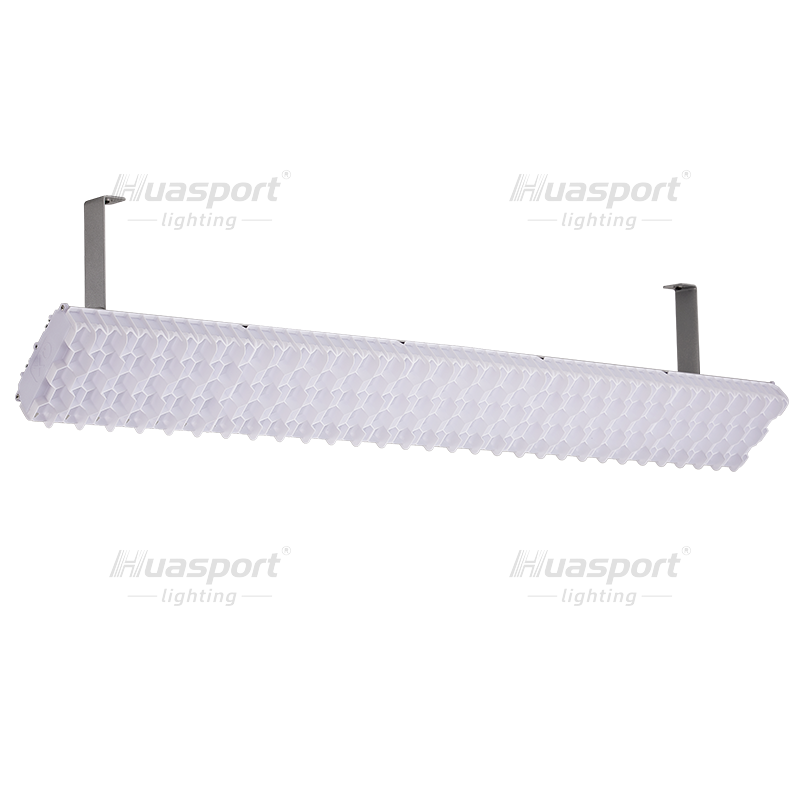
Before quotation, ask for product confirmation photos that show the grille, aluminum back, end caps, screws and adjustable bracket. These checks make the conversation more concrete and help avoid a vague proposal that only lists wattage without showing how the fixture will actually work around a padel court.
How This Differs From Badminton and Pickleball Lighting
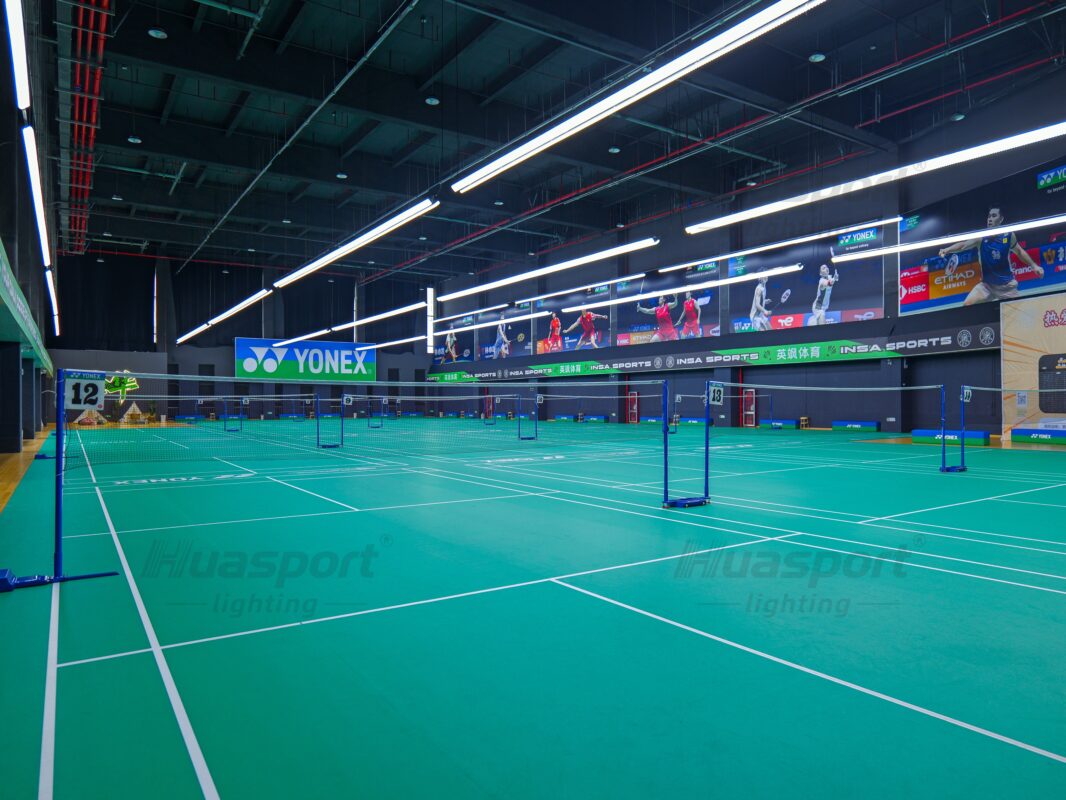
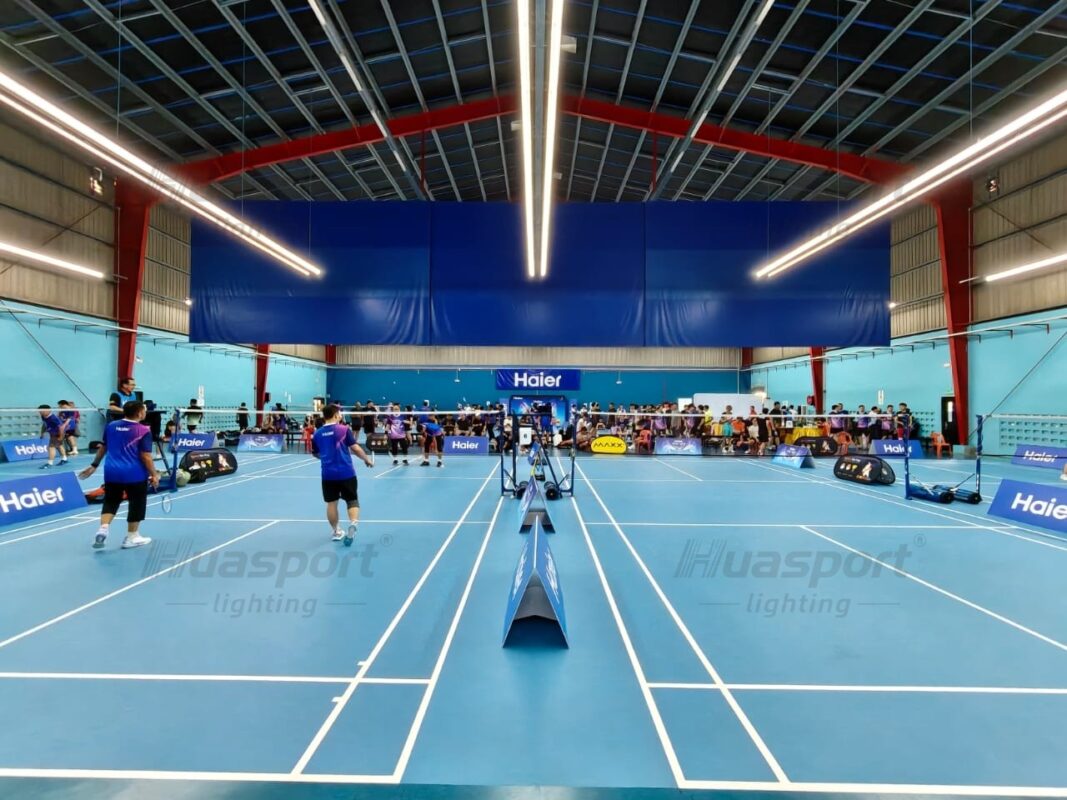
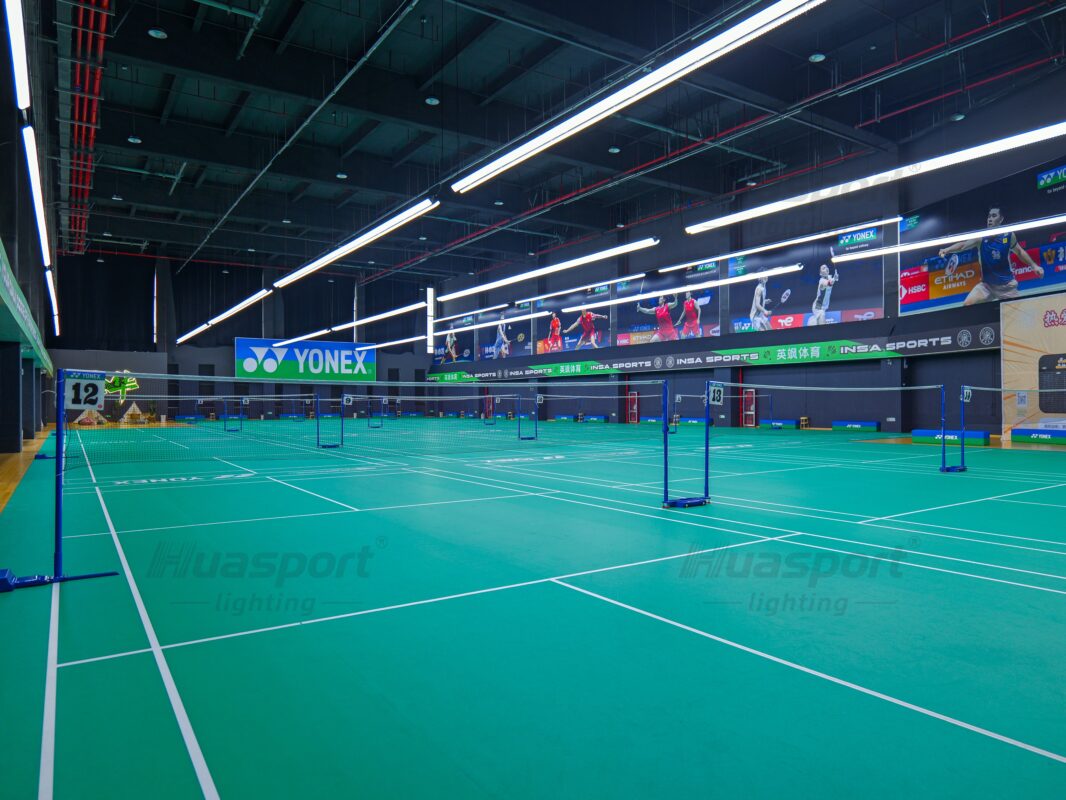
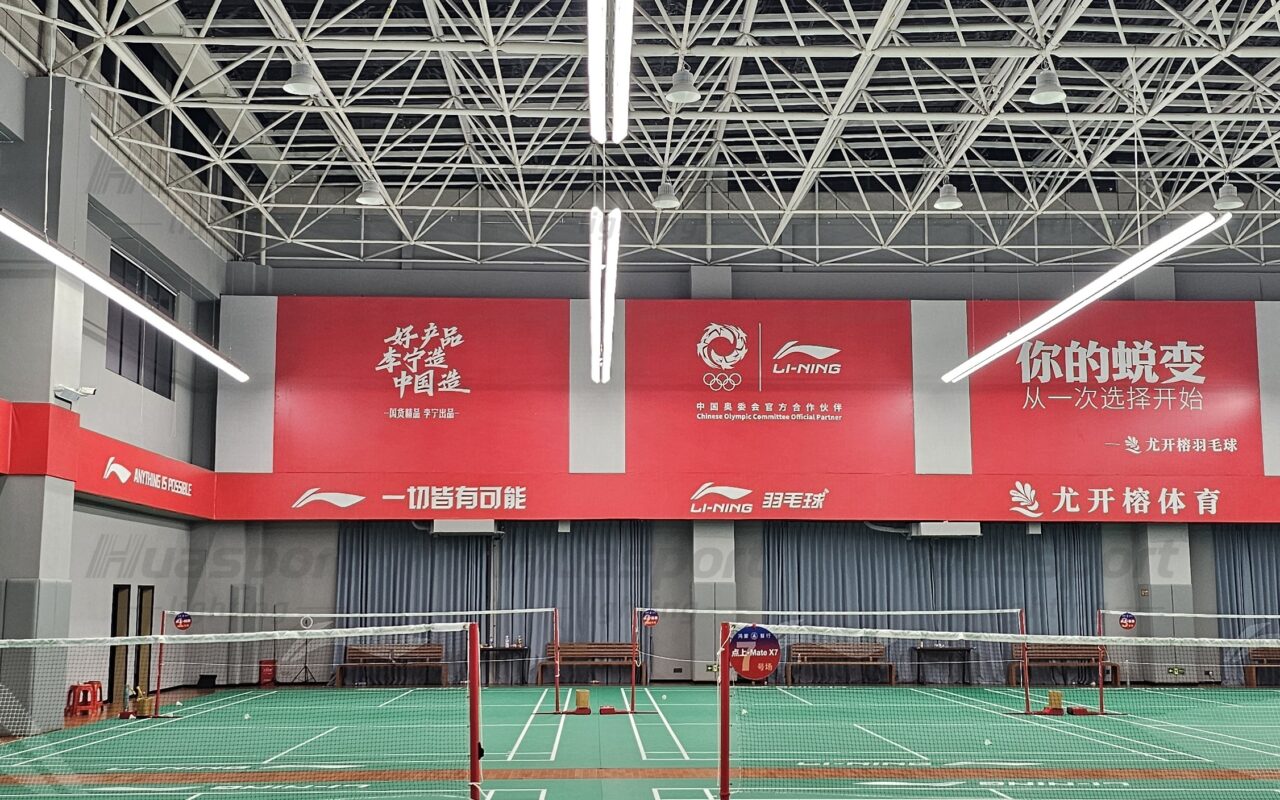
Huasport uses different planning logic for different court types. For indoor badminton courts, the lighting often works from two long side rows, where shuttle tracking and overhead glare are the main concerns. That approach is covered in the Huasport Badminton Court Lighting guide.
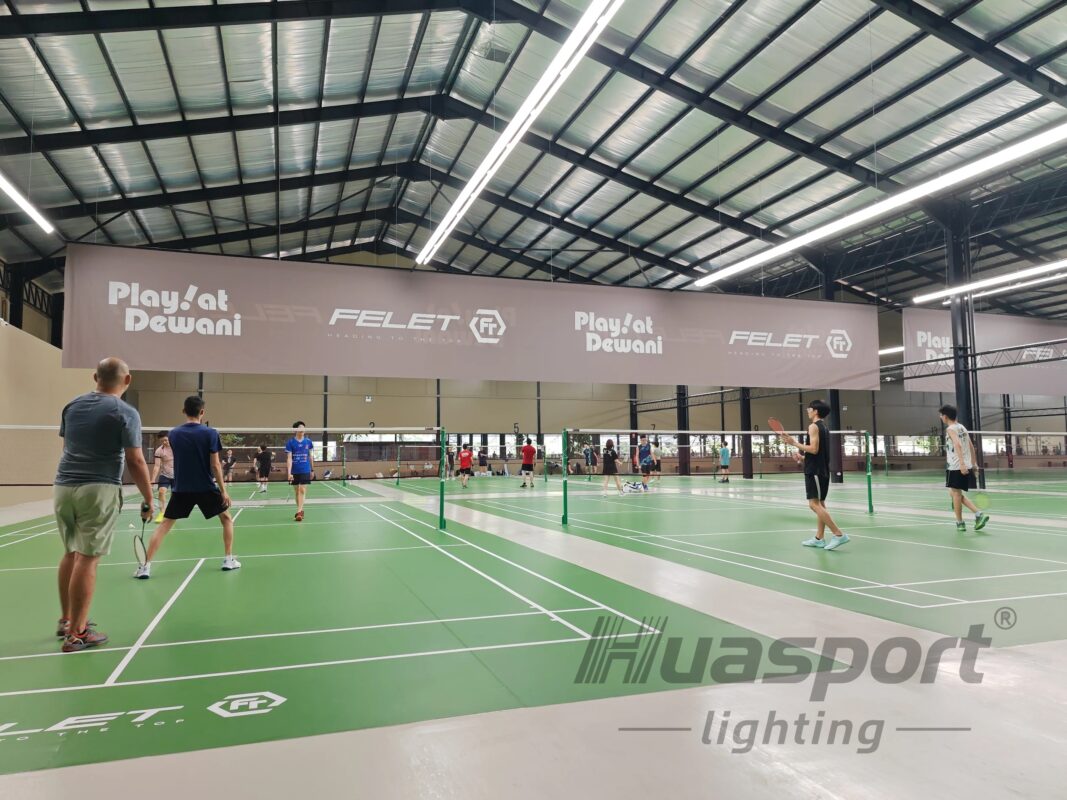
Indoor pickleball can share some side-row thinking with badminton when the venue drawing, mounting height and glare-control needs match. For that court type, use the Huasport Pickleball Court Lighting guide.
Padel should be treated separately because the glass enclosure changes the viewing angles. Copying a badminton or pickleball lighting count directly into a padel cage may leave the rear glass, corners or player eye line less comfortable than expected.
Quotation Checklist for Indoor Padel Court Owners
Before confirming a padel lighting order, collect these details:
- Final court quantity and whether each court is indoor.
- Ceiling height and available suspension structure.
- Whether the selected fixture is WM-S70-1160-DD-42W-108Z.
- Whether each court can use 50 fixtures in total.
- Whether the layout can place 17 fixtures on each long side.
- Whether the layout can place 8 fixtures on each short side.
- Whether the mounting height is close to 6 m.
- Whether the fixtures can be aimed 30 degrees inward.
- Whether installers can use the 7th bracket hole as the angle reference.
- Whether product photos show the double-layer honeycomb grille, aluminum profile and adjustable bracket.
These details turn the quote from a rough lamp count into a layout that can be checked before installation.
A Simple Walkthrough After Installation
After the fixtures are installed, walk the court from the same positions a player will use. Start at the serve position, then move to the back glass, both corners and the side-wall recovery area. Look for harsh fixture lines, sudden bright patches or uncomfortable reflection from the glass.
Then stand outside the enclosure and look back through the glass. Many padel venues use photos and videos to promote the court, so the lighting needs to look consistent from spectator and camera angles too. A good acceptance walk is not only about numbers on paper. It is about whether the court feels playable, comfortable and professional when people are actually inside it.
For project discussion, send the court quantity, ceiling height, roof structure photos and target use through the Huasport Contact Us page.
FAQ: Indoor Padel Court Lighting With Huasport S70
How many fixtures does this Huasport indoor padel layout use?
It uses 50 fixtures per court: 17 fixtures on each long side and 8 fixtures on each short side.
What is the model code for this S70 padel lighting option?
The model code is WM-S70-1160-DD-42W-108Z.
What mounting height is used?
The reference mounting height is about 6 m for this indoor padel layout.
What aiming angle is used?
The fixtures are aimed 30 degrees inward toward the court, with the 7th bracket hole used as the angle reference.
Why does padel need a different layout from badminton?
Padel courts have glass walls, fences and corner rebounds. A four-side lighting layout better follows the court enclosure and player viewing angles.
Should padel buyers ask for lumen or certification data?
Buyers can request those details for a specific project, but they should not assume a value unless it is confirmed in the quotation or project record.