 Badminton/Pickleball court lights
 Pickleball court lights
 Padel Court Lights
 Basketball court lights
 Tennis court lights
 Football field lights
Malaysia Badminton Court Lighting: S90 42W Checks for Courts That Feel Different

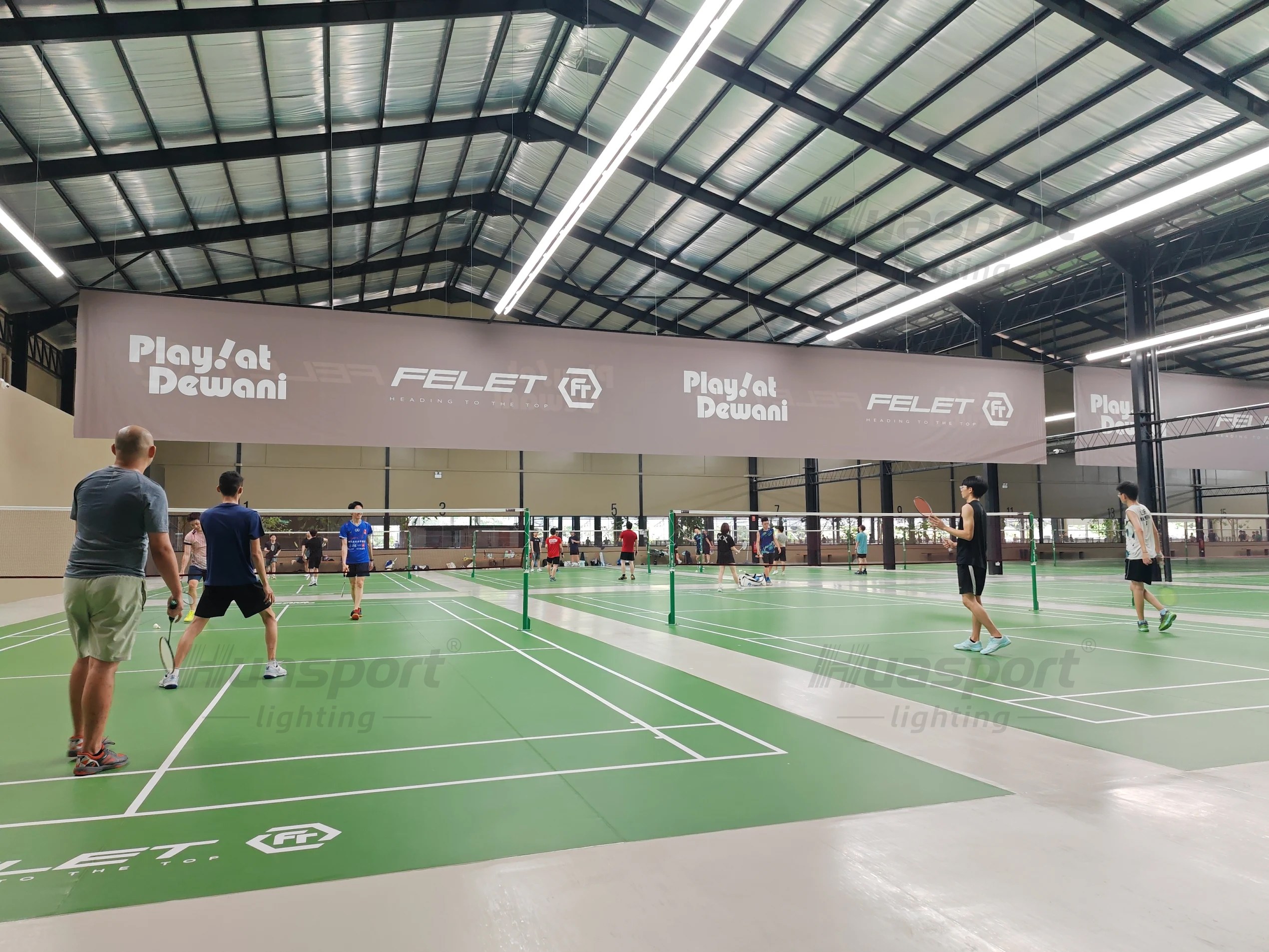
The most useful complaint in a badminton hall is rarely "the whole place is dark." It is usually more specific: court two feels fine, court four feels sharp, and the rear corner on one side is harder on the eyes during high lifts.
That is a layout problem before it is a wattage problem. In a busy Malaysia badminton venue, each court should be checked from the player side, the rear court and the upward shuttle path. Adjacent lighting rows can help fill the space, but they can also put a bright line into a player’s side view.
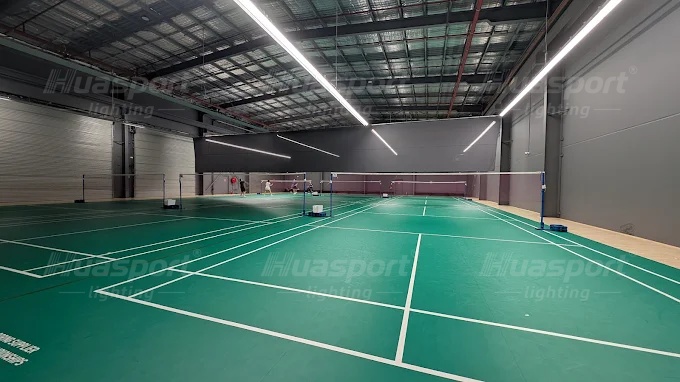
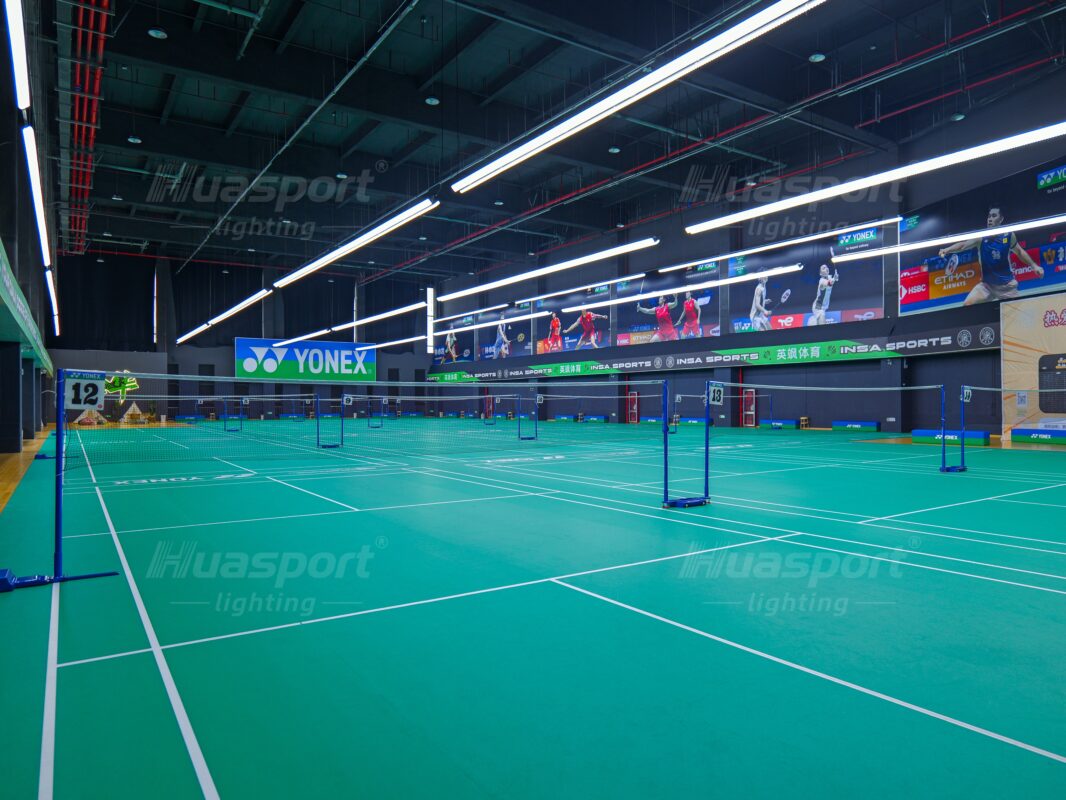
For a clear quotation reference, one practical Huasport option is the S90 1.16 m 42W long-bar anti-glare fixture, model WM-S90-1160-DD-42W-108Z. The reference layout uses 24 fixtures per badminton court, with 12 fixtures on each side, mounted at about 5 m and aimed 30 degrees inward. Twelve 1.16 m fixtures form a 13.92 m continuous row, which covers the 13.4 m main playing-area side length. The planning target is 300-400 lux+ for commercial training and recreational play. If the hall is intended for competition use, the layout should be reviewed toward 500 lux+ average illuminance.
Quick Answer for Malaysia Hall Owners
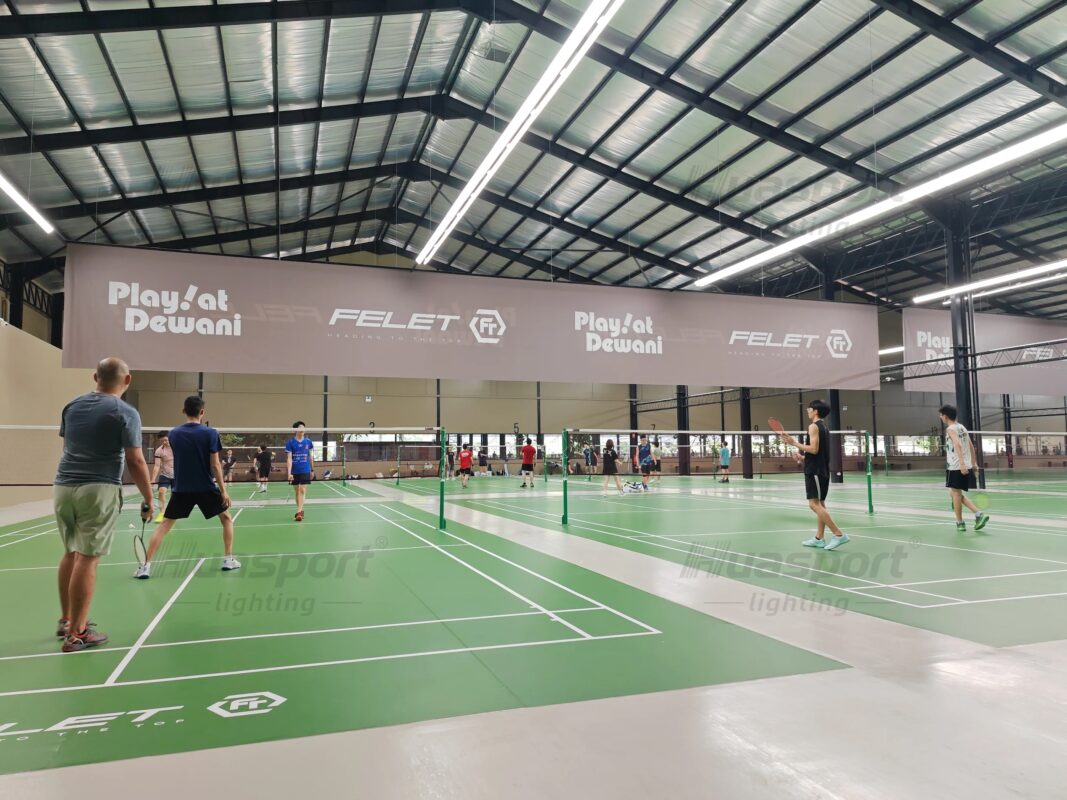
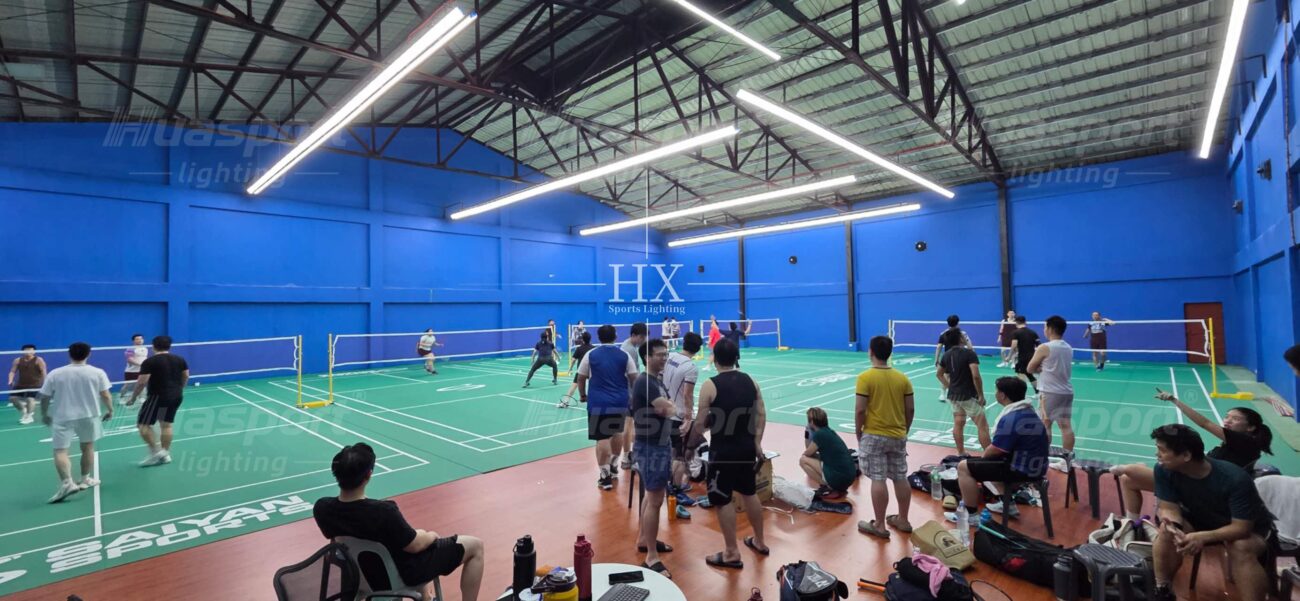
A Malaysia badminton hall with several side-by-side courts should not be accepted from one doorway photo or one floor reading. Walk each court. Stand at the rear court. Look up for clears, lifts and late defensive shots. Then compare whether the fixture row feels calm on every court.
For the S90 42W reference, Huasport plans two side rows per badminton court. The light should serve the court surface and the high shuttle path while reducing direct side glare from common player angles. That is why this article uses one model, one layout and one inspection method instead of listing every possible lamp option.
For the full badminton solution page, see the Huasport Badminton Court Lighting guide.
S90 42W Layout Data to Check Before Quotation
| Planning item | Huasport S90 reference |
|---|---|
| Application | Indoor badminton court lighting |
| Fixture model | WM-S90-1160-DD-42W-108Z |
| Fixture family | S90 1.16 m long-bar anti-glare light |
| Body width | 13 cm |
| Power | 42W |
| Fixture count | 24 fixtures per badminton court |
| Side layout | 12 fixtures on each side |
| Row length | 12 x 1.16 m = 13.92 m continuous row |
| Court reference | Covers the 13.4 m main playing-area side length |
| Mounting height | About 5 m |
| Aiming angle | 30-degree inward tilt |
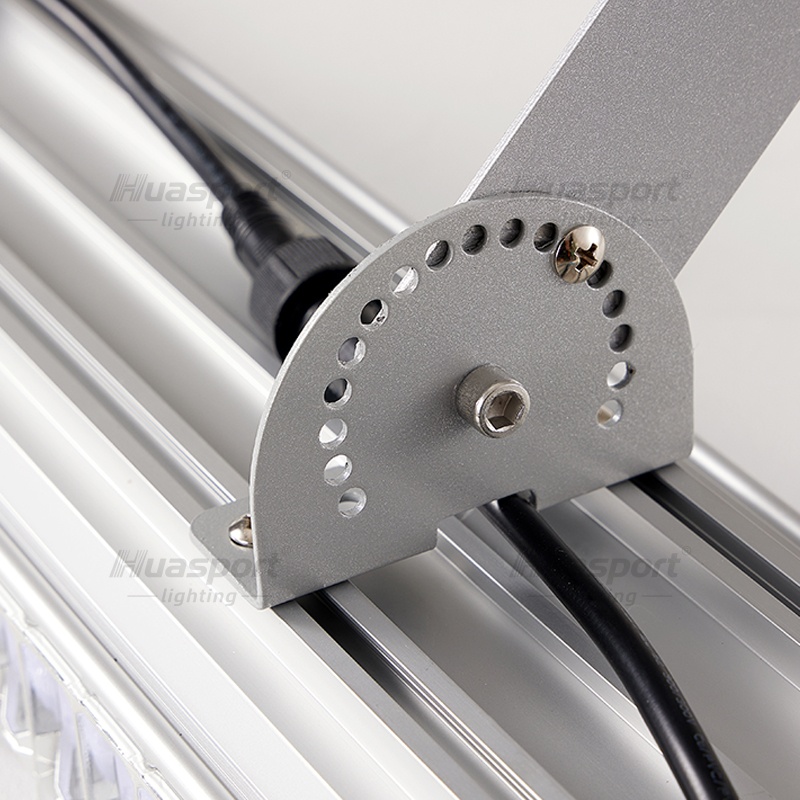
| Bracket reference | 6th hole for about 30-degree badminton or pickleball aiming |
| Training target | 300-400 lux+ average illuminance |
| Competition check | Review toward 500 lux+ average illuminance if required |
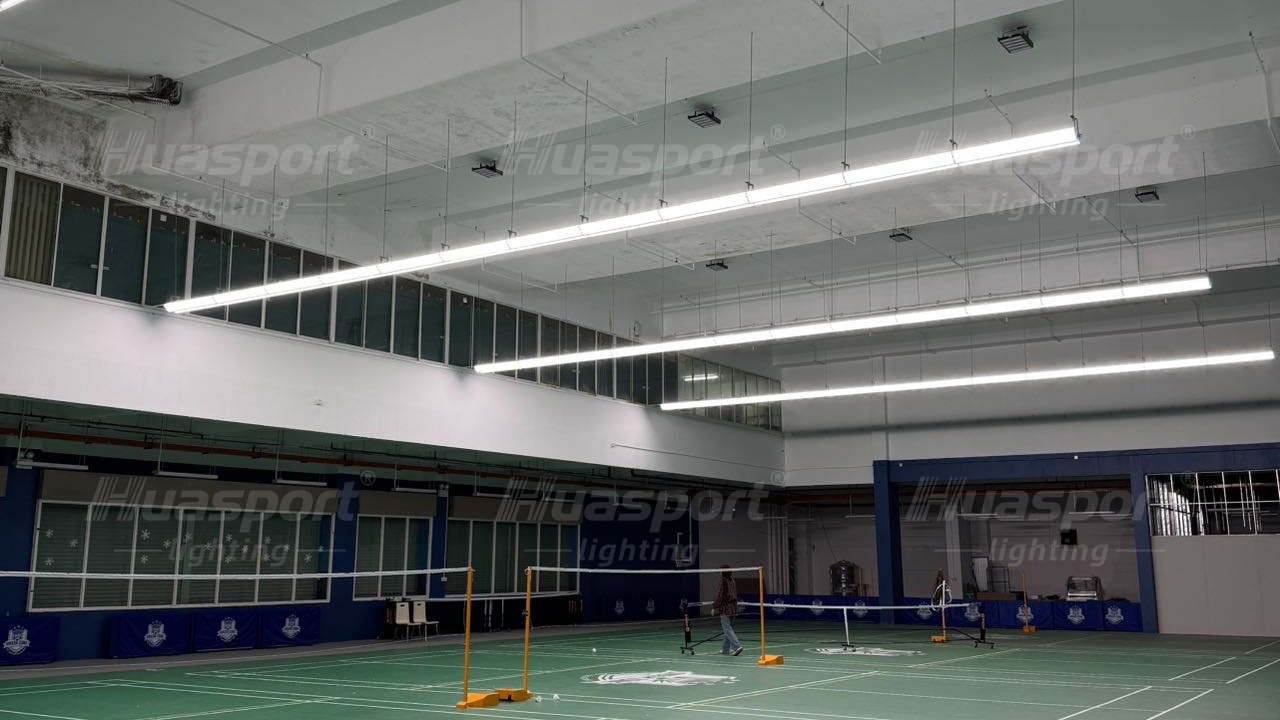
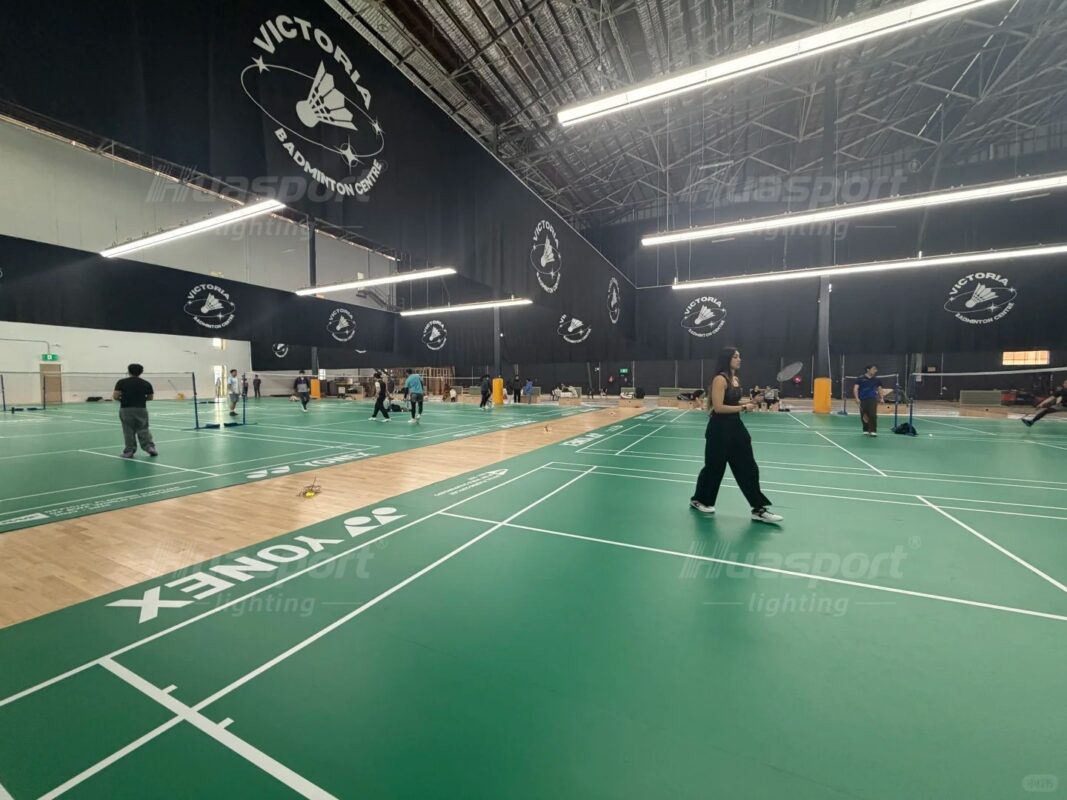
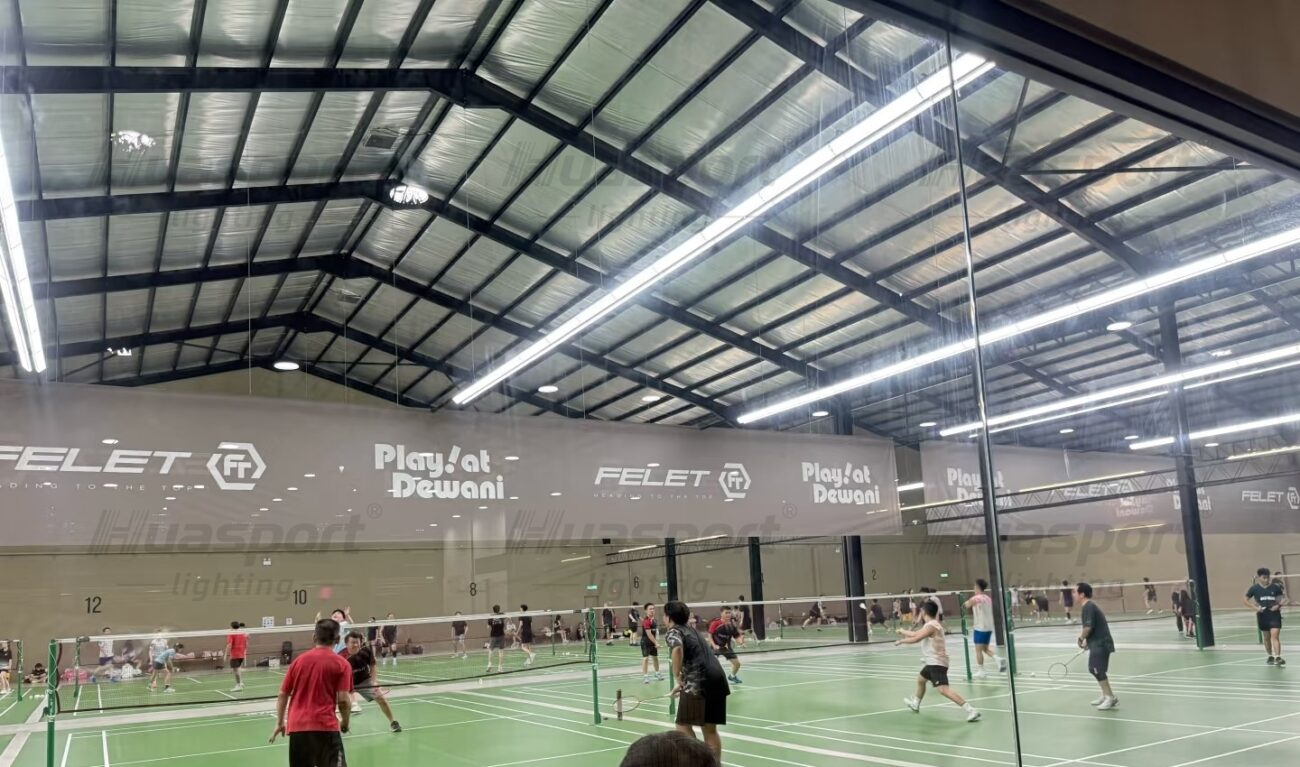
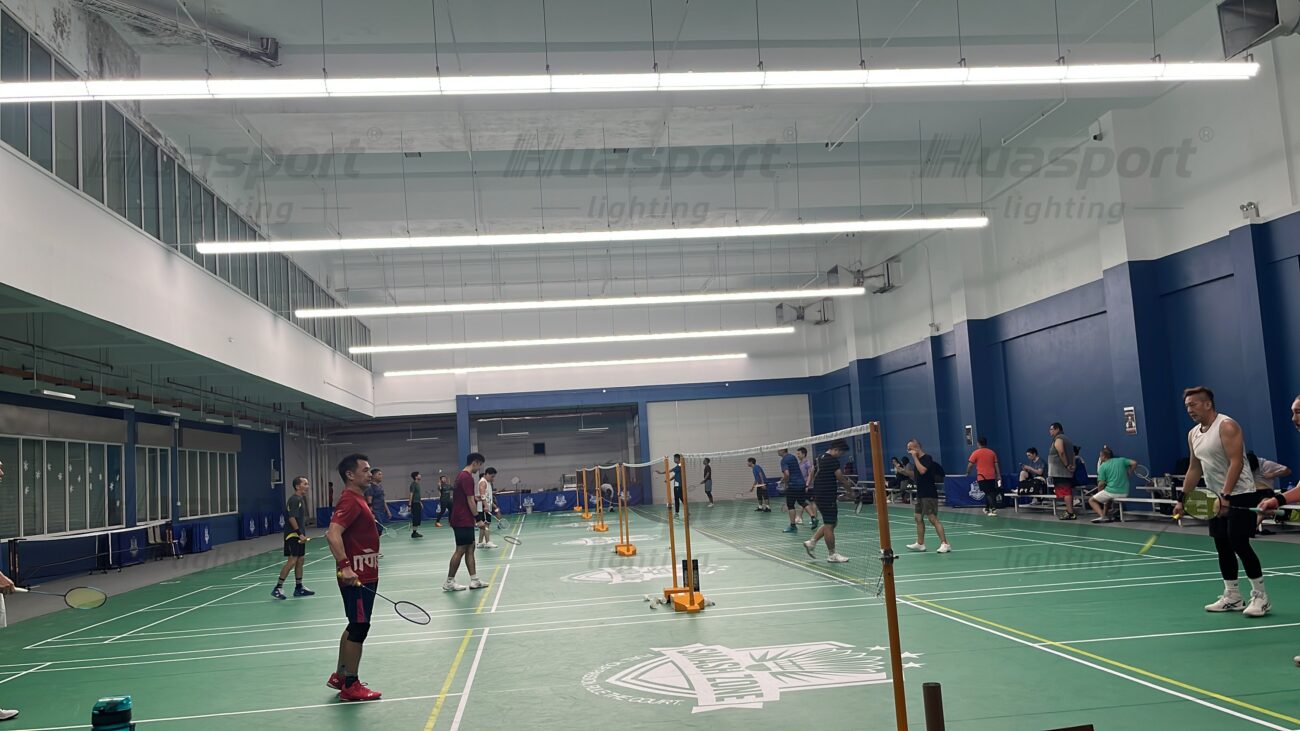
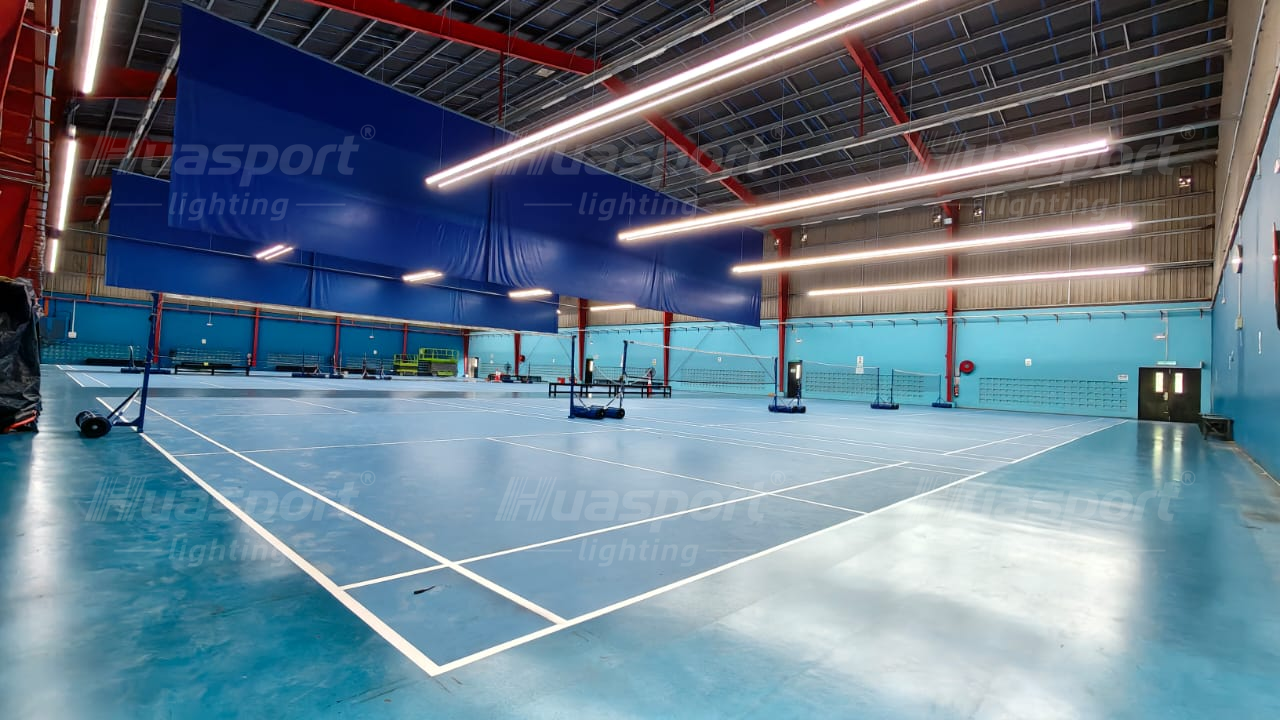
The Malaysia case photos can confirm the hall type, player movement, court grouping and visual checking angles. They should not be used alone to claim the exact installed model. The model code above is the S90 planning option to quote against when the project record confirms it fits the site.
Why One Court Can Feel Better Than the Next
In a multi-court hall, the player is not standing inside one isolated lighting box. Light from the next court may spill across the side line. A row aimed too flat can brighten the opposite side while sending glare across the eye line. A row aimed too steeply can make the near side feel strong and the far side weaker.
That is why a hall owner may hear different comments from players even when every court has the same fixture count. The difference can come from row position, roof beams, wall color, aisle width, side seating, court spacing and the direction a player faces during rallies.
The check should move court by court. Start from one rear court, look through the upper space, and compare the next court under the same viewing angle. If one court keeps pulling the eye toward the fixture row, the problem may not be solved by adding more power. The row position and glare-control structure need to be checked first.
High Shuttle Tracking Is the Real Test
Badminton exposes weak lighting faster than many indoor sports because the shuttle spends so much time above eye level. A player lifts from the rear court, follows the shuttle into the roof space, then prepares for the next shot while the fixture row sits in the same field of view.
Floor brightness can look acceptable while the high shuttle path still feels tiring. This is why Huasport treats player-view glare control as part of badminton court lighting planning. The aim is a court that looks bright enough, feels calm enough, and stays consistent from the first game to the last booking of the day.
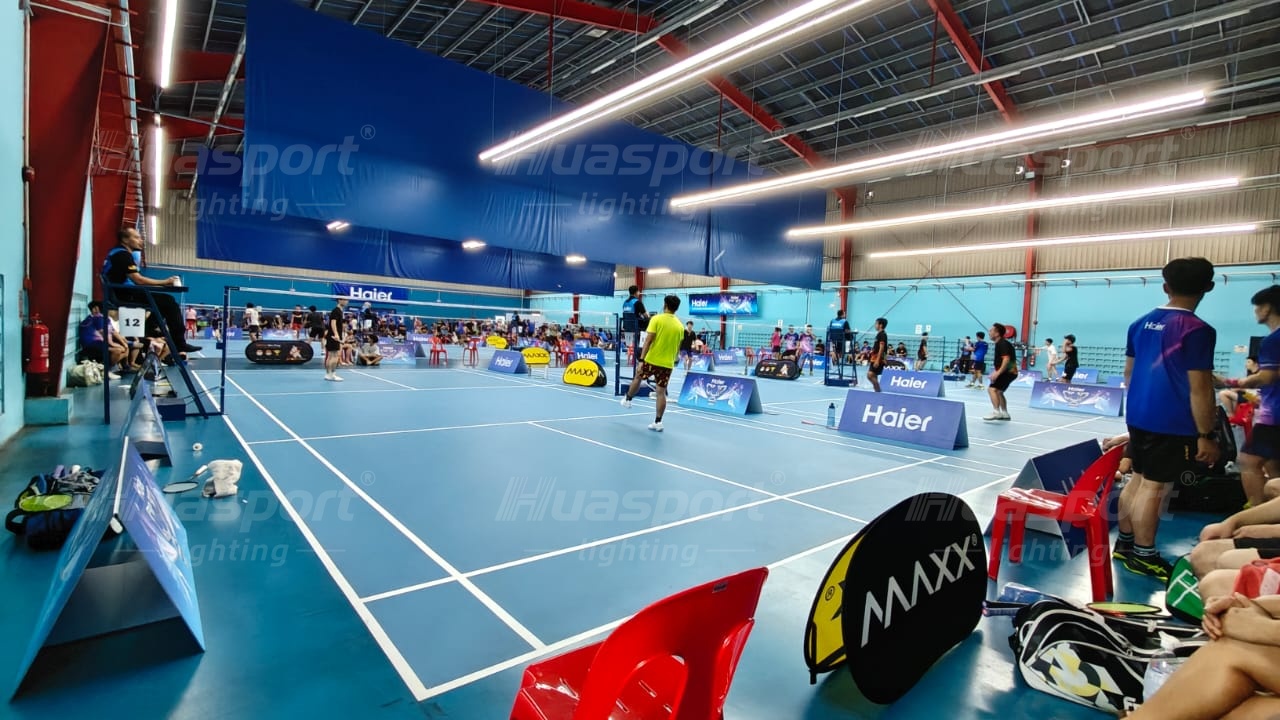
In the Malaysia photos, the useful details are the visible court rows, side viewing positions and active play conditions. Those are the places where the buyer can judge whether the lighting discussion matches real court use rather than a catalog number alone.
Neighbor-Row Glare: The Small Detail Players Notice
Adjacent rows are common in commercial badminton halls. They are efficient for planning, but they also create a simple risk: a light that was designed for one court may appear in the side vision of a player on the next court.
The check is practical. Stand near the baseline. Turn slightly across the court. Look toward the expected shuttle path, not straight at the floor. If the neighboring row cuts through that view as a harsh bright line, players may feel eye strain even when the lux reading is acceptable.
S90 is useful here because the fixture is built around a deeper anti-glare structure. It is not a promise that every viewing angle will have no glare. Glare still depends on mounting height, aiming angle, hall color and player position. The point is to reduce direct side glare with a fixture shape that is made for court viewing conditions.
What the Double-Layer Grille Does
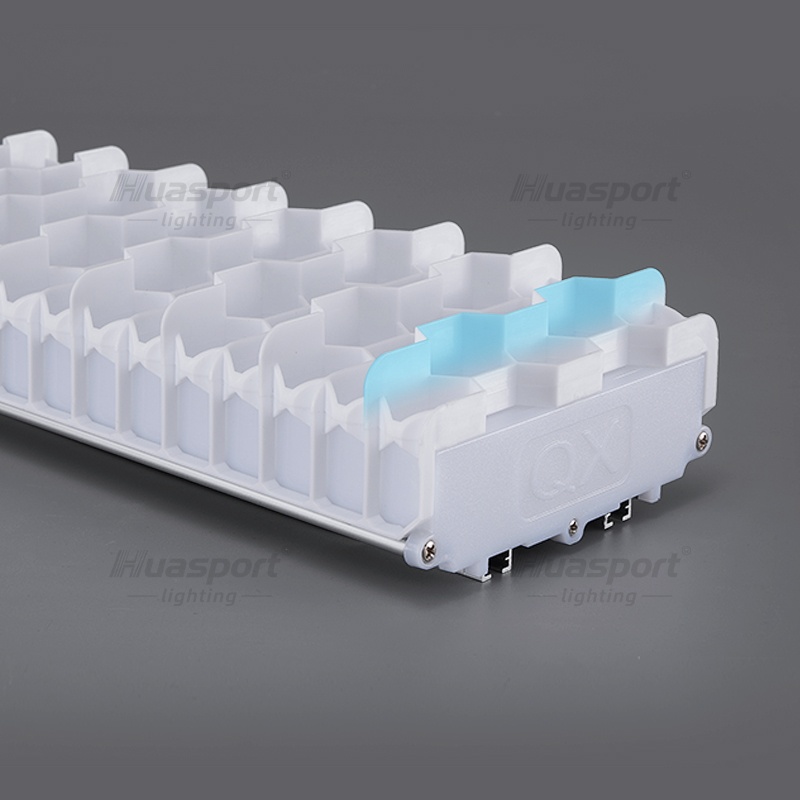
The S90 body is 13 cm wide and uses Huasport’s double-layer honeycomb anti-glare grille. Compared with a simple single-layer grille, the deeper structure gives the light a longer shielding path before it reaches the player’s eye from the side.
That product detail matters most when the player looks up. During clears, lifts and smashes, the upper space is part of the playing experience. A calmer upper view helps the player follow the shuttle instead of constantly noticing the LED source.
The back of the fixture uses a thickened aluminum profile. Aluminum helps move heat away from the driver and LED chips, which is important for commercial halls that run lighting for long hours. The bracket is fixed to the aluminum profile rather than to plastic, giving the aiming structure a stronger base.
Why the 30-Degree Angle Needs to Be Repeatable
The S90 layout depends on both rows working together. If one side is angled correctly and the other side is a few positions off, the court can feel uneven. One baseline may feel more comfortable, while the opposite baseline sees more exposed light.
For badminton and compatible indoor pickleball applications, Huasport commonly uses the 6th bracket hole as the reference for about 30-degree inward aiming. The installer should keep that angle consistent across the row, then repeat the same check on the next court.
For venues that plan indoor pickleball sessions in the same building, use the Huasport Pickleball Court Lighting guide to compare court size, use pattern and glare-control needs. Pickleball may share the same S90 side-row logic, but the final drawing should still match the actual court plan.
A Court-by-Court Inspection Sequence
Before final quotation or acceptance, do not check the hall from one comfortable angle. Use a simple sequence that forces the lighting to prove itself across the whole space.
- Stand at the rear court and track an imaginary high clear.
- Move to the opposite rear court and repeat the same upward view.
- Check the side line closest to the next court and look for neighbor-row glare.
- Compare the first, middle and last court instead of measuring only the easiest court.
- Confirm that every side row can fit 12 fixtures in a continuous 13.92 m line.
- Confirm the mounting height is close to the 5 m reference.
- Confirm the bracket can be locked consistently near the 30-degree inward angle.
- Confirm whether the venue target is 300-400 lux+ for training or needs a 500 lux+ competition review.
This sequence is simple enough for a hall owner to understand before buying, and detailed enough for an installer to discuss before work starts.
When This S90 Plan Fits
This S90 42W plan is a good reference for indoor badminton halls in Malaysia that want commercial training or recreational use with better player-view comfort. It fits projects where the court sides can support continuous rows and the ceiling structure allows about 5 m mounting height.
It is also useful when a hall owner wants one repeatable plan across several courts. The layout gives the buyer a clear model code, a clear fixture count and a clear angle reference, which makes the quote easier to compare.
Padel is different. A padel court has glass walls, corner rebounds and a four-side lighting relationship. If the project is for padel, use the Huasport Padel Court Lighting layout instead of copying a badminton side-row plan.
What to Send Huasport
For a Malaysia badminton hall quotation, send the court quantity, ceiling height, roof structure photos, court direction and target use. If the venue has several side-by-side courts, add photos from the first court, middle court and last court. Those images help Huasport check the row position and neighbor-row glare risk before quoting the S90 42W plan.
For project discussion, send the site details through the Huasport Contact Us page. To compare more technical articles, visit the Huasport Technical Articles library.
FAQ: Malaysia S90 Badminton Court Lighting
What S90 model is used in this Malaysia badminton lighting guide?
The planning reference uses Huasport WM-S90-1160-DD-42W-108Z, an S90 1.16 m 42W long-bar anti-glare fixture.
How many fixtures are used per badminton court?
The reference layout uses 24 fixtures per court, with 12 fixtures on each side.
What mounting height and angle are used?
The reference uses about 5 m mounting height and a 30-degree inward tilt. The 6th bracket hole is commonly used as the angle reference for badminton or compatible indoor pickleball planning.
Why does each court need to be checked separately?
In a multi-court hall, adjacent rows can add useful light or create side glare. Checking each court from the rear court and player side helps reveal differences that one doorway view can miss.
Is 300-400 lux+ enough for a commercial badminton hall?
It is a common planning target for commercial training and recreational play. If the venue needs competition use, the lighting layout should be reviewed toward 500 lux+ average illuminance before final confirmation.
Can this badminton layout be copied to padel courts?
No. Padel courts need a separate four-side layout because glass walls, corners and player viewing angles create different lighting conditions.