 Badminton/Pickleball court lights
 Pickleball court lights
 Padel Court Lights
 Basketball court lights
 Tennis court lights
 Football field lights
Brunei Badminton Court Lighting: Why S90 Grille Depth Matters

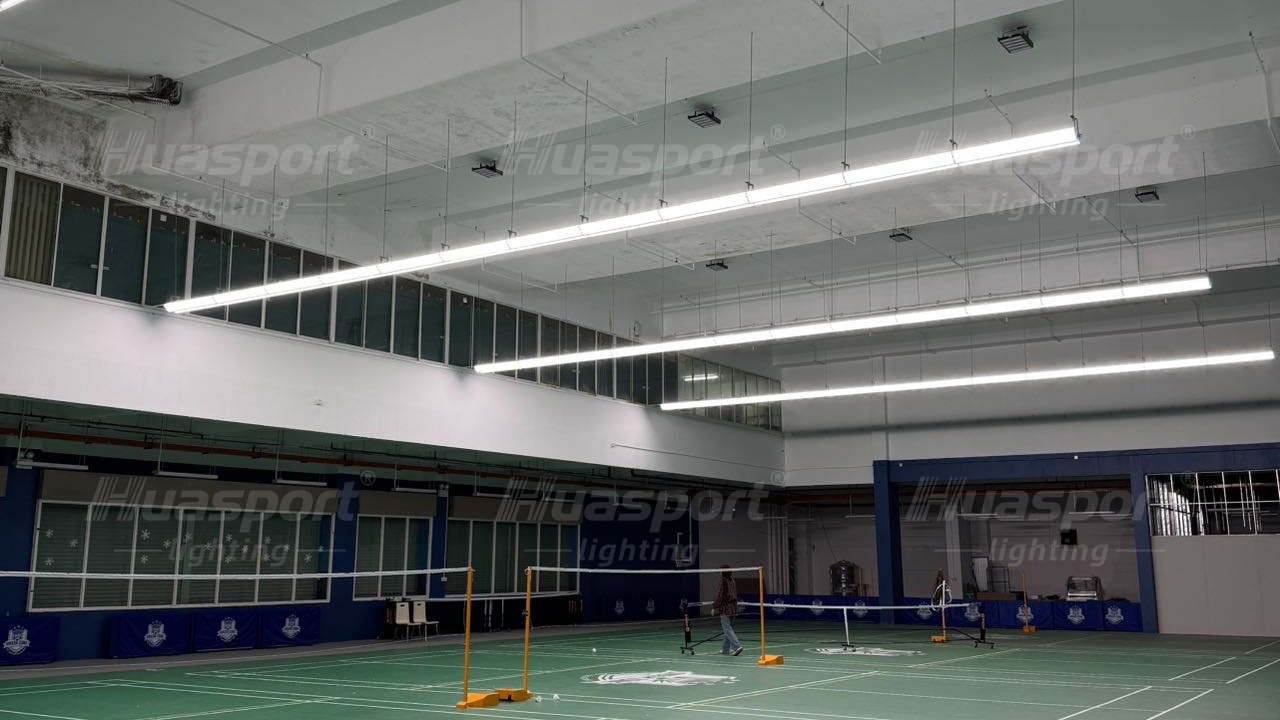
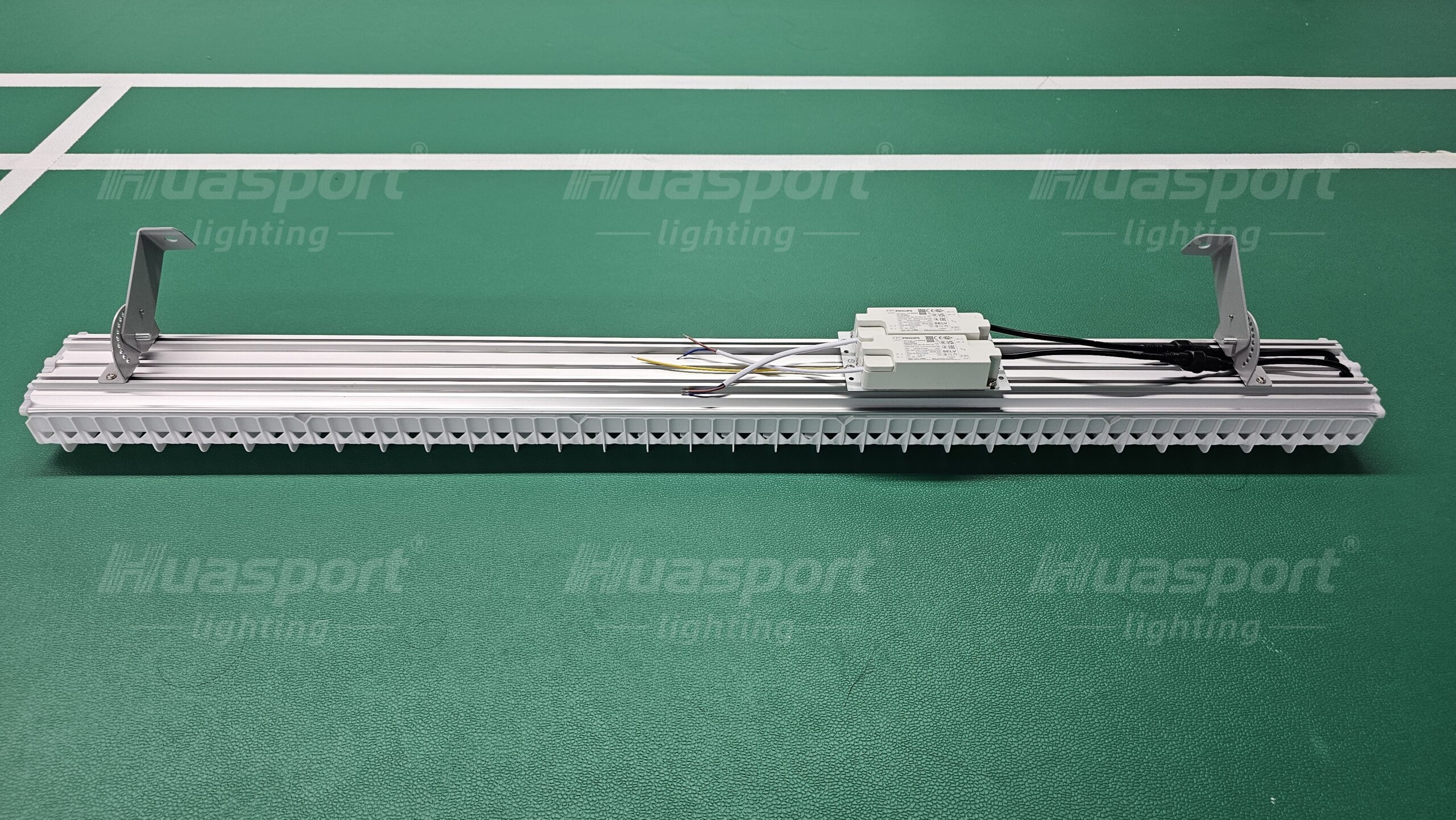
Ask for a side-on photo before choosing a badminton light. It shows how far the grille walls project around the light-emitting surface, a detail that is hard to judge in a front view. For a player looking up after a deep clear, those walls help determine how much exposed light enters the side of their view.
For Brunei badminton court lighting projects, Huasport’s current S90 double-layer grille gives buyers a specific detail to compare: grille depth of up to about 22 mm at its highest points. The design uses that depth to help reduce side glare. Here is how the structure works, what its reported light loss means, and how it fits a 42W continuous-row layout.
Look at the Depth Behind the Honeycomb Pattern
The honeycomb pattern is easy to recognize. Its depth takes a closer look. Viewed from the side, the raised cell walls shield part of the light-emitting surface. That shielding is useful in badminton because players turn and look upward as the shuttle travels across the court.
In the current S90 design, the double-layer structure reaches up to about 22 mm at the highest sections. The close-up below shows the raised walls and layered construction. The 22 mm figure describes maximum grille depth; individual sections have different heights.
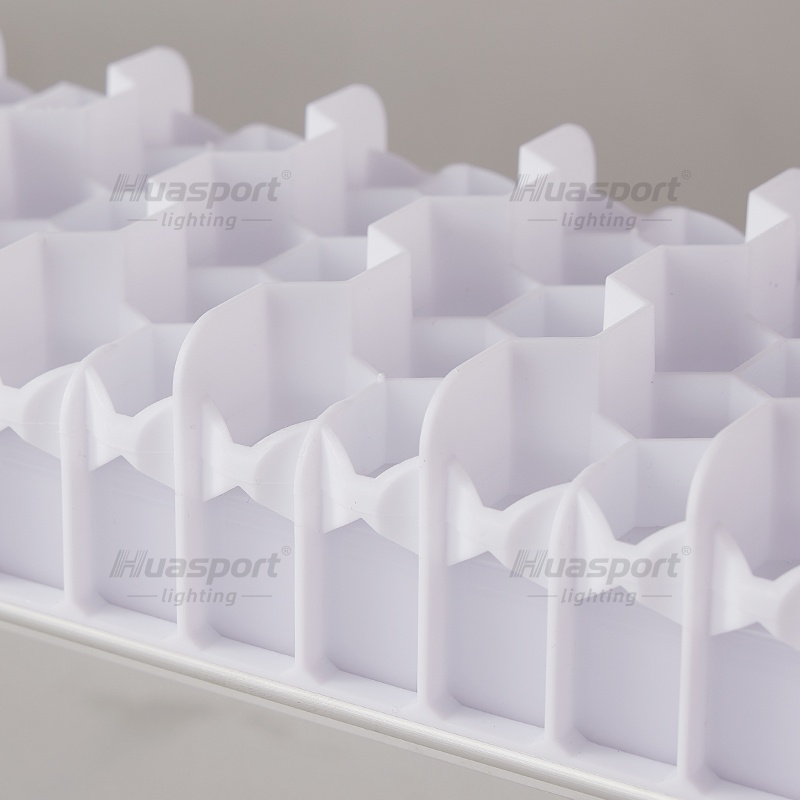
When comparing samples, ask to see each fixture from a similar side angle and under the same viewing conditions. Look for how much of the bright surface remains exposed. A side-view demonstration helps explain the structure; a playing-position check in the finished hall shows how it works with the actual row position and mounting angle.
The S90 body is 13 cm wide. Check both the body and the grille when confirming the selected product, since a front photo alone can hide the depth of the optical structure.
What Does the Deeper Grille Cost in Light Output?
Adding material around a light-emitting surface involves a tradeoff. Huasport reports about two percentage points of measured light loss for the double-layer grille in its development testing. The design compensates by improving fixture efficacy.
That figure is a manufacturer-reported development result. For a purchasing decision, request the supporting test information for the selected version, including the comparison conditions. It does not mean that every court’s measured lux will change by the same percentage.
The useful number for your hall is the illuminance expected from the complete fixture, including its grille, at the proposed height and angle. Ask for the court layout and lighting calculation together. The drawing should show where the rows sit, while the calculation should help identify differences between the center, rear areas and sidelines.
A 42W Continuous-Row Option for a 5 m Hall
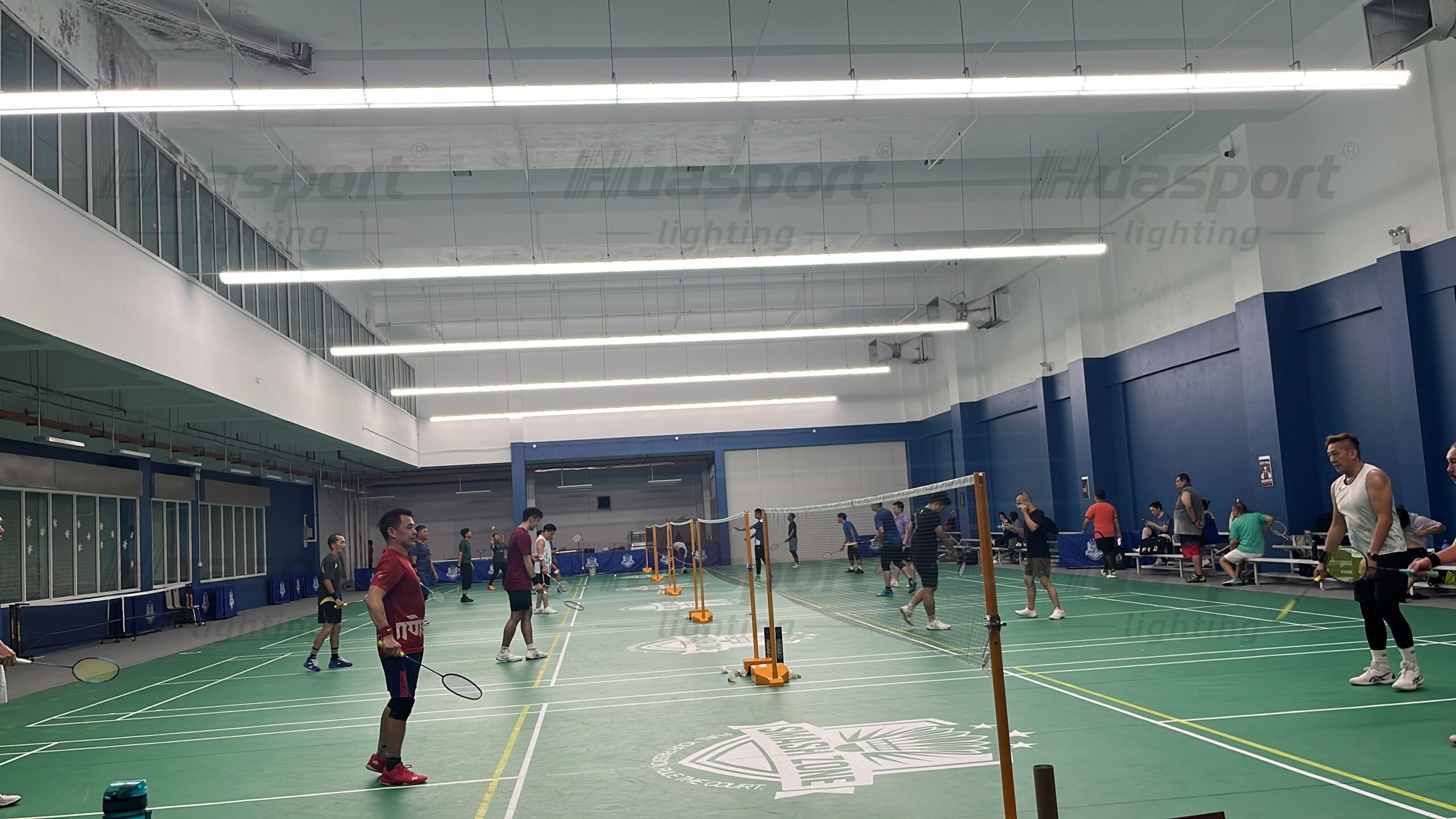
For a Brunei indoor badminton project, one Huasport planning option is WM-S90-1160-DD-42W-108Z. It uses two continuous side rows with inward aiming.
| Item | Planning Reference |
|---|---|
| Model | WM-S90-1160-DD-42W-108Z |
| Fixture size and power | S90, 1.16 m long, 13 cm wide, 42W |
| Quantity | 24 fixtures per court; 12 fixtures per side |
| Mounting | 5 m height, 30-degree inward aiming |
| Each continuous row | 12 x 1.16 m = 13.92 m |
| Main playing-area length | 13.4 m |
| Training and recreational illuminance reference | 300-400 lux+ |
| Competition planning | Review a 500 lux+ target and the event’s requirements separately |
The row is 0.52 m longer than the court’s main playing length. That is a useful dimension when coordinating suspension points with the ceiling structure. It does not establish the light coverage by itself; row offset, aiming and the fixture’s light distribution still matter.
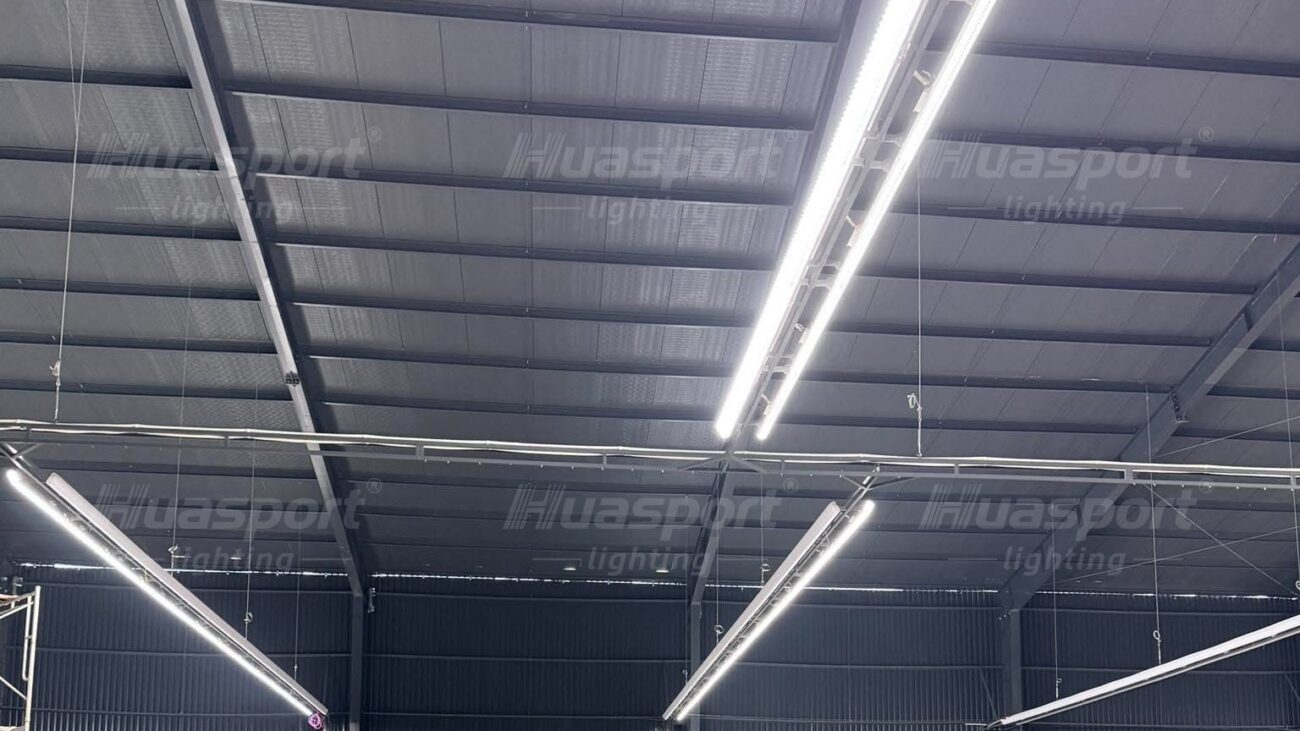
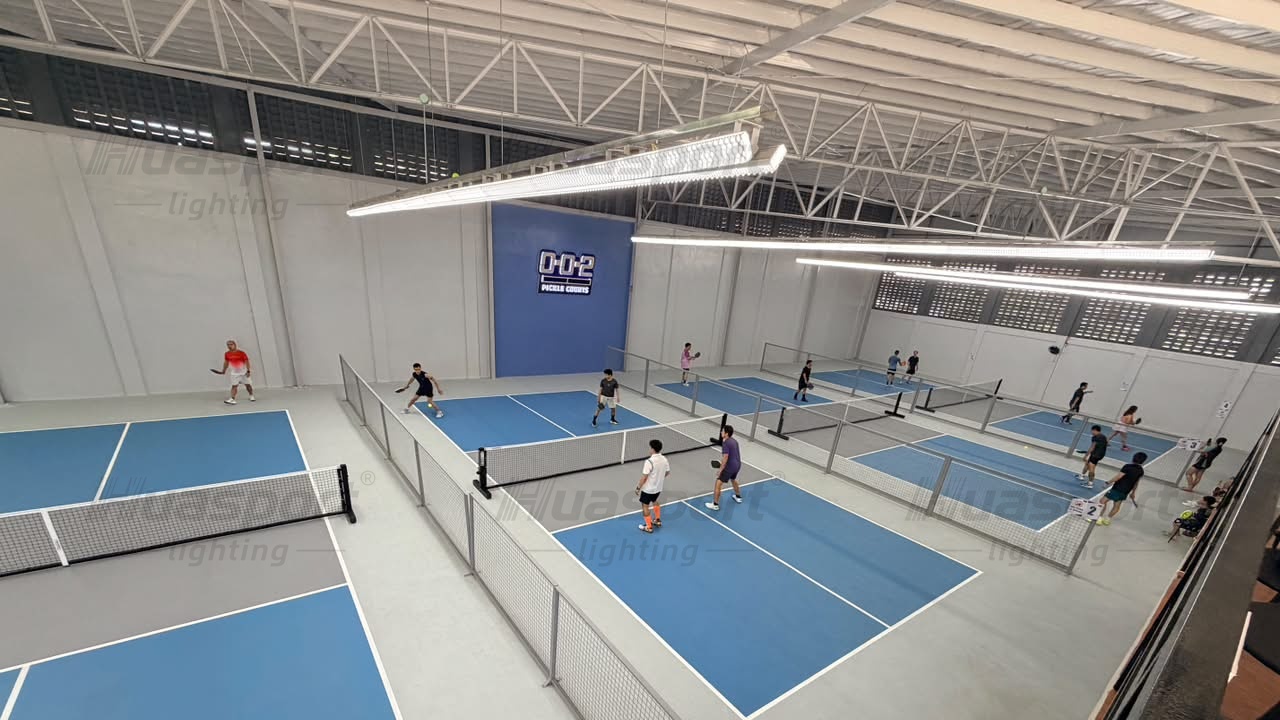
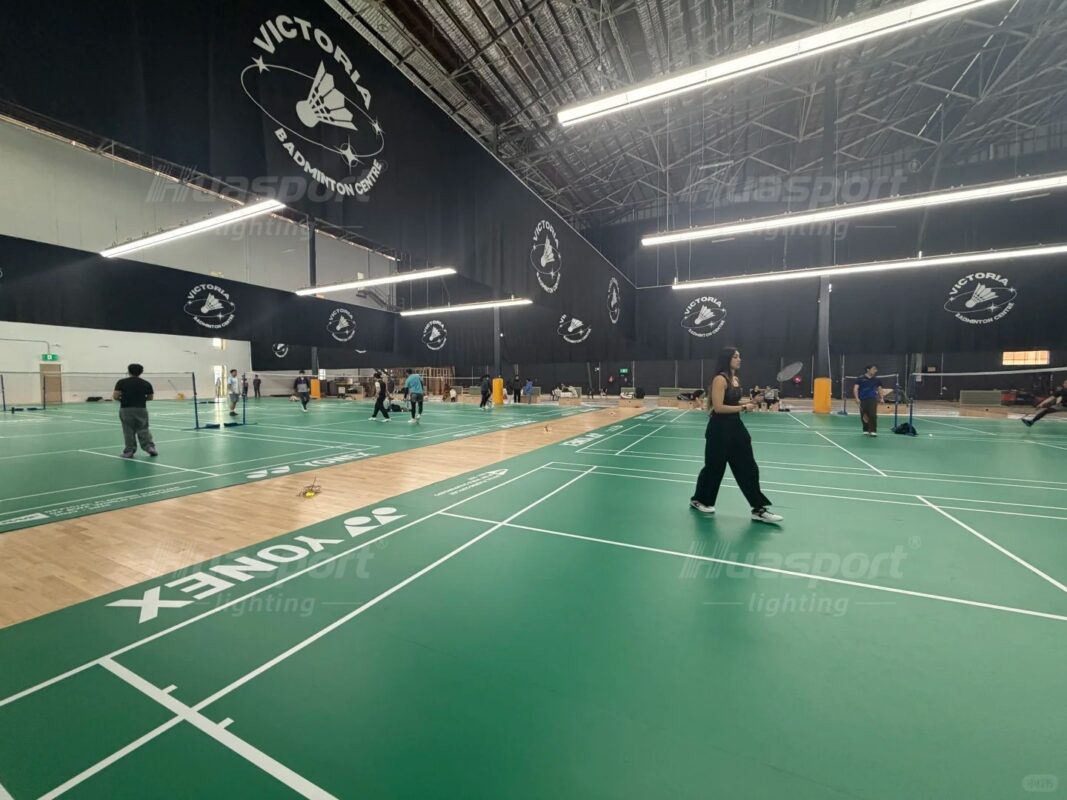
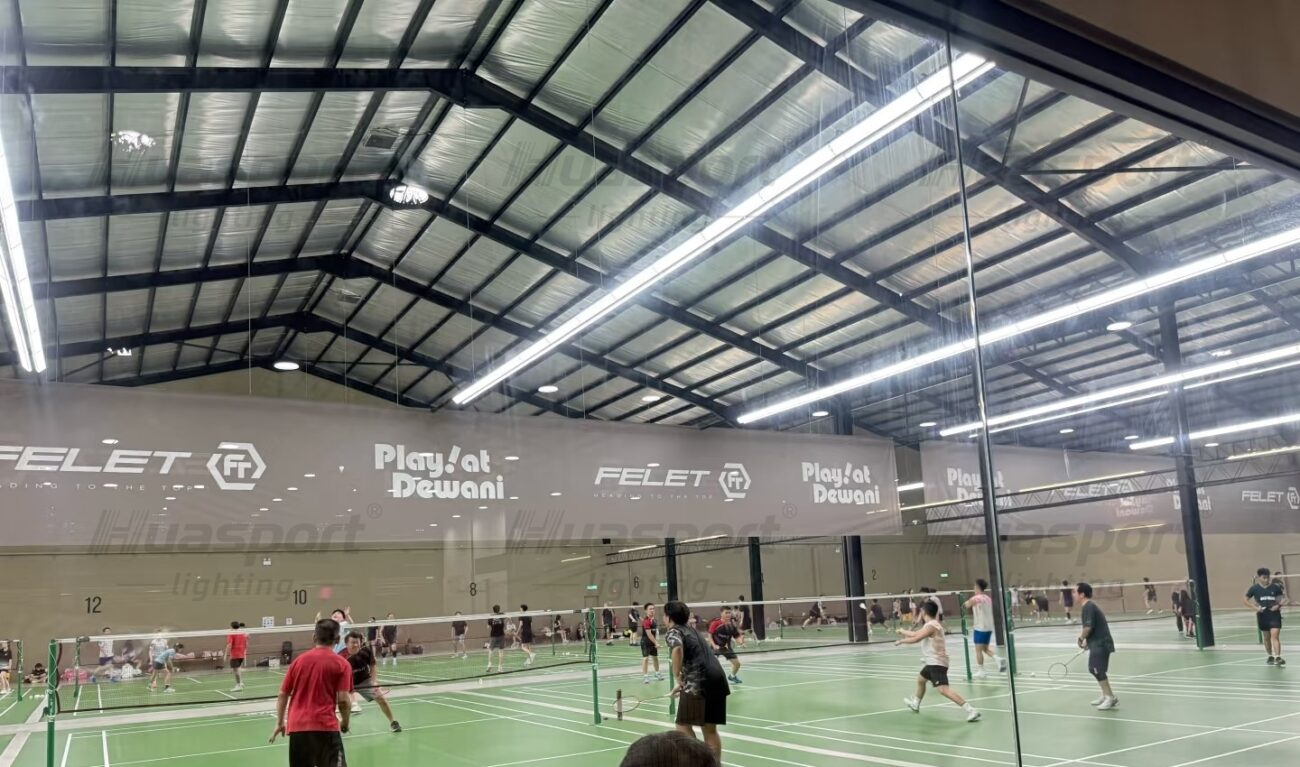
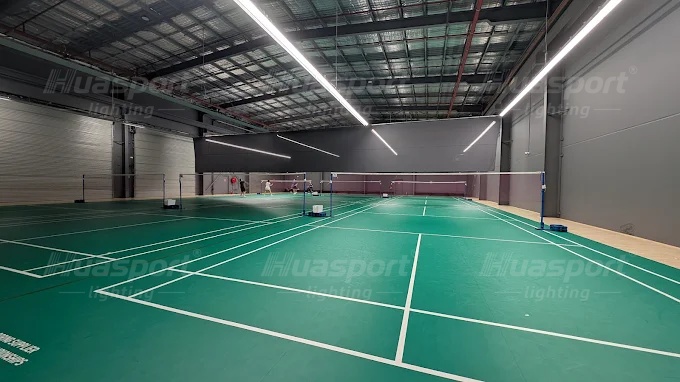
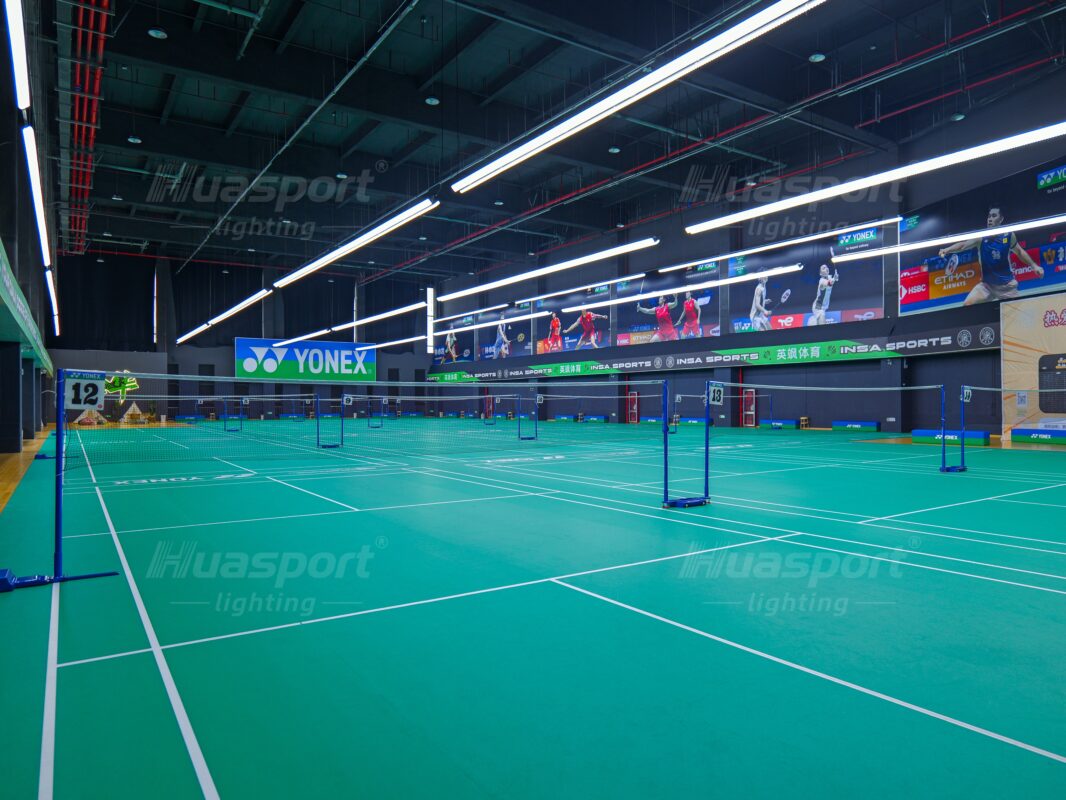
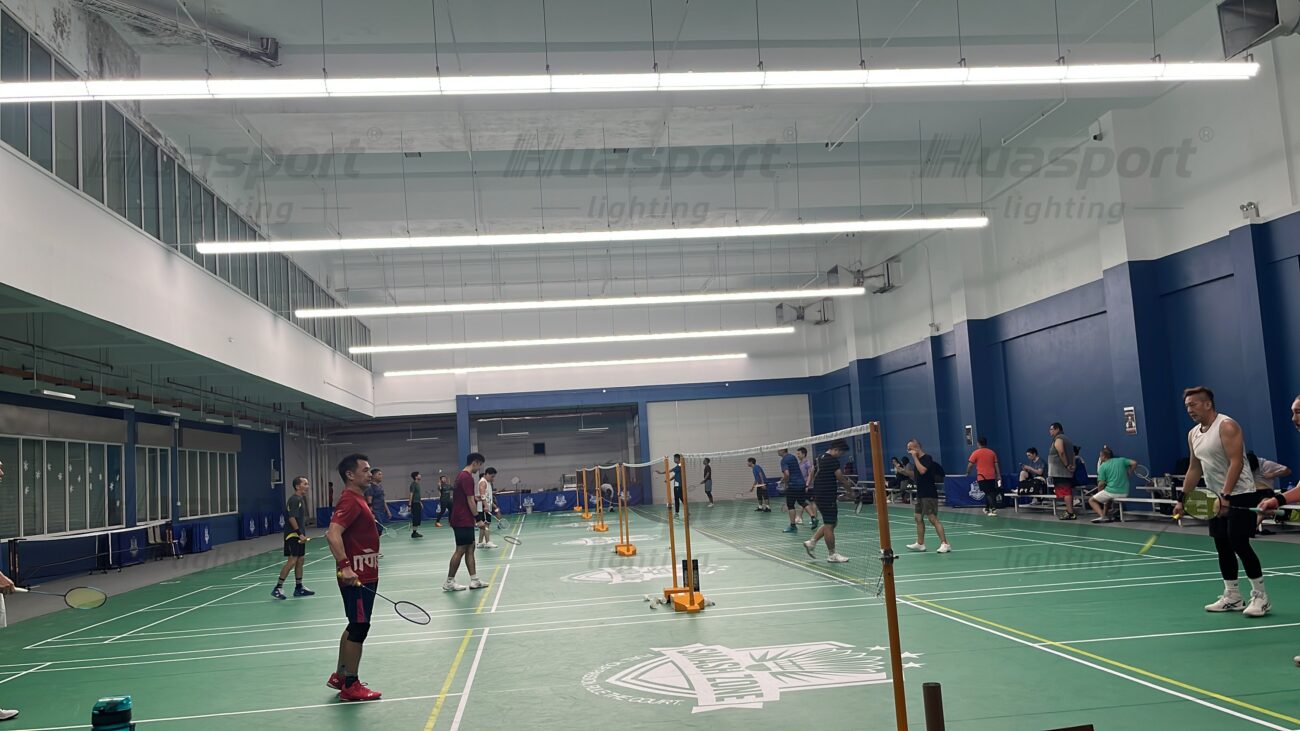
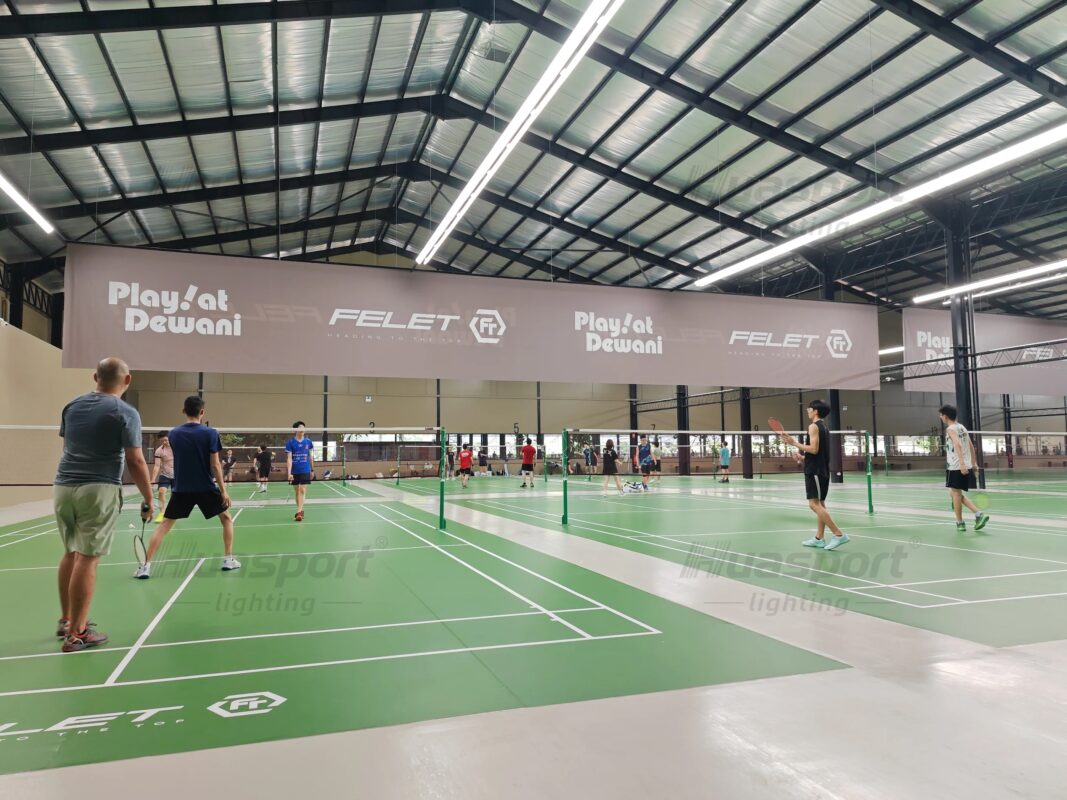
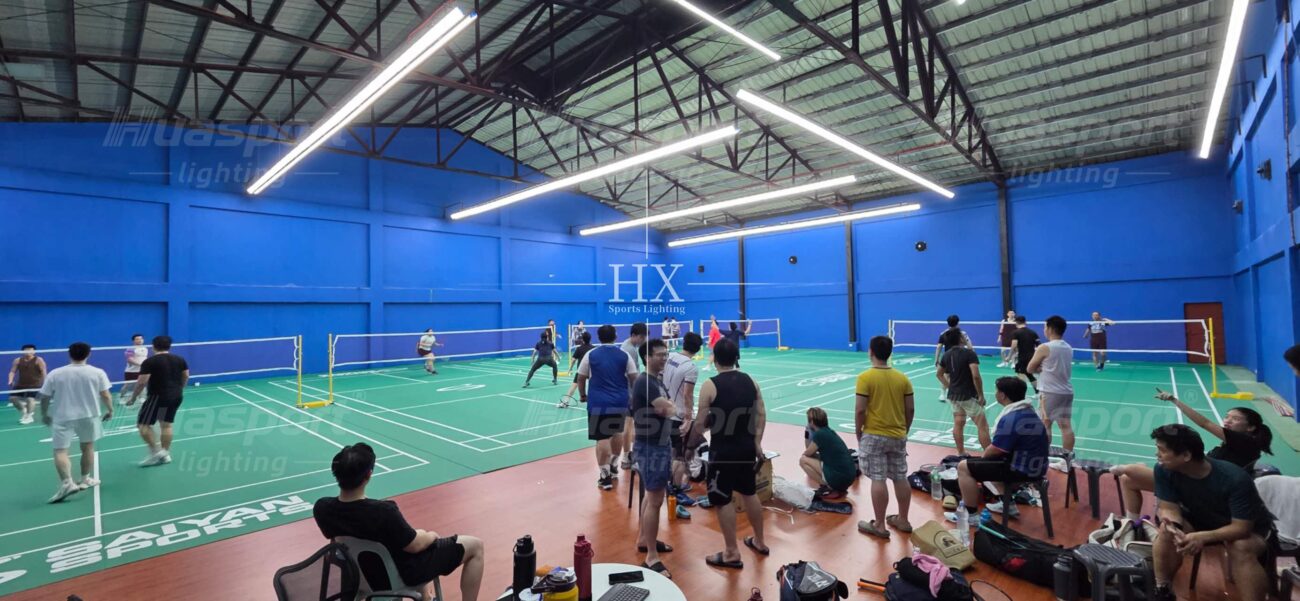
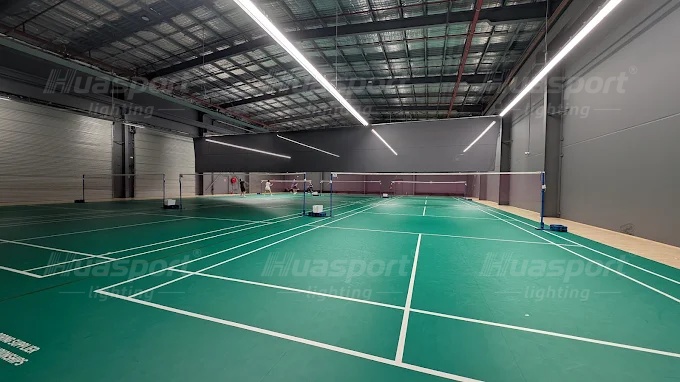
The Brunei photographs show hall conditions and fixture-row arrangements. The table is a proposed planning reference, with final model, quantities and results to be confirmed for your project.
For the broader relationship between mounting height, row length and court use, see the Huasport badminton court lighting guide.
Follow the Bracket Back to the Aluminum Body
The grille’s position changes when the fixture tilts. During installation, the two side rows need consistent inward aiming so the selected optical structure faces the playing area as intended.
The S90 adjustable bracket fixes to the aluminum profile. Inspect that connection when reviewing a sample, then confirm how the installer will set and secure the proposed angle along the row.
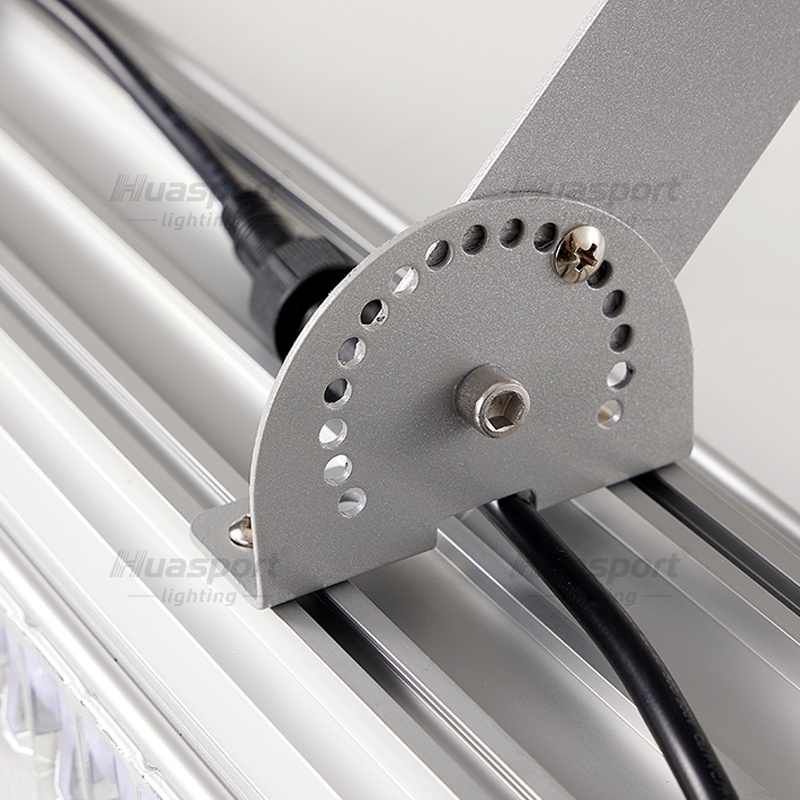
Behind the grille, the S90 uses an oxidation-treated extruded-aluminum profile. The profile provides the structural fixing base and supports heat dissipation. This is another useful detail to inspect when comparing quotations: the price covers the body and mounting assembly as well as the visible grille.
Bring the Sample and the Court Drawing Together
A product sample can answer questions about grille construction. A venue drawing can answer questions about placement. Before ordering, connect the two through three practical checks.
- Match the sample to the quotation. Confirm that the quoted model includes the grille, body and bracket you inspected. Request the relevant product drawing and supporting test report.
- Mark the viewing positions on the layout. Include a rear-court position and a sideline position, plus the view toward a neighboring row. These are useful places to review where the emitting surfaces will appear during play.
- Agree how the installed result will be checked. Include measurements across the court and a playing-position review. A high average reading can still hide a dimmer area or an uncomfortable view of a nearby row.
This gives the supplier and installer a shared set of decisions to work through before the lights are suspended.
Questions From Venue Owners
Does a deeper grille prevent discomfort from every viewing angle?
The S90 double-layer grille is designed to reduce side glare. Players can still see an emitting surface from some positions, so mounting height, row position and aiming remain part of the design. Check the installed arrangement during overhead shots and high-shuttle tracking.
Can an existing hall keep its suspension points?
That depends on their position, height and the supporting structure. Send a dimensioned drawing and ceiling photos for review before reusing them. Existing points need to suit the proposed row alignment and bracket arrangement.
Is 500 lux enough to confirm competition suitability?
An average illuminance figure alone cannot establish that. Huasport uses 500 lux+ as a competition planning reference here; the event’s lighting requirements and the complete installation need a separate review, including light distribution and player sightlines.
Planning a Brunei Badminton Hall?
Send the court plan, court count, available mounting height and a ceiling photo through Huasport’s lighting enquiry page. Include whether the hall will serve recreational players, coaching sessions or competitions. Those details give us a starting point for reviewing the S90 layout and preparing a quotation.
If your venue also includes pickleball, compare the indoor pickleball court lighting options against that court’s layout. For enclosed courts, the Padel court lighting guide covers the separate considerations around glass, fencing and perimeter rows.
More installation examples are available in Huasport’s technical articles.