 Badminton/Pickleball court lights
 Pickleball court lights
 Padel Court Lights
 Basketball court lights
 Tennis court lights
 Football field lights
Canada Badminton Court Lighting: ETL 50W Player-View Checks

In a Canadian badminton hall, the first question is not always whether the court looks bright from the doorway. The better question is what a player sees after moving to the rear court, turning toward the net, and tracking a high shuttle under the fixture rows.
That player view can change the whole lighting decision. A row that looks clean from the entrance can feel much closer when a player looks up for a clear, lift or fast overhead shot. For Canadian projects that need ETL documentation, one practical Huasport planning option uses the `WM-S90-1160-DD-50W-108Z` long-bar fixture, with 50W power, 4275 lm output, 24 fixtures per court, 6 m mounting height and 30-degree inward aiming.
Why Canadian Halls Should Start From the Player View
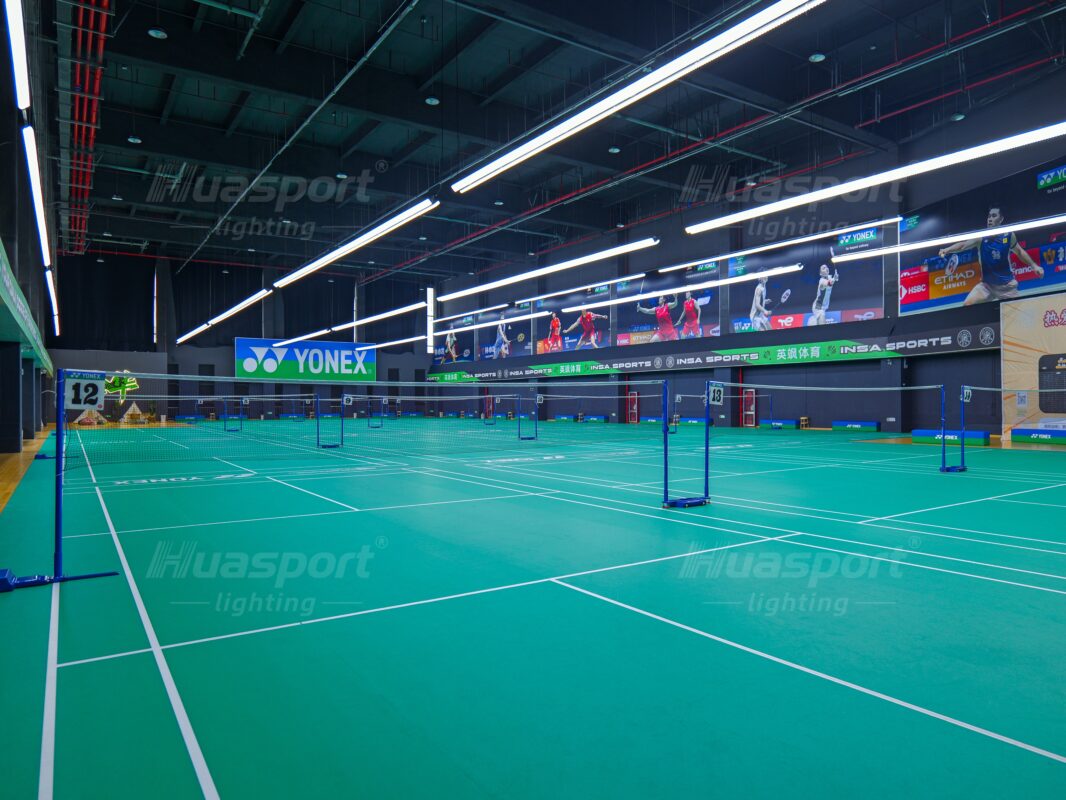
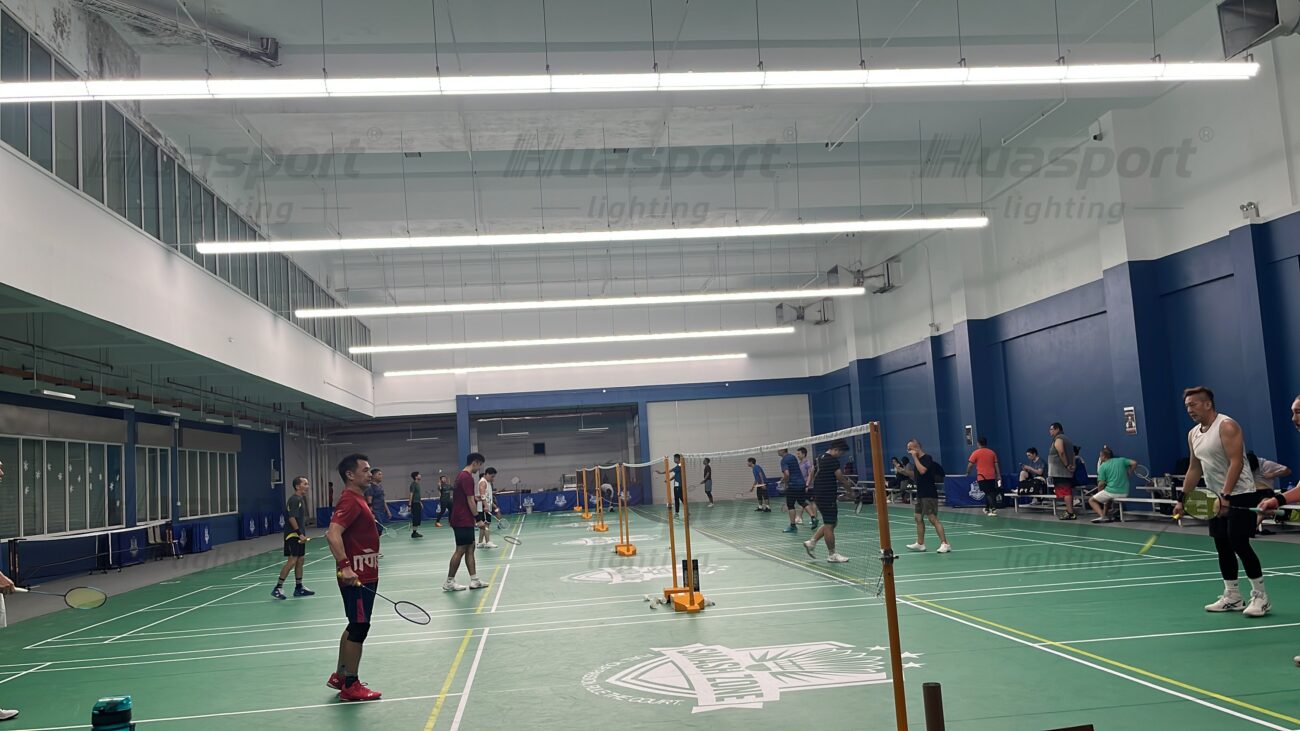
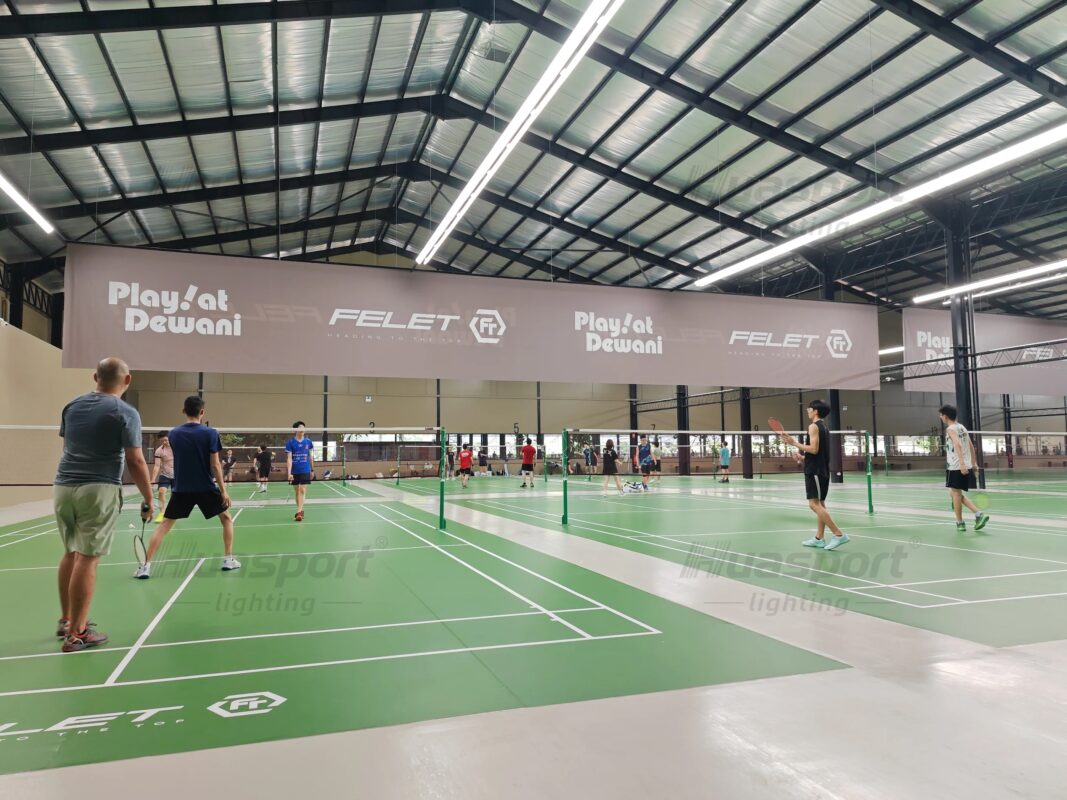
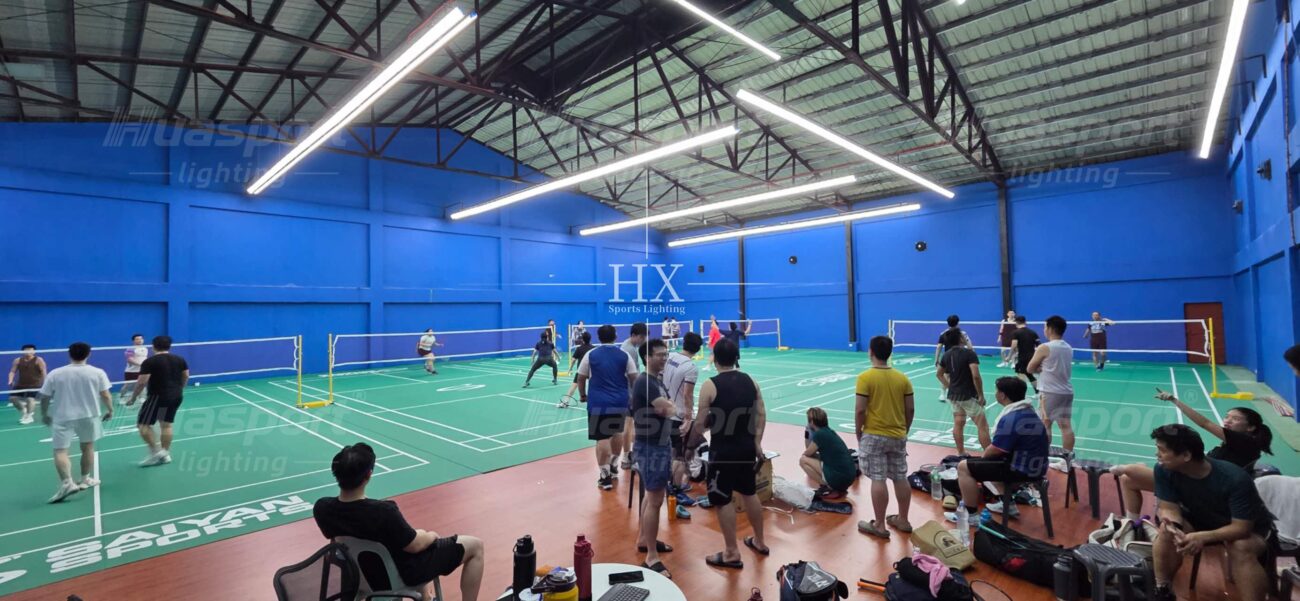
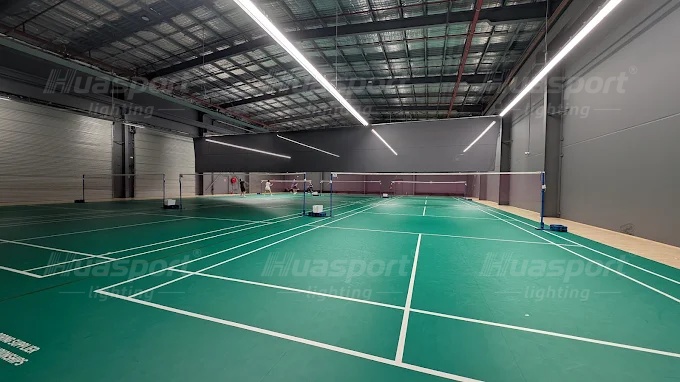
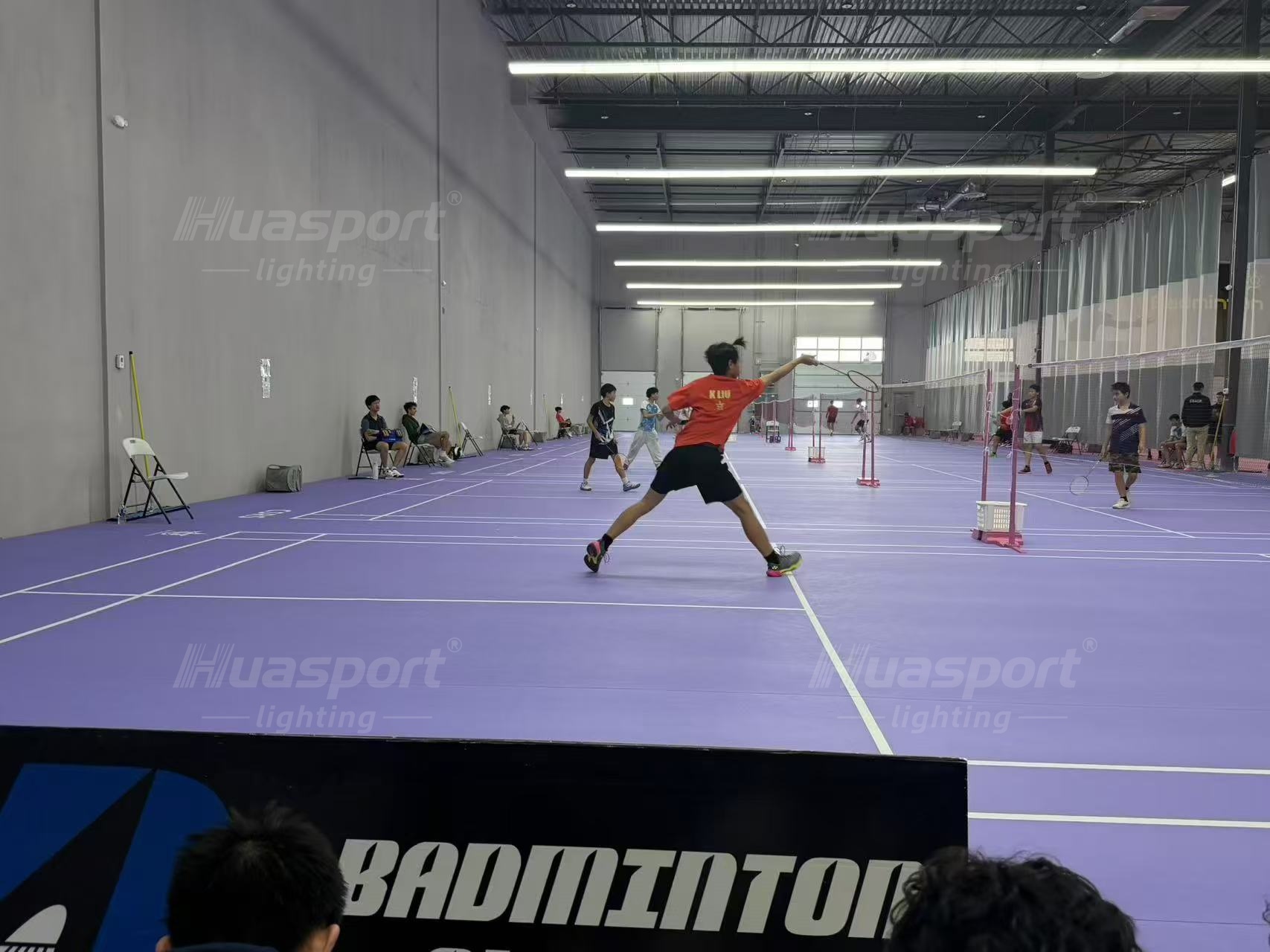
Many indoor badminton halls in Canada use tall industrial spaces, side curtains, concrete or painted walls, and exposed roof structure. Those details matter because badminton players do not only look across the floor. They look up repeatedly, often from the baseline or sideline, while judging a shuttle that is moving fast.
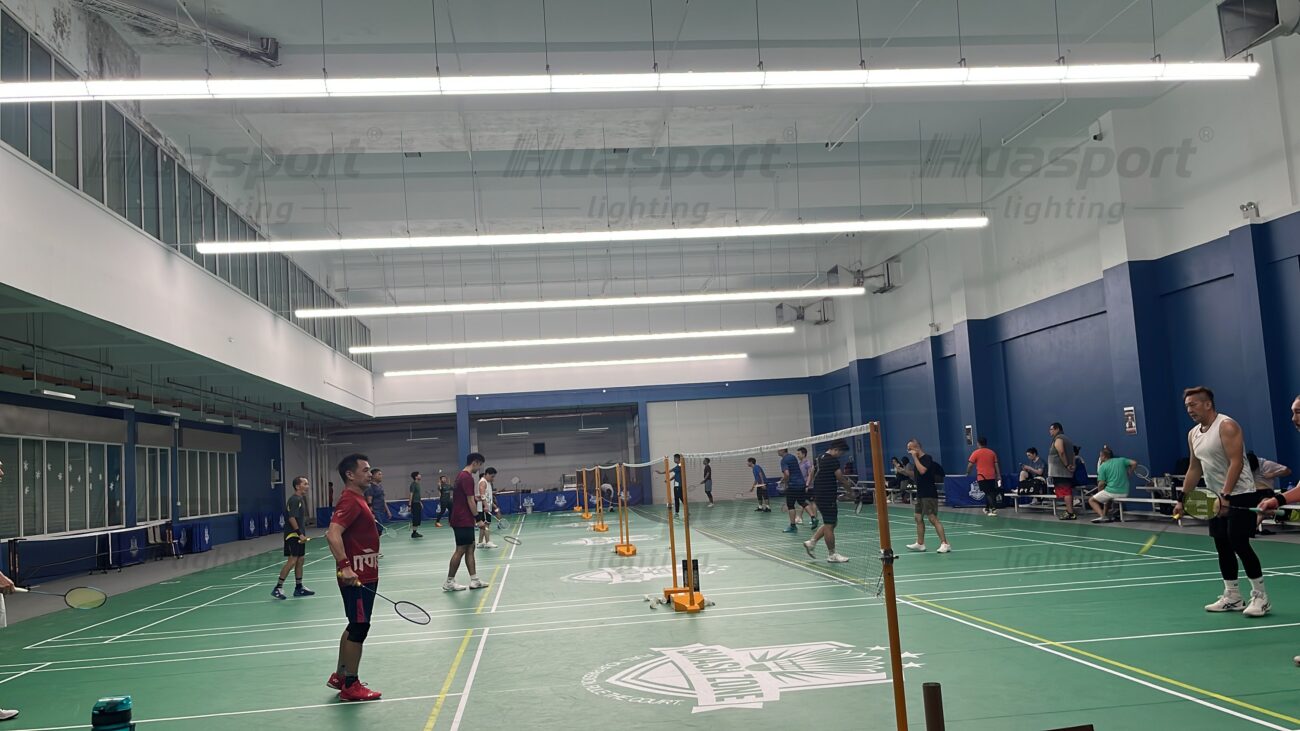
A simple brightness check can miss that experience. The center of the court may look even, but the rear-court player may see a long bright line entering the upper sightline. The sideline player may notice light from the side of the row. A player on an end court may also see a wall, curtain or roof beam changing the background contrast.
This is why the Huasport Badminton Court Lighting guide treats layout, aiming and glare checking as one decision. The fixture count matters, but the court positions matter just as much.
The Canada ETL 50W Planning Reference
For Canada badminton court lighting projects that need ETL-certified long-bar fixtures, this planning reference uses the Huasport `WM-S90-1160-DD-50W-108Z`. It is a 1.16 m S90 anti-glare fixture with 50W power, 4275 lm output and a 13 cm body width.
The layout is designed as two continuous side rows per court. Each side uses 12 fixtures, creating a 13.92 m row that covers the 13.4 m main playing-area side.
| Item | Canada Planning Reference |
|---|---|
| Fixture model | WM-S90-1160-DD-50W-108Z |
| Certification | ETL |
| Power and output | 50W, 4275 lm |
| Fixture family | S90 1.16 m long-bar fixture |
| Body width | 13 cm |
| Fixtures per court | 24 fixtures |
| Fixtures per side | 12 fixtures |
| Mounting height | 6 m |
| Aiming | 30-degree inward aiming |
| Row length | 13.92 m continuous row |
| Main playing-area side covered | 13.4 m |
| Planning illuminance | 400-500 lux+ |
This is a planning reference, not a claim that every Canada case photo proves the exact installed model. Photos are useful for reading hall shape, row location and player sightlines. Final model, quantity, aiming and acceptance targets should still be confirmed in the project record before quotation.
Direct-View Glare and Side Glare Are Not the Same Problem
A useful lighting conversation separates two things buyers often mix together.
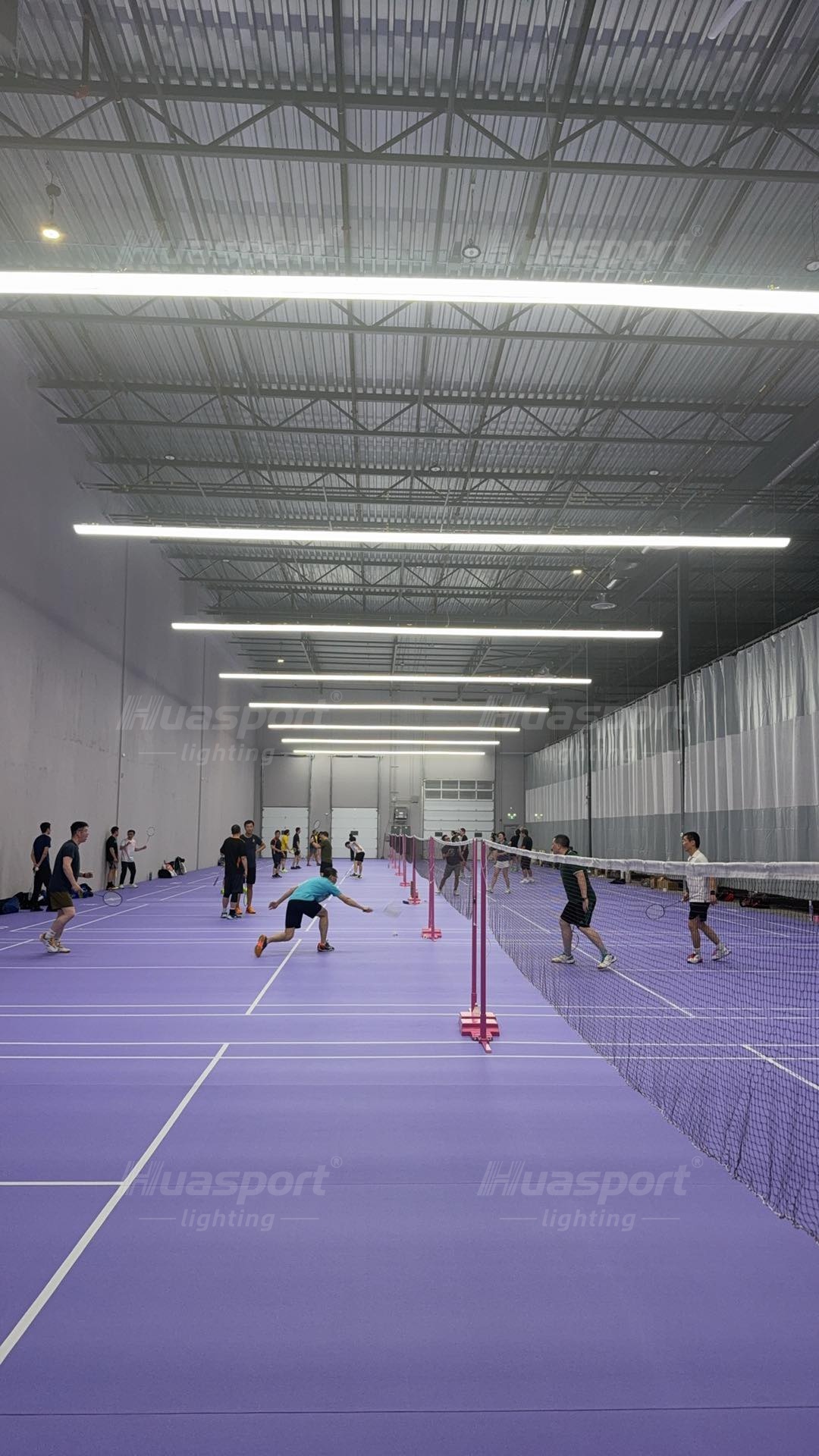
Direct-view glare happens when the player sees the bright face of the fixture while playing. This can show up during serves, clears, lifts or any shot that forces the eyes upward.
Side glare is different. It appears when long rows run along the court edge and light from the side of the fixture reaches the player’s viewing angle. A hall can pass a general brightness check and still feel tiring if this side view is not controlled.
For this reason, Canadian buyers should not judge a proposal only by wattage. They should ask how the fixture handles player-angle glare, how the rows are aimed, and how the end courts are checked after installation.
Why the S90 Double-Layer Grille Matters
The S90 uses a double-layer honeycomb grille. The public buyer benefit is straightforward: the grille helps reduce side glare from the viewing angles that badminton players actually use. It should not be described as making every angle glare-free. A serious hall still needs a player-view check.
The 13 cm S90 body gives room for the optical structure instead of leaving the light source exposed from the side. In practice, that makes the fixture more suitable for continuous rows, where the side of the row can be visible from the neighboring court or from the baseline.
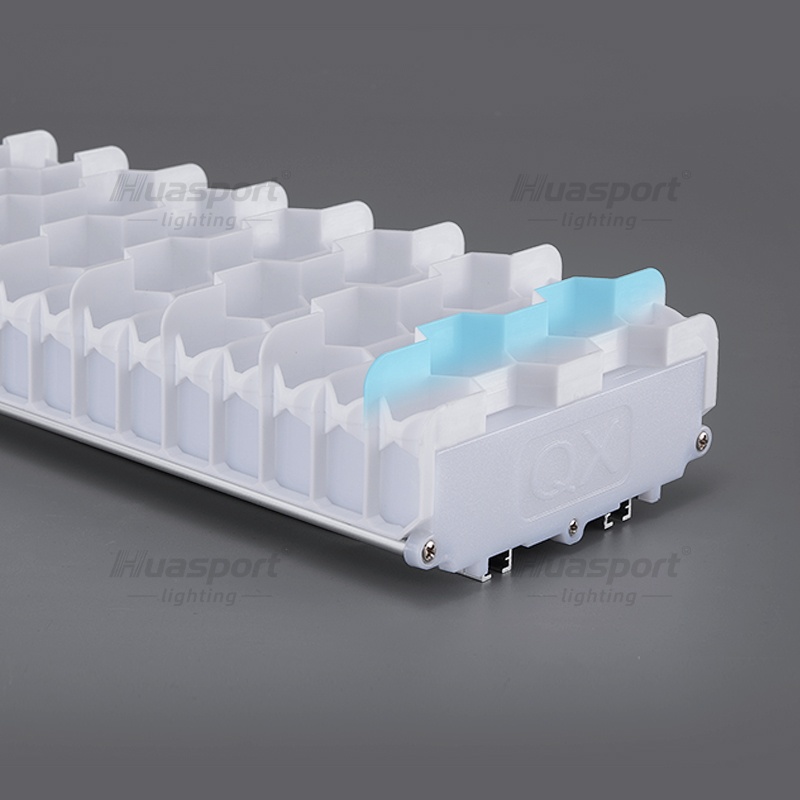
A buyer does not need to become a lighting engineer to use this point. The practical question is simple: if someone stands at the back line and looks up at a high shuttle, does the row support tracking, or does it steal attention?
The 24-Fixture Row Is About Coverage, Not Decoration
The 24-fixture layout is not chosen so the row looks full in photos. It is chosen because twelve 1.16 m fixtures per side form a 13.92 m continuous row, which matches the 13.4 m main playing-area side of a badminton court.
That continuous row helps avoid obvious dark breaks along the side. It also gives the supplier a clearer basis for aiming the fixtures inward at 30 degrees. If the row is broken, shortened or placed too far away from the playing area, the court may still look bright in spots while shuttle tracking feels uneven.
For multi-court halls, the review should be done court by court. A middle court may receive extra brightness from neighboring rows, while an end court may sit beside a wall or curtain with less surrounding light. This is one reason two courts in the same building can feel different even when the fixture model is the same.
Bracket and Aiming Checks Before Quotation
The reference layout uses 6 m mounting height and 30-degree inward aiming. That angle should be repeatable on both sides of the court. If one row points too flat or too steep, the player-view result can change quickly.
Before quotation, ask for these checks:
- Confirm the number of courts and the exact court layout.
- Confirm whether the Canada project requires ETL documentation.
- Confirm the fixture model as `WM-S90-1160-DD-50W-108Z`.
- Confirm 24 fixtures per court, with 12 fixtures on each side.
- Confirm 6 m mounting height and safe suspension points.
- Confirm 30-degree inward aiming on both side rows.
- Confirm whether end courts, wall-side courts or curtain-side courts need extra player-view review.
- Confirm whether the target is 400-500 lux+ for the intended play level.
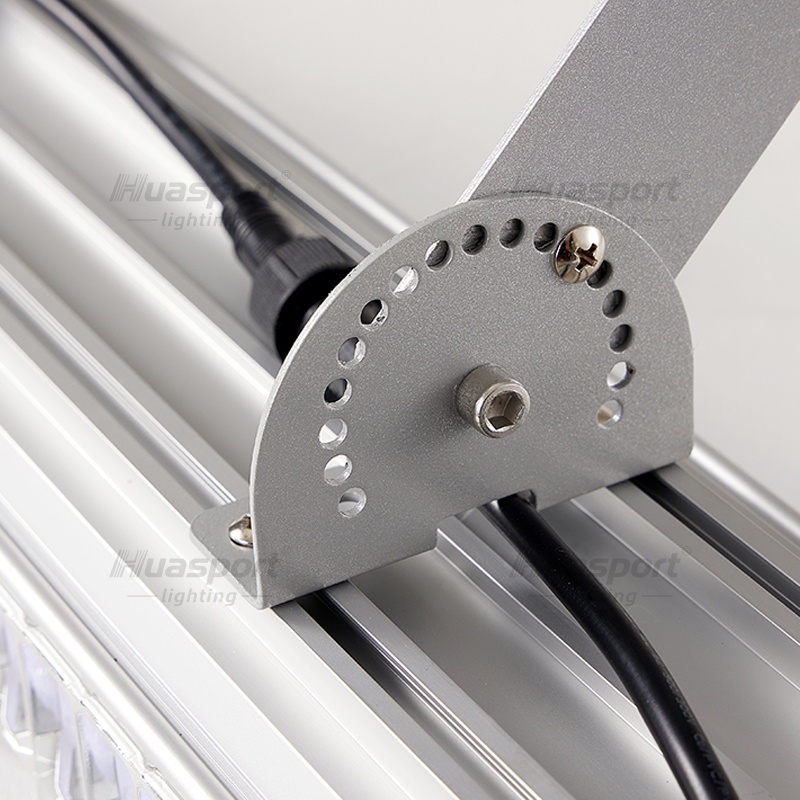
The adjustable bracket is not just a small accessory. It helps make the aiming repeatable, and it should be fixed to the aluminum profile so the row stays consistent after installation.
What the Photos Can Confirm
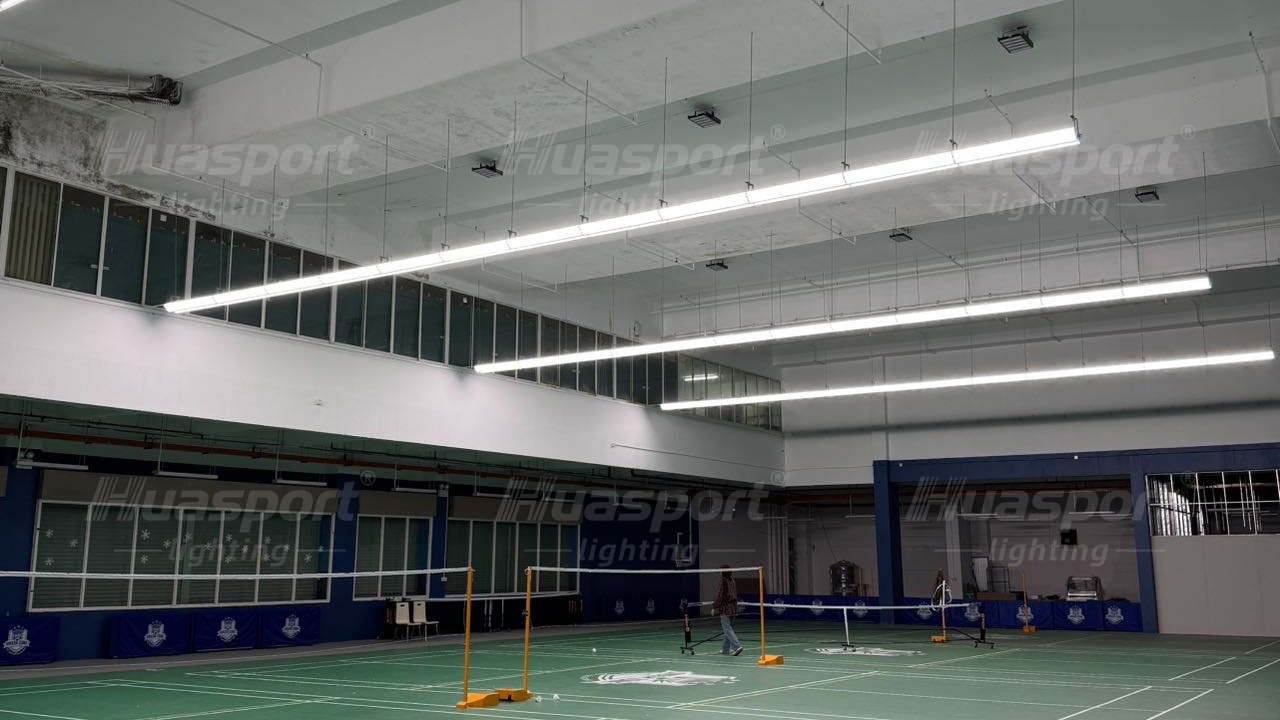
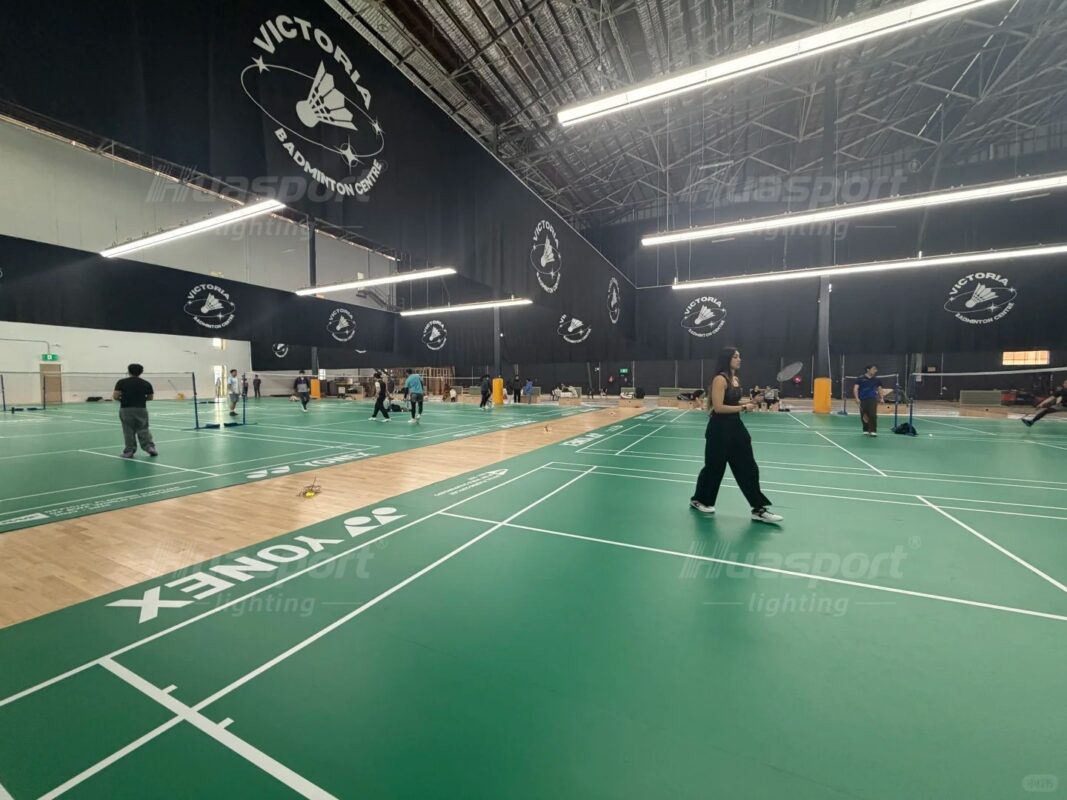
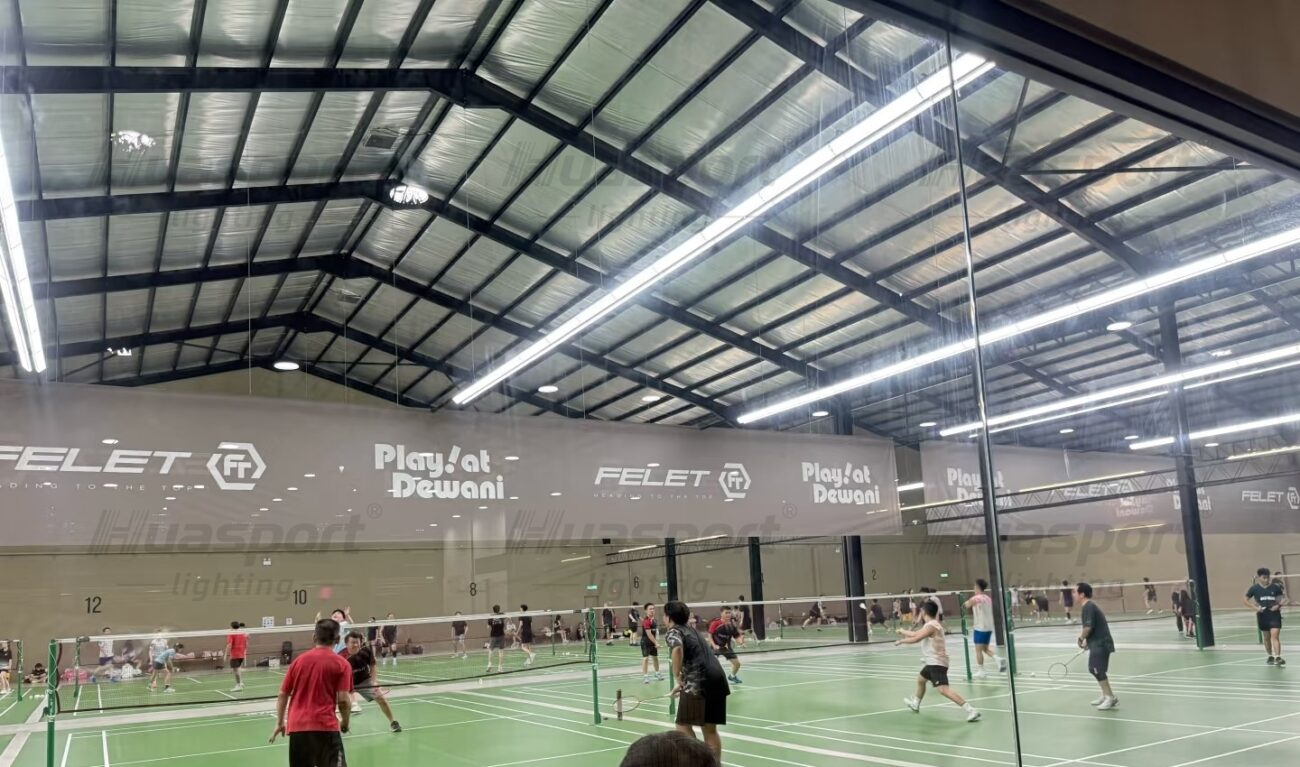
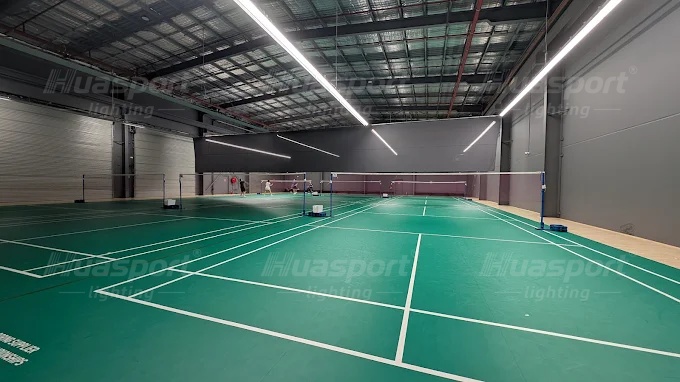
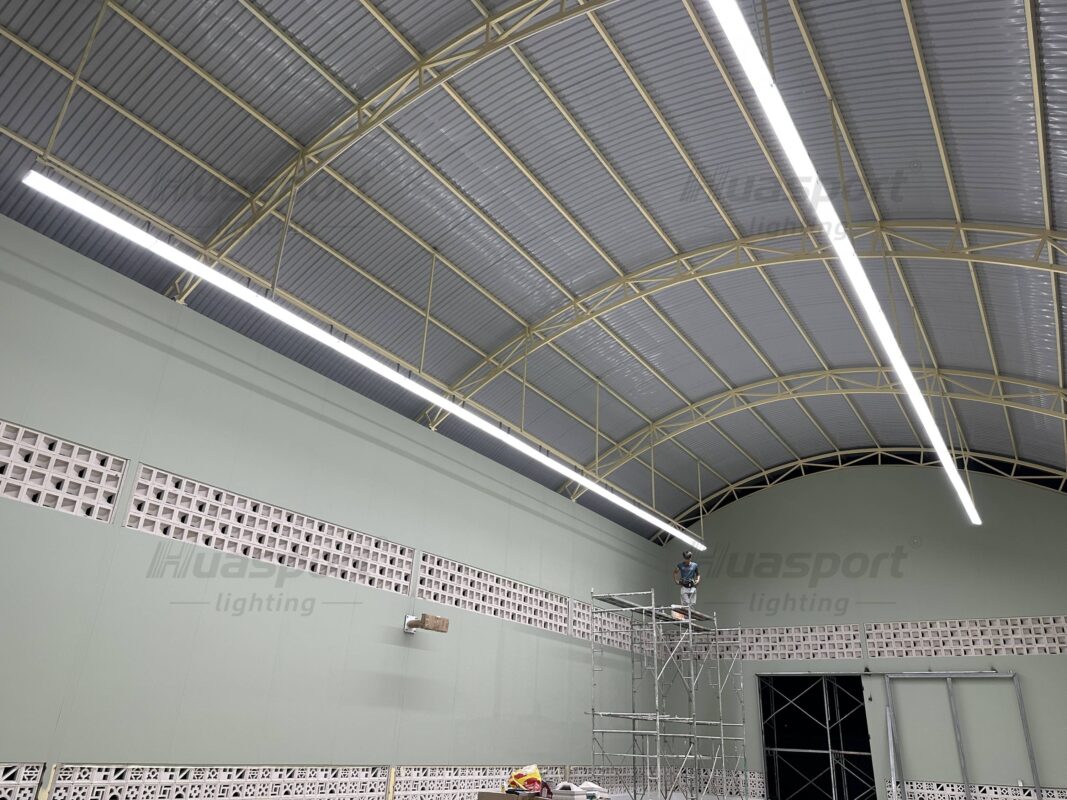
Same-country case photos are valuable because they show real court environments. They can reveal ceiling height, wall distance, fixture row direction, curtain position, player positions and how much roof structure sits behind the lights.
Photos cannot prove every technical parameter by themselves. A photo does not confirm output, certification, exact model, final lux level or complete fixture count unless those details are backed by project records. That is why this article uses Canada photos as environment references and ties the technical numbers to the ETL 50W planning option.
This distinction protects the buyer as well as the supplier. It keeps the conversation focused on what can be checked: documentation, fixture model, row length, mounting height, aiming angle, player-view comfort and quotation scope.
A Small Body Detail That Still Matters
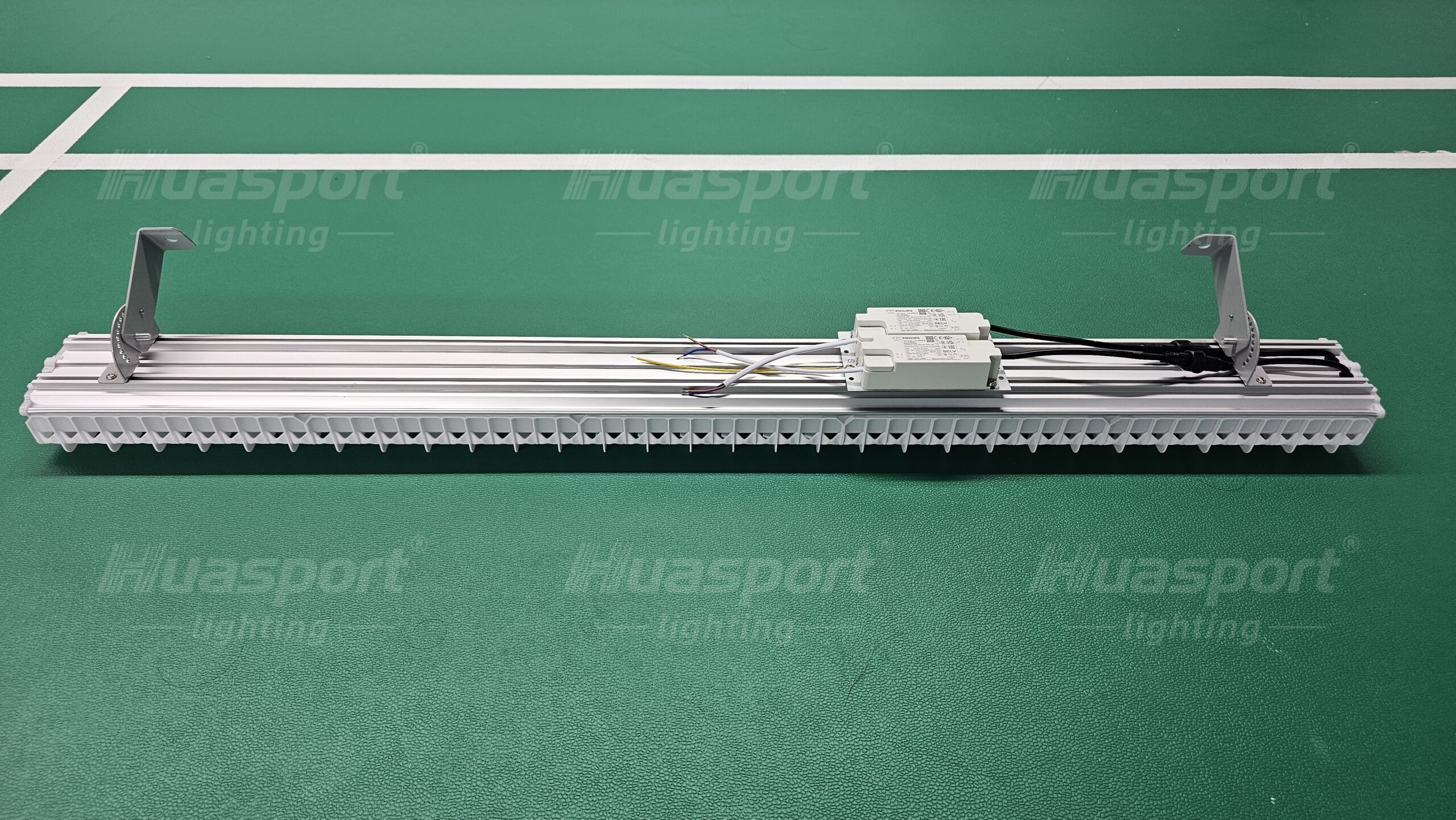
The back of the fixture matters because long rows need stable aiming and thermal performance. Huasport uses a thickened aluminum profile, and the bracket is fixed to the aluminum body rather than to a weak plastic section.
That detail is easy to miss in a quotation, but it matters over time. If the body is weak or the bracket position shifts, the row may not keep the same player-view result. A good badminton lighting plan should connect the fixture body, bracket, row length and aiming angle into one installable system.
How This Differs From Pickleball and Padel
The same player-view mindset can help other sports, but the layout cannot be copied blindly. Pickleball has a different ball path and a different court rhythm, so buyers should compare it with a dedicated Huasport Pickleball Court Lighting guide rather than assuming every badminton detail transfers.
Padel is more different again. Glass walls, fencing and four-side lighting make reflection and side glare a separate problem. That is why the Huasport Padel Court Lighting layout uses its own fixture count and court logic.
For Canadian badminton projects, keep the discussion narrow and checkable: ETL 50W, 4275 lm, 24 fixtures per court, 12 fixtures per side, 6 m mounting height, 30-degree inward aiming and a real player-view check before final quotation.
For project discussion, contact Huasport Lighting. For more court lighting planning notes, visit the Technical Articles archive.