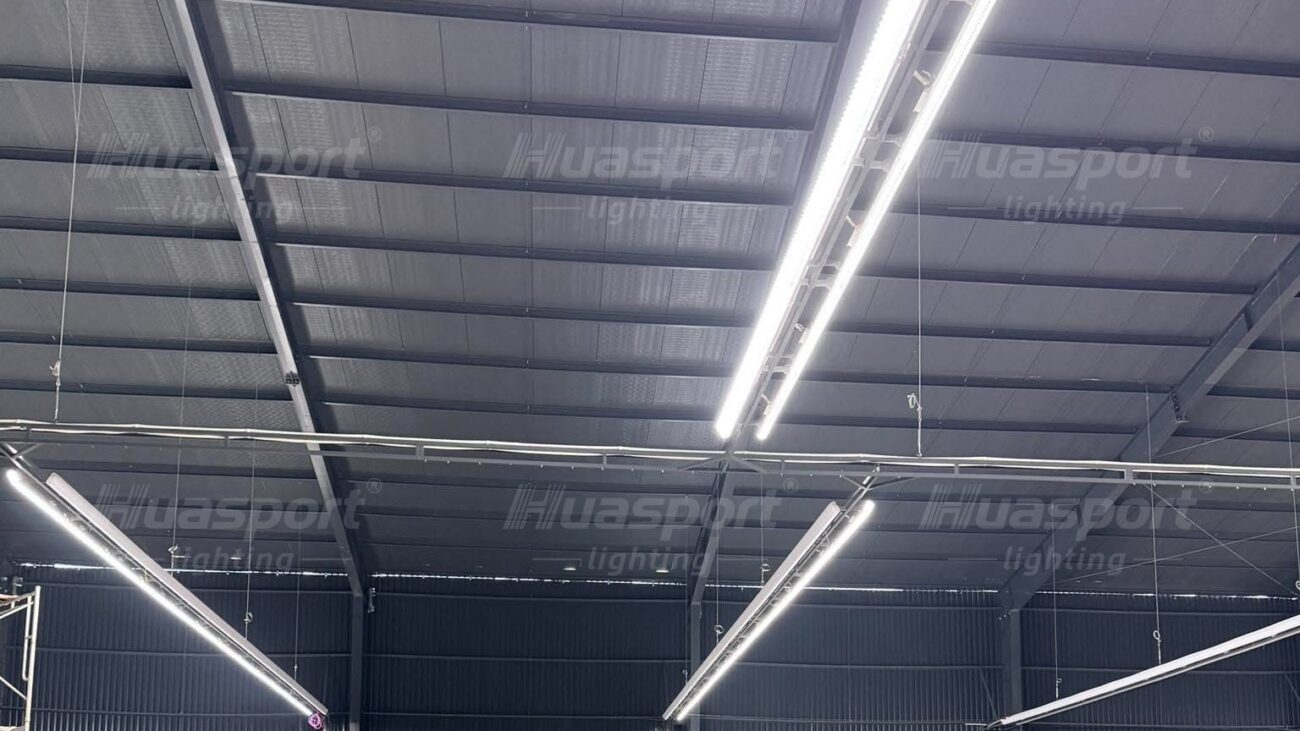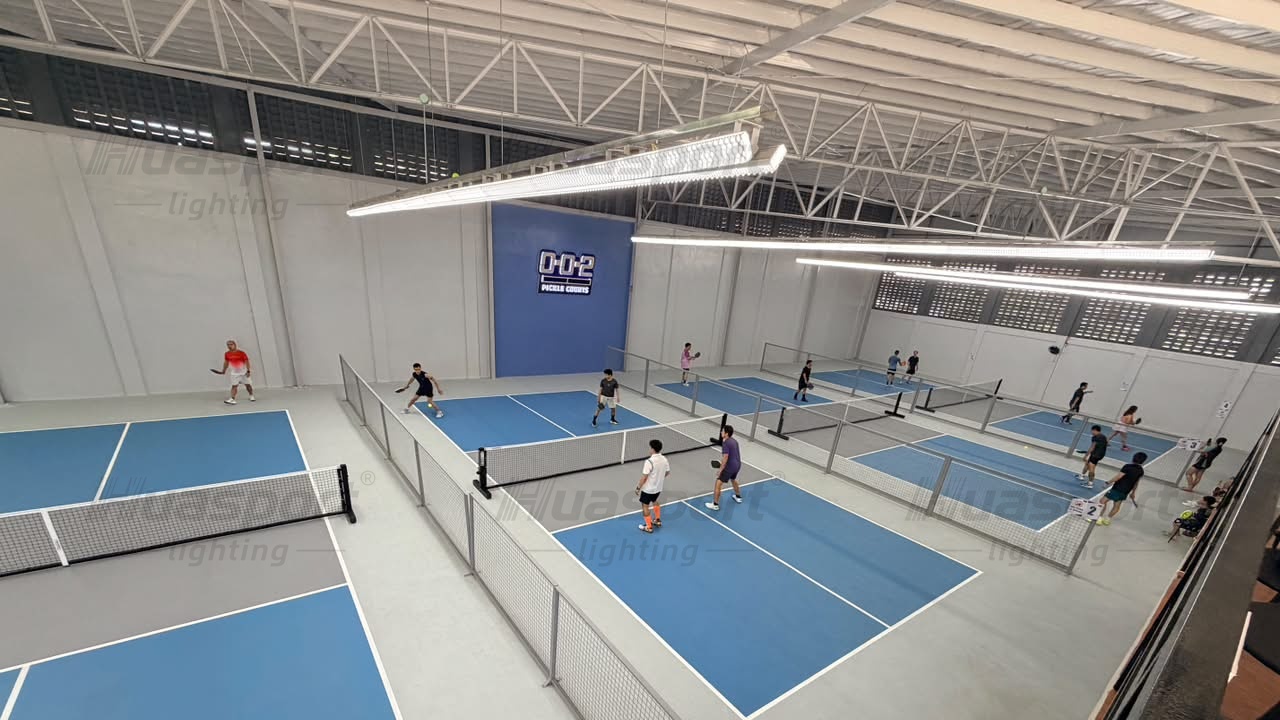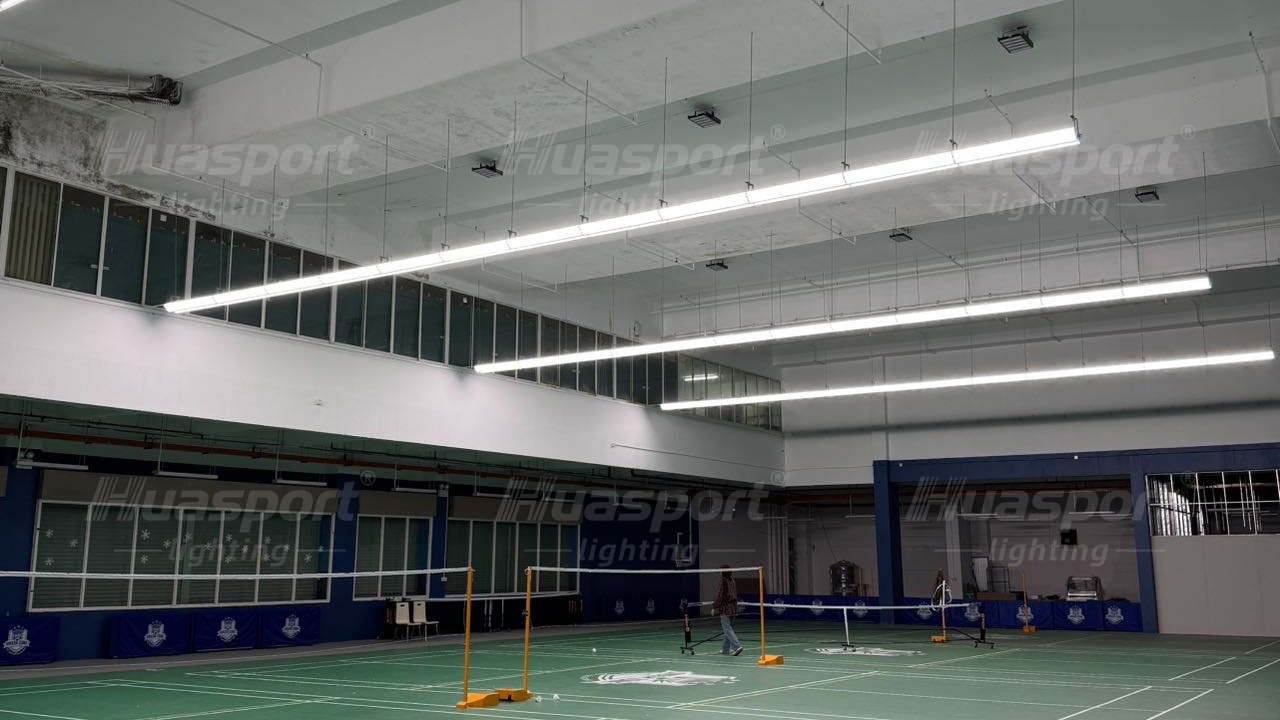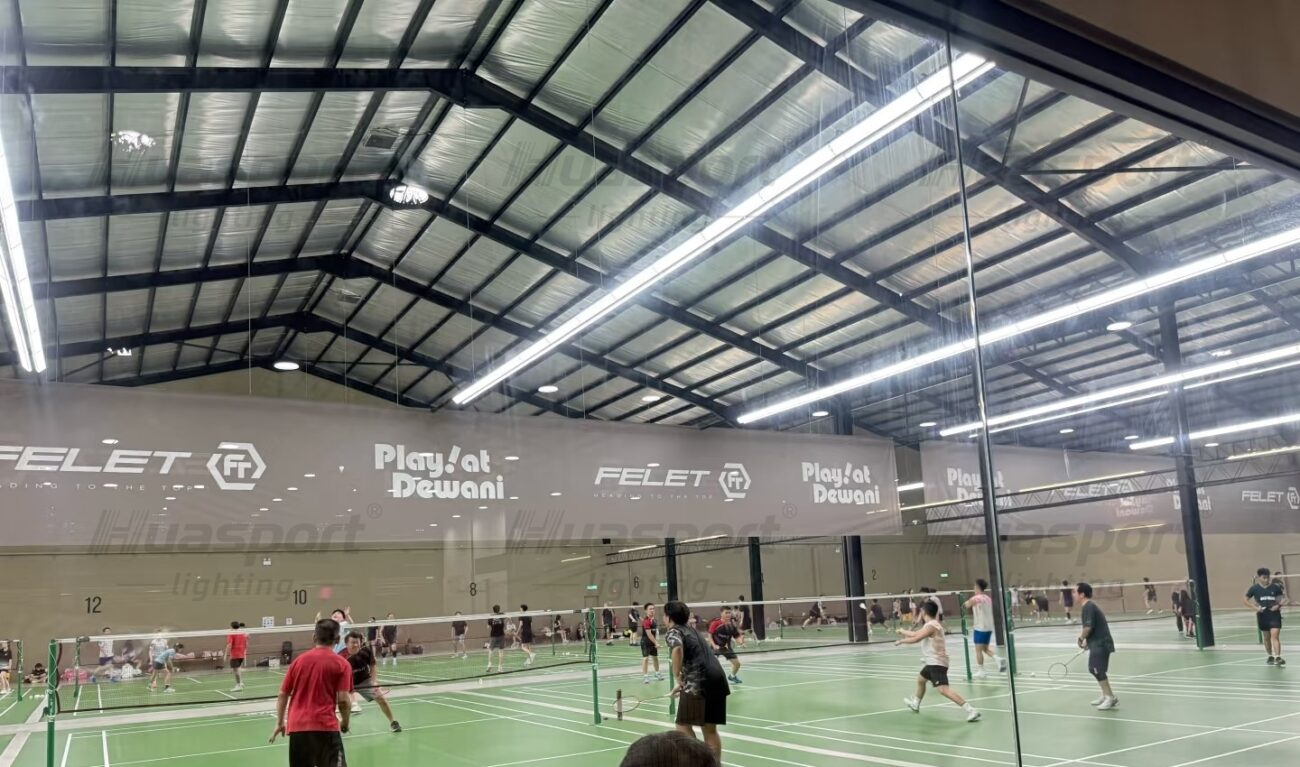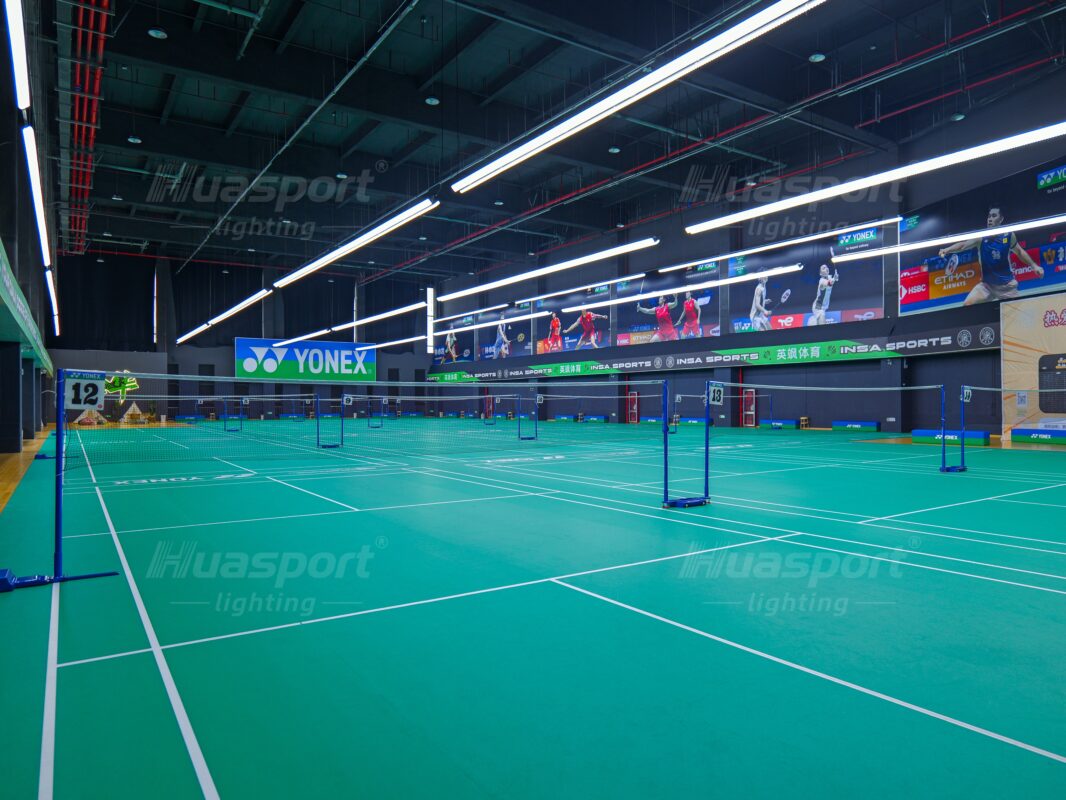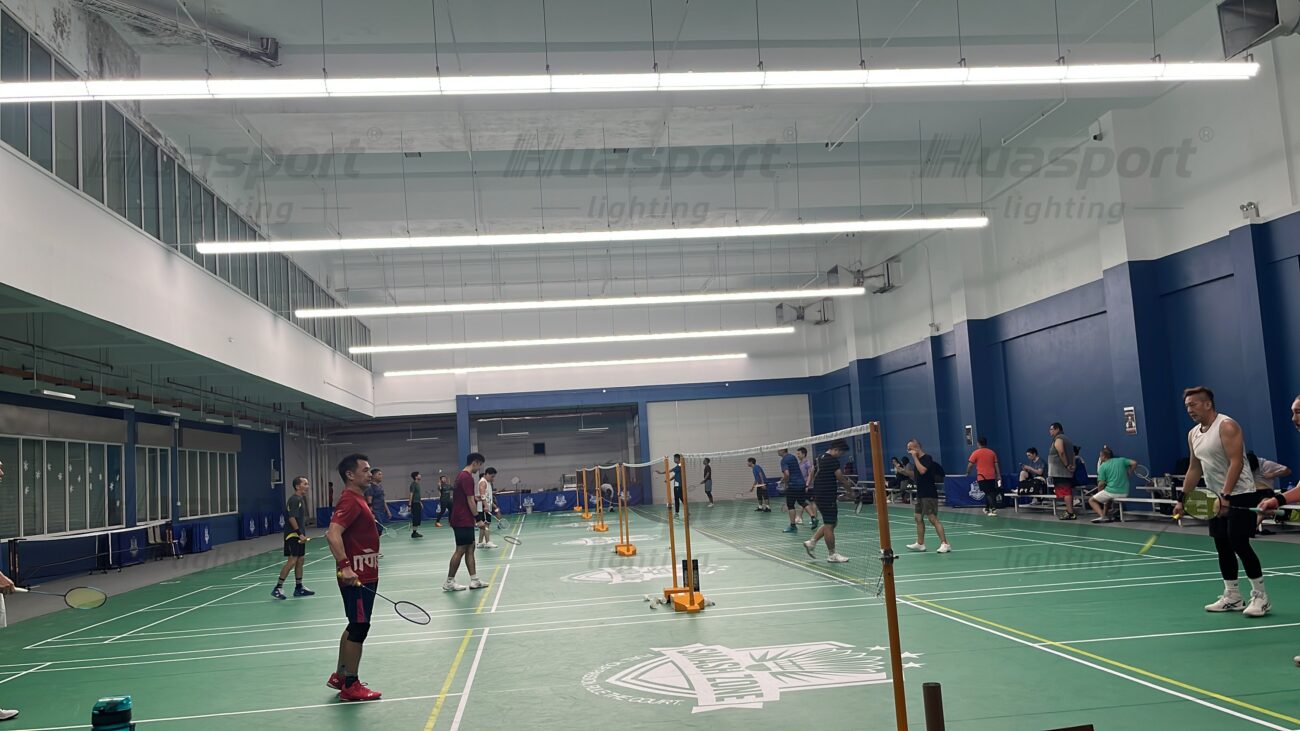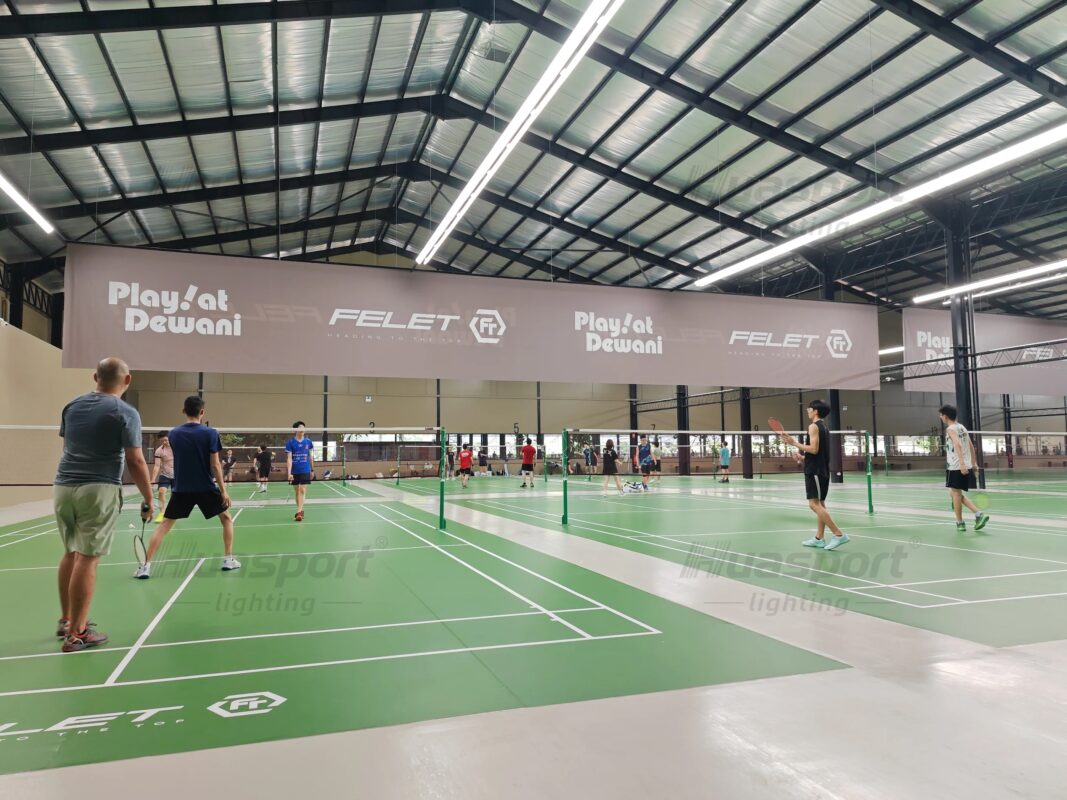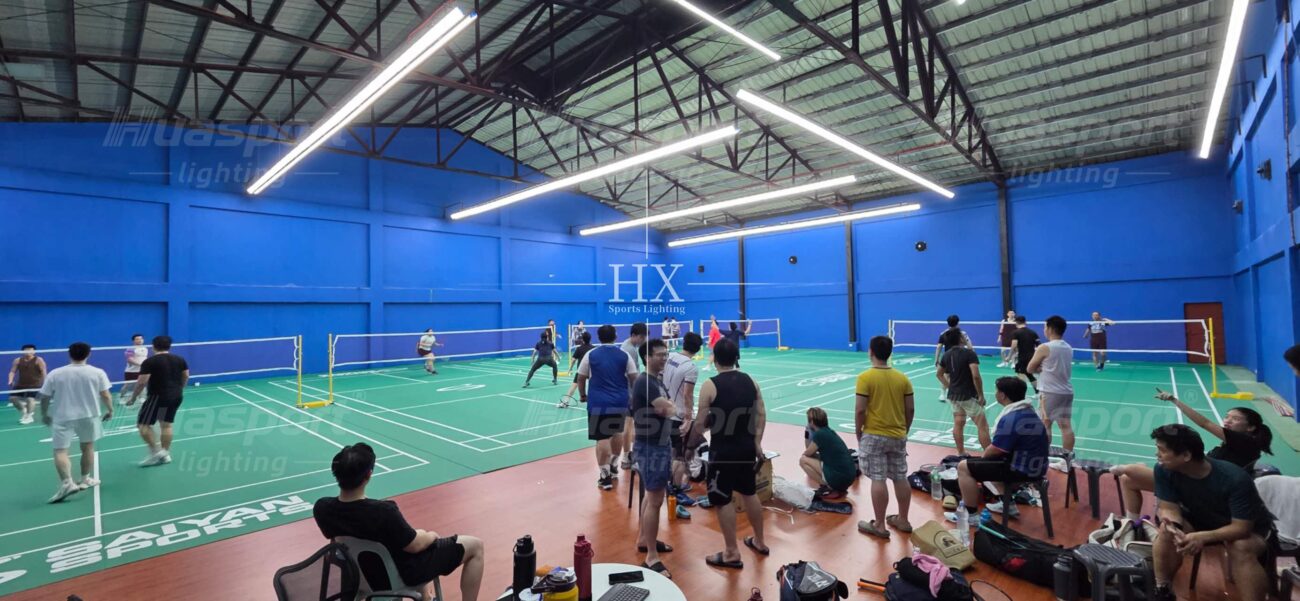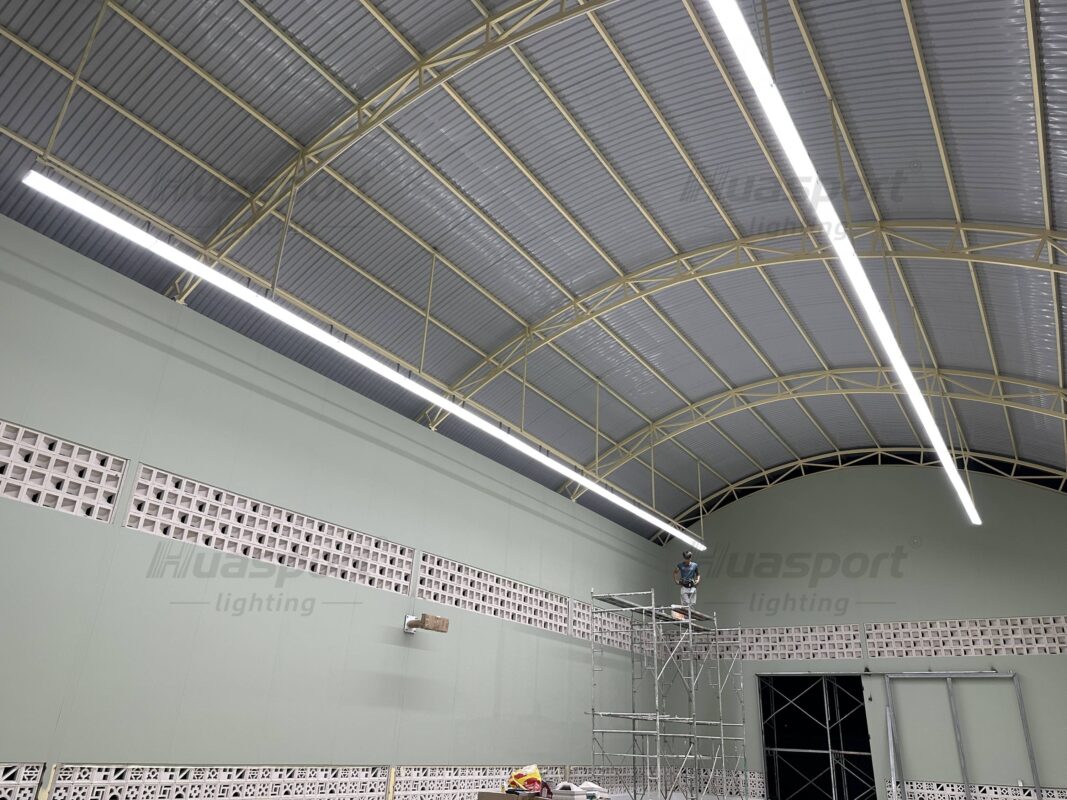
 Badminton/Pickleball court lights
 Pickleball court lights
 Padel Court Lights
 Basketball court lights
 Tennis court lights
 Football field lights
Wuhan Badminton Hall Lighting Retrofit: Why Bomingdun Chose S90 Double-Layer Grille

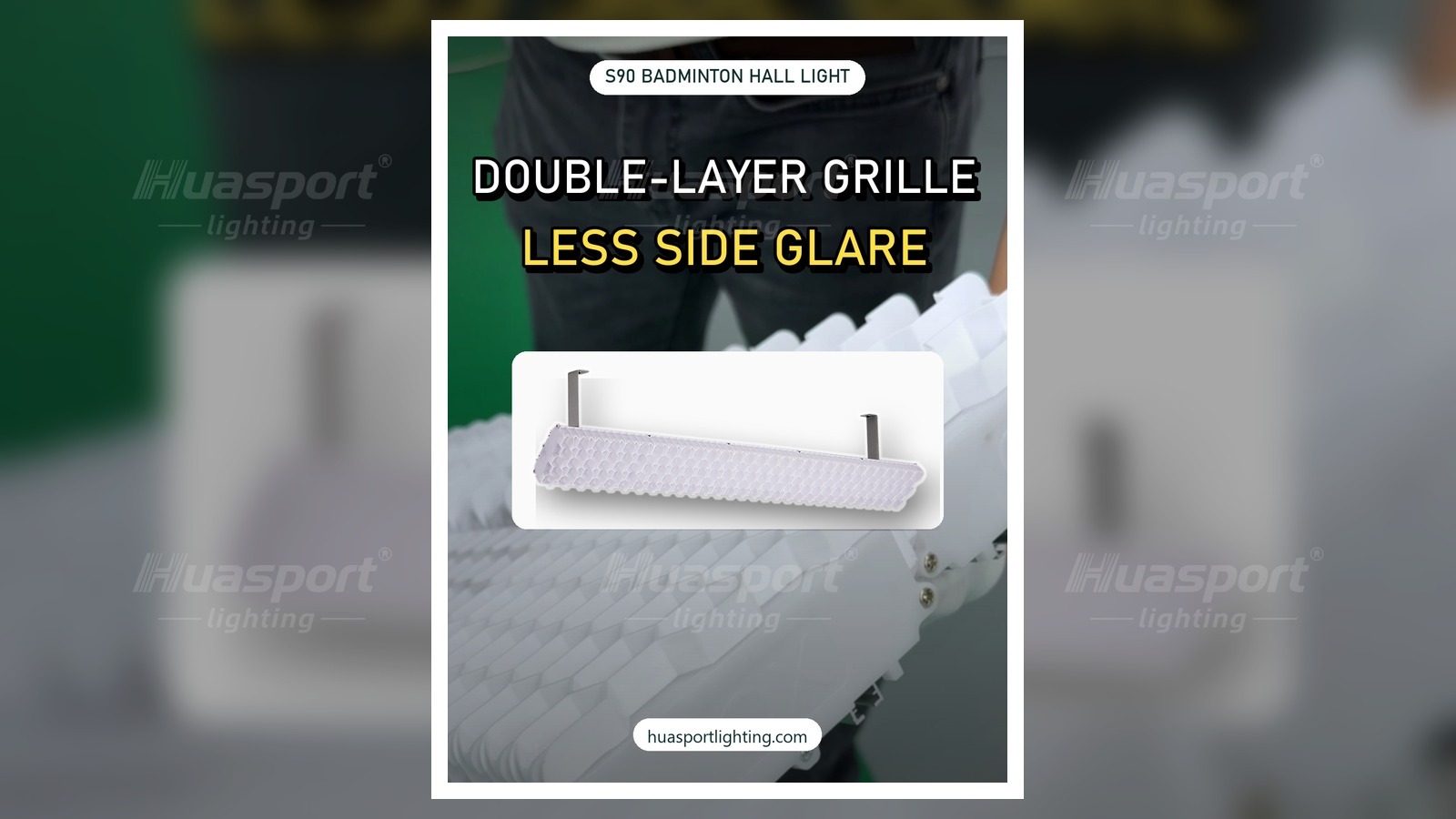
Bomingdun Badminton Hall in Wuhan, Hubei is the kind of retrofit story that feels familiar to many club owners. The courts were already open for play. The roof already had lights. The question was whether the old ceiling-light approach still made sense once players started comparing comfort, side glare and court-by-court visibility.
The short answer from this case is simple: brightness seen from the doorway is not the same as comfort seen from under the shuttle. Bomingdun changed to the Huasport S90 double-layer grille hall light because the real buying decision was about player view and the feel of the light inside the court.
Quick Planning Answer
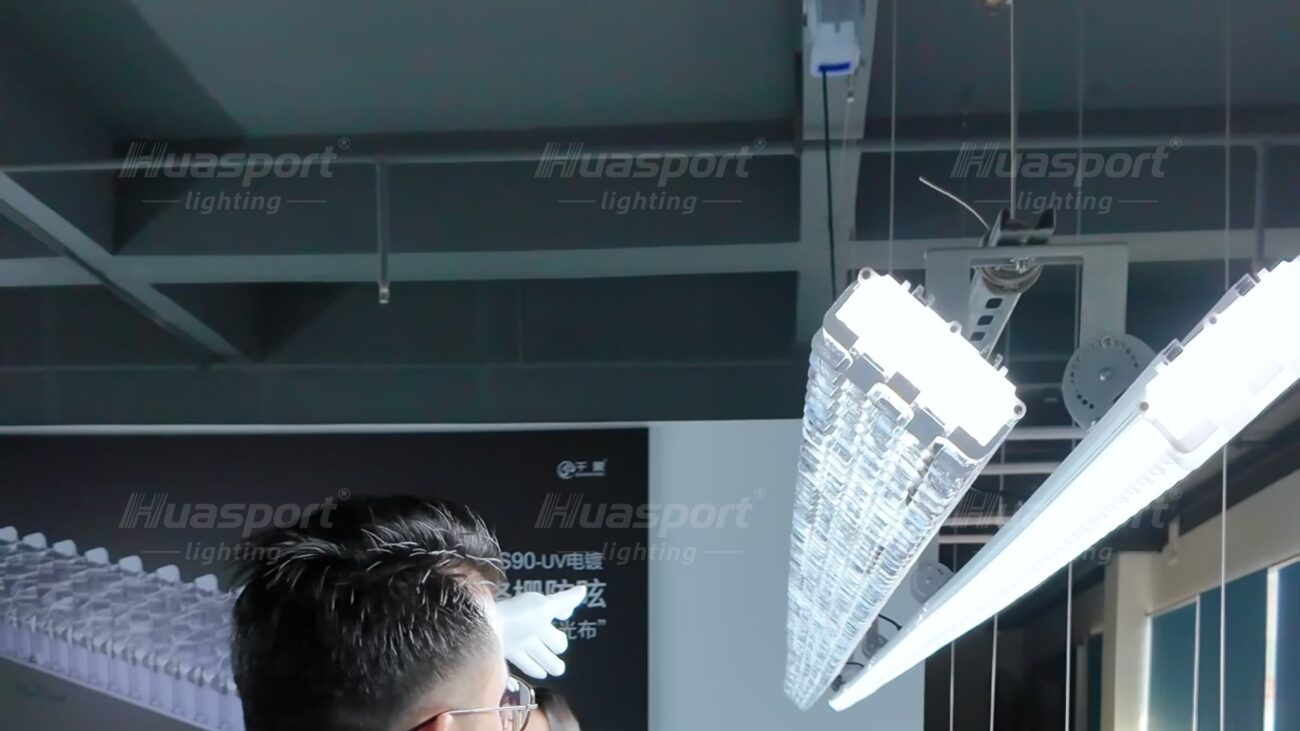
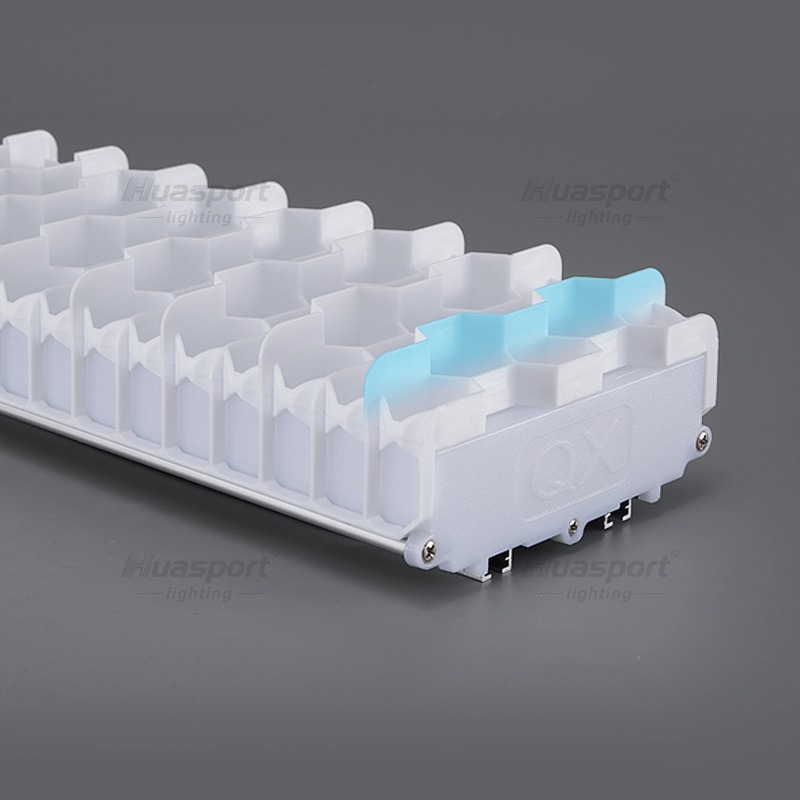
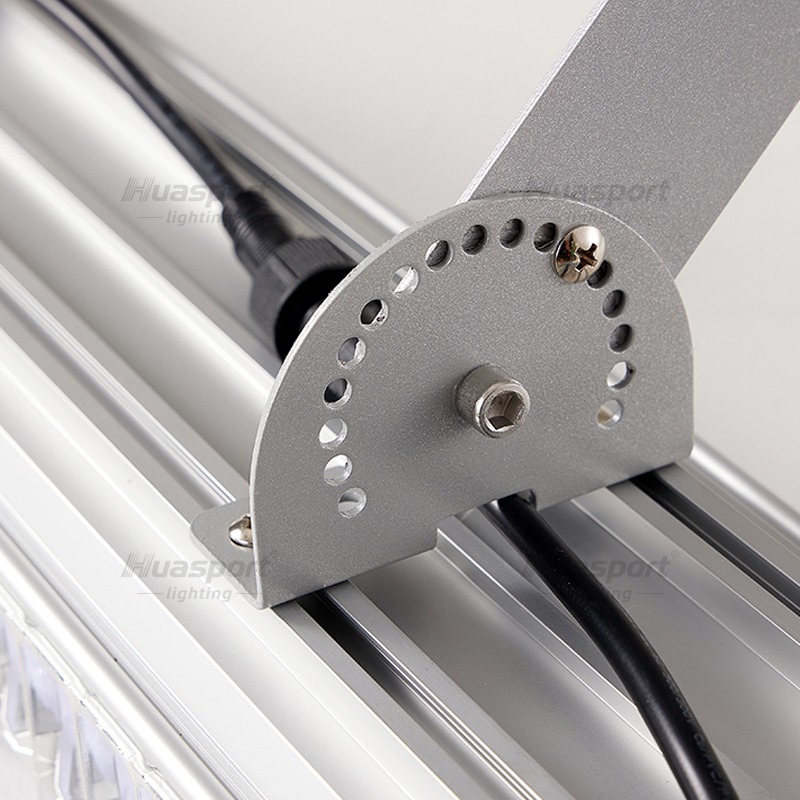
For an indoor badminton hall retrofit like Bomingdun, the useful starting point is side-glare control. The S90 body is 13 cm wide and uses a double-layer honeycomb grille, a thickened aluminum back profile and an adjustable angle bracket. These details matter when players look upward during clears, lifts, serves and fast net recovery.
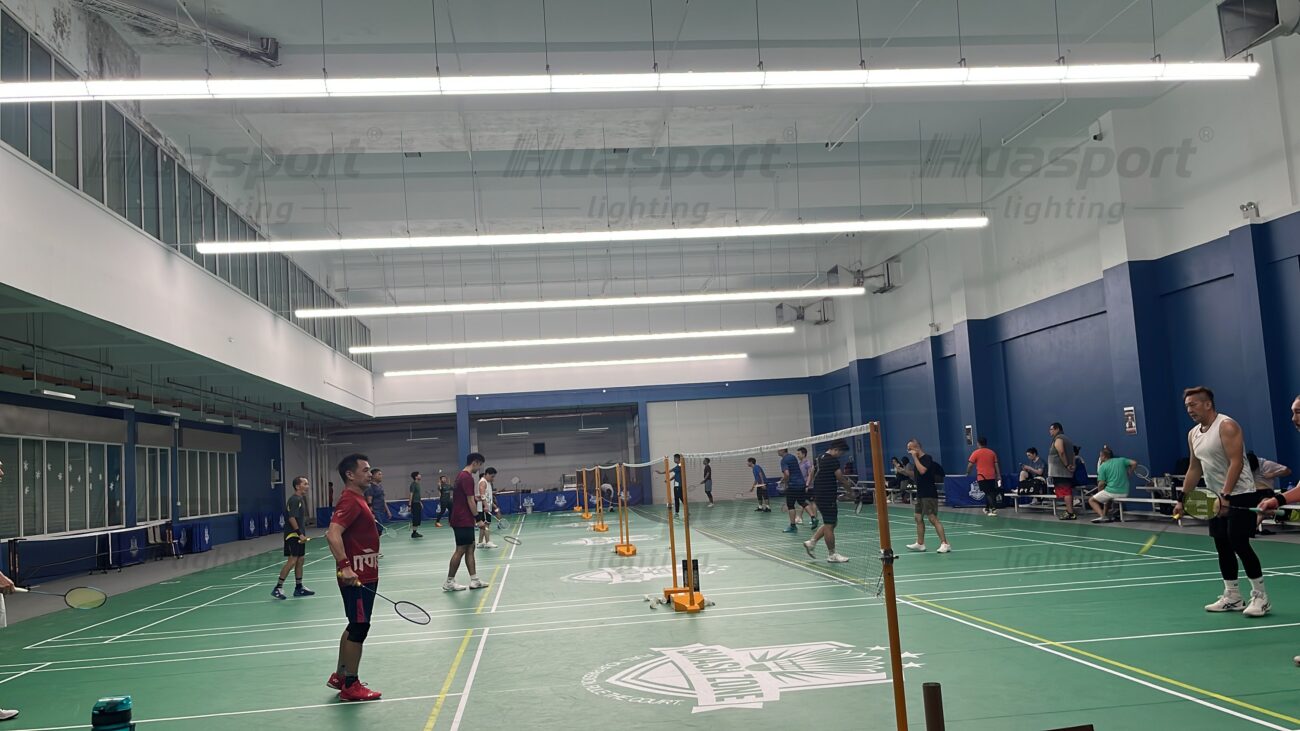
For export planning, one practical S90 reference is WM-S90-1160-DD-42W-108Z: a 1.16 m, 42W long-bar anti-glare fixture. One badminton court can use 24 fixtures, with 12 fixtures on each side, installed around 5 m high and tilted 30 degrees inward. The continuous row length is 13.92 m, which covers the 13.4 m main playing-area side. This plan targets 300-400 lux+ for commercial training or recreational use. If the hall is planned for competition use, check the project against a 500 lux+ average illumination target before quotation.
That model data is a planning reference. A final quote should still confirm the real ceiling height, roof structure, court count, wiring route, local certification needs and acceptance target.
Why This Retrofit Is Worth Studying
Many badminton halls replace lights only after players complain, yet the complaint is often described in the wrong language. Owners hear "not bright enough" and start looking for more watts. Players usually mean something narrower: the light hits their eyes from the side, the shuttle disappears near the roof, or one court feels harsher than the next.
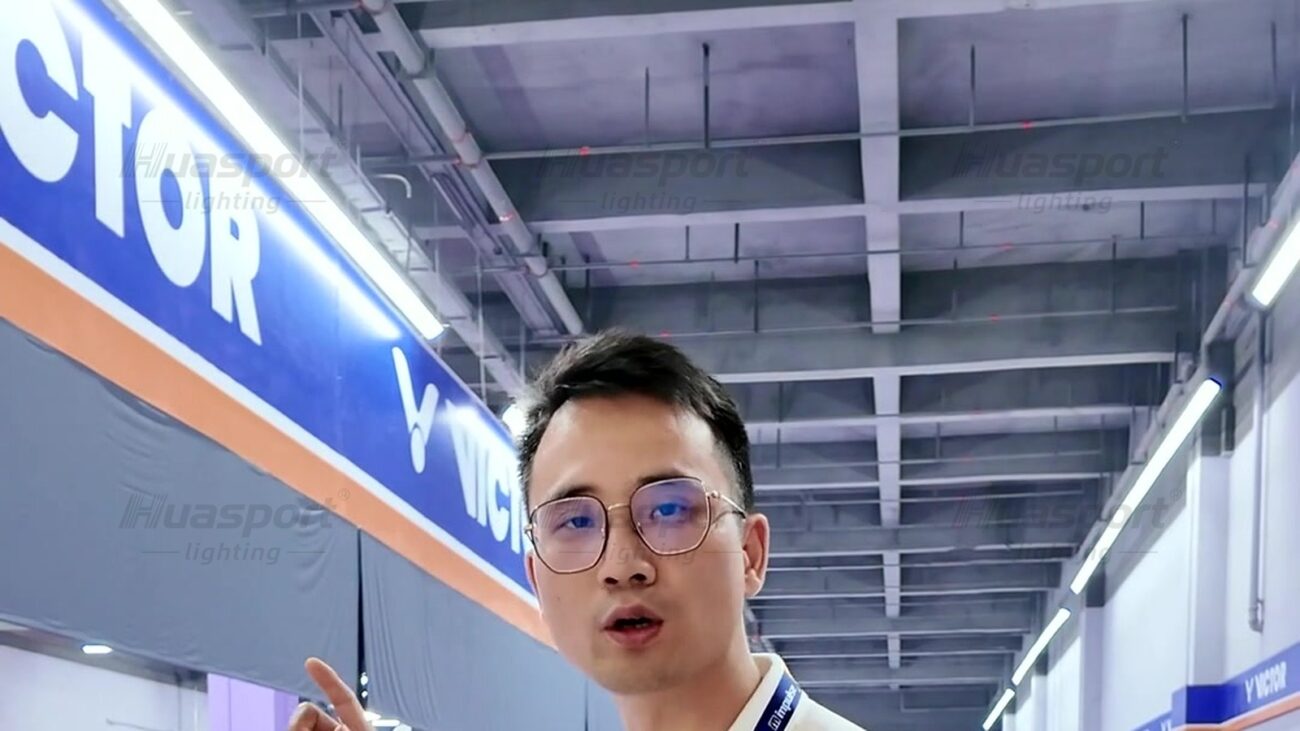
Bomingdun is useful because the video shows the fixture family and the buyer logic together. The hall moved from older ceiling lights to S90 long-bar lights. The visible selling point is the double-layer grille. The practical reason is comfort during real play.
This is also why Huasport separates badminton planning from ordinary warehouse lighting. A sports hall has a moving shuttle, repeated upward sightlines and players standing under the light row. The fixture must be bright enough, but the optical structure has to keep the light from feeling raw at court level.
What the S90 Double-Layer Grille Changes
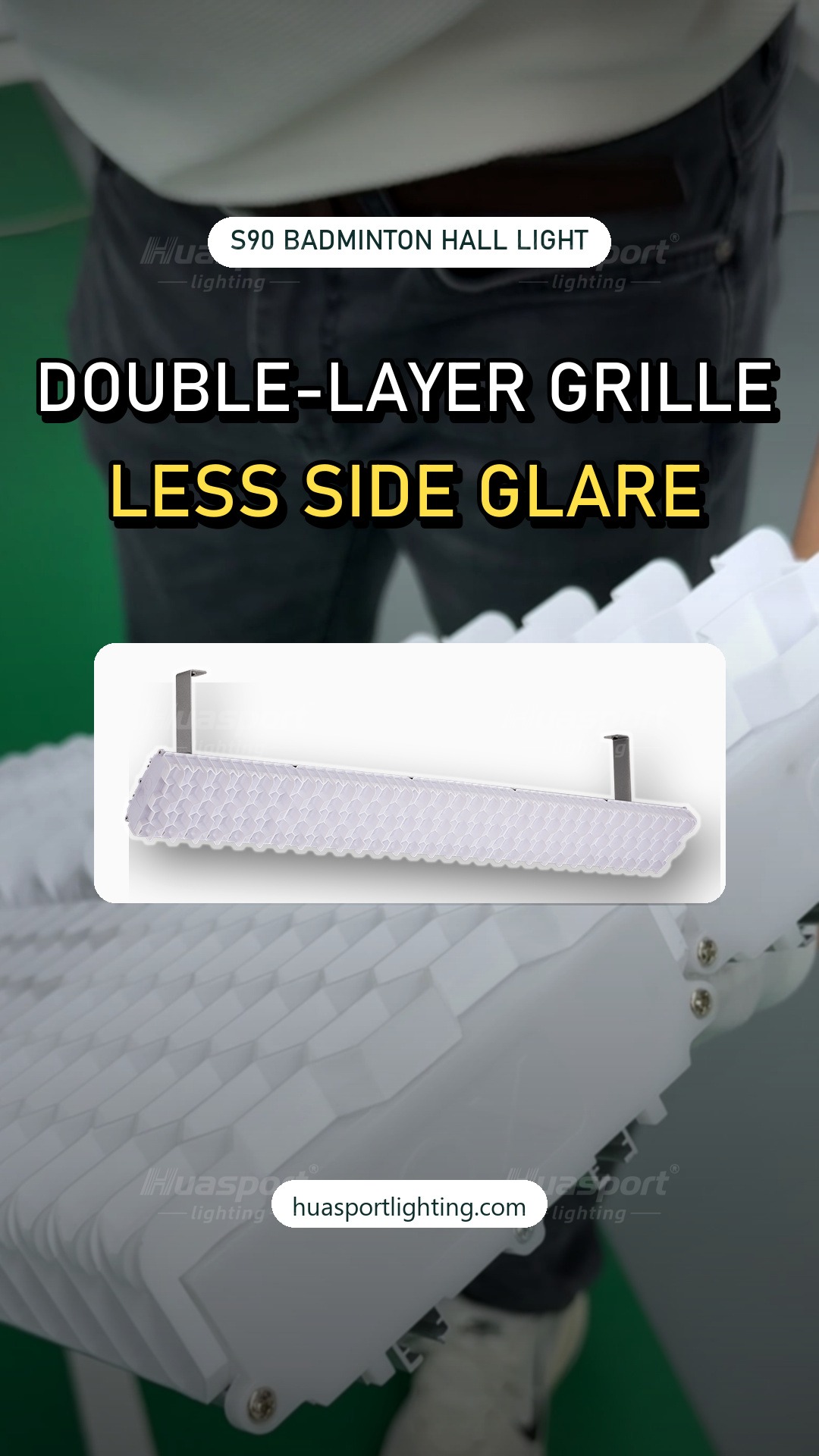
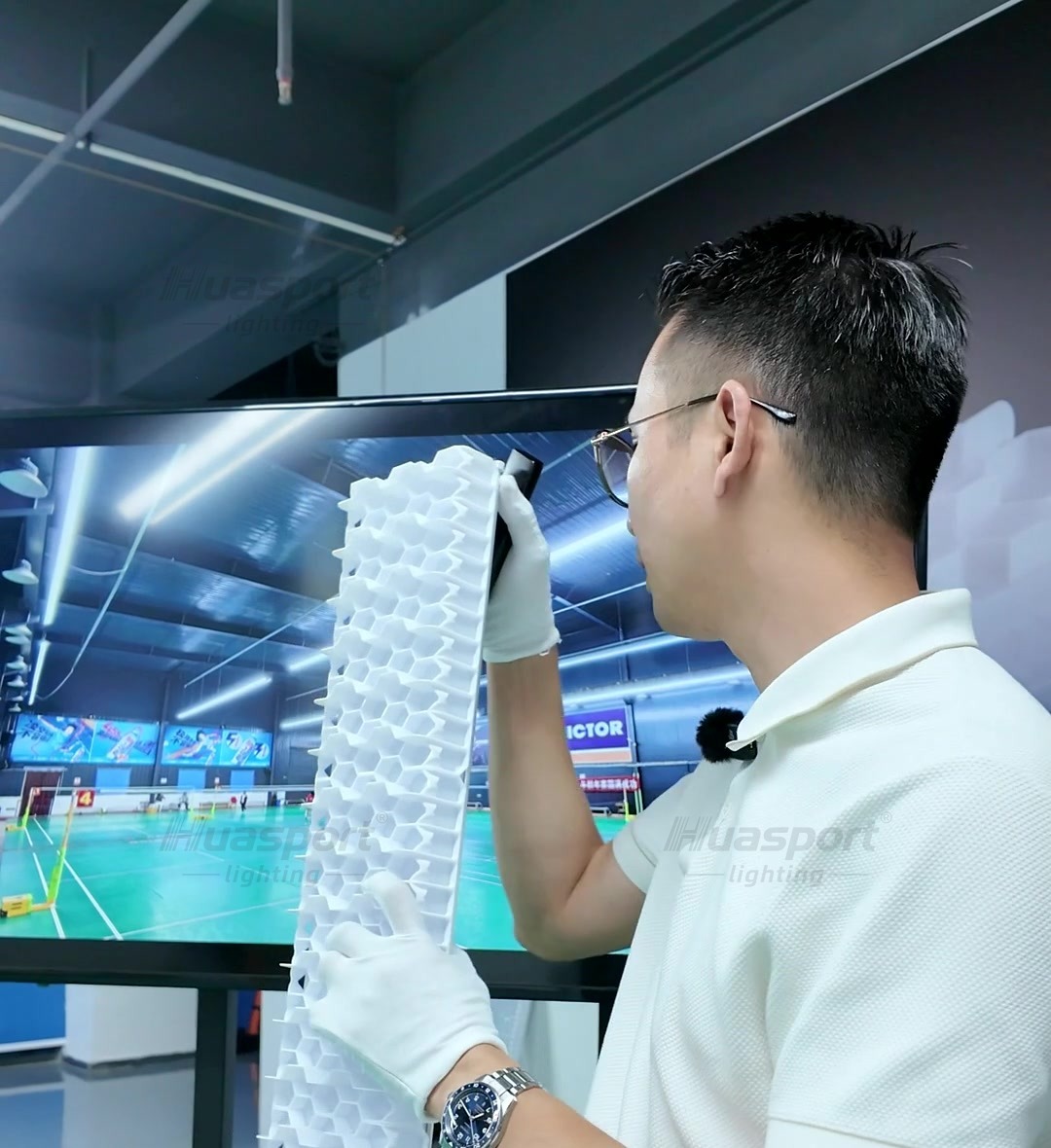
The S90 does not try to solve badminton lighting with wattage alone. Its double-layer honeycomb grille adds depth in front of the LED source, helping cut light that escapes sideways toward the player’s eyes. The result buyers want is not a dark fixture; it is a court where the shuttle remains easy to track and the fixture row does not keep pulling attention upward.
No badminton light should be sold as zero-glare in every possible viewing angle. A player standing directly below a fixture, a neighboring court viewed obliquely, or a T-shaped hall layout can still require project-level adjustment. The honest target is lower side glare, better player comfort and a layout that matches the building.
The video also points to a second detail that is easy to miss: the fixture body and bracket structure. Huasport uses a thickened aluminum back profile for heat dissipation, and the bracket is fixed to the aluminum profile instead of a weak plastic part. For a hall owner, that means the optical promise is supported by a mechanical structure built for long service.
A Better Way to Judge a Badminton Hall Light
When buyers visit a court, the first look is usually from the door. That view can be misleading. A hall can look bright from the entrance while still tiring the players inside the court.
A more useful check is to stand where the player stands:
- Look upward from the baseline and backcourt.
- Check whether the fixture row catches the eye during clears and smashes.
- Walk to the side of the court and look across neighboring rows.
- Compare the near court, the far court and the darkest usable playing area.
- Confirm whether the bracket angle can aim the light inward without exposing too much side glare.
- Ask for model code, fixture count, mounting height and target illumination before approving the quote.
For a single export planning option, the S90 42W layout gives a clean reference: 24 fixtures per badminton court, 12 per side, around 5 m mounting height and 30-degree inward tilt. That is the layout to compare with the venue dimensions before changing fixture count or installation height.
Where This Fits With Other Court Pages
For badminton-specific planning, start from the badminton court lighting page. It explains why player-view glare control, court-side rows and model selection matter more than simply adding higher wattage.
If the same venue also has training courts for pickleball, the pickleball court lighting page is useful because low-net sports share similar side-view comfort problems with badminton.
For glass-wall clubs and enclosed courts, the padel court lighting page is the better reference. Padel projects need a different perimeter layout, but the same buyer question appears again: can players look upward and across the court without fighting the light?
What Buyers Should Confirm Before Quotation
Bomingdun shows the reason to care about the S90 double-layer grille, but a video does not replace a project record. Before asking for a final offer, a buyer should confirm the items that change the lighting plan:
- Total number of badminton courts.
- Ceiling height and available mounting structure.
- Whether the selected reference model is WM-S90-1160-DD-42W-108Z.
- Whether each court uses 24 fixtures, with 12 fixtures on each side.
- Whether a 5 m mounting height and 30-degree inward tilt are suitable for the venue.
- Whether the double-layer grille can be verified from product photos or sample inspection.
- Whether the bracket is fixed to the aluminum profile.
- Whether the target is 300-400 lux+ for commercial training or 500 lux+ average illumination for competition use.
These checks make the discussion concrete. They also prevent a common mistake: judging a badminton hall light by the first bright impression instead of the way the players actually see the court.
FAQ
Which model is used as the S90 planning reference?
The planning reference is WM-S90-1160-DD-42W-108Z, a 1.16 m, 42W S90 long-bar anti-glare fixture.
How many fixtures are used in the export planning layout?
One practical S90 42W badminton court layout uses 24 fixtures per court, with 12 fixtures installed on each side of the playing area.
Does the video prove the exact installed quotation data?
No. The video confirms the hall setting, the S90 double-layer grille product family and the player-view glare problem. Exact installed model, fixture count and acceptance data should be confirmed from the project record before quotation.
Why not choose a light only by wattage?
Badminton lighting has to support shuttle tracking from upward viewing angles. Wattage helps with brightness, but the grille, bracket angle, row position and ceiling height decide whether the light feels comfortable during play.
For a project review, send the court quantity, ceiling height, photos of the roof structure and the target use level through Huasport Lighting contact. More published planning notes are available in the technical articles archive.