 Badminton/Pickleball court lights
 Pickleball court lights
 Padel Court Lights
 Basketball court lights
 Tennis court lights
 Football field lights
Brunei Badminton Court Lighting: S90 42W Side-Zone Glare Checks

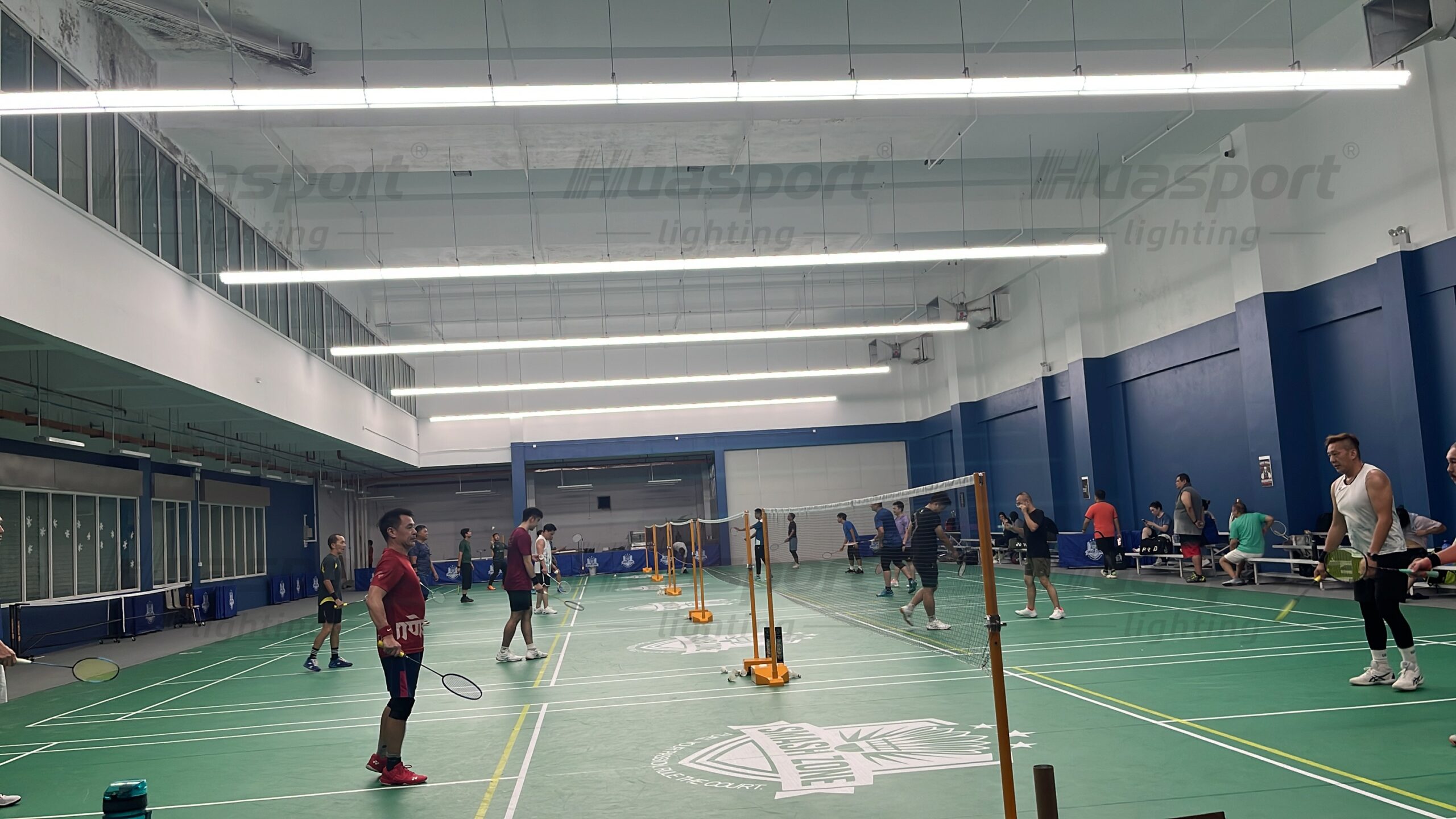
The easiest photo in a badminton hall is not always the most honest one. Stand in the doorway and the room may look bright. Stand beside the court while players wait for the next rally, and the question changes: does the fixture row stay calm in the side view, or does it keep pulling the eye away from the shuttle?
That side-zone view is useful for Brunei badminton venues, especially compact indoor halls where courts, waiting areas and wall-mounted services sit close together. A buyer should check brightness from the playing area, but also from the side line, rear court and seating edge where people naturally look across the lights.
For one practical Huasport planning option, this article uses the S90 1.16 m 42W long-bar anti-glare fixture, model WM-S90-1160-DD-42W-108Z. The reference layout uses 24 fixtures per badminton court, with 12 fixtures on each side, mounted at about 5 m and aimed 30 degrees inward. Twelve 1.16 m fixtures form a 13.92 m continuous row, which covers the 13.4 m main playing-area side length. The planning target is 300-400 lux+ for commercial training and recreational play. If the hall needs competition use, the lighting plan should be reviewed toward 500 lux+ average illuminance.
Quick Answer for Brunei Hall Owners
For a Brunei indoor badminton hall, floor brightness is only the first check. Walk to the side zone, face across the court and look toward the expected shuttle path. If the long-bar row appears as a harsh bright line in that view, players may feel glare even when the court looks bright in photos.
The S90 42W layout in this guide gives the buyer one clear model and one repeatable plan: 24 fixtures per court, 12 per side, about 5 m mounting height and 30-degree inward aiming. Huasport uses the S90 double-layer honeycomb anti-glare structure to reduce player-angle side glare while keeping enough light on the court surface and upper shuttle path.
For the complete application page, see the Huasport Badminton Court Lighting guide.
S90 42W Layout Data Used in This Article
| Planning item | Huasport S90 reference |
|---|---|
| Application | Indoor badminton court lighting |
| Country context | Brunei indoor hall planning |
| Fixture model | WM-S90-1160-DD-42W-108Z |
| Fixture family | S90 1.16 m long-bar anti-glare light |
| Body width | 13 cm |
| Power | 42W |
| Fixture count | 24 fixtures per badminton court |
| Side layout | 12 fixtures on each side |
| Row length | 12 x 1.16 m = 13.92 m continuous row |
| Court reference | Covers the 13.4 m main playing-area side length |
| Mounting height | About 5 m |
| Aiming angle | 30-degree inward tilt |
| Bracket reference | 6th hole for about 30-degree badminton or pickleball aiming |
| Training target | 300-400 lux+ average illuminance |
| Competition check | Review toward 500 lux+ average illuminance if required |
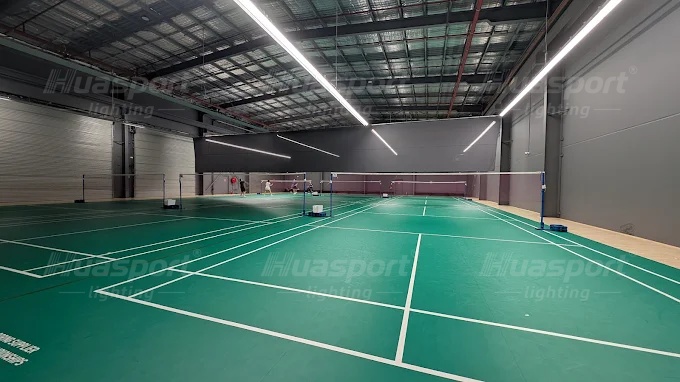
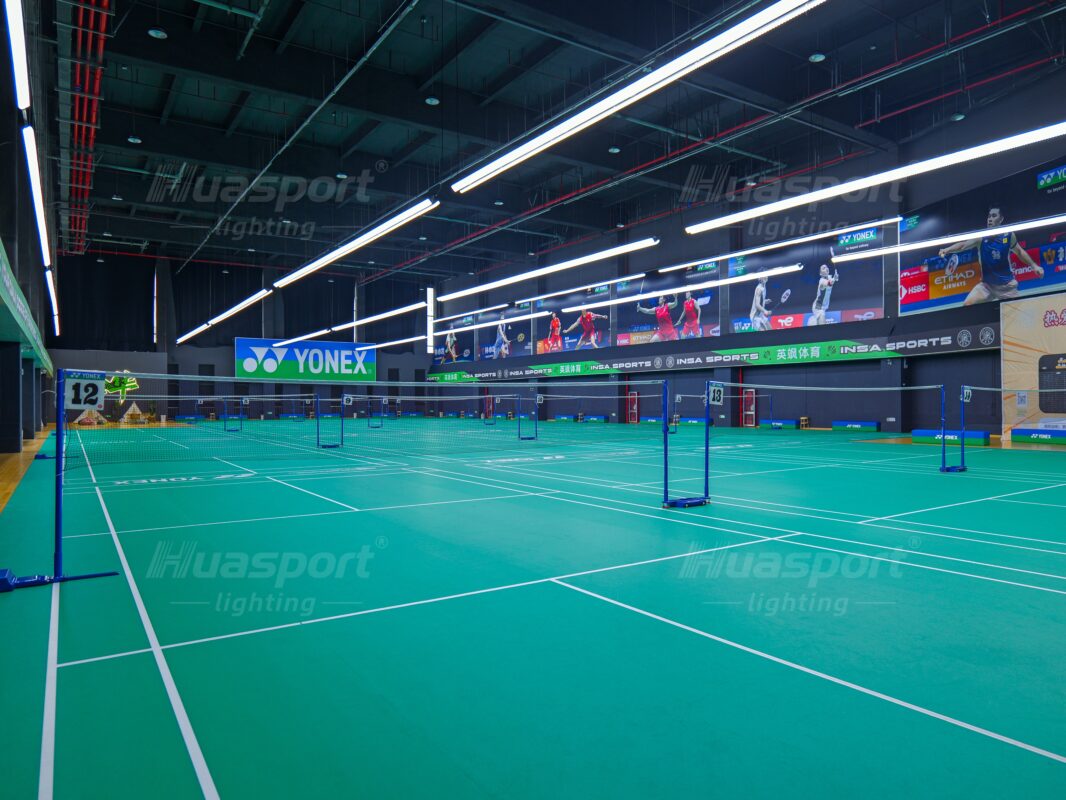
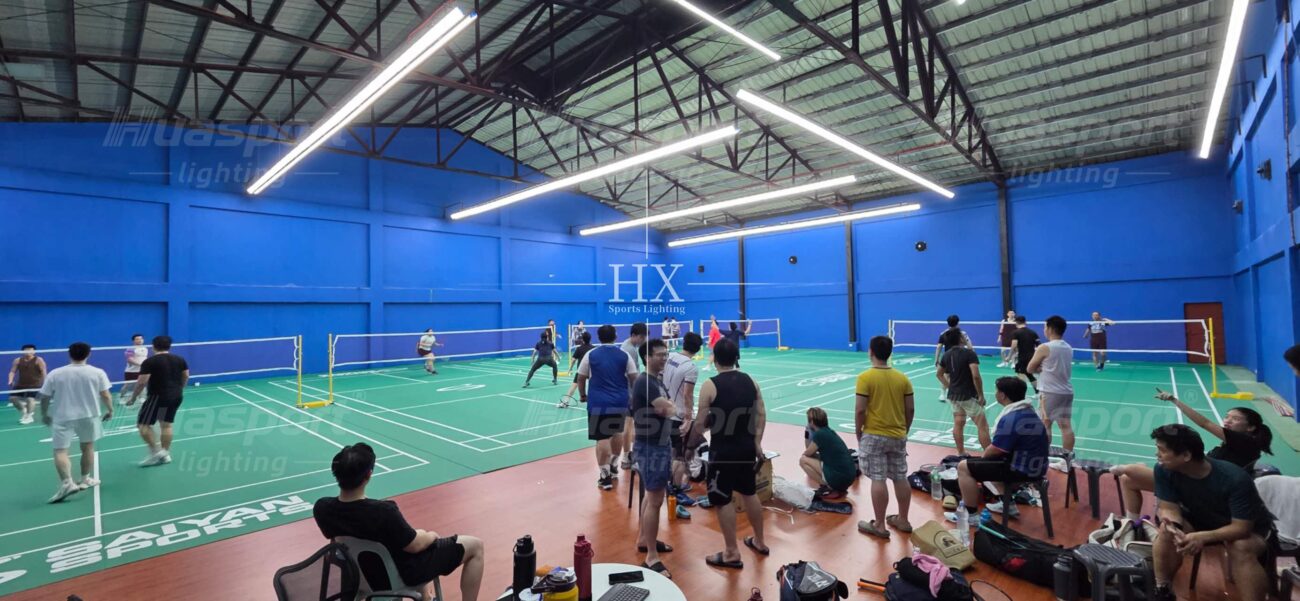
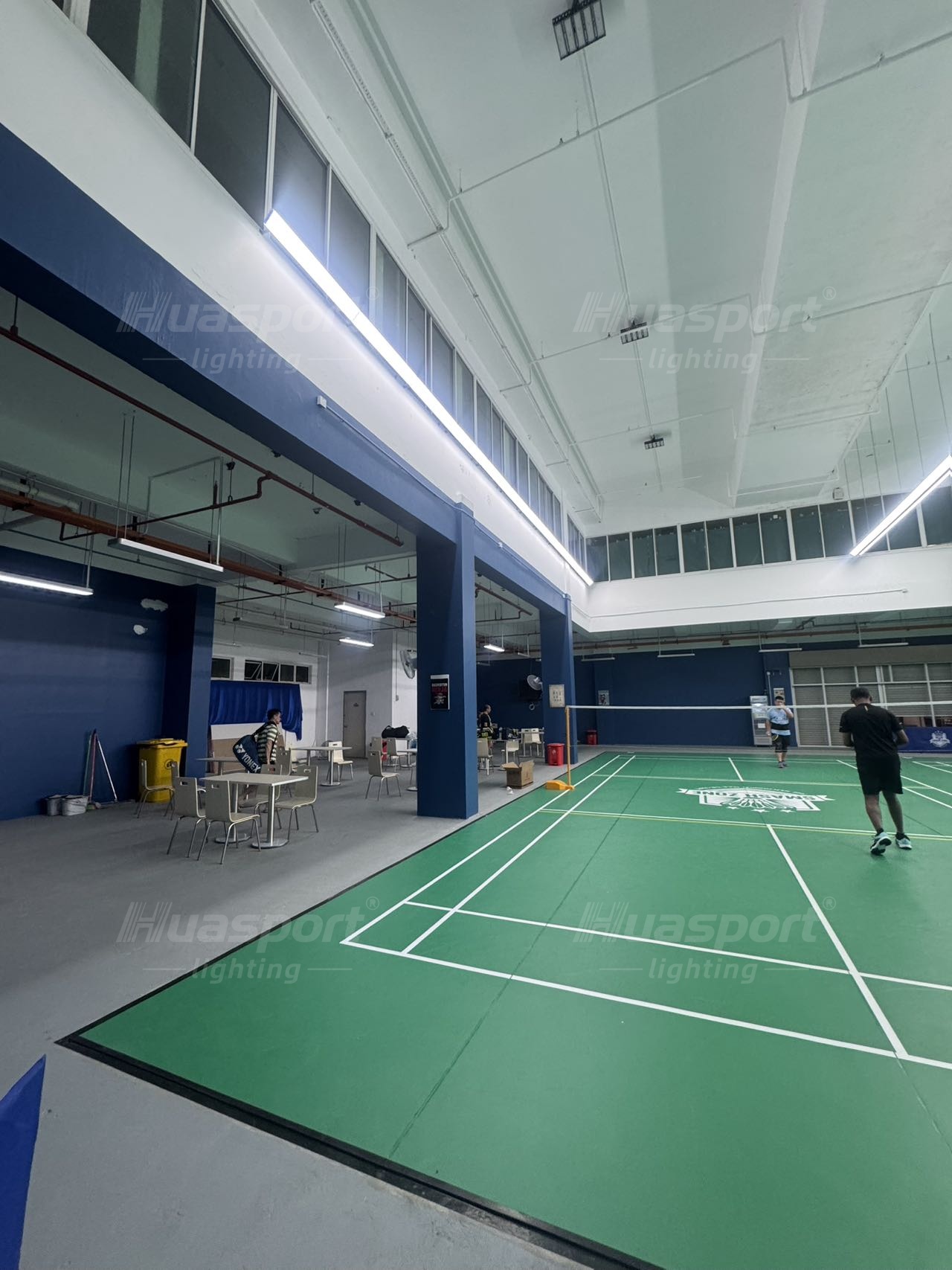
The Brunei photos help show hall shape, court spacing, side viewing positions and where players naturally stand between rallies. They should not be used alone to claim the exact installed model. The model code above is the S90 planning option to quote against when the project record confirms it fits the site.
Why the Side Zone Deserves Its Own Check
Badminton halls are judged by players, not by ceiling photos. A player may stand on the baseline, wait at the side line, sit beside the court, then step back into a rally. Each position creates a different view of the same fixture row.
The side zone is where glare complaints often start. It is close enough to the lights for the row to feel bright, but far enough from the center of the court that the viewer sees the fixture from an angle. In a compact venue, this is also where waiting players, bags, benches and walkway movement may sit under the same visual field.
A quotation should not be built from a single front-facing picture. Ask for side photos. Ask for rear-court photos. Ask whether the player can track a high clear without staring through a bright row. The layout is still technical, but the first clue often sounds very ordinary: this side feels sharp.
What the Brunei Case Photos Help a Buyer Check
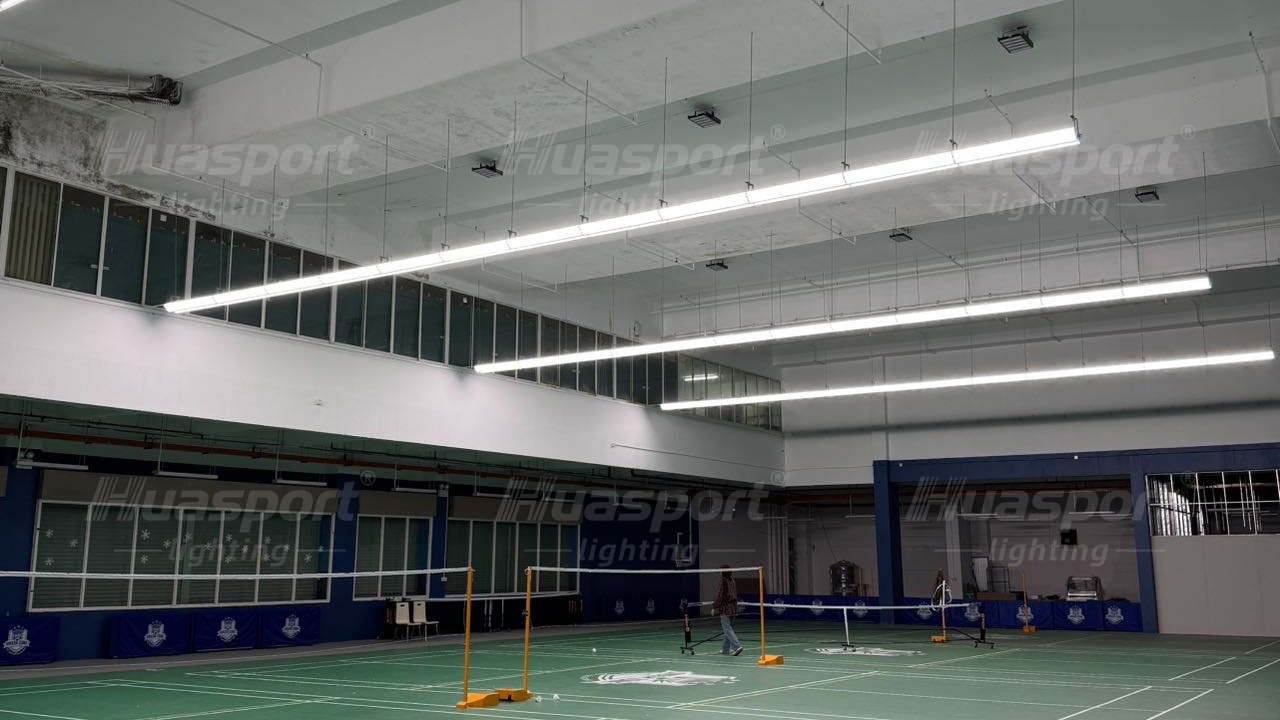
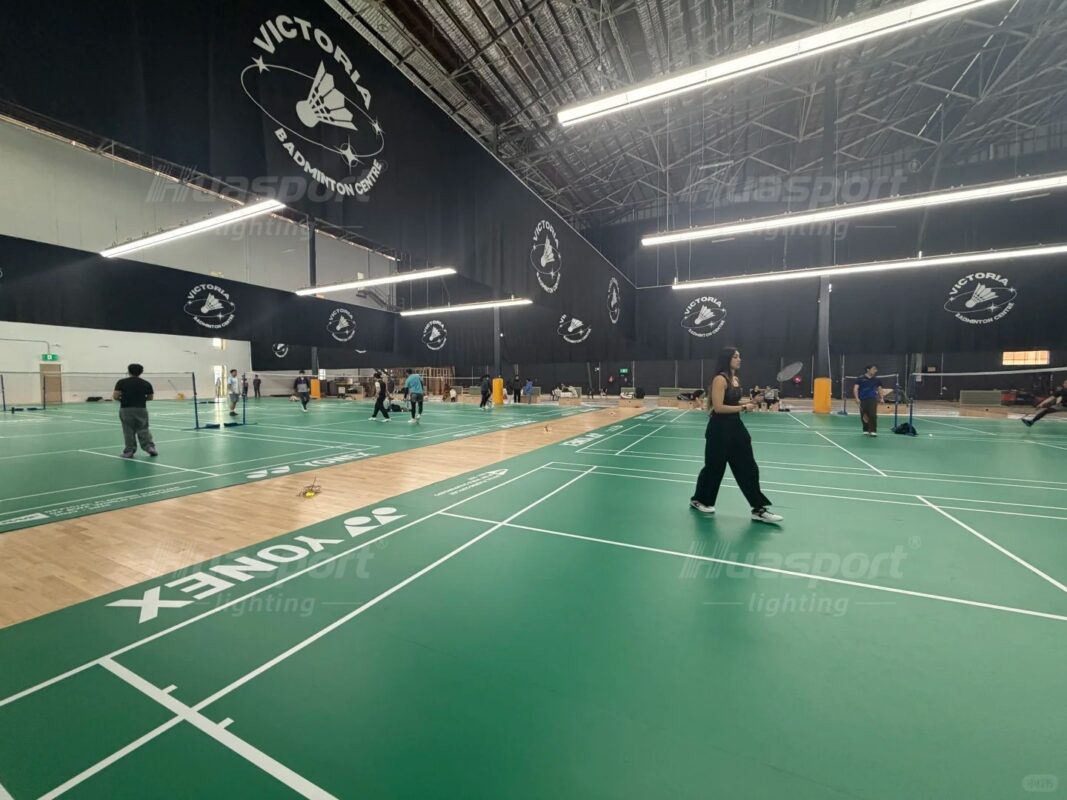
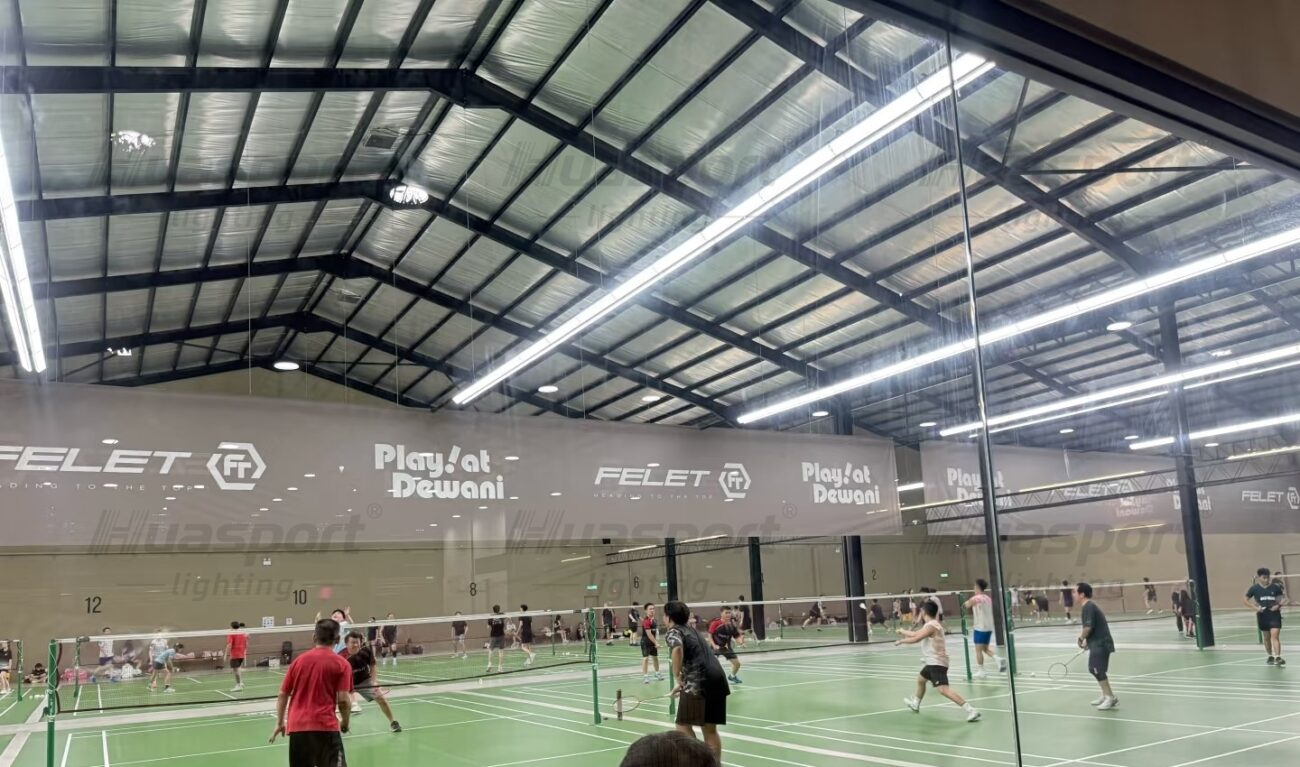
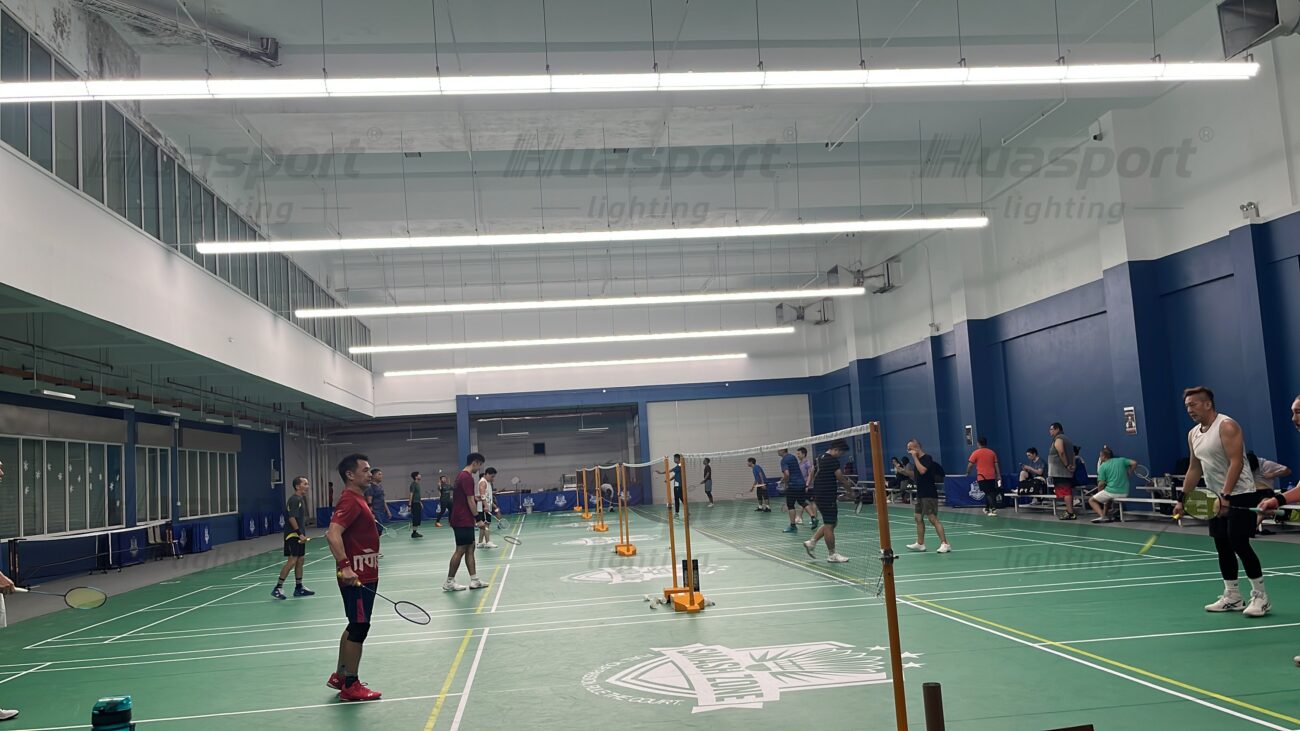
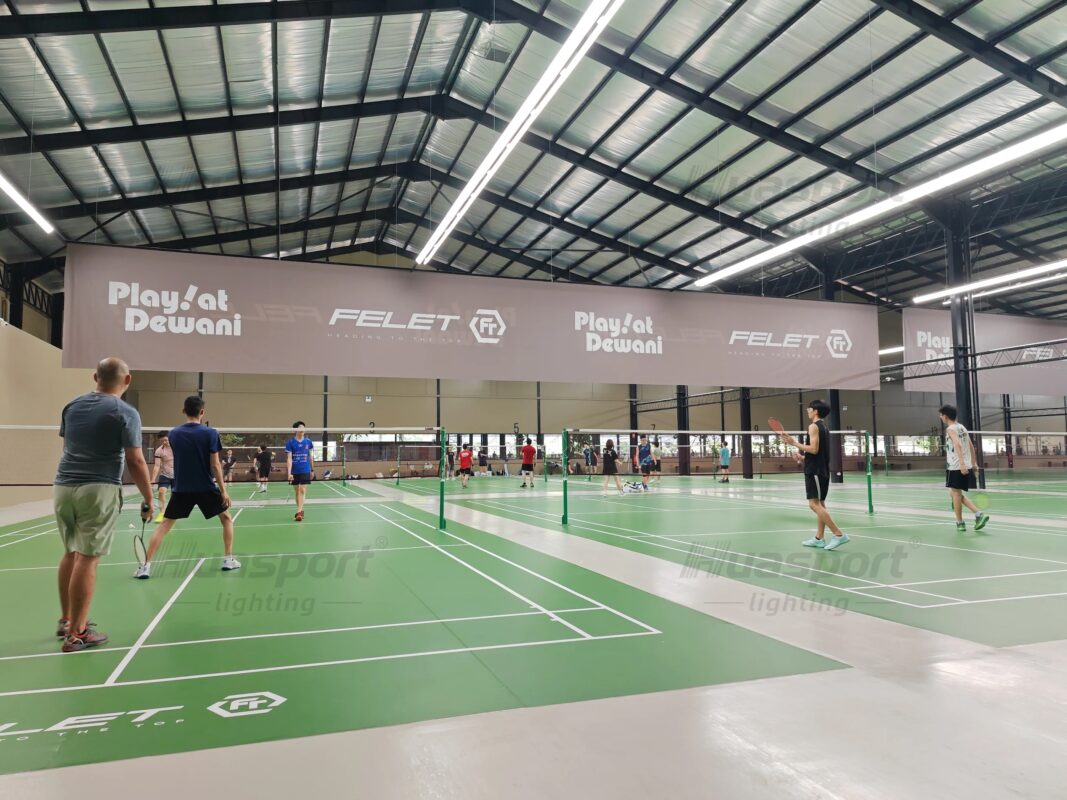
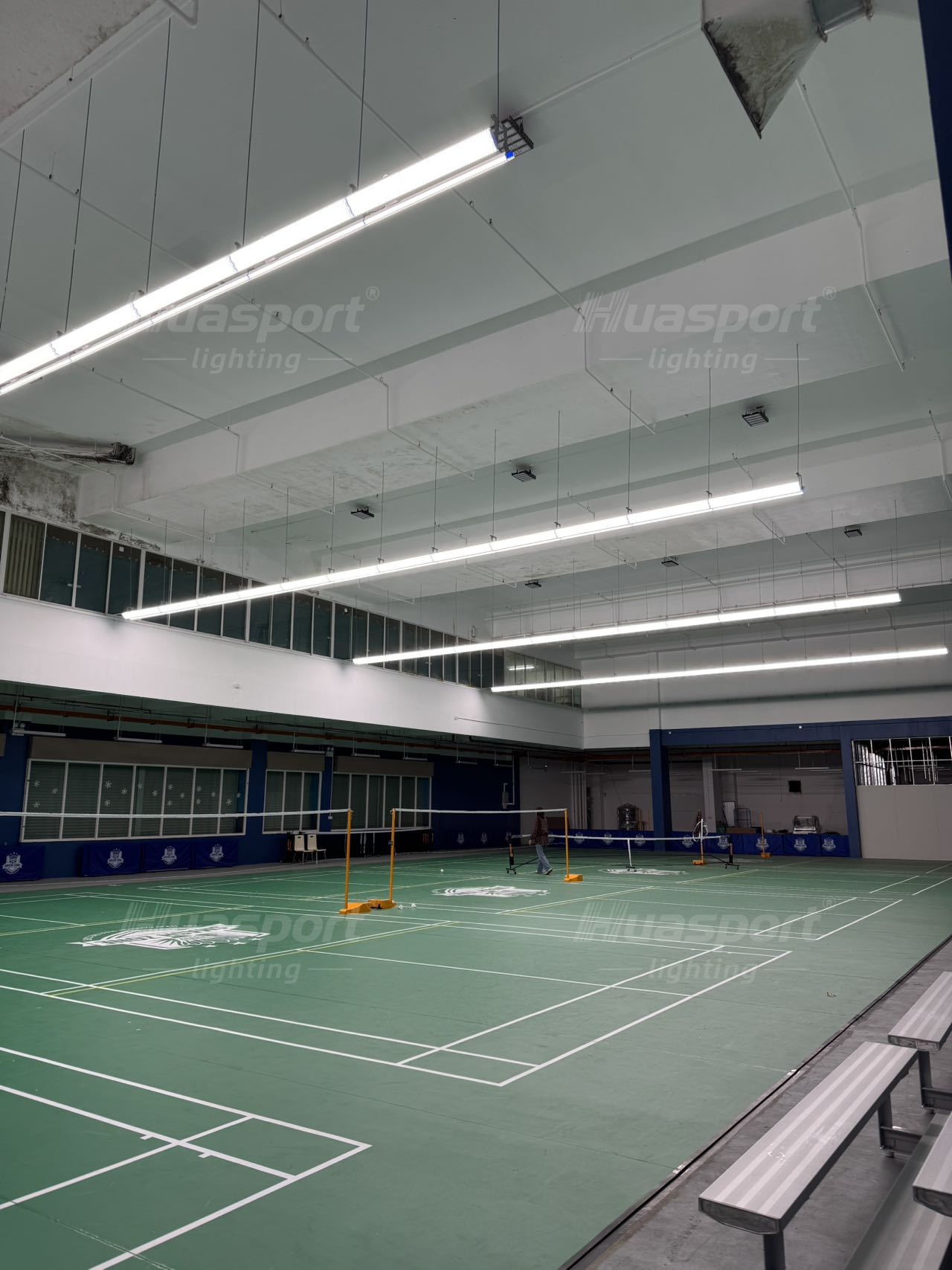
The useful thing in the Brunei reference view is not just that the hall is bright. The photo shows players standing near the side, long rows above the court, a lower indoor ceiling condition and viewing angles that a buyer can actually test on site.
From that view, a buyer can check four things before quotation:
- Whether the side row is too close to the waiting and seating zone.
- Whether the row direction follows the court length cleanly.
- Whether the fixture appears directly in a player’s upward view.
- Whether wall color and ceiling height make the row feel stronger from one side.
These are not abstract lighting details. They decide whether the hall feels comfortable after one game or tiring after two hours.
Why S90 Is Chosen for This Side-View Topic
S90 is a better fit for this article than a generic batten light because the job is more specific than making the court brighter. The problem is how to keep enough court light while reducing the direct side view of the LED source.
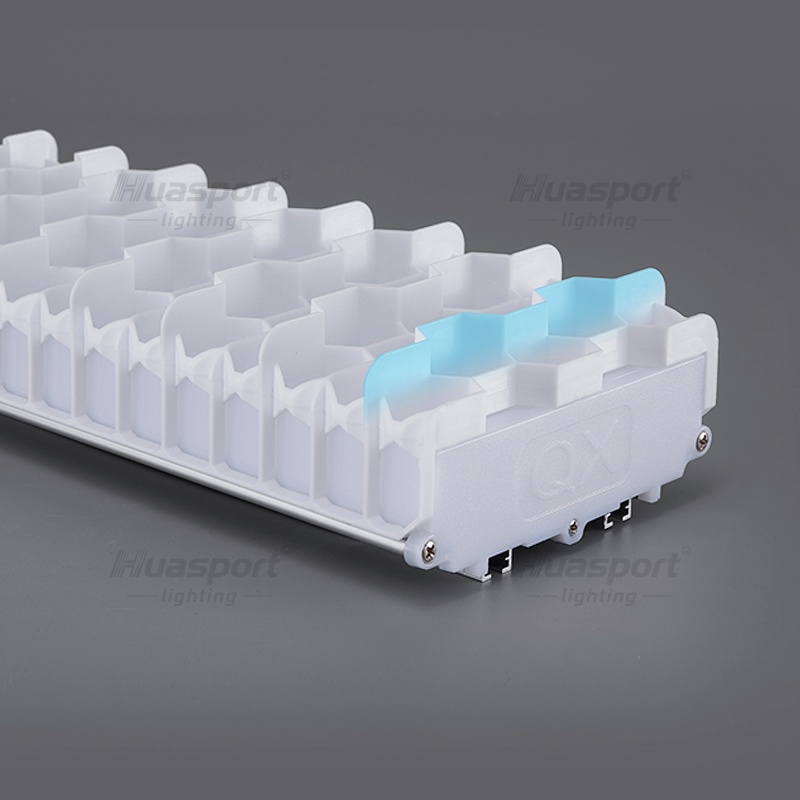
The S90 body is 13 cm wide and uses Huasport’s double-layer honeycomb anti-glare grille. Compared with a simple single-layer grille, the deeper structure gives the light a longer shielding path before it reaches the player’s eye from the side. This matters when players look up for clears, lifts and late defensive shots.
It is still honest to say glare cannot be reduced by the grille alone. Mounting height, row position, aiming angle, wall color and ceiling shape all matter. The fixture helps, but the plan still needs the right layout.
The Rear Court Tells You What a Doorway Cannot
Doorway brightness can be misleading. It usually makes a hall look better than it feels during play because the viewer is standing outside the fastest visual movement.
The rear court is stricter. A player there follows the shuttle upward, reads the opponent’s hit, then turns quickly for the next shot. If the light row sits in that upper view, the eye keeps adjusting between shuttle, ceiling and fixture. That small interruption can make the court feel uncomfortable long before anyone complains about lux.
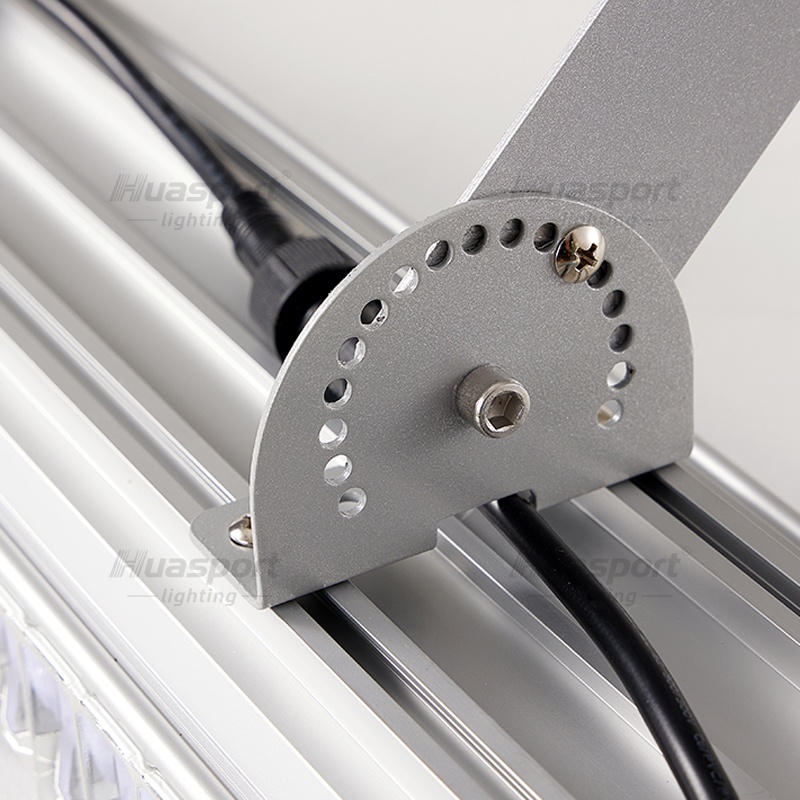
For the S90 42W reference, the 30-degree inward tilt is used to send light toward the playing area while controlling side exposure. The 6th bracket hole is the common badminton and compatible indoor pickleball reference for about 30 degrees, but the installer should still confirm the final angle across the full row.
Why a Continuous 13.92 m Row Matters
The S90 reference uses 12 fixtures on each side. Since each fixture is 1.16 m long, one side becomes a 13.92 m continuous row. That row length is important because the main badminton playing-area side length is 13.4 m.
A continuous row makes the planning easier to inspect. The buyer can look along one side and ask simple questions. Does the row cover the court length? Does the row stop too early near the rear court? Does one end look brighter because of nearby walls or beams?
Today the discussion stays with the 42W continuous-row layout because the Brunei photos are better suited to checking row direction, side comfort and repeatable coverage.
What Installers Should Keep Consistent
Once a layout is selected, consistency matters as much as the model code. A good fixture can still create a poor court if rows are uneven, brackets are locked at different positions or one side is aimed flatter than the other.
For this Brunei-style S90 plan, the installer should keep these points consistent:
- 12 fixtures per side for each court.
- Same row start and row end relationship on both sides.
- About 5 m mounting height where the building allows it.
- About 30-degree inward tilt on both rows.
- Brackets fixed to the aluminum profile, not to plastic parts.
- Final player-view check from side line and rear court.
The back of the S90 fixture uses a thickened aluminum profile. Aluminum helps move heat away from the driver and LED chips, which matters in commercial halls that run lighting for long hours. The bracket is fixed to that aluminum profile, giving the aiming structure a stronger base.
If the Hall Also Discusses Pickleball or Padel
Some indoor sports venues ask whether one badminton lighting idea can cover every court type. The answer depends on the court.
Indoor pickleball may share part of the same side-row logic because players also need comfortable visibility across a low net and a smaller court. If the Brunei venue plans pickleball sessions or a separate pickleball area, compare the use pattern with the Huasport Pickleball Court Lighting guide before copying a badminton plan.
Padel is different. A padel court has glass walls, corner rebounds and four-side viewing relationships. For padel projects, use the Huasport Padel Court Lighting layout instead of using the badminton side-row plan.
What to Send Before Quotation
For a Brunei badminton court lighting quotation, send the court quantity, ceiling height, roof or ceiling photos, court direction and target use. Add photos from the side zone and rear court, not just a wide front view. If the hall already has benches or a waiting area close to the court, include that too.
Huasport can then check whether the S90 42W layout is suitable for the site, whether the 24-fixture plan fits each court and whether the 30-degree inward tilt can be repeated across the rows.
For project discussion, send the site details through the Huasport Contact Us page. To compare more technical articles, visit the Huasport Technical Articles library.
FAQ: Brunei S90 Badminton Court Lighting
What S90 model is used in this Brunei badminton lighting guide?
The planning reference uses Huasport WM-S90-1160-DD-42W-108Z, an S90 1.16 m 42W long-bar anti-glare fixture.
How many fixtures are used per badminton court?
The reference layout uses 24 fixtures per court, with 12 fixtures on each side. Twelve 1.16 m fixtures form a 13.92 m continuous row on each side.
What mounting height and angle are used?
The reference uses about 5 m mounting height and a 30-degree inward tilt. The 6th bracket hole is commonly used as the angle reference for badminton or compatible indoor pickleball planning.
Why does the side zone need a glare check?
Players and waiting users often stand close to the side line. From that angle, a fixture row can appear stronger than it does from the center of the court. Checking the side zone helps catch glare that a doorway photo may miss.
Is 300-400 lux+ enough for a commercial badminton hall?
It is a practical planning target for commercial training and recreational play. If the venue needs competition use, the lighting layout should be reviewed toward 500 lux+ average illuminance before final confirmation.
Can this badminton layout be copied to padel courts?
No. Padel courts need a separate four-side layout because glass walls, corners and player viewing angles create different lighting conditions.