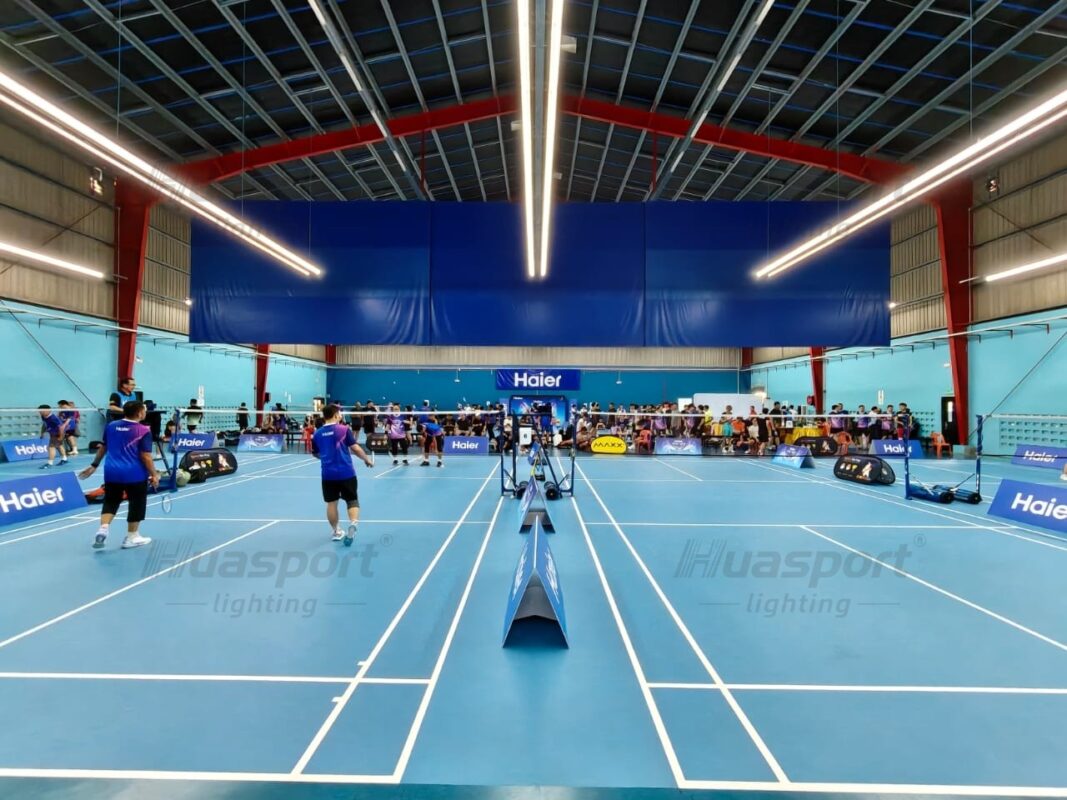
 Badminton/Pickleball court lights
 Pickleball court lights
 Padel Court Lights
 Basketball court lights
 Tennis court lights
 Football field lights
S90 Anti-Glare Badminton Court Lighting: Why the Double Layer Grille Matters

If players complain about glare in a badminton hall, adding more watts is usually the wrong answer. A court can look bright from the doorway and still feel harsh when players look up to track a high clear, a lift, or a smash.
That is why professional badminton court lighting should be checked from the player angle, not only from the entrance or the seating area. The real question is not simply “Is the court bright enough?” The better question is: can players look upward comfortably and still follow the shuttle clearly?
Why More Watts Cannot Solve Badminton Court Glare
Brightness and comfort are not the same thing. More wattage can raise the light level on the floor, but it can also make side glare worse if the fixture does not control the beam properly.
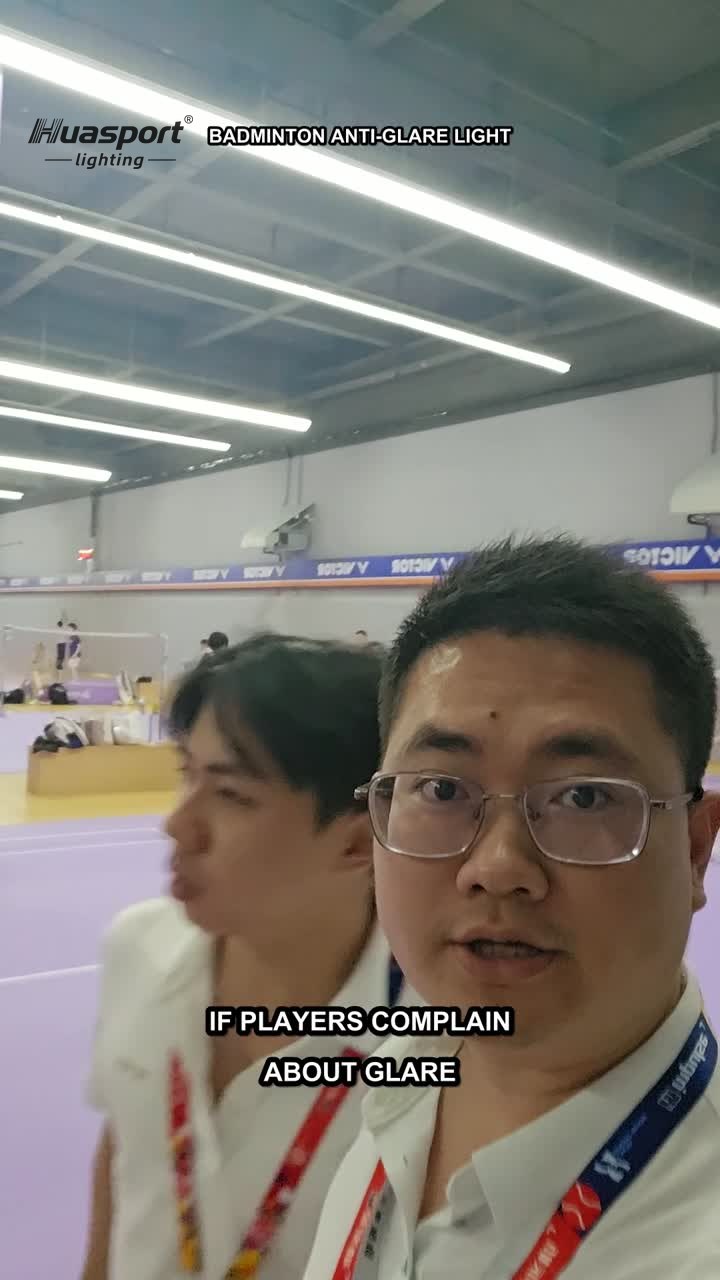
In badminton, the shuttle moves fast and often travels above eye level. Players need to look upward repeatedly during rallies. If side light from the fixture hits the eyes directly, the court may feel tiring even when the floor looks bright.
This is one of the most common mistakes in badminton hall lighting: solving every complaint by increasing power. In many cases, the problem is not a lack of brightness. The problem is uncontrolled light direction.
Test Badminton Court Lights From the Player Angle
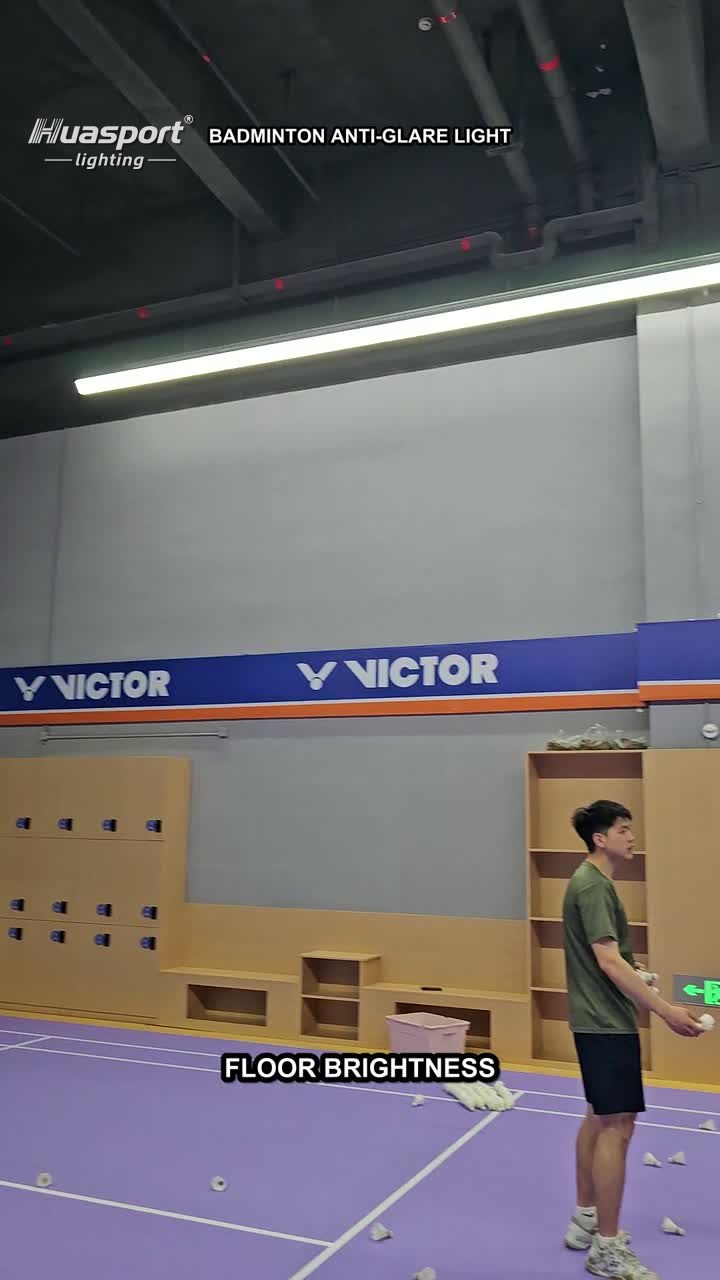
A practical acceptance test is simple: stand on the baseline and look up as if you are waiting for a high clear or preparing to receive a smash.
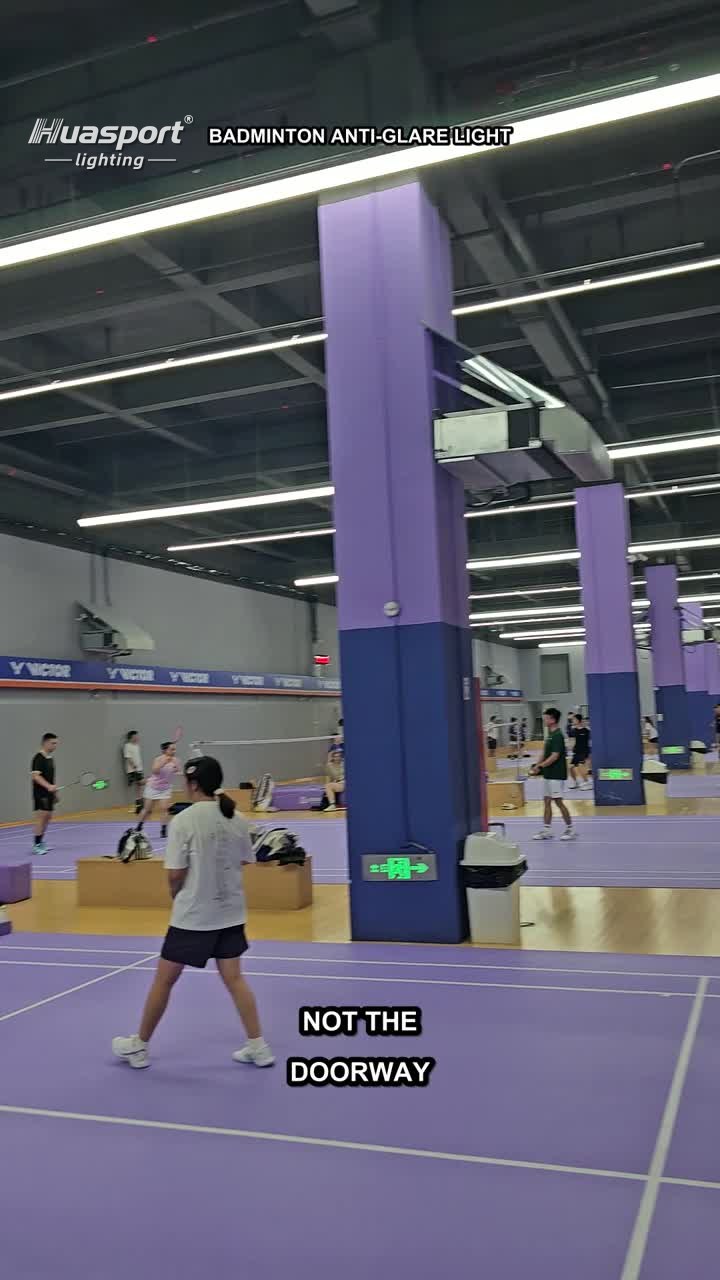
From this position, check whether the fixture surface feels harsh, whether side light reaches the face, and whether the shuttle would be easy to track against the ceiling. This player-angle test is more useful than judging the lighting only from the doorway.
For hall owners, this test helps reveal problems that may not appear in a simple lux reading. A lux meter can measure floor brightness, but the player’s eyes decide whether the light feels comfortable during real play.
How the S90 Double Layer Grille Controls Side Glare
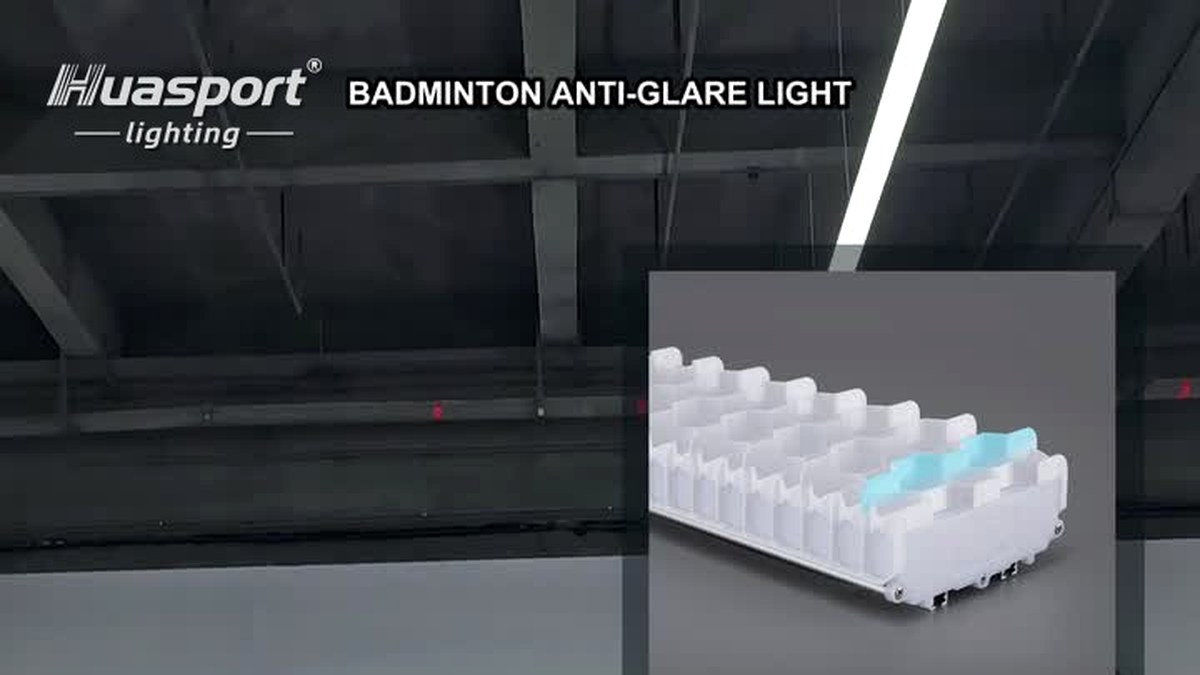
The Huasport S90 anti-glare badminton court light is designed around a double layer grille structure. The purpose is to guide useful light down to the playing surface while reducing harsh side light before it reaches the player’s face.
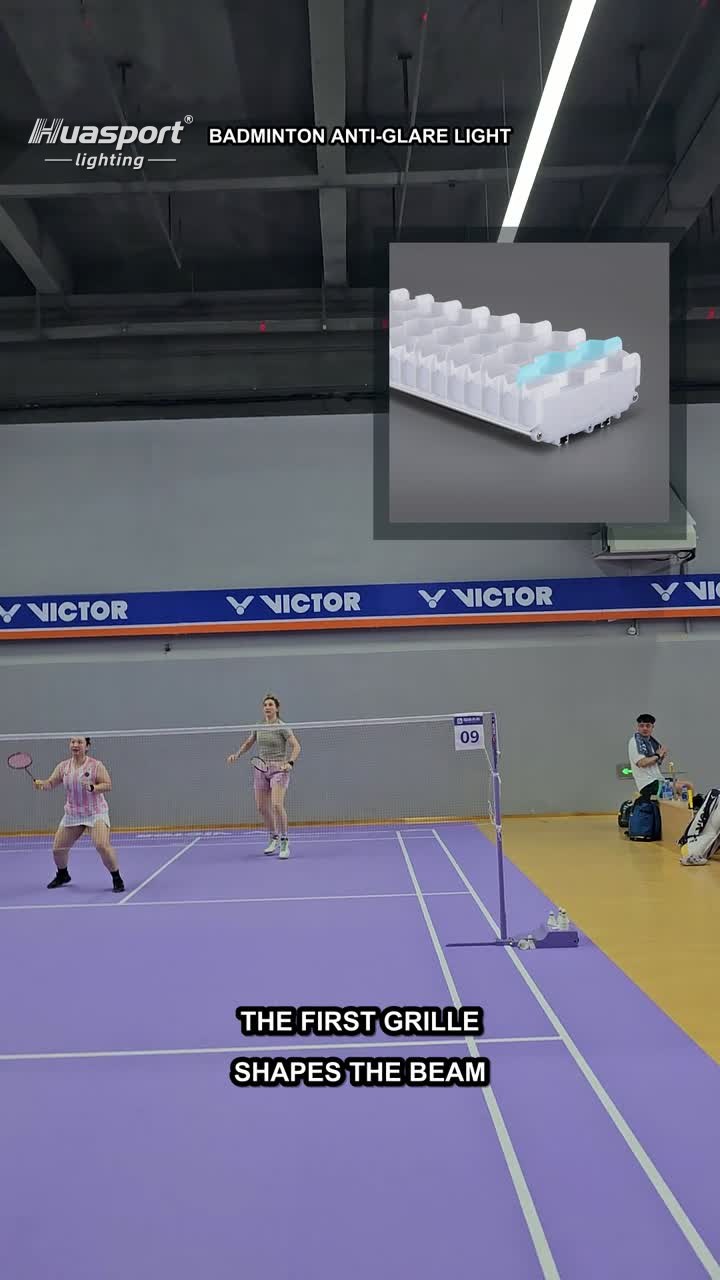
The first grille shapes the beam
The first grille helps shape the light output, so the beam is directed toward the court instead of spreading freely in every direction. This supports clearer floor brightness and better court visibility.
The second grille cuts side glare again
The second grille adds another layer of control. It reduces side glare again, especially from viewing angles where players are likely to look upward during play.
This two-stage structure is the key difference. Instead of relying only on power, the S90 uses physical optical control to make the light more playable.
What Hall Owners Should Check Before Accepting a Lighting Project
Before accepting a badminton lighting project, hall owners should check at least four real-use points:
- Side glare: stand on the baseline and look up toward the fixture rows.
- Face comfort: confirm the light does not feel harsh when players track high shots.
- Floor brightness: check whether the playing area looks clear and usable.
- Shuttle visibility: make sure the shuttle remains easy to follow during upward viewing angles.
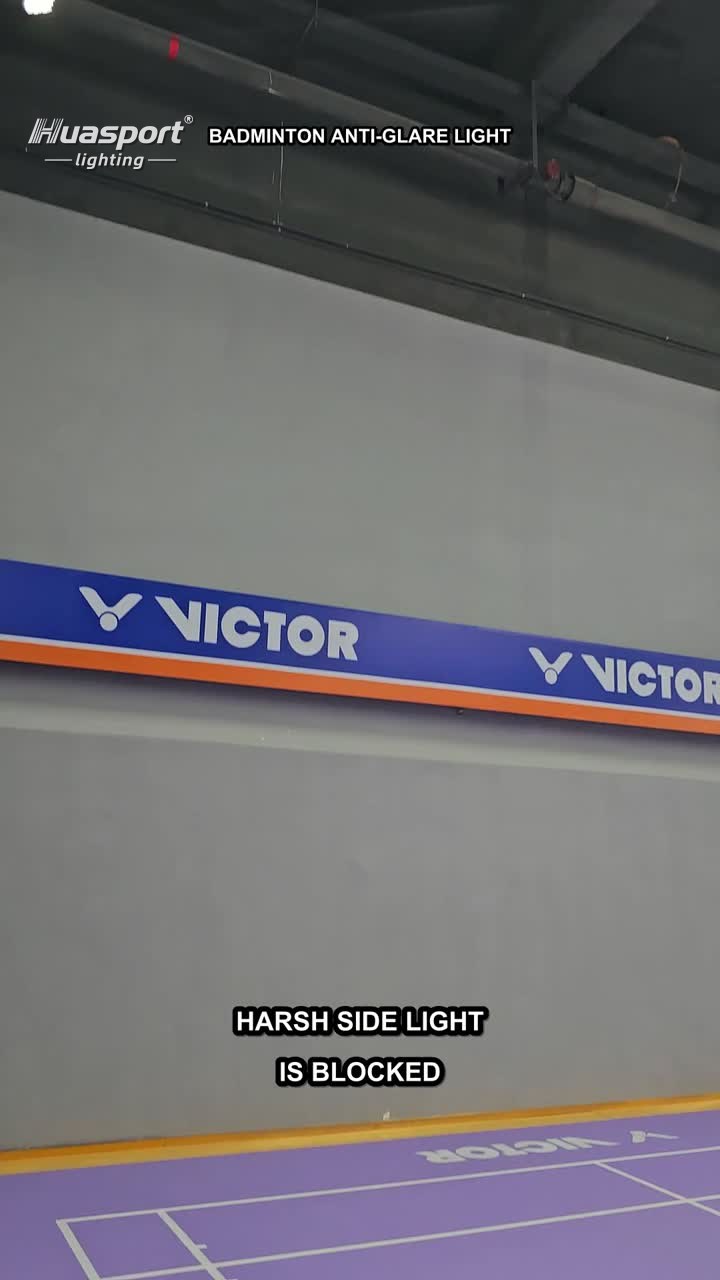
These checks do not replace a professional lighting layout, but they help owners avoid a common problem: a court that looks bright in photos but feels uncomfortable during play.
Why Anti-Glare Structure Matters More Than Brightness Alone
For badminton halls, anti-glare structure is part of the product performance. The fixture needs to deliver useful light to the court, but it should not send too much uncontrolled light into the player’s eyes.
This is especially important in multi-court venues, training halls, and commercial badminton clubs where players may stay for several hours. Comfortable lighting can affect playing experience, customer satisfaction, and the perceived quality of the venue.
If a project only compares wattage, it misses the point. A better comparison should include beam control, side glare, installation angle, mounting height, floor brightness, and shuttle visibility.
When to Choose S90 Anti-Glare Badminton Court Lights
The S90 is suitable for indoor badminton halls where players often look upward and where the owner wants a cleaner, more comfortable lighting environment. It is also a strong option for venues that want to reduce glare complaints without simply increasing wattage.
For best results, the fixture should be selected together with a lighting layout. Court size, ceiling height, fixture spacing, wall color, and installation position can all affect the final result.
Huasport can help evaluate fixture quantity, installation height, glare control, and court visibility for badminton and multi-sport indoor venues.
FAQ: Anti-Glare Badminton Court Lighting
Is higher wattage always better for badminton court lighting?
No. Higher wattage can increase brightness, but it does not automatically solve glare. If the fixture does not control side light, more power may make visual discomfort worse.
What is the advantage of a double layer grille light?
A double layer grille adds two stages of glare control. The first grille shapes the beam, while the second grille further reduces side glare from player viewing angles.
How should a hall owner test badminton lighting comfort?
Stand on the baseline and look upward as if tracking a high clear or smash. Check side glare, face comfort, floor brightness, and shuttle visibility.
Why does shuttle visibility matter in lighting design?
Badminton players constantly track a small, fast shuttle against the ceiling and fixture rows. If glare reaches the eyes, the shuttle becomes harder to follow.
Can Huasport provide a lighting layout for badminton halls?
Yes. Huasport provides anti-glare LED sports lighting and lighting layout support for badminton, pickleball, padel, tennis, basketball, and football venues.
Explore the S70/S90 indoor court lighting product, review more sports lighting case studies, or contact Huasport to request a lighting layout.
Video transcript summary: If players complain about glare, do not add more watts. Test the court from the player angle, stand on the baseline, and check whether side light reaches the eyes. The S90 double layer grille uses the first grille to shape the beam and the second grille to cut side glare again, so useful light goes down to the floor while harsh side light is blocked before it reaches the face.
Related Huasport Lighting Guides
For a full badminton hall planning reference using S70/S90 anti-glare fixtures, see Huasport badminton court lighting for 300-500+ lux indoor courts. For similar indoor pickleball projects using long-bar court lights, compare Huasport pickleball court lighting for 300-500+ lux indoor courts.