
 Badminton/Pickleball court lights
 Pickleball court lights
 Padel Court Lights
 Basketball court lights
 Tennis court lights
 Football field lights
Australia Badminton Court Lighting Checklist: SAA 60W, 5130 lm Anti-Glare Fixtures

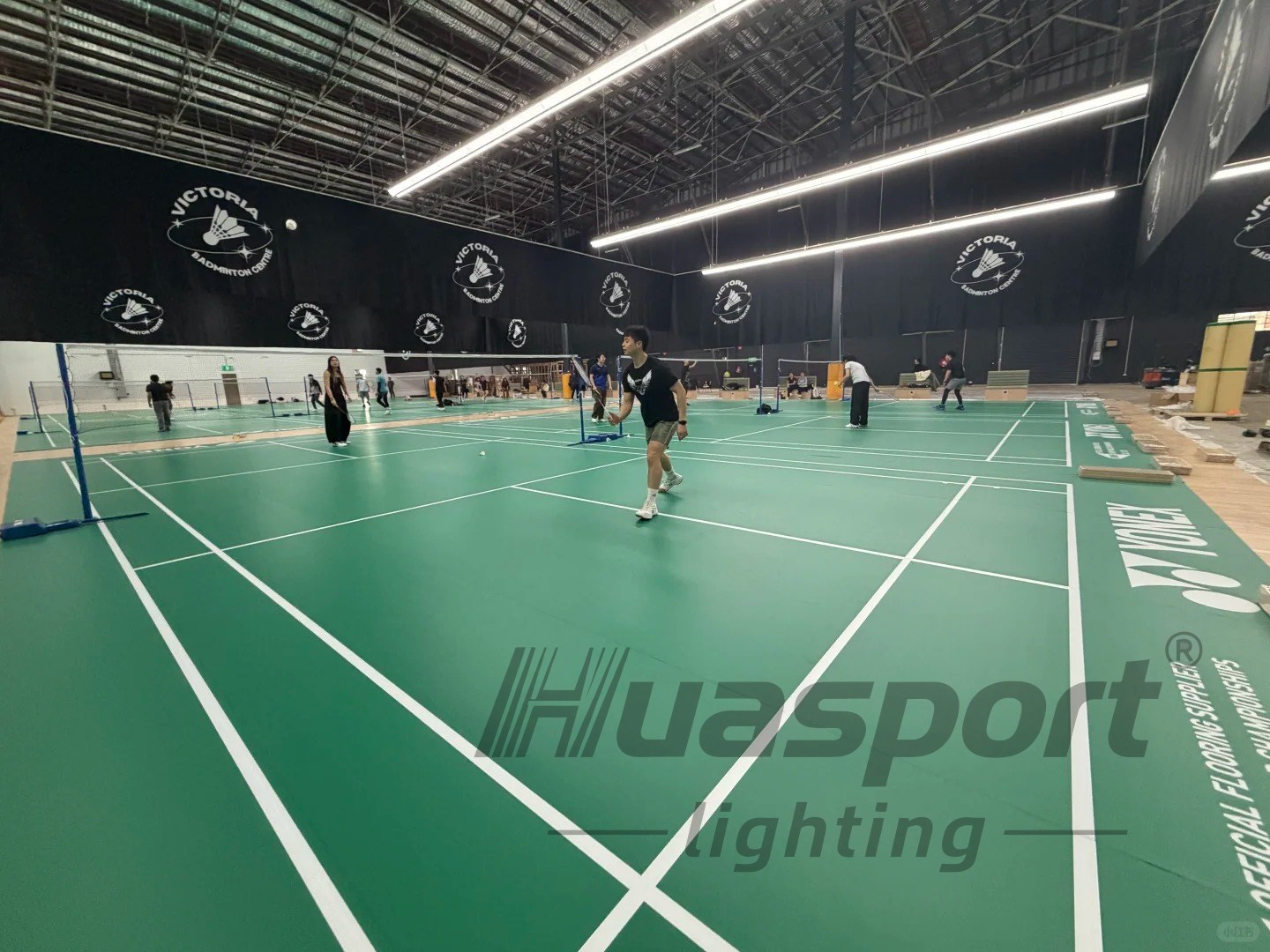
This is a practical acceptance checklist for an Australian badminton hall after the lights are installed. The fixture data for this project is SAA certification, 60W power and 5130 lm luminous flux, but the acceptance test should not stop at the specification.
A good inspection also checks the visible product structure and the player viewing angle. Badminton is an upward-looking sport, so the court should be evaluated from the baseline and from real play positions, not only from the doorway.
Check 1: Confirm the Approved Fixture Before Judging the Court
Before deciding whether the lighting “looks good,” confirm that the installed product matches the approved fixture. This prevents a common problem: comparing real sports lighting with ordinary indoor lights that may look similar from a distance.
- SAA-certified fixture for the Australia case.
- 60W power.
- 5130 lm luminous flux.
- White long-bar badminton court light body.
- Double-layer honeycomb anti-glare grille.
- Grey metal hanging bracket.
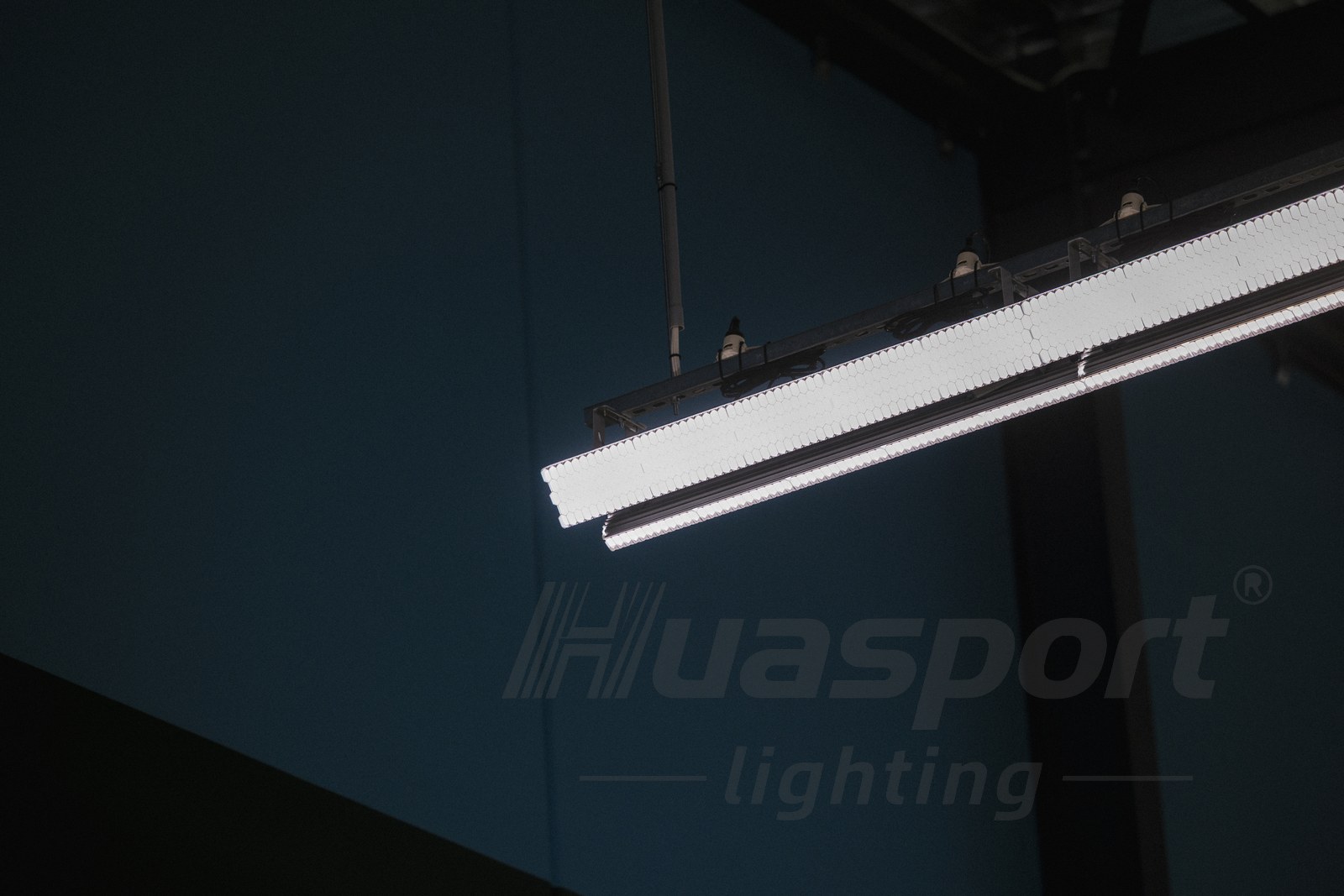
Check 2: Photograph the Product Details That Prove the Fixture
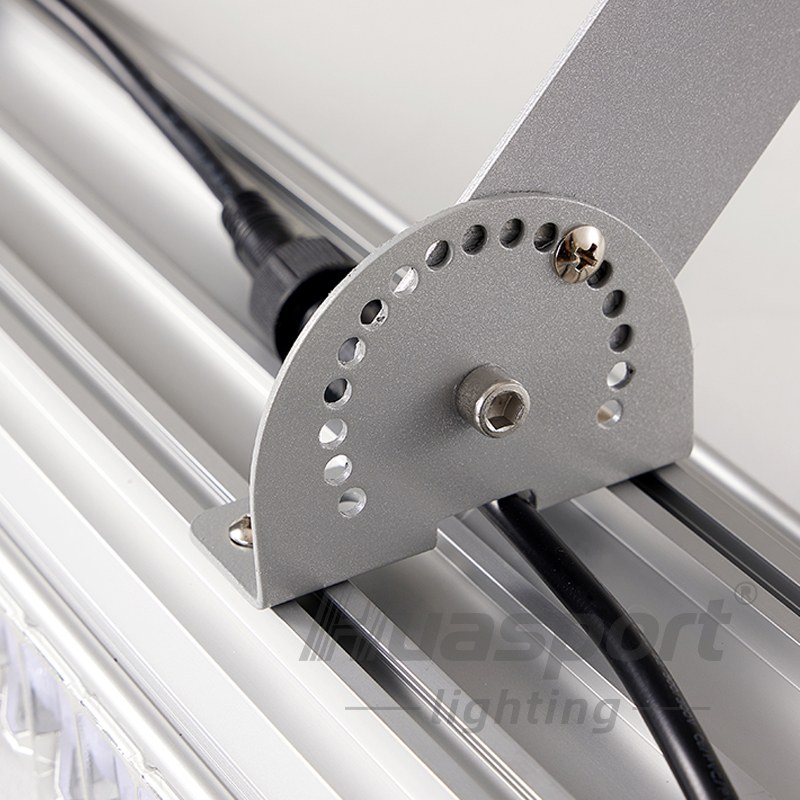
Do not only photograph the full court. A reliable acceptance record should include the front honeycomb grille, end cap and screws, embossed end-cap detail, grey metal hanging bracket and adjustable angle bracket with its perforated semicircle plate.
Check 3: Stand on the Baseline and Look Up
Stand near the baseline. Look upward as if receiving a high clear. Then turn your head slightly toward the fixture rows. If the light feels harsh from that angle, players may complain during real games even when the floor appears bright.
This test is important because a lux reading can measure floor brightness, but it cannot fully describe face comfort or shuttle visibility during play.
Check 4: Inspect the Direction of the Long-Bar Fixtures
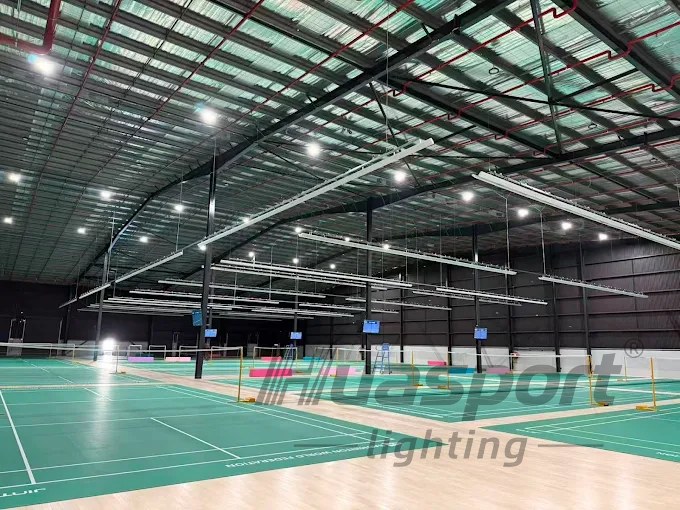
Long-bar badminton court lights should form clean, logical rows along the court direction. During acceptance, check whether the rows are aligned with the courts, whether side courts create glare, whether there are dark gaps between playing areas and whether the bracket angle is consistent across the row.
Check 5: Separate Brightness From Playability
The Australia case gives a strong data anchor: 60W and 5130 lm. But those numbers must be evaluated with playability. Ask whether players can track the shuttle during high clears, whether the court lines are clear, whether the ceiling feels visually calm and whether long sessions feel comfortable.
If the answer is yes, the lighting is doing more than illuminating the hall. It is supporting the sport.
FAQ
What should be checked first in an Australia badminton lighting project?
First confirm the approved fixture data: SAA certification, 60W power and 5130 lm luminous flux.
Why should the honeycomb grille be photographed?
The honeycomb grille is visible evidence of the anti-glare structure. It helps buyers understand why the light is designed for badminton rather than general indoor lighting.
Why does the bracket angle matter?
The bracket angle affects fixture direction. Badminton lights should be aligned with the court layout so players are not hit by direct side glare.
Browse more technical sports lighting articles, compare badminton court lighting products, or request a lighting layout from Huasport.
Related Huasport Lighting Guides
For a broader indoor badminton lighting layout reference, see Huasport badminton court lighting for 300-500+ lux indoor courts. For related product and case checks, continue with Huasport technical articles on anti-glare court lighting.